Check Price Now
Table of Contents
- What are Crash Barriers and Why are They Important?
- Crash Barrier Price per Meter in India (2026)
- Factors Affecting Crash Barrier Price per Meter
- W-Beam vs Thrie-Beam Crash Barrier Price Comparison
- Crash Barrier Specifications That Influence Procurement
- Installation Cost of Crash Barriers in India
- How to Evaluate Suppliers
- Common Mistakes Buyers Make
- How to Choose the Right Crash Barrier for Your Project
- Future Trends Impacting Crash Barrier Pricing in India
- Conclusion
- FAQs
Crash barrier price per meter in India is an important consideration for contractors, consultants, and procurement teams involved in road infrastructure projects. Highway crash barriers help reduce accident severity and improve safety on highways, expressways, bridges, and industrial roads. As investments in NHAI projects continue to grow, buyers are increasingly evaluating costs alongside performance and compliance requirements.
Prices vary based on barrier type, steel specifications, galvanisation quality, project location, and installation scope. W-beam, Thrie-beam, and concrete road safety barriers each serve different applications and cost levels. This guide explains pricing trends, buying factors, supplier selection, and procurement considerations.
What are crash barriers and why are they important?
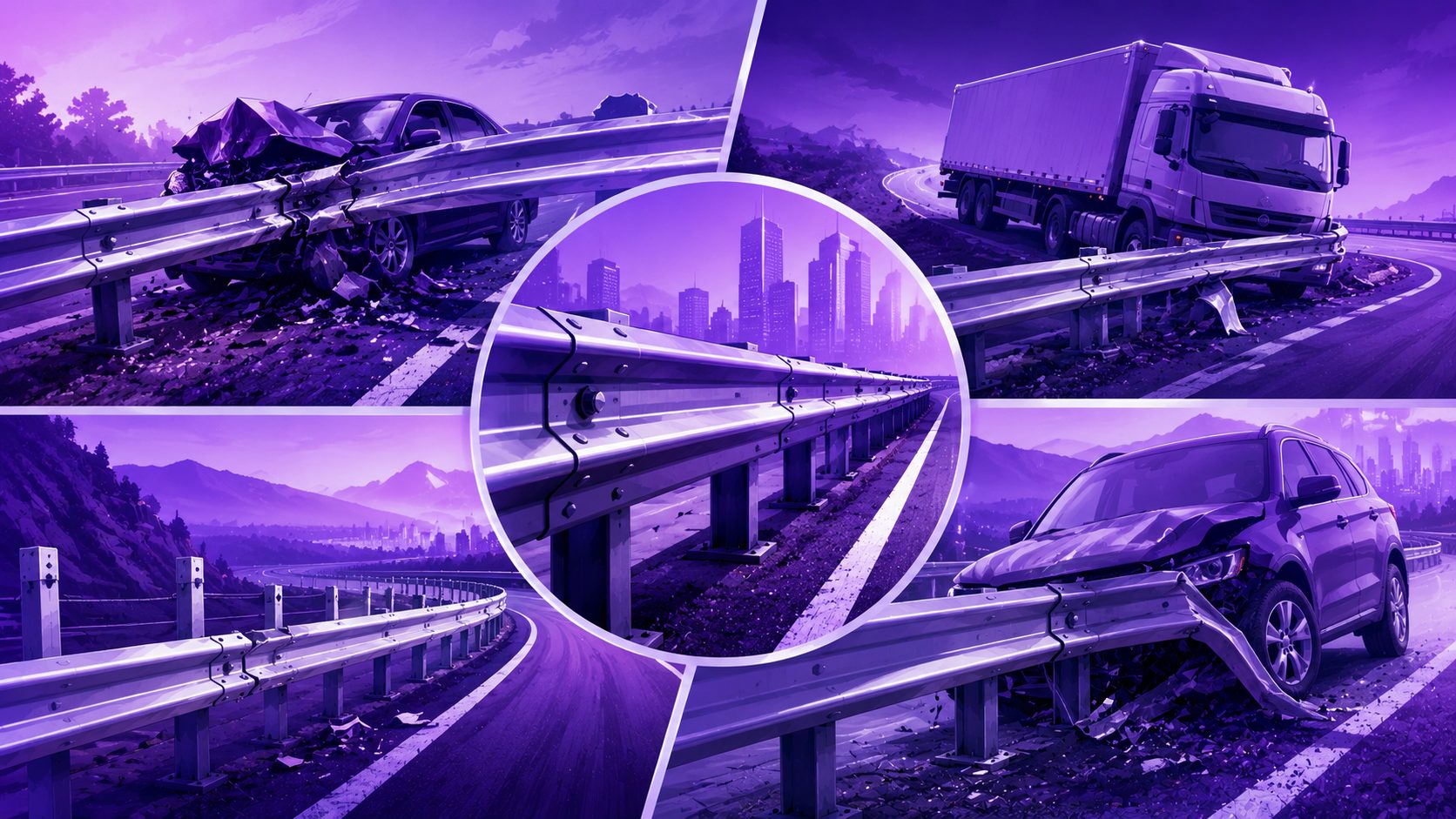
Crash barriers are protective safety systems installed along roads, medians, bridges, and other high-risk areas to minimise the impact of vehicle collisions. They are designed to redirect vehicles back onto the roadway or prevent them from leaving the carriageway, reducing the risk of severe injuries, fatalities, and damage to surrounding infrastructure.
Crash barriers play a critical role in preventing vehicle run-off-road accidents, which are among the most common causes of serious highway incidents. By absorbing and distributing impact forces, these systems help improve safety for drivers, passengers, pedestrians, and nearby assets.
Common applications of crash barriers include:
- National highways and expressways
- Bridge approaches and elevated corridors
- Mountain and ghat roads
- Industrial roads and logistics parks
- Urban flyovers and high-speed corridors
- Road medians and embankment sections
Today, highway safety barriers form an essential part of India’s road safety infrastructure. Their use has increased significantly across projects developed by NHAI, MoRTH, and state highway authorities. Metal beam crash barrier systems, particularly W-beam and Thrie-beam variants, remain widely used due to their proven performance and cost-effectiveness.
Beyond improving safety, roadside crash barriers also help project owners meet mandatory road safety and design requirements. Properly specified and installed crash barriers support regulatory compliance while enhancing the overall safety performance of modern transportation networks.
Crash barrier price per meter in India (2026)
The crash barrier price per meter in India varies based on barrier type, steel thickness, galvanisation quality, project location, and installation requirements. For EPC contractors and procurement teams, it is important to compare like-for-like specifications before evaluating quotes. The figures below represent typical market ranges for medium to large infrastructure projects in 2026. Actual prices may vary depending on quantity, freight costs, zinc coating requirements, and tender specifications.
| Crash barrier type | Typical supply-only price (₹/Meter) | Supply & installation rice (₹/Meter) | Common applications |
|---|---|---|---|
| W-beam crash barrier | 1,400–2,200 | 1,900–2,800 | National highways, state highways, industrial roads. |
| Thrie-beam crash barrier | 2,500–4,000 | 3,100–4,800 | High-risk zones, medians, bridge approaches. |
| Bridge crash barrier | 3,000–5,500+ | 4,000–6,500+ | Bridges, flyovers, elevated corridors. |
| Wire rope safety barrier | 2,800–5,000 | 3,500–6,000 | Expressways, wide medians. |
| Concrete crash barrier | 3,500–7,000+ | 4,500–9,000+ | Urban corridors, permanent medians. |
| Pedestrian safety barrier | 900–2,000 | 1,200–2,500 | Urban roads, footpaths, public areas. |
Disclaimer: The prices listed above are indicative market ranges for June 2026 and should be used for budgeting and preliminary planning purposes only. Actual rates may vary based on project specifications, steel prices, galvanisation requirements, order quantity, location, logistics costs, and installation scope.
The crash barrier price per meter in India can vary significantly from one project to another. While pricing is an important consideration, buyers should also evaluate product quality, compliance requirements, and supplier capabilities before making a procurement decision. Comparing quotations on a like-for-like specification basis helps ensure better value and long-term performance. For most infrastructure projects, selecting the right crash barrier involves balancing cost, safety, durability, and regulatory compliance rather than focusing solely on the lowest quoted rate.
Factors affecting crash barrier price per meter
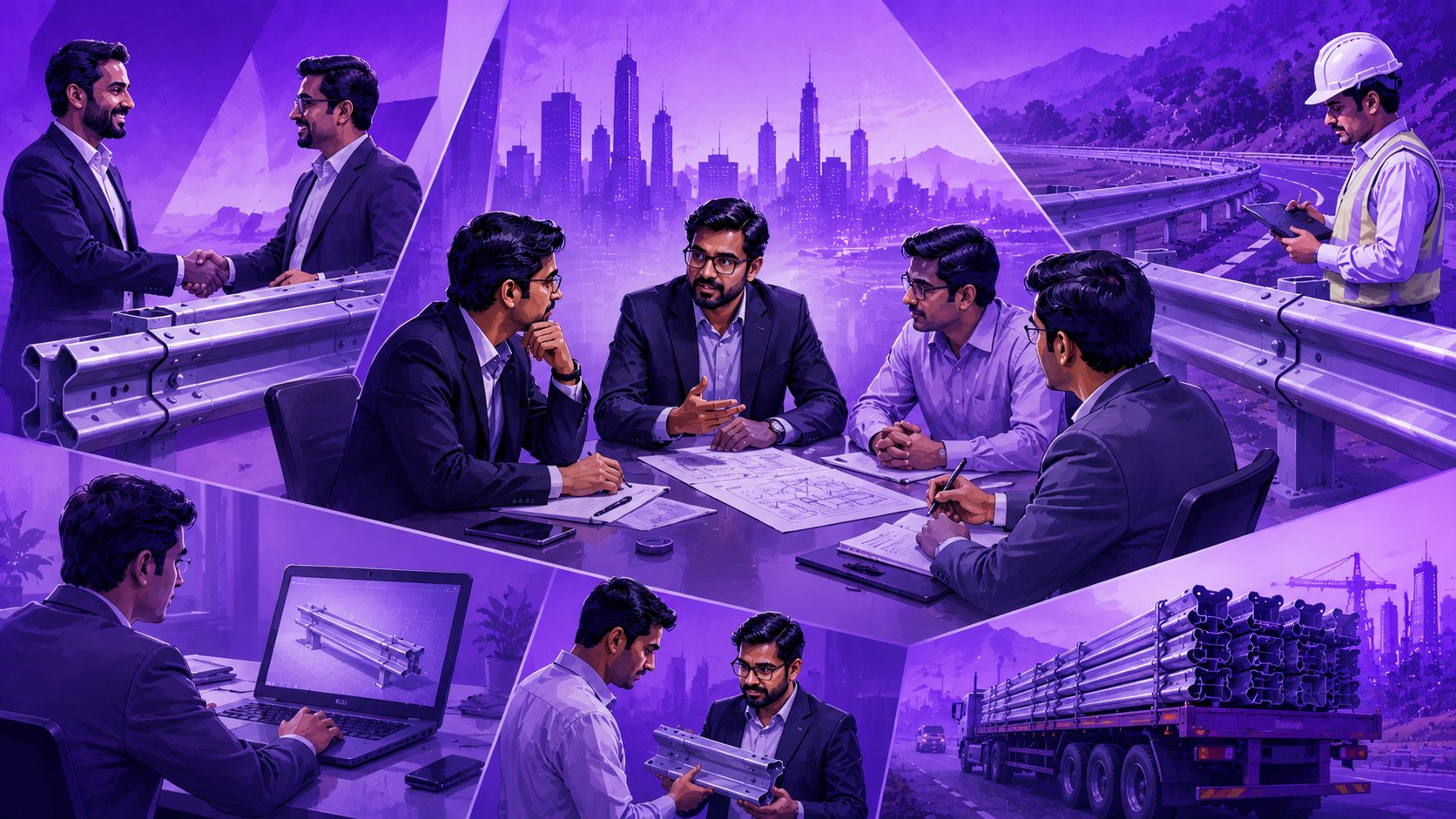
A quoted crash barrier price often reflects much more than the beam itself. Material quality, compliance requirements, site conditions, and installation scope can significantly influence the final project cost. Understanding these factors helps buyers compare quotations accurately and avoid costly procurement mistakes.
Steel grade and material thickness
Steel is the largest cost component in most crash barrier systems. Higher-grade steel and thicker beam sections improve strength and durability but also increase material consumption. The overall crash barrier steel weight per metre directly impacts manufacturing and transportation costs.
Galvanisation quality
Galvanisation protects crash barriers from corrosion and extends service life. Higher zinc coating thickness generally increases upfront costs but can reduce maintenance requirements over the long term. Buyers should verify galvanisation specifications rather than comparing prices alone when evaluating galvanised crash barriers.
Barrier type and containment level
Different barrier systems are designed for different impact conditions. Standard W-beam systems typically cost less than Thrie-beam, bridge, or specialised containment systems. Project-specific crash barrier specifications often determine the required performance level and influence overall procurement costs.
Project location
Freight and logistics can significantly affect highway safety barrier cost. Transportation expenses tend to increase for remote locations, hilly regions, bridge projects, and sites located far from manufacturing facilities.
Quantity ordered
Large infrastructure projects usually benefit from economies of scale. Suppliers can optimise production, galvanisation, and transportation, which often results in lower per-metre rates for bulk orders.
Installation scope
Installation requirements vary considerably between projects. Factors such as soil conditions, excavation needs, traffic management measures, labour availability, and machinery requirements can substantially impact final project costs. Supply-and-install contracts generally command higher rates than supply-only procurement.
W-beam vs thrie-beam crash barrier price comparison
W-beam and Thrie-beam barriers are the most widely used roadside safety barrier systems in India’s highway sector. While both serve the same purpose, they differ in strength, applications, and cost. Understanding these differences helps EPC contractors, consultants, and procurement teams select the most suitable solution for a project’s safety and budget requirements.
| Parameter | W-beam crash barrier | Thrie-beam crash barrier |
|---|---|---|
| Typical supply price (June 2026) | ₹1,400–2,200 per metre | ₹2,500–4,000 per metre |
| Typical installed price (June 2026) | ₹1,900–2,800 per metre | ₹3,100–4,800 per metre |
| Strength | Moderate to high | Higher than W-beam |
| Common applications | Highways, state roads, medians, industrial roads. | Bridge approaches, elevated sections, high-risk corridors. |
| Impact resistance | Suitable for most road conditions | Better suited for high-impact environments |
| Typical project type | Standard highway and expressway projects. | Bridges, flyovers, sharp curves, high-embankment sections. |
The W-beam crash barrier remains the preferred choice across most Indian highway projects because it offers a strong balance between safety performance and cost. It is widely specified in NHAI, state highway, and industrial infrastructure projects, making it the most commonly installed crash barrier system in the country.
A thrie beam crash barrier is typically selected for locations that require additional protection. Bridge approaches, elevated corridors, sharp curves, and sections with higher accident risks often use Thrie-beam systems because of their greater rigidity and containment capability.
From a procurement perspective, W-beam barriers generally deliver the best value for large-scale deployments. However, the higher upfront cost of Thrie-beam systems may be justified in critical locations where enhanced vehicle containment can reduce repair costs and improve long-term safety performance. This makes project-specific risk assessment an important part of any highway crash barrier comparison.
Crash barrier specifications that influence procurement decisions
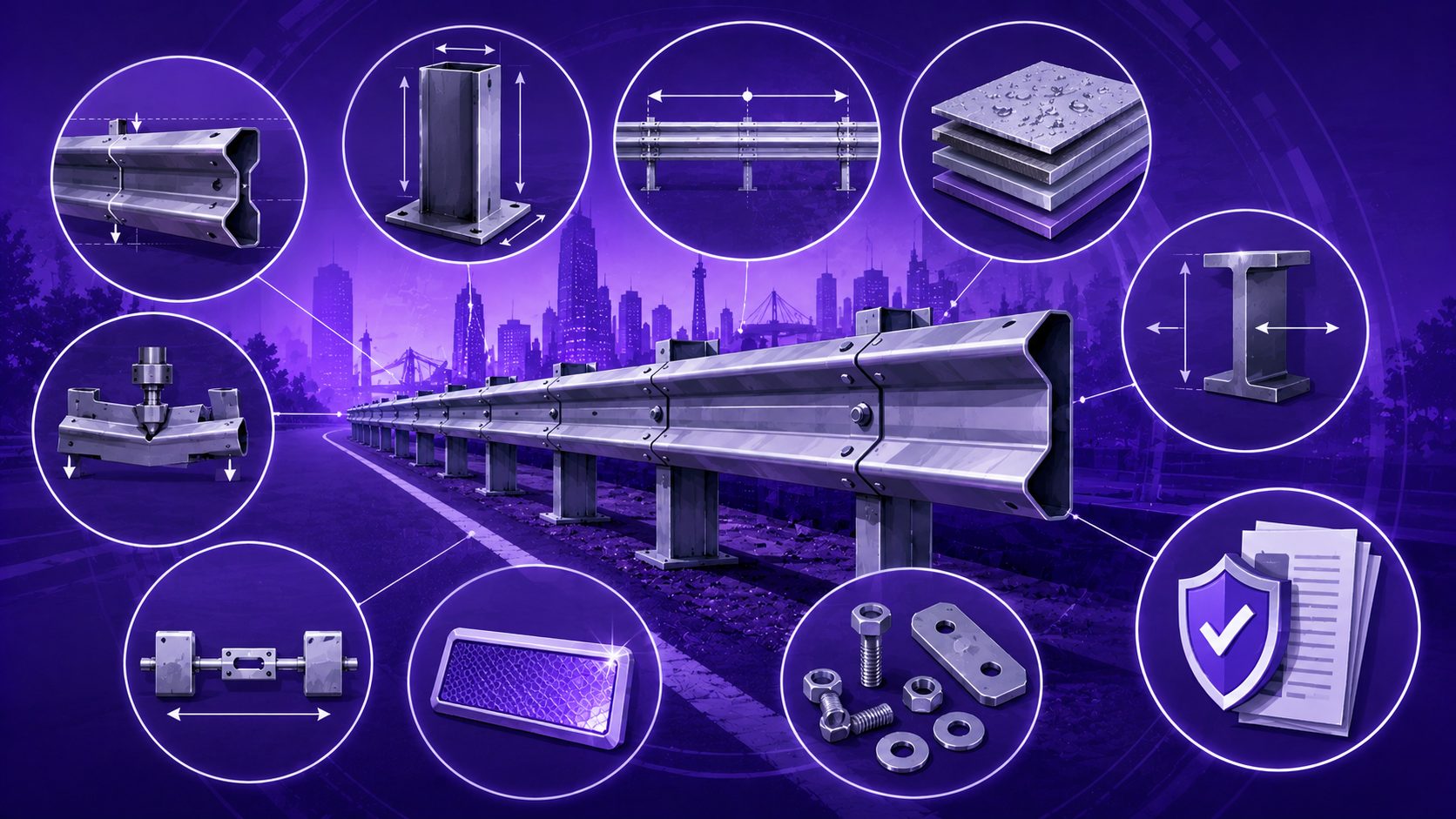
When evaluating quotations, buyers should look beyond price and carefully review the technical requirements. Understanding key crash barrier specifications helps ensure compliance, durability, and long-term performance.
Beam thickness
Beam thickness affects the strength and impact resistance of the barrier system. Thicker beams generally provide higher durability but may increase material and installation costs.
Post dimensions
Posts support the entire barrier system and play an important role in energy absorption during a collision. Buyers should verify post size, shape, and material specifications against project requirements.
Centre-to-centre spacing
The distance between posts influences barrier performance and stability. Incorrect spacing can affect vehicle containment and overall system effectiveness.
Zinc coating
Galvanisation protects steel components from corrosion. Zinc coating thickness is particularly important for projects located in coastal, industrial, or high-moisture environments.
Yield strength and tensile strength
These properties determine the steel’s ability to withstand impact forces without permanent deformation or failure. Higher-strength steel can improve barrier performance under demanding conditions.
Reflectors
Reflective markers improve visibility during low-light and adverse weather conditions. Many highway projects require reflectors as part of their road safety design.
Fasteners and accessories
Bolts, nuts, spacers, terminal ends, and other accessories contribute to the overall integrity of the barrier system. Procurement teams should ensure all components meet specified quality requirements.
Compliance requirements
Crash barriers should comply with applicable IRC crash barrier guidelines, MoRTH crash barrier specifications, and project-specific tender conditions. Some projects may also reference international highway safety standards such as EN 1317 and AASHTO MASH testing requirements when evaluating system performance.
Installation cost of crash barriers in India
The crash barrier installation cost depends on project location, terrain conditions, installation methodology, and contract scope. While some buyers procure barriers on a supply-only basis, many highway projects prefer turnkey contracts that include supply, transportation, and installation.
Major components of road safety barrier installation
| Cost component | Scope of work |
|---|---|
| Survey and setting out | Site measurements, alignment marking, and installation planning. |
| Excavation | Ground preparation and post foundation work where required. |
| Post installation | Driving or fixing posts as per approved spacing. |
| Beam erection | Installation and alignment of W-beam or Thrie-beam sections. |
| Reflector fixing | Mounting reflective markers and safety accessories. |
| Testing and inspection | Quality checks, dimensional verification, and compliance inspection. |
| Traffic management | Barricading, diversions, signage, and worker safety measures. |
Factors that can increase highway project cost include difficult terrain, restricted work zones, bridge approaches, and remote project locations. Hilly roads often require additional site preparation and specialised equipment, while bridge projects may involve stricter safety and installation requirements.
Key factors affecting installation costs include:
- Labour availability and productivity
- Soil and ground conditions
- Access to machinery and equipment
- Traffic management requirements
- Project length and installation volume
- Site-specific safety requirements
In most projects, supply-only contracts cover manufacturing and delivery of materials, while supply-and-install contracts include complete crash barrier erection and commissioning. Mechanised installation methods generally improve productivity on large highway projects, whereas labour-intensive installation is more common in constrained or difficult-to-access locations. Proper planning and execution are essential to ensure durable and compliant road safety barrier installation.
How EPC contractors and procurement teams should evaluate suppliers
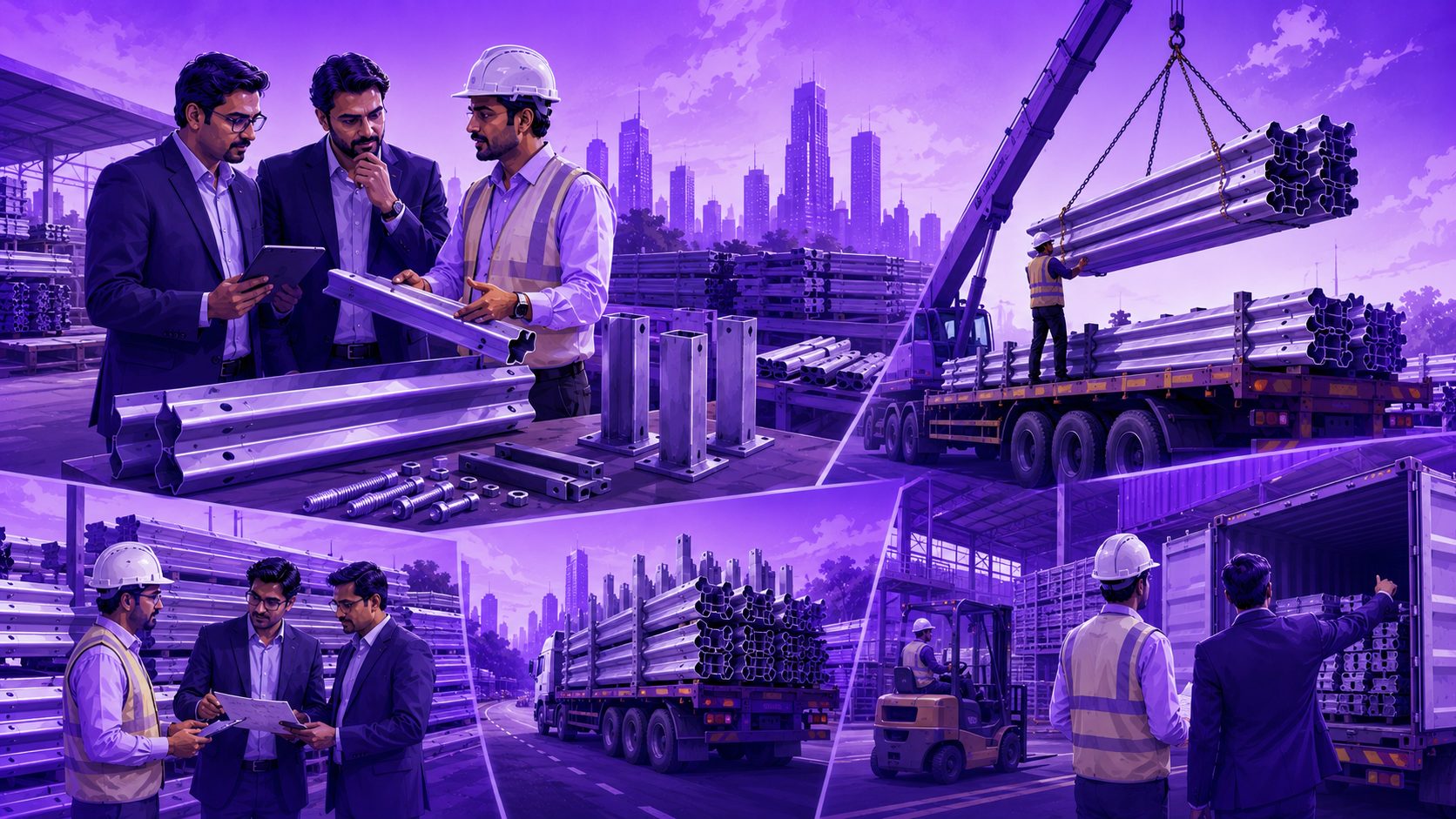
Selecting the right supplier is just as important as choosing the right crash barrier system. A structured evaluation process helps buyers minimise project risks, maintain compliance, and ensure timely execution. When comparing crash barrier manufacturers in India, procurement teams should assess both technical capabilities and project delivery strengths.
Crash barrier supplier evaluation checklist
| Evaluation criteria | What buyers should Verify | Why it matters |
|---|---|---|
| Manufacturing capacity | Monthly production capacity, machinery, fabrication capabilities. | Ensures the supplier can meet project timelines and large-volume requirements. |
| Galvanisation facilities | In-house or outsourced galvanisation, zinc coating capability, quality controls. | Directly impacts corrosion resistance and product lifespan. |
| Previous highway project experience | Experience with NHAI, MoRTH, expressway, and state highway projects. | Demonstrates familiarity with infrastructure project requirements. |
| Quality certifications | ISO certifications, testing reports, quality management systems. | Provides confidence in manufacturing consistency and compliance. |
| Delivery capability | Logistics network, transportation resources, delivery track record. | Reduces risk of project delays and supply disruptions. |
| Tender compliance support | Technical documentation, drawings, test certificates, bid support. | Helps contractors meet tender and approval requirements. |
| Product testing records | Material test reports and inspection records. | Verifies product quality and specification compliance. |
| Installation support | Site supervision, installation guidance, technical assistance. | Supports proper installation and project execution. |
| After-sales support | Resolution process for defects, replacements, and technical queries. | Improves long-term project support and accountability. |
Documentation buyers should request
Before finalising a supplier, procurement teams should review:
- Product specifications and drawings
- Material test certificates
- Galvanisation test reports
- Quality assurance documents
- Inspection records
- Project references and client credentials
- Warranty and support commitments
Factory visits can provide additional confidence when evaluating large contracts. Reviewing production processes, quality assurance practices, and inventory management systems helps buyers identify reliable crash barrier suppliers. For large-scale crash barrier procurement, suppliers that offer strong technical documentation, compliance support, and installation assistance often deliver greater value than those competing solely on price.
Common mistakes buyers make when comparing crash barrier prices
Price is an important consideration, but it should not be the only factor during crash barrier procurement. Focusing solely on the lowest quotation can lead to quality issues, compliance risks, and higher long-term costs. Buyers should evaluate quotations on a like-for-like basis to ensure fair comparison and better project outcomes.
Selecting the lowest bid without technical evaluation: The cheapest quote may not meet project specifications or performance requirements.
Ignoring galvanisation standards: Lower zinc coating levels can reduce corrosion resistance and shorten service life.
Overlooking logistics costs: Transportation expenses can significantly impact the final delivered cost, especially for remote project locations.
Not checking testing reports: Missing or incomplete test certificates may indicate quality or compliance concerns.
Comparing different specifications: Quotations should be evaluated against identical beam thickness, post dimensions, coating requirements, and accessories.
Ignoring lifecycle costs: Lower upfront pricing may result in higher maintenance, repair, or replacement expenses over time.
Overlooking supplier capability: Limited production capacity or weak delivery performance can affect project schedules.
Skipping factory and quality audits: Verifying manufacturing and quality processes helps reduce procurement risks.
Practical example
In many NHAI and EPC projects, a supplier may offer a lower rate by using lighter steel sections or reduced galvanisation thickness. While the initial quotation appears competitive, the product may not fully meet tender requirements or expected service life. Effective crash barrier tender evaluation should therefore consider technical compliance, documentation, supplier capability, and crash barrier quality standards alongside price. This approach supports better highway project purchasing decisions and reduces the risk of costly project delays or corrective work.
How to choose the right crash barrier for your project
Choosing the right crash barrier involves more than comparing prices. Buyers should evaluate project requirements, compliance obligations, installation conditions, and long-term value before making a procurement decision. A structured assessment helps ensure the selected system meets both safety and budget objectives.
| Evaluation factor | Key questions to ask |
|---|---|
| Safety requirements | Does the barrier provide the level of protection required for the project? |
| Tender compliance | Does the system meet all tender specifications and approval requirements? |
| Product quality | Are material specifications, coating requirements, and testing reports available? |
| Supplier capability | Can the supplier meet the required production and delivery timelines? |
| Installation requirements | Are there site-specific challenges that could affect installation costs or timelines? |
| Documentation | Are drawings, certifications, inspection reports, and technical documents available? |
| Durability | Is the barrier designed to withstand the environmental conditions of the project location? |
| Total project cost | Have transportation, installation, maintenance, and replacement costs been considered? |
| After-sales support | Does the supplier offer technical assistance and project support when required? |
| Delivery schedule | Can the supplier maintain consistent supply throughout project execution? |
Future trends impacting crash barrier pricing in India

The crash barrier market India is evolving alongside the country’s expanding transportation and infrastructure network. As project requirements become more stringent and demand continues to grow, several factors are expected to influence pricing trends in the coming years.
Bharatmala and expressway expansion: Ongoing highway infrastructure growth is expected to increase demand for crash barriers across national and state road projects.
Rising steel consumption: Changes in steel prices and raw material costs will continue to influence overall crash barrier pricing.
Higher-performance barrier systems: Growing adoption of advanced containment systems may increase demand for premium barrier solutions.
Digital procurement platforms: Online sourcing and supplier discovery platforms are making procurement more transparent and competitive.
Quality-focused tender specifications: Increasing emphasis on compliance, testing, and durability is driving demand for higher-quality barrier systems.
Airport and industrial infrastructure projects: New investments in airports, logistics parks, ports, and industrial corridors are creating additional crash barrier demand beyond traditional highway applications.
These developments are expected to shape the road safety industry India while influencing procurement strategies, supplier competition, and long-term pricing trends.
Conclusion
India’s growing investment in highways, expressways, bridges, and industrial infrastructure is expected to support steady demand for crash barrier systems in the coming years. For project owners, contractors, and procurement teams, selecting the right solution requires balancing budget expectations with project objectives and long-term performance requirements.
A well-planned procurement approach can help improve project efficiency, support regulatory compliance, and reduce future maintenance challenges. Ultimately, the most effective crash barrier solution is one that delivers reliable safety performance while meeting the operational needs of the project.
Looking to procure steel?
Tata nexarc helps manufacturers, builders and MSMEs source certified steel products, compare prices, and choose the right grade as per IS codes—with complete traceability and procurement confidence.
FAQs
What is the average crash barrier price per meter in India?
What is the price of a W-beam crash barrier?
Which crash barrier is used on NHAI highways?
What factors affect crash barrier pricing?
What is included in crash barrier installation cost?
Are crash barriers mandatory on highways?
What standards should crash barriers comply with?
Which is better: W-beam or Thrie-beam?
How do I choose a crash barrier supplier?
Can crash barrier prices vary by state?
A product manager with a writer's heart, Anirban leverages his 6 years of experience to empower MSMEs in the business and technology sectors. His time at Tata nexarc honed his skills in crafting informative content tailored to MSME needs. Whether wielding words for business or developing innovative products for both Tata Nexarc and MSMEs, his passion for clear communication and a deep understanding of their challenges shine through.