Check Price Now
Table of Contents
Crash barriers play an important role in road and highway safety. They help reduce vehicle impact and improve protection on highways, bridges, industrial sites, and infrastructure projects. Understanding crash barrier specification, dimensions, and weight details helps contractors, procurement teams, and businesses make informed decisions during planning and sourcing. Different projects require different barrier sizes and standards. This guide explains crash barrier specification in India, including standard dimensions, weight charts, and key requirements that support procurement, compliance, and project execution.
What is a crash barrier and why specifications matter
Crash barriers are safety systems designed to reduce the impact of vehicle collisions and improve road protection. They create a physical barrier between vehicles and potential hazards such as medians, bridge edges, slopes, or roadside obstacles. Road authorities, contractors, and infrastructure developers use crash barriers across highways, flyovers, bridges, industrial zones, and transport corridors. Understanding crash barrier specifications helps businesses choose systems that align with project requirements, safety expectations, and installation conditions.
Purpose of crash barriers
Crash barriers help contain vehicles during accidents and reduce the risk of severe collisions. They absorb impact energy and guide vehicles away from dangerous areas. This function improves safety for drivers, passengers, and surrounding road users.
Crash barriers also protect median sections by preventing vehicles from crossing into opposite traffic lanes. Bridge sections and roadside areas rely on barriers to reduce risks near elevated surfaces, curves, and high-speed corridors. Their role has become increasingly important as road infrastructure projects continue to expand across India.
Types commonly used in India
Different projects require different crash barrier systems. The W beam crash barrier remains one of the most widely used options because of its balance between performance and cost. Infrastructure projects also use the Thrie beam crash barrier, especially in locations that require additional strength.
Wire rope barriers offer flexibility and controlled impact absorption. Concrete crash barriers provide high durability and often appear in medians, urban roads, and high-traffic sections. Project requirements, vehicle movement, and site conditions usually influence barrier selection.
Why dimensions and weight matter
Selecting suitable crash barrier dimensions affects safety performance, installation efficiency, and long-term durability. Barrier thickness, beam profile, and weight influence structural stability and impact resistance.
Weight details also support steel procurement planning, freight calculations, and project budgeting. Contractors often review dimensions during material estimation and transport planning. Following highway crash barrier standards India requirements also supports project compliance and quality expectations. Proper specification selection helps businesses improve procurement decisions while reducing installation and operational challenges.
Crash barrier weight chart (W Beam and Thrie Beam standard sizes)
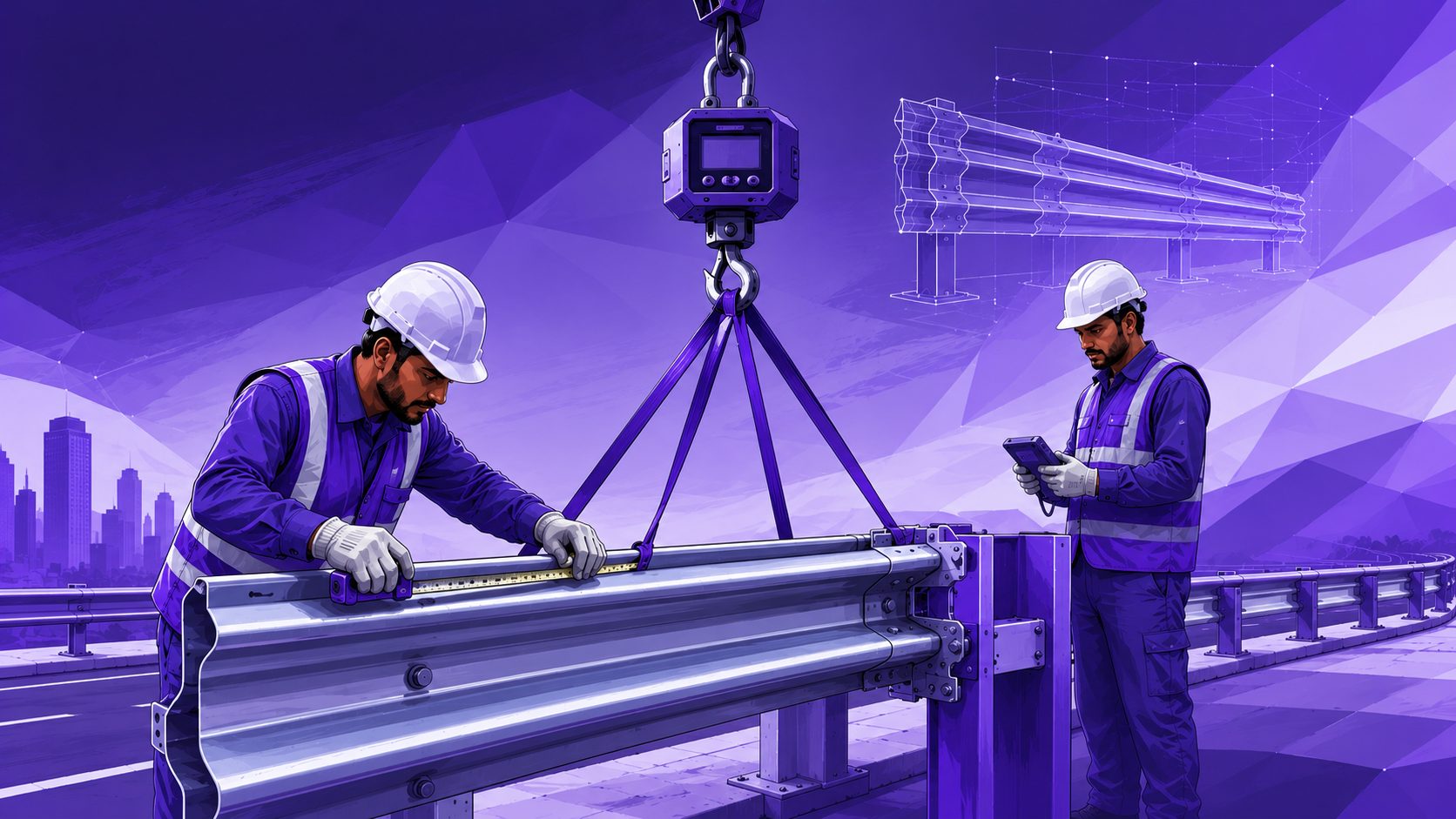
Understanding crash barrier weight helps contractors, procurement teams, and infrastructure businesses plan projects more efficiently. Weight details support material estimation, transport planning, vendor evaluation, and budgeting decisions. Teams working on highways, bridges, and industrial infrastructure often review a crash barrier weight chart before procurement to improve accuracy and reduce planning gaps.
The table below provides indicative values commonly used for planning purposes. Actual values may vary based on manufacturer specifications, galvanisation requirements, and project standards.
| Crash barrier type | Common material | Standard length/ Unit | Approx weight per metre/unit | Common applicationa |
|---|---|---|---|---|
| W eabm crash barrier (2.67 mm) | Galvanised steel | 4.318 m beam | 12–14 kg/m | National highways, state highways. |
| W beam crash barrier (3 mm /3.15 mm) | Galvanised steel | 4.318 m beam | 15–17 kg/m | High-speed road corridors. |
| Thrie beam crash barrier | Galvanised steel | 4.318 m beam | 16–19 kg/m | Bridges, medians, sharp curves. |
| Wire rope crash barrier | Steel cable + steel posts | Project-based | 8–15 kg/m | Median protection, expressways. |
| Concrete crash barrier | Reinforced concrete | Cast in situ/precast | 250–450 kg/m | Flyovers, medians, urban roads. |
| Box beam crash barrier | Galvanised steel | Project-specific | 18–24 kg/m | Roadsides, industrial areas. |
| Pedestrian crash barrier | Mild steel/GI pipe | 2–3 m sections | 18–35 kg per section | Footpaths, traffic control. |
| Bridge crash barrier (steel) | Structural steel | Project-specific | 25–40 kg/m | Bridges and elevated roads. |
| Bridge Crash Barrier (RCC) | Reinforced concrete | Project-specific | 300–500 kg/m | Heavy-duty bridge protection. |
Factors affecting crash barrier weight
Several factors influence crash barrier weight per metre. Steel thickness remains one of the biggest factors because thicker material increases overall beam weight. Beam profile also changes material usage, which directly affects total weight.
Galvanisation coating contributes additional weight while improving corrosion resistance and service life. Post dimensions and support components also influence total system weight. Contractors often consider these variables before procurement to improve material planning and project execution.
Why procurement teams use weight charts
Weight information supports better planning across infrastructure and construction projects. Procurement teams use weight charts to estimate steel requirements and reduce ordering errors. Material estimation becomes easier when teams understand expected quantities before project execution.
Freight planning also depends on barrier weight because transport loads influence logistics costs. Procurement teams frequently compare supplier offerings to assess specification consistency and delivery requirements. Weight references also support tender planning by helping businesses prepare more accurate project estimates.
Reviewing W beam crash barrier weight, galvanised crash barrier weight, and specification details early in the procurement process helps businesses improve cost planning and operational efficiency.
Standard crash barrier dimensions used in India
Standard dimensions influence crash barrier performance, installation quality, and procurement planning. Contractors and infrastructure teams often review metal beam crash barrier dimensions before material selection to ensure compatibility with project requirements. Beam size, thickness, and post spacing affect structural stability and long-term performance. Understanding these specifications also helps businesses compare products and improve sourcing decisions.
W beam crash barrier dimensions
W beam systems remain one of the most commonly used highway safety barriers in India. Their corrugated steel profile helps absorb impact forces while improving vehicle redirection during collisions. Procurement teams often review dimensions and crash barrier thickness before project execution.
Typical W beam dimensions used in India are outlined below.
| Specification | Typical dimension |
|---|---|
| Beam width | 312 mm |
| Corrugation depth (beam height) | 83–85 mm |
| Beam thickness range | 2.67 mm, 3 mm, 3.15 mm |
| Standard beam length | 4.318 m |
| Effective installation height | Typically 700–850 mm (project dependent) |
These beam crash barrier sizes commonly support highways, median protection systems, flyovers, and infrastructure corridors.
Thrie beam crash barrier dimensions
Thrie beam systems use an additional corrugation compared to W beam barriers. The three-wave profile improves strength and vehicle containment capability. These systems often support bridges, sharp curves, elevated sections, and high-risk highway zones.
Typical dimensions include:
| Specification | Typical dimension |
|---|---|
| Beam width | 505–510 mm |
| Corrugation depth | 83–85 mm |
| Beam thickness range | 3 mm – 3.15 mm |
| Standard beam length | 4.318 m |
Project requirements and approved design standards may influence final specifications.
Post dimensions and spacing
Support posts strengthen barrier systems and improve impact resistance. C posts and Sigma posts remain common choices across Indian highway projects.
Typical specifications include:
C post
- Approximate size: 150 mm × 75 mm
- Thickness: 5 mm
Sigma post
- Approximate width: 150 mm
- Thickness range: 4–5 mm
Typical spacing standards
- Standard spacing: 2 metres centre-to-centre
- Reduced spacing may apply in bridges, curves, and high-risk sections.
Following standard highway guardrail dimensions India requirements helps improve installation quality, specification compliance, and procurement planning.
Standard crash barrier specifications in India

Crash barrier systems used in highways and infrastructure projects must meet technical and safety requirements before installation. Project consultants, contractors, and procurement teams often review MORTH crash barrier specifications to ensure compliance with approved standards. Standardisation improves safety performance, installation quality, and long-term durability across road infrastructure projects.
MORTH specifications for crash barriers
The Ministry of Road Transport and Highways (MoRTH) defines key requirements for metal beam crash barriers used across Indian road projects. Specifications generally align with MoRTH Section 800 – Traffic Signs, Markings and Road Appurtenances, along with approved highway safety provisions followed across infrastructure projects.
Crash barriers installed on highways must comply with approved dimensions, material requirements, coating standards, and installation practices. Procurement teams often verify compliance documents before supplier selection to reduce quality and execution risks.
Indian highway projects may also refer to relevant IRC guidelines, particularly where project consultants specify additional performance or road safety requirements. Following crash barrier standard specifications India expectations helps improve project consistency and approval readiness.
Material requirements
Material quality directly affects barrier strength and operational life. Steel crash barriers commonly use structural steel grades approved under project specifications and highway authority requirements.
Galvanisation protects crash barriers against corrosion exposure caused by weather, moisture, and environmental conditions. Highway projects commonly specify zinc coating requirements to improve service life and reduce maintenance requirements.
Procurement teams also review coating consistency, material thickness, and manufacturing quality before finalising suppliers. Proper material selection supports compliance with road safety barrier specifications while improving long-term durability.
Performance requirements
Crash barriers must perform under impact conditions while maintaining structural stability. Barrier systems should absorb collision forces and redirect vehicles effectively without excessive structural failure.
Structural integrity remains important across highways, bridges, medians, and elevated corridors. Installation quality also influences barrier performance because incorrect positioning or spacing can affect safety outcomes.
Project authorities often review installation tolerance limits, alignment requirements, and system performance expectations during execution. Following approved MORTH crash barrier specifications supports procurement quality, compliance requirements, and safer infrastructure delivery.
How to calculate crash barrier weight for procurement and project planning
Understanding crash barrier specification details helps businesses estimate material requirements more accurately. Weight calculations support procurement planning, transport estimation, budgeting, and supplier evaluation. Contractors, infrastructure companies, and procurement teams often calculate barrier weight before placing orders to reduce planning gaps and avoid material shortages.
Basic weight calculation formula
The basic steel crash barrier weight calculation depends on steel dimensions and material density.
Use this formula:
Crash barrier weight = Volume × steel density
Steel density commonly used for estimation:
Steel density = 7,850 kg/m³
To calculate volume, procurement teams usually consider:
- Beam length
- Beam width
- Beam thickness
Example inputs:
Beam length = 4.318 m
Beam width = 312 mm
Thickness = 3 mm
Manufacturers may also provide ready weight values for faster procurement planning. Buyers often compare these values while reviewing crash barrier specification requirements.
Inputs required
Before calculating weight, collect the following details:
Beam dimensions
- Beam length
- Beam width
- Beam profile type
Thickness
- 2.67 mm
- 3 mm
- 3.15 mm
Steel density
Standard steel density for calculation
Quantity requirement
- Total project length
- Number of beams required
- Post quantity requirement
Accurate inputs improve metal beam crash barrier estimation and reduce procurement errors.
Procurement planning tips for MSMEs and contractors
Weight estimation becomes more useful when combined with procurement planning.
Keep these points in mind:
Plan buffer quantities: Keep additional material for handling losses and project changes.
Verify suppliers: Review compliance documents and manufacturing capability before selecting a crash barrier supplier India.
Estimate freight early: Transport costs often depend on material weight and shipment size.
Consider site wastage: Small losses during installation can affect final requirements.
Proper planning improves crash barrier procurement decisions and helps businesses align purchases with project requirements. Understanding crash barrier specification requirements also supports cost control and smoother project execution.
Factors to check before purchasing crash barriers in India

Selecting the right supplier matters as much as selecting the right product. Buyers often compare multiple options before finalising a purchase because crash barrier specification requirements can vary across projects. Contractors and procurement teams should review quality, compliance, and delivery capability before placing an order. A structured evaluation process helps reduce procurement risks and improves project execution.
Compliance with MoRTH standards
Verify whether the product aligns with applicable MoRTH requirements and approved project specifications. Compliance supports safety performance and improves acceptance across infrastructure projects. Buyers should also review relevant metal beam crash barrier standards before procurement.
Galvanisation quality
Galvanisation protects steel against corrosion and environmental exposure. Check coating quality and specification details because coating performance directly affects product life and maintenance requirements.
Material thickness consistency
Review thickness specifications carefully. Material thickness affects durability, impact resistance, and overall barrier performance. Thickness consistency also supports compliance with approved crash barrier specification requirements.
Supplier capability
Evaluate manufacturing capability, supply capacity, and project experience before selecting a crash barrier supplier India. Procurement teams often review previous infrastructure supply records to assess reliability.
Manufacturing certification
Request quality certifications and compliance documentation where applicable. Verified manufacturing processes improve procurement confidence and support project approval requirements.
Delivery timelines
Delayed material supply can affect project execution. Confirm production schedules and delivery commitments before order finalisation.
Project compatibility
Every project has different technical and operational requirements. Confirm dimensions, installation requirements, and performance expectations before procurement.
Following a structured crash barrier procurement guide helps businesses improve sourcing decisions while aligning purchases with project requirements and crash barrier specification needs.
Conclusion
Selecting suitable crash barrier systems requires balancing technical requirements with project goals. Dimensions, weight considerations, and specification alignment all influence procurement outcomes and long-term performance. Businesses should also evaluate compliance requirements, supplier capability, and project suitability before finalising purchases. Reviewing a reliable crash barrier weight chart and specifications in India can support better planning decisions and help contractors, infrastructure teams, and buyers improve project readiness and procurement efficiency.
Looking to procure steel?
Tata nexarc helps manufacturers, builders and MSMEs source certified steel products, compare prices, and choose the right grade as per IS codes—with complete traceability and procurement confidence.
FAQs
What is the standard crash barrier thickness in India?
What is the weight of a W beam crash barrier?
What are MoRTH specifications for crash barriers?
What is the standard length of a crash barrier beam?
How is crash barrier weight calculated?
What steel grade is used in crash barriers?
What is the difference between W beam and Thrie beam barriers?
Why does galvanisation affect crash barrier weight?
What is the standard spacing between crash barrier posts?
Which industries commonly procure crash barriers?
A product manager with a writer's heart, Anirban leverages his 6 years of experience to empower MSMEs in the business and technology sectors. His time at Tata nexarc honed his skills in crafting informative content tailored to MSME needs. Whether wielding words for business or developing innovative products for both Tata Nexarc and MSMEs, his passion for clear communication and a deep understanding of their challenges shine through.