Check Price Now
Table of Contents
- Bitumen vs Tar: Quick Comparison
- What is Bitumen?
- What is Tar?
- Difference Between Bitumen and Tar
- Bitumen vs Tar for Road Construction
- Why is Bitumen Preferred for Modern Highway and Infrastructure Projects?
- Bitumen and Tar Properties: How They Affect Material Selection
- Bitumen Grades and Modified Binders Used in Road Projects
- How to Choose Between Bituminous Materials
- Bitumen vs Tar: Which One Should You Use?
- Conclusion
- FAQs
Bitumen and tar often get used interchangeably, but bitumen vs tar involves important differences in source, composition, and application. Both are dark, viscous materials that provide binding and waterproofing properties. However, bitumen comes mainly from petroleum refining, while tar forms through the destructive distillation of coal or other organic materials. Modern road construction primarily uses bitumen and engineered bituminous binders. Tar now has limited use because of its composition and handling concerns.
For contractors, engineers and procurement teams, the distinction affects material selection, specifications, and project compliance. The right material depends on the application, specification requirements, performance needs, and project compliance requirements.
Bitumen vs tar: Quick comparison
| Factor | Bitumen | Tar |
| Source | Petroleum refining or natural deposits | Destructive distillation of coal, wood or other organic materials. |
| Common modern road use | Widely used | Limited |
| Temperature sensitivity | Changes with temperature | Different thermal behaviour |
| Odour | Petroleum-based odour | Strong characteristic odour |
| Water resistance | High | High, depending on type |
| Modern infrastructure relevance | High | Limited and application-specific |
| Common applications | Roads, asphalt, waterproofing | Industrial and specialised applications |
The following sections examine bitumen vs tar in greater detail, including their composition, properties, and applications. They also explain the differences that matter when selecting materials and checking procurement or project requirements.
What is bitumen?
Binding material: Bitumen is a viscous, black or dark-coloured material that acts as a strong binder in construction applications.
Source: It is commonly produced during crude oil refining, although natural bitumen deposits also exist.
Composition: It mainly contains hydrocarbons, which give the material its binding, adhesive and waterproofing characteristics.
Road construction: Bitumen for road construction binds aggregates together to form asphalt mixes used in flexible pavements and highway surfacing.
Airport pavements: Engineers also use suitable bituminous binder systems in airport pavements that require reliable surface performance.
Waterproofing: Its water-resistant properties also support waterproofing systems and other industrial and infrastructure applications.
Material selection: Project teams must select the right binder based on traffic load, climate, pavement design, mix requirements, and project specifications.
What is tar?
Production: Tar forms through the destructive distillation or thermal processing of organic materials.
Coal tar: Coal tar is one of the best-known forms and has historically seen wide industrial use.
Composition: Different types of tar have different compositions and properties, depending on the source material and production process.
Traditional applications: Tar has historically been used in road surfacing, waterproofing, protective coatings, and other industrial applications.
Common misconception: Tar is not simply another name for bitumen. Its chemical composition differs significantly from petroleum-derived bitumen.
Modern road use: Modern road construction specifications and practices generally rely more heavily on bitumen-based binders.
Current relevance: Tar still has specialised and industrial applications, but its role in modern infrastructure remains more limited and application-specific.
Difference between bitumen and tar
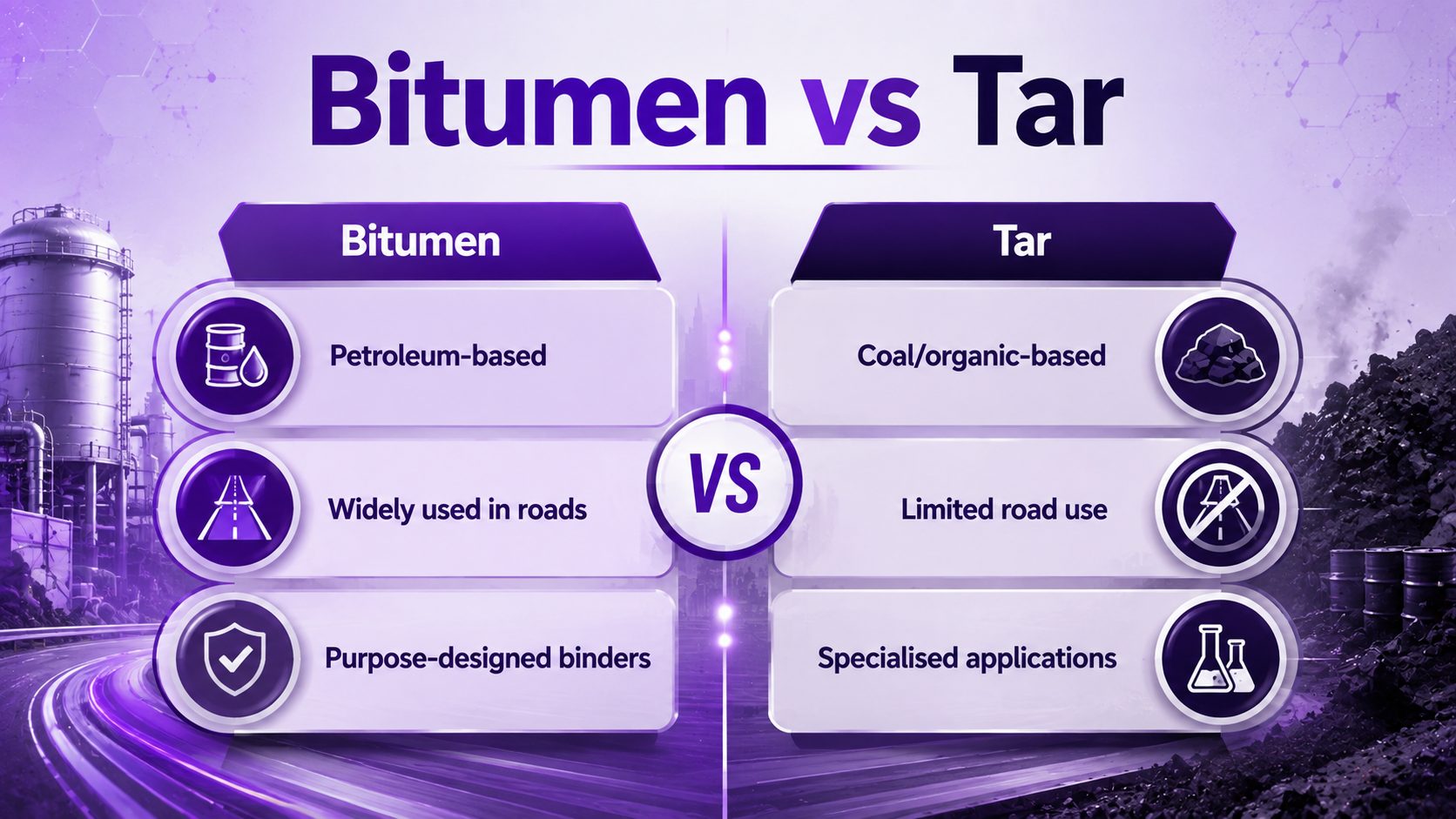
The main difference between bitumen and tar lies in their source, composition, properties, and suitability for specific applications. Although both materials are dark and can provide binding and waterproofing properties, they are not interchangeable.
Source and production
Bitumen: Bitumen generally comes from crude petroleum refining. Natural deposits can also provide bitumen.
Tar: Tar forms through the thermal decomposition or destructive distillation of organic materials. Coal tar is one of the most widely known examples.
| Material | Main source | Production |
| Bitumen | Crude petroleum or natural deposits | Mainly obtained during petroleum refining |
| Tar | Coal, wood or other organic materials. | Produced through thermal processing or destructive distillation |
Chemical composition
Bitumen: It mainly contains complex hydrocarbons that give it its binding and adhesive properties.
Tar: Its composition varies according to the source material and production process.
This difference affects how each material behaves during handling, application, and service. Procurement and tender teams should therefore check the specified binder rather than treating bitumen and tar as equivalent materials.
Physical properties
The two materials also differ in several practical properties:
Viscosity: Both can vary in consistency depending on temperature and composition.
Adhesion: Each material interacts differently with aggregates and other surfaces.
Temperature behaviour: Their response to heating and cooling differs because of their composition.
Water resistance: Both can provide water resistance, depending on the material and application.
Handling: Storage, heating, and application requirements can vary.
Application suitability
Material selection: The intended application and project specification should guide the choice.
Road construction: Modern road projects primarily specify bitumen or engineered bituminous binders for asphalt and pavement applications.
Procurement relevance: Contractors should check technical specifications, performance requirements, and compliance conditions before selecting a binder.
Bitumen vs tar for road construction
In bitumen vs tar for road construction, bitumen dominates modern projects because it works as the primary binding material in asphalt and bituminous mixes. Engineers and contractors can select suitable binders based on pavement design, traffic conditions, climate and mix requirements. Tar has a more limited role in mainstream road construction and is generally considered only for specific applications or where project requirements allow its use.
| Factor | Bitumen | Tar |
| Role in road construction | Widely used as a binder in asphalt and bituminous mixes | Limited use in modern mainstream road projects |
| Binder selection | Available in different grades and modified forms for specific performance needs | Options depend on the source and composition |
| Traffic suitability | Contractors can select suitable binders based on traffic load and pavement design | Less commonly selected for modern pavement systems |
| Climate considerations | Binder selection can account for temperature and climatic conditions | Thermal behaviour depends on the type and composition |
| Material consistency | Supports controlled specifications for road and asphalt applications | Properties can vary based on the source material |
| Handling considerations | Established handling and application practices for bituminous road construction | Requires consideration of handling and composition-related concerns |
| Health and environmental considerations | Selection depends on applicable specifications and handling requirements | Requires additional consideration because of its composition and associated handling concerns |
| Modern project relevance | High across highways, roads and other infrastructure projects. | Limited and application-specific |
| Availability | Widely available as a purpose-designed road construction material | Less commonly used for mainstream road applications |
| Specification compliance | Commonly specified for asphalt and pavement works | Use depends on project specifications and applicable requirements |
Why is bitumen used in roads? It provides the binding properties needed to hold aggregates together in asphalt and other road construction materials. The availability of purpose-designed binders also allows contractors and asphalt plant operators to select materials that match project specifications and mix design requirements.
Why is bitumen preferred for modern highway and infrastructure projects?

Strong binding performance: Bitumen provides strong binding properties that help hold aggregates together in asphalt and pavement layers. This makes it suitable for roads, highways, and other infrastructure applications.
Compatibility with asphalt mixes: Bitumen works effectively with aggregates used in asphalt production. Contractors can select suitable binders based on the required mix design and pavement application.
Water resistance: Its water-resistant properties help protect pavement layers and support waterproofing applications. Performance still depends on proper material selection and construction quality.
Flexible binder selection: Bitumen is available in multiple grades and modified forms. Engineers can select binders based on traffic loads, climatic conditions, and pavement performance requirements.
Established testing and specifications: Bituminous materials follow established testing methods and specification frameworks. This gives project teams a clearer basis for quality control and material acceptance.
Procurement and project impact
For highway contractors and EPC companies, binder selection can directly affect:
Mix design: Matching the binder with aggregate and pavement requirements.
Plant operations: Supporting efficient production and material handling.
Construction schedules: Reducing delays caused by unsuitable or inconsistent materials.
Material costs: Comparing suitable options against project and performance requirements.
Quality control: Checking materials against specified properties and standards.
Tender compliance: Meeting technical and contractual requirements.
Long-term performance: Supporting the required pavement life and service conditions.
Bitumen and tar properties: How they affect material selection
Adhesion: Check how effectively the material binds with aggregates or other surfaces, as this can affect overall application performance.
Temperature behaviour: Select pavement binders that can perform under the expected climatic and temperature conditions.
Viscosity and workability: Consider how the material behaves during mixing, pumping, heating and application, especially in asphalt plant operations.
Water resistance: Assess resistance to water ingress when selecting materials for pavements, waterproofing, and protective applications.
Durability: Evaluate long-term performance alongside the initial material cost, as a lower purchase price may not always deliver the best lifecycle value.
Material testing: Quality teams should verify relevant material properties against project specifications before use.
Selection requirements: Site engineers, asphalt plant operators and procurement managers should assess application needs, operating conditions and compliance requirements before selecting a suitable material.
Bitumen grades and modified binders used in road projects
Bitumen is not one uniform product. Road projects can use different types of bituminous binders based on traffic conditions, climate, pavement design, and required performance. The project specification ultimately determines the suitable binder.
| Binder type | General application consideration |
| VG bitumen | Conventional road and asphalt applications |
| Polymer Modified Bitumen (PMB) | Projects requiring enhanced performance characteristics |
| Crumb Rubber Modified Bitumen (CRMB) | Specific modified binder applications based on project requirements |
VG bitumen
VG bitumen is commonly used in conventional road and asphalt applications. Engineers select suitable viscosity grades based on pavement and project requirements.
Polymer Modified Bitumen (PMB)
PMB contains polymer modifiers that can provide enhanced performance characteristics. Projects may specify it for demanding traffic, climatic or pavement conditions.
Crumb Rubber Modified Bitumen (CRMB)
CRMB uses crumb rubber as a modifier and serves specific road applications where the required performance and project specifications support its use.
Selection factors: Contractors and procurement teams should evaluate traffic intensity, climate, pavement design, mix requirements, and performance expectations before selecting a binder.
How contractors and procurement teams should choose between bituminous materials
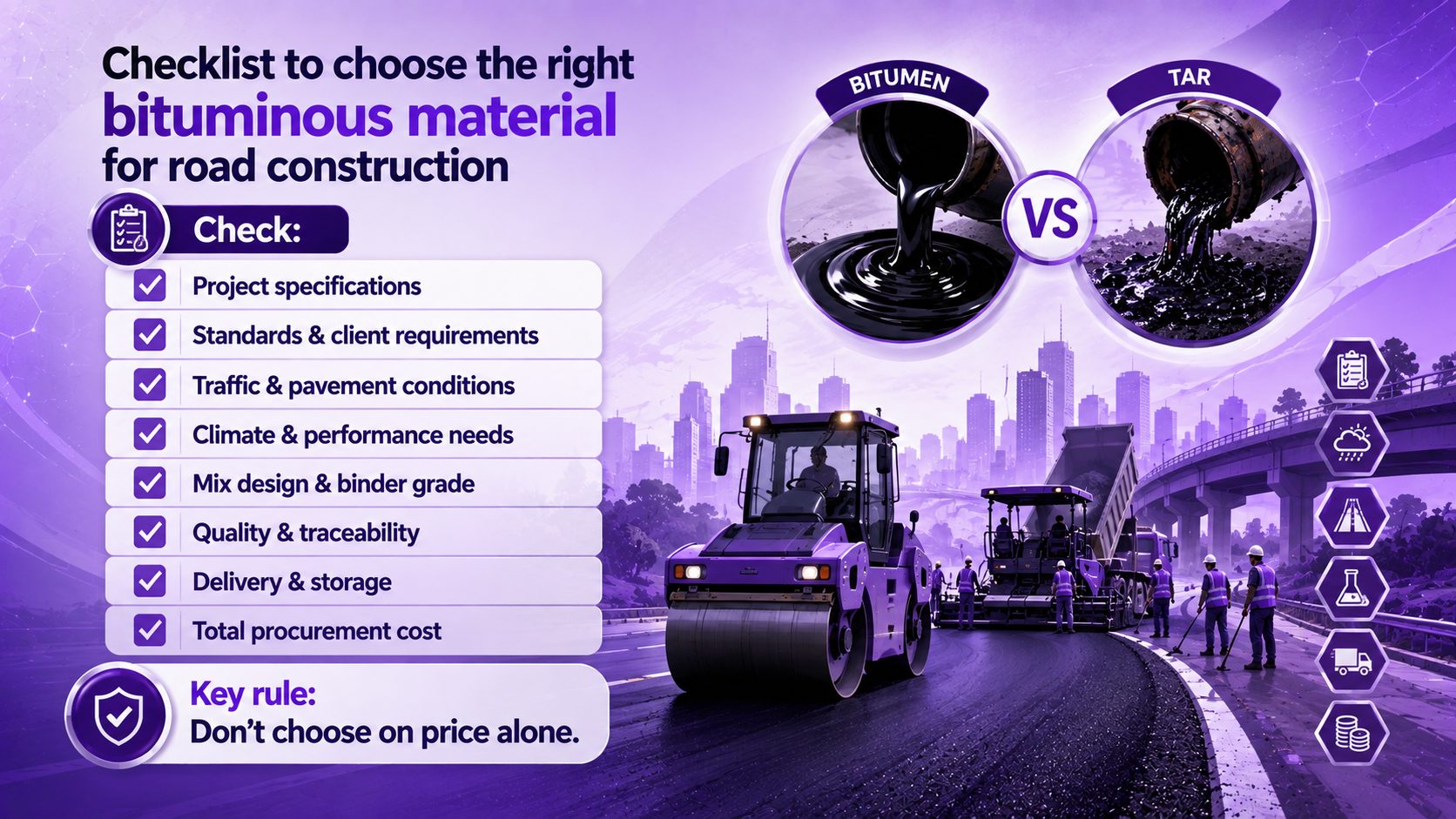
Selecting a bituminous material requires more than comparing prices. Contractors, procurement teams, and asphalt plant owners should check whether the material matches the technical and operational needs of the project.
Project specifications: Start with the binder type, properties, and acceptance criteria defined in the project documents.
Government and client requirements: Check all applicable standards, tender conditions, and client specifications before finalising the material.
Pavement and traffic conditions: Consider pavement design, expected traffic loading, and site conditions when selecting the binder.
Climate and performance needs: Match the material to local climatic conditions and the required pavement performance.
Mix design and binder requirements: Confirm that the selected binder works with the approved asphalt mix design and required grade.
Quality and traceability: Review testing requirements, batch traceability and supplier consistency to maintain material control.
Delivery and storage: Check whether the supplier can support the required delivery schedule, storage conditions, and handling arrangements.
Total procurement cost: Evaluate transport, storage, testing and potential quality risks alongside the quoted material price.
Key procurement rule: The lowest quoted cost should not be the only selection criterion. A binder that fails to meet the required specification can create quality, performance, and project compliance risks.
Bitumen vs tar: Which one should you use?
The right choice depends on the application, project specifications, and performance requirements.
| Application or requirement | Recommended material |
| Modern road or highway construction | Bitumen |
| Project specifies a bituminous binder | Bitumen |
| Asphalt mix compatibility is important | Bitumen |
| A specific grade or modified binder is required | Bitumen |
| Conventional pavement and infrastructure applications | Bitumen |
| Application specifically requires a tar-based material | Tar, where appropriate. |
| Project specification permits or requires tar | Tar, subject to requirements. |
| Specialised or industrial application suited to tar | Tar, where appropriate. |
Key takeaway: Bitumen and tar should not be treated as interchangeable materials. For modern road and highway projects, bitumen is generally the relevant choice, while tar remains suitable for specific industrial or specialised applications where project requirements permit its use.
Conclusion
For modern road, highway and infrastructure projects, bitumen is usually the more practical choice because contractors can match the binder to specific mix, traffic and performance requirements. This makes material selection more controlled during procurement, production, and quality checks. Tar serves more specialised applications and requires project-specific consideration.
Contractors should therefore avoid using the terms interchangeably and focus on the specified material, required performance, quality documentation, supplier consistency, and delivery capability before placing an order.
Looking to procure steel?
Tata nexarc helps manufacturers, builders and MSMEs source certified steel products, compare prices, and choose the right grade as per IS codes—with complete traceability and procurement confidence.
FAQs
What is the main difference between bitumen and tar?
Is bitumen the same as tar?
Why is bitumen used in road construction?
Is tar still used for road construction?
Which is better for roads: bitumen or tar?
What are the main properties of bitumen?
Can bitumen be used for waterproofing?
What is the difference between bitumen and coal tar?
What factors affect bitumen selection for a road project?
Should procurement teams choose bitumen based only on price?
A product manager with a writer's heart, Anirban leverages his 6 years of experience to empower MSMEs in the business and technology sectors. His time at Tata nexarc honed his skills in crafting informative content tailored to MSME needs. Whether wielding words for business or developing innovative products for both Tata Nexarc and MSMEs, his passion for clear communication and a deep understanding of their challenges shine through.