Check Price Now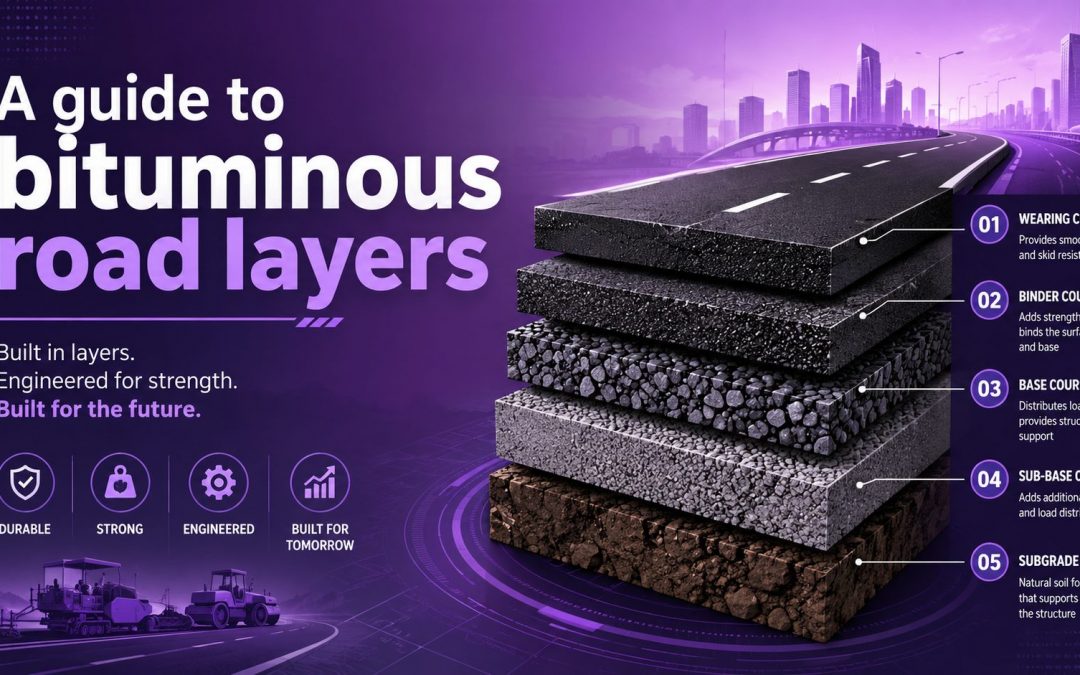
Table of Contents
- What are Bituminous Road Layers?
- Why Multiple Layers are Used in Bituminous Roads
- Components of a Typical Bituminous Pavement Structure
- Wearing Course – The Top Bituminous Layer
- Binder Course – The Structural Link Between Surface and Base
- Base Course and Sub-Base Layers in Road Construction
- Types of Bituminous Mixes Used Across Different Road Layers
- Construction Process of Bituminous Road Layers
- Factors Influencing Layer Thickness in Bituminous Roads
- Common Defects Linked to Poor Layer Construction
- Emerging Trends in Bituminous Pavement Construction in India
- Key Considerations for Contractors and Procurement Teams
- Conclusion
- FAQs
Bituminous road layers form the foundation of modern road construction in India. Together, these layers help roads withstand traffic loads, improve durability, and deliver long-term performance across national highways, expressways, airport pavements, industrial corridors, and urban road networks. A well-designed bituminous pavement structure distributes vehicle loads efficiently and protects the road from premature damage.
As investments under NHAI, MoRTH, Bharatmala, state highway projects, and municipal road development continue to grow, understanding bituminous road layers has become increasingly important for contractors, engineers, consultants, and procurement teams involved in highway pavement design and road construction in India.
What are bituminous road layers?
Bituminous road layers are the individual layers that make up a flexible pavement system. Together, these layers create a strong and durable road structure that can support traffic loads while providing a safe and comfortable riding surface.
Unlike rigid pavements, which are constructed using concrete, flexible pavements use bitumen and aggregates. These flexible pavement layers distribute traffic loads gradually through the pavement structure and into the underlying soil. This helps reduce stress concentrations and improves the overall life of the road.
The purpose of layered pavement construction is to ensure that each layer performs a specific function. The upper layers provide smoothness, skid resistance, and protection from weather. The lower layers deliver strength, stability, drainage, and load-bearing support.
The performance of a road is closely linked to the quality and design of its layers. A well-designed asphalt pavement structure can withstand heavy traffic, minimise maintenance requirements, and extend pavement life. This is particularly important for highways, expressways, industrial roads, airport pavements, and urban road networks.

A typical pavement cross section used in Indian roads consists of the following layers
| Layer | Position | Primary function |
|---|---|---|
| Wearing course | Top layer | Provides riding quality, skid resistance, and surface protection. |
| Binder course | Below the surface | Distributes traffic loads and improves structural strength. |
| Base course | Structural layer | Provides strength and load-bearing capacity. |
| Sub-base | Foundation support layer | Improves drainage and stability. |
| Subgrade | Natural soil layer | Acts as the load-bearing platform. |
Each of these road layers plays a vital role in pavement performance. If one layer fails, the overall durability and service life of the road can be affected. This is why proper design, material selection, and construction quality remain critical in modern road construction projects.
Why multiple layers are used in bituminous roads
Bituminous roads use a layered structure because no single material can effectively perform all pavement functions. Different layers work together to improve strength, durability, drainage, and long-term performance under varying traffic and environmental conditions.
Efficient load distribution
One of the main purposes of multiple layers is load distribution in pavement. The upper layers receive traffic loads and gradually transfer them to the lower layers. This prevents excessive stress from reaching the foundation soil.
Reduced stress on lower layers
As vehicle loads move through the pavement structure, the stress reduces from top to bottom. This allows the sub-base and subgrade to carry loads without experiencing excessive deformation or failure.
Improved pavement durability
Each layer contributes to pavement durability in a different way. The surface layer resists wear, while the lower layers provide structural support. Together, they help extend the service life of the road.
Better water resistance and drainage
Water is one of the biggest causes of pavement damage. Multiple layers help prevent water penetration and improve drainage, reducing the risk of weakening the pavement structure.
Prevention of rutting
Heavy traffic can create wheel-path depressions known as rutting. A properly designed layered pavement distributes loads more effectively, helping maintain surface shape and ride quality.
Greater resistance to cracking
Traffic loads and temperature variations can cause cracks over time. Layered construction helps absorb stresses and reduces the likelihood of structural cracking.
Cost-effective road construction
Building several specialised layers is often more economical than constructing a single thick layer. This approach balances performance and cost while meeting highway engineering and road design principles.
Designed for modern traffic demands
The need for multiple layers has increased with the growth of heavy commercial vehicles, freight corridors, industrial roads, airport pavements, and high-speed highways in India. As traffic volumes continue to rise, layered pavement structures remain essential for delivering reliable and long-lasting road infrastructure.
Components of a typical bituminous pavement structure
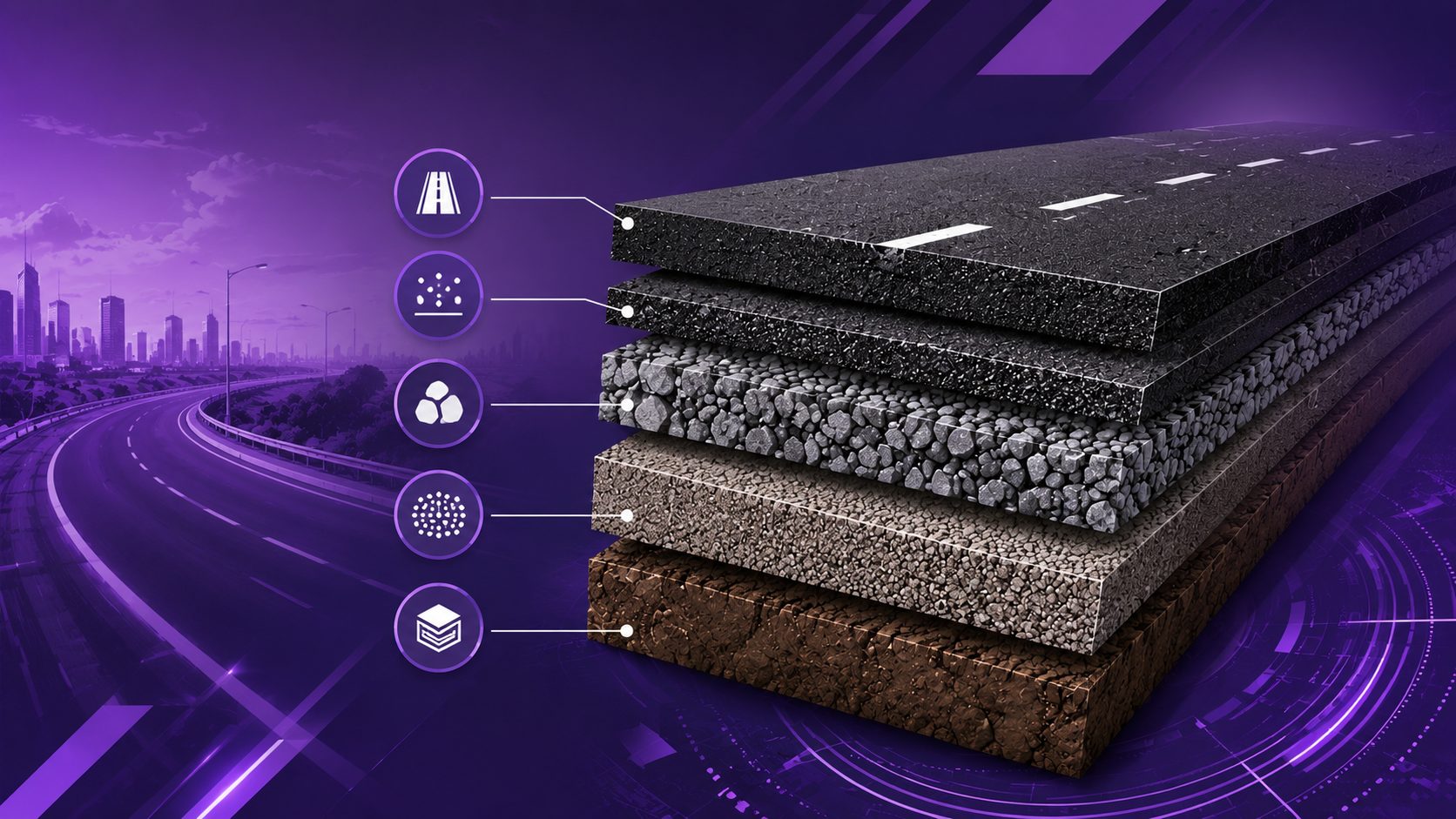
A typical bituminous pavement structure consists of several layers placed one above the other. Each layer performs a specific function and contributes to the overall strength, stability, drainage, and durability of the road. Together, these road foundation layers create a pavement capable of handling traffic loads while maintaining long-term performance.
| Layer | Key components | Primary function | Important considerations |
|---|---|---|---|
| Subgrade | Compacted natural soil or improved soil. | Acts as the foundation for the entire pavement structure. | Must be properly graded and compacted. CBR values influence pavement thickness design. Weak subgrades may require stabilisation. |
| Granular Sub-Base (GSB) | Well-graded granular materials. | Provides drainage, moisture protection, and support to upper layers. | Improves stability and prevents water accumulation. Helps reduce the impact of frost and seasonal moisture variations. |
| Base course | WMM (Wet Mix Macadam), WBM (Water Bound Macadam), CTB (Cement Treated Base) where required. | Distributes traffic loads and provides structural strength. | WMM road construction is widely preferred due to better gradation, faster construction, and improved performance. CTB may be used in high-traffic roads and expressways. |
| Binder course | Dense Bituminous Macadam (DBM), Bituminous Macadam (BM). | Transfers loads from the surface layer and strengthens the pavement structure. | Forms the intermediate bituminous layer between the base and wearing course. Thickness depends on traffic requirements. |
| Wearing course | Bituminous Concrete (BC), Stone Matrix Asphalt (SMA), modified bituminous mixes. | Provides riding quality, skid resistance, and protection against weather and traffic wear. | Directly exposed to traffic and environmental conditions. Surface quality and mix design significantly affect pavement performance. |
Key standards governing pavement construction
| Standard/guideline | Purpose |
|---|---|
| MoRTH specifications | Defines material requirements, layer thicknesses, construction methods, and quality control procedures for road projects. |
| IRC guidelines | Provides recommendations for pavement design, traffic loading, drainage, and construction practices. |
| Quality control requirements | Includes field density tests, aggregate gradation checks, bitumen content testing, compaction verification, and layer thickness measurements. |
The performance of a bituminous pavement structure depends on the quality of pavement construction materials used at every stage. Proper execution of the GSB layer, WMM road construction, bituminous layers, and quality control measures ensures a stronger, longer-lasting road with lower maintenance requirements.
Wearing course – The top bituminous layer
The wearing course is the topmost layer of a bituminous pavement structure and the only layer directly exposed to traffic and weather conditions. It plays a critical role in road safety, riding quality, and pavement durability. Since this asphalt surface layer receives the highest level of wear and tear, its design, material quality, and construction standards significantly influence long-term road performance.
Key functions of the wearing course
| Function | Importance |
|---|---|
| Direct traffic contact | Withstands continuous vehicle movement, braking, and tyre friction. |
| Surface smoothness | Provides an even riding surface and improves driving experience. |
| Skid resistance | Enhances vehicle grip and road safety, especially during wet conditions. |
| Water protection | Reduces moisture penetration into lower pavement layers. |
| Rider comfort | Minimises vibrations and improves travel quality. |
Common materials used in wearing courses
| Material | Typical application | Key benefit |
|---|---|---|
| Bituminous Concrete (BC) | National highways, state highways, urban roads. | Smooth finish and good durability. |
| Stone Matrix Asphalt (SMA) | Expressways and high-traffic corridors. | Excellent rut resistance and longer service life. |
| Modified Bitumen Mixes (PMB/CRMB) | Heavy-duty roads and challenging climates. | Improved flexibility, durability, and crack resistance. |
Common surface defects
Even a well-designed wearing course can develop defects if construction quality or materials are compromised.
Ravelling – Loss of aggregates from the pavement surface.
Rutting – Wheel-path depressions caused by repeated traffic loading.
Surface cracking – Cracks resulting from ageing, fatigue, or moisture damage.
Surface wear – Gradual deterioration due to traffic and environmental exposure.
Procurement and material selection considerations
For contractors, project engineers, and procurement teams, the wearing course is often the most scrutinised layer during project execution. Material selection can directly impact lifecycle costs and maintenance requirements.
Key considerations include:
- Selection of high-quality aggregates with good polishing resistance
- Choosing the appropriate bitumen grade based on traffic and climate conditions
- Compliance with project specifications and performance requirements
- Use of approved mix designs for highway surfacing applications
- Evaluation of long-term durability rather than upfront material cost alone
A properly designed and constructed wearing course not only improves road safety and ride quality but also helps maximise the service life of the entire pavement structure.
Binder course – The structural link between surface and base
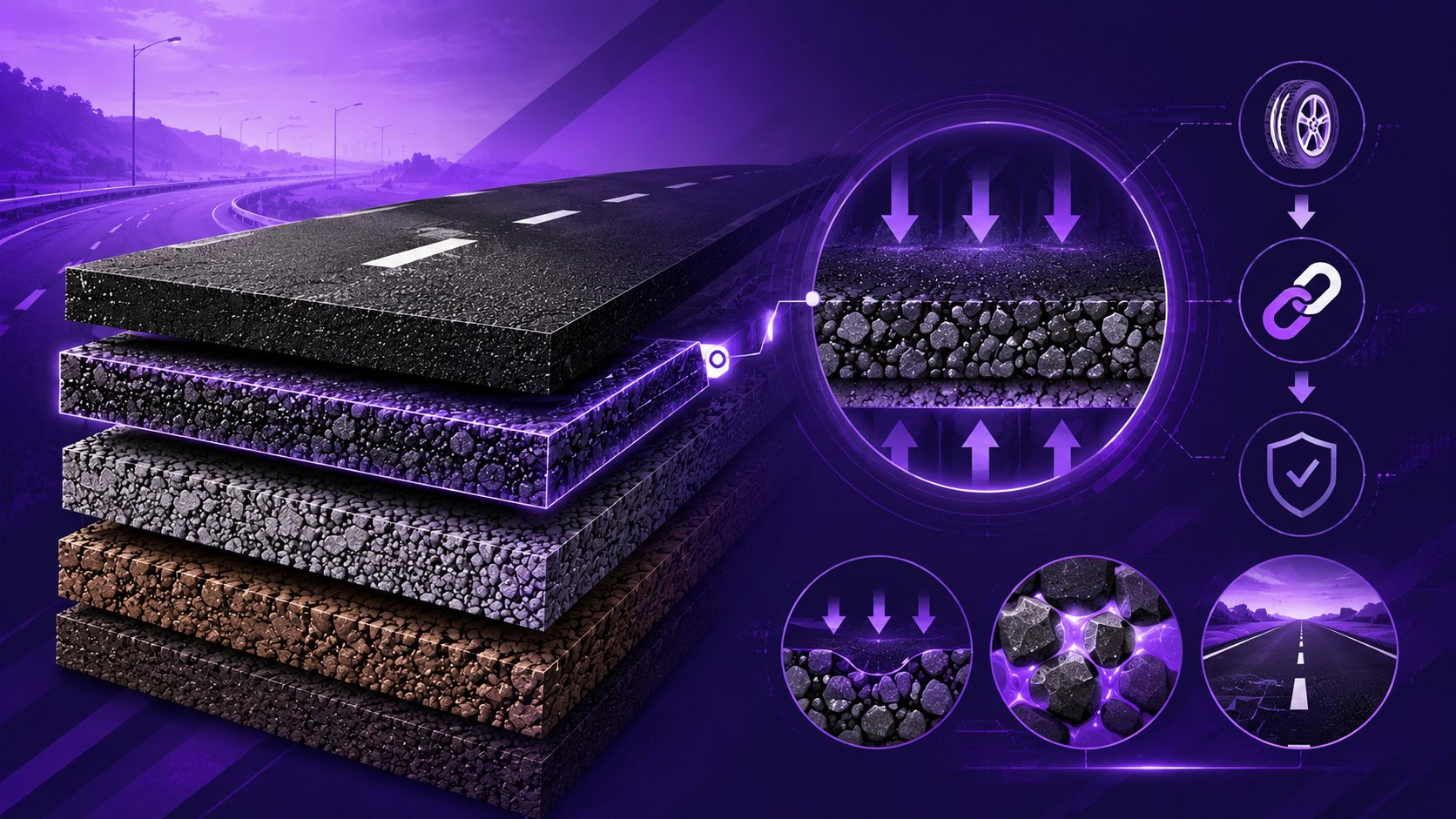
The binder course is the intermediate layer located between the wearing course and the base course. Although it is not directly exposed to traffic, it plays a vital role in supporting the surface layer and strengthening the overall pavement structure. In most highway pavement layers, the binder course carries a significant share of traffic-induced stresses and helps distribute loads to the lower layers.
Key functions of the binder course
| Function | Importance |
|---|---|
| Load distribution | Transfers traffic loads from the wearing course to the base layer. |
| Structural support | Increases the overall strength of the pavement structure. |
| Stress absorption | Reduces stress concentrations within the pavement. |
| Fatigue resistance | Helps minimise cracking caused by repeated traffic loading. |
| Surface support | Provides a stable platform for the wearing course. |
Common materials used in binder courses
| Material | Typical application | Key benefit |
|---|---|---|
| Dense Bituminous Macadam (DBM) | National highways, expressways, high-traffic roads. | High strength and excellent load-bearing capacity. |
| Bituminous Macadam (BM) | Lower traffic roads and base applications. | Good structural support and cost-effectiveness. |
Factors influencing binder course design
The thickness of the binder course depends on several project-specific factors. Roads carrying higher traffic volumes and heavier axle loads generally require thicker binder layers to achieve the desired pavement life.
Key considerations include:
- Expected traffic volume and axle loads
- Road classification and design life
- Pavement thickness requirements
- Climatic and site conditions
- Project specifications and performance targets
Applications in high-traffic roads
The binder course becomes increasingly important in highways, expressways, freight corridors, industrial roads, and airport pavements where heavy commercial vehicles operate continuously. A properly designed DBM layer helps improve pavement durability, reduces the risk of fatigue cracking, and supports long-term pavement performance under demanding traffic conditions.
Base course and sub-base layers in road construction
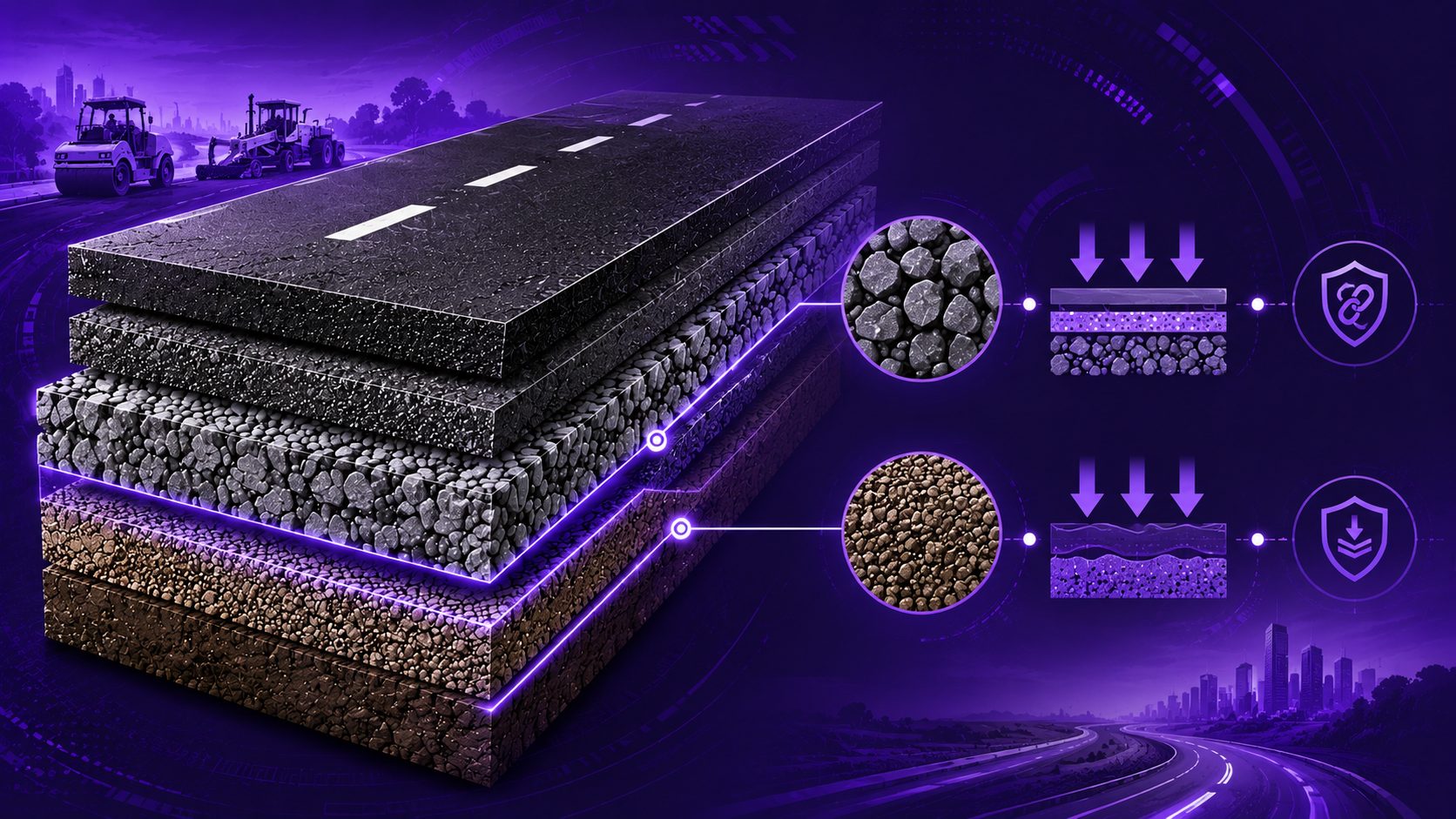
The base course and sub-base form the foundation of a bituminous pavement structure. These layers provide structural support, distribute traffic loads, and protect the upper pavement layers from moisture-related damage. The long-term performance of a road often depends on the quality of these underlying layers.
Base course
The road base course sits above the sub-base and below the bituminous layers. Its primary role is to spread traffic loads over a wider area and provide structural strength to the pavement.
| Material | Typical application | Key benefit |
|---|---|---|
| Wet Mix Macadam (WMM) | Highways, expressways, urban roads. | Better gradation, strength, and faster construction. |
| Water Bound Macadam (WBM) | Low to moderate traffic roads. | Cost-effective structural support. |
| Cement-Treated Base (CTB) | Heavy-duty highways and industrial roads. | Higher strength and improved load-bearing capacity. |
Sub-base
The sub-base is placed between the base course and the subgrade. It acts as a transition layer and helps improve pavement stability.
| Component | Function |
|---|---|
| Granular Sub-Base (GSB) | Provides support to upper layers |
| Drainage layer | Removes excess water from the pavement structure |
| Moisture protection | Prevents weakening of the pavement foundation |
| Stability enhancement | Reduces deformation in underlying soil |
Key construction requirements
The performance of the road base course and granular sub base depends heavily on construction quality.
Key requirements include:
- Proper material specifications as per project requirements
- Well-graded aggregates for improved strength and stability
- Adequate compaction to achieve the required density
- Layer thickness verification during construction
- Regular quality control and field testing
Why contractors focus on these layers
EPC contractors, project engineers, and site engineers closely monitor the base and sub-base because failures in these layers can affect the entire pavement structure. Problems such as inadequate compaction, poor aggregate grading, or drainage issues can lead to settlement, rutting, cracking, and premature road failures. Investing in a strong pavement foundation helps reduce maintenance costs and improves the service life of the road.
Types of bituminous mixes used across different road layers
Different bituminous mix types are used across pavement layers based on traffic volume, structural requirements, climatic conditions, and project specifications. Selecting the right mix is critical for achieving the desired pavement life, ride quality, and maintenance performance.
| Mix type | Typical application | Layer position | Traffic suitability | Key performance characteristics | Relative cost |
|---|---|---|---|---|---|
| Bituminous Macadam (BM) | Base and binder applications. | Lower layers | Moderate traffic roads | Open-graded mix that provides structural support and load distribution | Low |
| Dense Bituminous Macadam (DBM) | National highways, state highways, expressways. | Intermediate binder layer | Medium to heavy traffic | High strength, better load-bearing capacity, and improved durability. | Medium |
| Bituminous Concrete (BC) | Highway and urban road surfacing. | Top layer | Medium to heavy traffic | Smooth finish, good riding quality, and wear resistance. | Medium |
| Stone Matrix Asphalt (SMA) | Expressways and premium highways. | Surface layer | Very heavy traffic | Excellent rut resistance, superior durability, and longer service life. | High |
| Polymer Modified Bitumen (PMB) Mixes | High-volume highways and expressways. | Multiple pavement layers | Heavy traffic and high-speed corridors | Improved flexibility, fatigue resistance, and performance under varying temperatures. | High |
| Crumb Rubber Modified Bitumen (CRMB) Mixes | High-stress zones, industrial roads, intersections. | Multiple pavement layers | Heavy traffic and repetitive loading | Better crack resistance, enhanced elasticity, and improved durability. | High |
Comparison of DBM vs BC
| Parameter | DBM | BC |
|---|---|---|
| Full form | Dense Bituminous Macadam | Bituminous Concrete |
| Typical position | Binder course | Wearing course |
| Primary function | Structural strength and load distribution | Surface finish and riding quality |
| Aggregate size | Coarser | Finer |
| Traffic exposure | Not directly exposed | Directly exposed to traffic |
| Surface smoothness | Moderate | High |
Key selection factors
- BM and DBM are commonly used where structural strength is the primary requirement.
- BC and SMA are preferred for surface layers where ride quality and durability are critical.
- PMB roads are increasingly used on expressways and high-traffic corridors due to their improved performance.
- CRMB roads are often selected for locations exposed to heavy loading, frequent braking, and harsh environmental conditions.
The choice of asphalt mixes ultimately depends on traffic intensity, project budget, climatic conditions, expected pavement life, and tender specifications. Proper selection of bituminous mix types helps contractors and infrastructure developers achieve better long-term pavement performance while optimising lifecycle costs.
Construction process of bituminous road layers
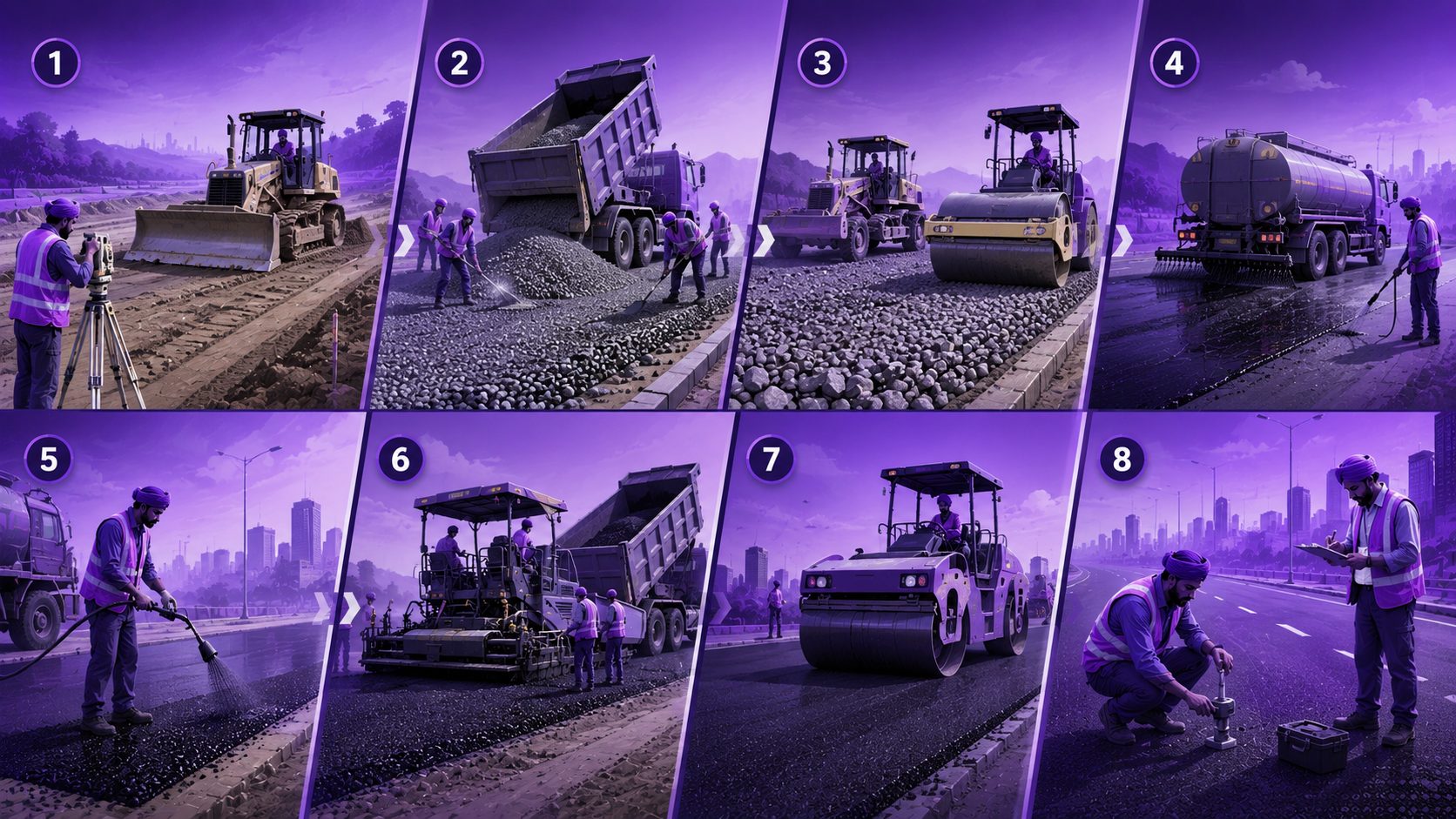
The bituminous road construction process follows a systematic sequence to ensure pavement strength, durability, and long-term performance. Each stage must be executed according to project specifications and quality standards.
Step 1: Subgrade preparation
The construction process begins with preparing the natural soil layer. The subgrade is graded, levelled, and compacted to achieve the required density and load-bearing capacity. Any weak sections are strengthened before further work begins.
Step 2: GSB construction
The Granular Sub-Base (GSB) layer is placed over the prepared subgrade. This layer improves drainage, provides stability, and protects the pavement foundation from moisture-related damage.
Step 3: WMM/base construction
The base layer is typically constructed using Wet Mix Macadam (WMM). Well-graded aggregates are spread, mixed, and compacted to create a strong structural layer capable of distributing traffic loads effectively.
Step 4: Prime coat application
A prime coat is applied over the granular base layer. This helps bind loose particles, reduces dust, and improves adhesion between the base layer and subsequent bituminous layers.
Step 5: Tack coat application
A tack coat is sprayed before laying bituminous mixes. This thin layer of bitumen ensures proper bonding between pavement layers and prevents slippage under traffic loads.
Step 6: Binder course laying
The binder course, usually comprising Dense Bituminous Macadam (DBM), is laid using paver machines. Hot mix plant production ensures the mix is prepared according to approved specifications and delivered at the required temperature.
Step 7: Wearing course construction
The wearing course is placed over the binder layer to create the final road surface. Materials such as Bituminous Concrete (BC) or Stone Matrix Asphalt (SMA) are commonly used to provide smoothness, durability, and skid resistance.
Step 8: Compaction and quality testing
Roller compaction is carried out immediately after paving to achieve the required density. Throughout the asphalt paving process, temperature control remains critical to ensure proper workability and performance. Quality checks such as density testing, thickness verification, and surface inspections are conducted before the road is opened to traffic.
Factors influencing layer thickness in bituminous roads
The required road layer thickness varies from one project to another. Engineers determine pavement thickness design based on traffic, ground conditions, environmental factors, and the expected service life of the road.
Traffic volume: Higher traffic volumes require thicker pavement layers to withstand continuous loading and minimise premature deterioration.
Axle loads: Roads carrying heavy commercial vehicles and overloaded trucks need greater structural thickness to distribute stresses effectively.
Soil strength: Weak subgrade soils generally require thicker pavement sections, while stronger soils can support thinner pavement structures.
Climate conditions: Temperature variations influence pavement performance and can affect the required thickness of bituminous layers.
Rainfall intensity: Areas receiving heavy rainfall often require stronger pavement structures and enhanced drainage provisions to prevent moisture damage.
Project design life: Roads designed for longer service periods typically incorporate thicker layers to accommodate future traffic growth and wear.
IRC pavement design methods: IRC pavement design guidelines help engineers determine appropriate layer thicknesses based on traffic projections, soil conditions, and design requirements.
Typical thickness requirements by road type
| Road type | Typical road layer thickness requirement |
|---|---|
| Rural roads | Designed for low traffic volumes and lighter axle loads. |
| State highways | Require moderate pavement thickness to handle regional traffic movement. |
| National highways | Need stronger pavement structures for higher traffic densities. |
| Expressways | Incorporate thicker layers to support heavy and high-speed traffic. |
| Airport pavements | Require substantial pavement thickness to withstand aircraft loads. |
Selecting the correct road layer thickness is essential for achieving long-term pavement performance, reducing maintenance costs, and ensuring the pavement meets project objectives throughout its design life.
Common defects linked to poor layer construction

Even a well-designed pavement can develop road defects if construction quality, materials, or workmanship fall below the required standards. Most pavement failures originate from issues in the underlying layers rather than the surface alone.
Common pavement defects
Rutting: Permanent depressions form along wheel paths due to repeated traffic loading.
Potholes: Surface cavities develop when weakened pavement sections break apart under traffic.
Fatigue cracking: Repeated loading causes interconnected cracks that resemble an alligator skin pattern.
Ravelling: Surface aggregates gradually loosen and separate from the pavement.
Bleeding: Excess bitumen rises to the surface, creating a smooth and slippery finish.
Edge failures: Pavement edges break away due to inadequate support or excessive loading.
Settlement issues: Uneven sinking occurs when lower pavement layers lose strength or stability.
Common causes of pavement failure
Poor compaction: Insufficient compaction reduces layer strength and increases the risk of deformation.
Incorrect mix design: Unsuitable aggregate and bitumen proportions can weaken pavement performance.
Low-quality aggregates: Inferior materials accelerate wear, cracking, and structural deterioration.
Inadequate drainage: Water accumulation weakens pavement layers and shortens service life.
Improper layer bonding: Weak adhesion between layers can lead to slippage and premature failures.
Procurement perspective
- Selecting high-quality aggregates and bitumen grades can significantly improve pavement durability.
- Approved mix designs help minimise maintenance requirements over the road’s lifecycle.
- Material quality often has a greater impact on long-term costs than initial procurement savings.
- Investing in specification-compliant materials can reduce the risk of asphalt cracking, rutting in roads, and other costly pavement failures.
- Strong supplier evaluation practices help ensure consistent pavement performance across projects.
Emerging trends in bituminous pavement construction in India
India’s growing investment in expressways, Bharatmala projects, airport infrastructure, and industrial corridors is driving the adoption of advanced pavement materials and construction technologies.
| Trend | Key benefit |
|---|---|
| PMB adoption | Improves flexibility, durability, and resistance to cracking. |
| CRMB adoption | Enhances elasticity and performance under heavy traffic loads. |
| Warm mix asphalt | Reduces production temperatures, fuel consumption, and emissions. |
| Recycled Asphalt Pavement (RAP) | Lowers material costs and supports resource conservation. |
| Smart compaction technologies | Improves compaction consistency and construction quality. |
| Digital quality monitoring | Enables real-time tracking of paving and quality parameters. |
| Sustainable road construction | Reduces environmental impact while improving lifecycle performance. |
| Performance-based specifications | Focuses on long-term pavement outcomes rather than material inputs alone. |
Key industry trends
- PMB and CRMB are increasingly used on high-traffic highways and expressways.
- Warm mix asphalt is gaining attention for its environmental and operational benefits.
- RAP is helping contractors reduce material consumption and project costs.
- Smart technologies are improving construction efficiency and quality assurance.
- Performance-based specifications are becoming more common in large infrastructure projects.
Key considerations for contractors and procurement teams

Selecting the right materials and suppliers is critical for achieving quality, durability, and cost efficiency in road construction projects. For EPC contractors, procurement managers, highway consultants, government tender participants, and asphalt plant operators, procurement decisions can directly influence pavement performance and lifecycle costs.
Bitumen grade selection: Choose the appropriate bitumen grade based on traffic conditions, climate, and project specifications.
Aggregate sourcing: Source aggregates that meet grading, strength, and durability requirements for the intended application.
Quality certifications: Verify compliance with relevant standards, test certificates, and quality assurance requirements.
Supplier evaluation: Assess supplier capabilities, production capacity, delivery reliability, and quality consistency.
Mix design approvals: Ensure all asphalt mixes are tested and approved before large-scale project execution.
Tender specifications: Review project specifications carefully to ensure material compliance and avoid execution risks.
Cost versus performance analysis: Balance upfront material costs against expected durability, maintenance needs, and service life.
Long-term maintenance considerations: Prioritise materials that reduce future repair requirements and improve pavement longevity.
Why it matters
EPC contractors: Focus on project quality, timelines, and lifecycle performance.
Procurement managers: Aim to optimise costs without compromising specifications.
Government tender participants: Must ensure compliance with tender requirements.
Highway consultants: Evaluate material suitability for long-term pavement performance.
Asphalt plant operators: Need consistent raw material quality for reliable mix production.
A structured approach to bitumen procurement and highway project procurement helps minimise risks, improve pavement durability, and maximise the value of road construction materials over the life of the project.
Conclusion
Bituminous road layers function as an integrated system, with each layer contributing to the overall strength and performance of the pavement. Their success depends on selecting suitable materials, following approved construction practices, and maintaining quality standards throughout the project lifecycle.
As India’s highway, expressway, airport, and industrial infrastructure networks continue to expand, a clear understanding of pavement layer requirements can help industry stakeholders deliver more durable, efficient, and cost-effective road assets.
Looking to procure steel?
Tata nexarc helps manufacturers, builders and MSMEs source certified steel products, compare prices, and choose the right grade as per IS codes—with complete traceability and procurement confidence.
FAQs
What are the layers of a bituminous road?
What is the function of the wearing course in bituminous pavements?
What is the difference between DBM and BC layers?
Why is a binder course used in road construction?
What is the role of GSB in flexible pavements?
Which bituminous mix is used for highway surface layers?
How is pavement layer thickness determined?
What are the common causes of pavement failure?
What is the difference between PMB and CRMB roads?
Which standards govern bituminous road construction in India?
A product manager with a writer's heart, Anirban leverages his 6 years of experience to empower MSMEs in the business and technology sectors. His time at Tata nexarc honed his skills in crafting informative content tailored to MSME needs. Whether wielding words for business or developing innovative products for both Tata Nexarc and MSMEs, his passion for clear communication and a deep understanding of their challenges shine through.