Check Price Now
Table of Contents
- Understanding the Bitumen Industry in India
- Types of Bitumen Products Available
- Top Bitumen Manufacturers in India
- Top Bitumen Suppliers and Distributors in India
- Bitumen Plants in India: Factors to Evaluate
- How to Select Bitumen Suppliers as a Highway Contractor
- Bitumen Procurement Challenges and How to Manage Them
- Bitumen Supplier Evaluation Checklist
- Emerging Trends Shaping India’s Bitumen Market
- Conclusion
- FAQs
India’s road and highway sector depends on a reliable supply of bitumen to support project quality and timely execution. Demand continues to rise as NHAI, state governments, and infrastructure developers invest in expressways, airports, and urban road networks. In this growing market, bitumen plants and suppliers play a crucial role in ensuring consistent availability across project locations. Choosing the right manufacturer or supplier can also support smoother procurement, better compliance, and fewer construction delays.
Understanding the bitumen industry in India
The bitumen industry in India plays a central role in the country’s infrastructure development. As investments in highways, expressways, airports, and urban transport networks continue to increase, demand for high-quality bitumen remains strong. For contractors, procurement teams, and project engineers, understanding how the industry operates can help improve sourcing decisions and reduce project risks.
Role of bitumen in road construction
Bitumen is the primary binding material used in asphalt pavements. It provides flexibility, durability, and resistance to traffic loads, making it suitable for a wide range of infrastructure applications.
| Application | Importance of bitumen |
|---|---|
| National highways | Supports heavy traffic and long service life |
| Expressways | Improves pavement performance and durability |
| Airport runways | Helps withstand high load and stress conditions |
| Urban roads | Provides smooth and flexible road surfaces |
| Industrial roads | Enhances durability in high-traffic zones |
India’s growing infrastructure demand
India’s infrastructure pipeline continues to create significant opportunities for bitumen manufacturers and suppliers. Large-scale programmes such as Bharatmala, state highway expansion projects, airport modernisation initiatives, and smart city developments require a steady supply of road construction materials.
Key demand drivers include:
- Expansion of national and state highway networks
- Development of economic corridors and logistics parks
- Airport construction and runway upgrades
- Urban road and smart city projects
How the bitumen supply chain works
The bitumen supply chain involves several stakeholders before the material reaches a project site. Refineries produce bitumen, which is then supplied through manufacturers, distributors, and bulk suppliers. Asphalt plants use the material to produce asphalt mixes that are delivered to contractors and infrastructure developers.
Major suppliers in the market include Indian Oil Corporation, Bharat Petroleum Corporation Limited, Hindustan Petroleum Corporation Limited, and Nayara Energy. Their refinery networks and distribution infrastructure help ensure consistent supply for highway construction materials and other infrastructure projects across India.
Types of bitumen products available in India
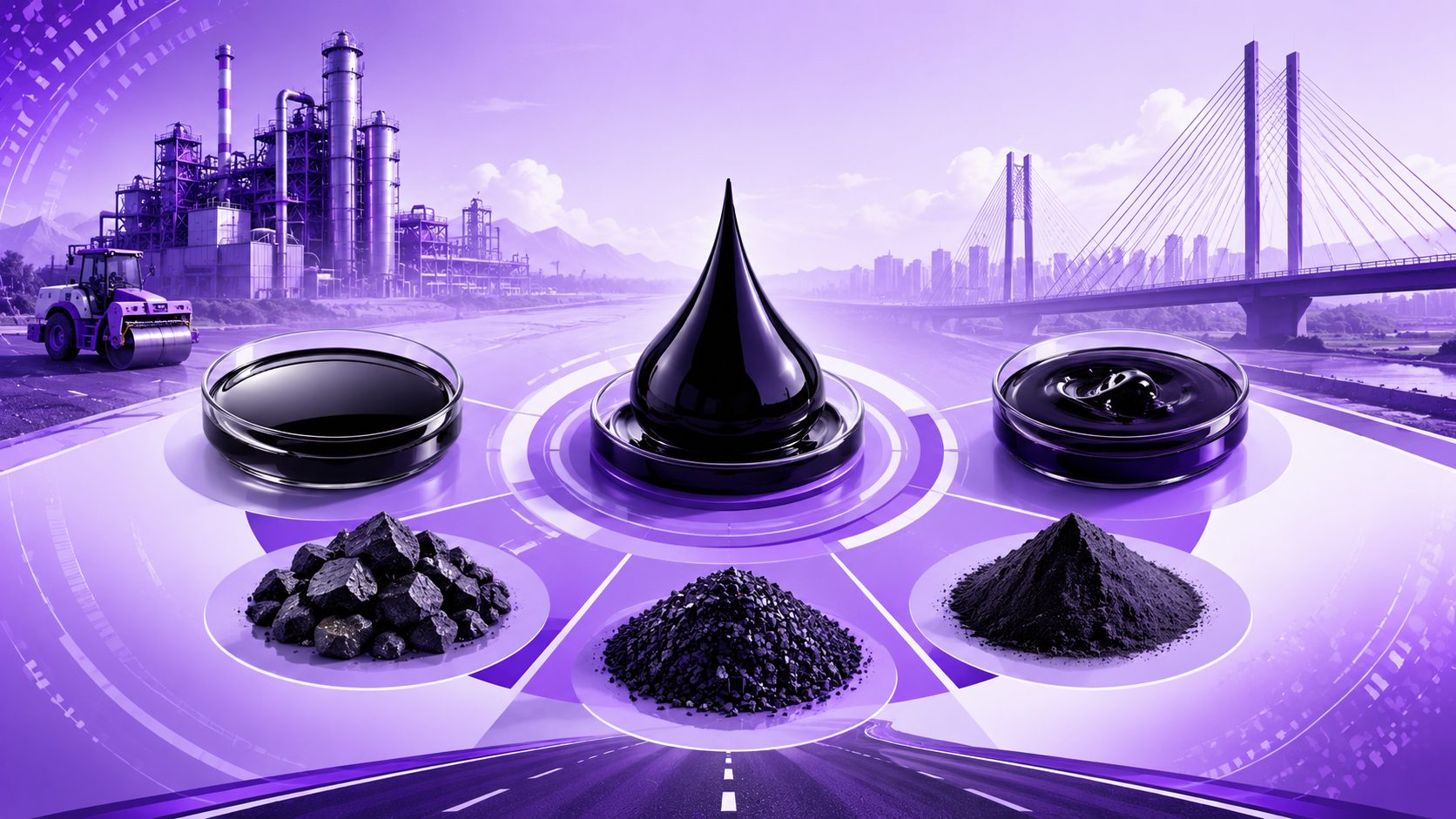
Different projects require different bitumen grades and formulations. The choice depends on traffic volume, climatic conditions, pavement design, and performance requirements. Understanding the most commonly used bitumen grades in India can help contractors, engineers, and procurement teams select the right product for their project.
| Bitumen type | Key characteristics | Common applications |
|---|---|---|
| VG 10 | Lower viscosity grade suitable for colder climates and spray applications. | Surface dressing, cold-weather road works. |
| VG 20 | Medium viscosity grade with good workability. | Rural roads, low to moderate traffic roads. |
| VG 30 | Most widely used paving grade in India with balanced performance. | National highways, state highways, city roads. |
| VG 40 | Higher viscosity grade designed for heavy traffic loads and warmer regions. | Expressways, heavy-duty corridors, industrial roads. |
| Polymer Modified Bitumen (PMB) | Enhanced elasticity, rutting resistance, and durability through polymer additives. | Expressways, bridges, airport pavements, high-speed corridors. |
| Crumb Rubber Modified Bitumen (CRMB) | Manufactured using recycled rubber to improve flexibility and fatigue resistance. | High-stress pavements, heavy traffic roads, intersections. |
| Bitumen emulsion | Bitumen dispersed in water, allowing application at lower temperatures. | Road maintenance, patch repairs, rural road construction. |
| Industrial bitumen | Designed for non-road applications requiring waterproofing and sealing properties. | Roofing, insulation, industrial coatings. |
| Oxidised bitumen | Processed to achieve higher softening points and improved weather resistance. | Waterproofing membranes, pipe coatings, construction products. |
Among all bitumen grades in India, VG 30 bitumen remains the preferred choice for most highway projects due to its versatility and widespread availability. PMB suppliers often cater to premium infrastructure projects where enhanced pavement performance is required.
Similarly, CRMB manufacturers support projects seeking improved durability while incorporating recycled materials into road construction. Bitumen emulsions continue to play an important role in maintenance works, especially for rural roads and rehabilitation projects.
Top bitumen manufacturers in India
India’s road construction sector relies heavily on a few major producers with large refinery networks and nationwide distribution capabilities. These companies supply bitumen for highways, expressways, airport projects, urban roads, and other infrastructure developments. Their production capacity, product portfolio, and logistics network make them key players in the market.
Indian Oil Corporation
Indian Oil is one of the largest bitumen manufacturers in India. The company operates multiple refineries across the country and supplies a wide range of paving grades, modified bitumen products, and emulsions. Its extensive distribution network supports infrastructure projects in both urban and remote locations.
Bharat Petroleum Corporation Limited
Bharat Petroleum supplies bitumen through its refinery infrastructure and regional distribution network. The company serves highway contractors, government agencies, and road construction companies with products designed for various pavement and maintenance applications.
Hindustan Petroleum Corporation Limited
Hindustan Petroleum is a major supplier of paving-grade and speciality bitumen products. Its refinery network and storage facilities help ensure a consistent supply for large-scale infrastructure and road development projects across India.
Nayara Energy
Nayara Energy has emerged as an important supplier in India’s bitumen market. The company produces and supplies bitumen for highway construction, industrial applications, and infrastructure projects through its refinery and distribution operations.
What should contractors evaluate?
When comparing bitumen manufacturers in India, procurement teams should look beyond pricing. Product consistency, availability during peak construction seasons, geographic reach, and supply reliability often have a greater impact on project execution.
Contractors should also assess delivery capabilities, technical support, and the supplier’s experience in serving large infrastructure projects. These factors can help reduce procurement risks and ensure uninterrupted material availability throughout the project’s lifecycle.
Top bitumen suppliers and distributors in India

Bitumen suppliers and distributors play a crucial role in ensuring material reaches project sites on time. For contractors and procurement teams, reliable supply can be just as important as product quality.
National suppliers: National suppliers operate across multiple states and support large infrastructure projects through extensive storage and distribution networks.
Regional suppliers: Regional suppliers serve specific markets and often provide faster deliveries and stronger local support for state and municipal projects.
Bulk supply partners: Bulk suppliers handle large-volume requirements and typically offer storage facilities, transportation support, and tanker fleet services.
Project-based supply specialists: These suppliers support specific projects with customised delivery schedules, inventory planning, and technical assistance.
What should buyers look for?
When evaluating bitumen suppliers in India, procurement teams should assess:
- Storage and inventory capacity
- Delivery network and logistics support
- Emergency supply capability
- Technical documentation and assistance
- Experience in infrastructure projects
For many contractors, dependable supply and responsive service are often more valuable than the lowest price.
Leading bitumen suppliers in India
| Company | Supply focus | Key strengths |
|---|---|---|
| Indian Oil Corporation | Nationwide supply | Extensive refinery and distribution network |
| Bharat Petroleum Corporation Limited | Highways and infrastructure projects | Strong regional supply presence |
| Hindustan Petroleum Corporation Limited | Road construction and maintenance | Established logistics and storage infrastructure |
| Nayara Energy | Bulk bitumen supply | Large refinery operations and growing market reach |
| Agarwal Industrial Corporation Limited (AICL) | Bulk bitumen, PMB, CRMB, emulsions. | Integrated manufacturing, storage, and logistics capabilities. |
| Bitcol | Bitumen and road construction materials | Nationwide sourcing and distribution network |
| ART Infrastructure | Modified bitumen products | Focus on infrastructure and road construction applications |
Supplier capabilities, storage infrastructure, product portfolio, and geographic coverage can vary significantly. Contractors and procurement teams should evaluate supply reliability, logistics support, and project experience alongside pricing when selecting a supplier.
Bitumen plants in India: Infrastructure and capabilities to evaluate
The performance of a bitumen plant in India can directly influence product quality, delivery reliability, and project execution. For highway contractors, EPC companies, and procurement teams, evaluating plant infrastructure is an important part of supplier selection.
Storage capacity
Adequate storage capacity helps suppliers maintain inventory levels and respond to fluctuations in project demand. Larger storage facilities can also reduce the risk of supply disruptions during peak construction periods.
Heating systems
Bitumen must be stored and handled at controlled temperatures to maintain its properties. Modern heating systems help ensure consistent product quality during storage, transportation, and dispatch.
Quality control laboratories
Leading bitumen plants operate in-house laboratories to test key product parameters before dispatch. Regular quality checks help ensure compliance with project specifications and reduce the risk of performance issues on site.
Dispatch infrastructure
Efficient dispatch systems allow suppliers to process orders quickly and minimise vehicle turnaround times. This becomes particularly important for projects operating on tight construction schedules.
Bulk loading facilities
Dedicated bulk loading facilities support faster tanker loading and improve operational efficiency. They are especially valuable for large infrastructure projects that require frequent material deliveries.
Logistics integration
Strong logistics integration connects storage terminals, transport fleets, and project sites. This helps suppliers maintain delivery schedules and improve supply continuity across multiple locations.
When evaluating a bitumen storage facility or bulk bitumen plant, buyers should consider how these capabilities affect delivery timelines, product consistency, and the ability to support large-scale road construction projects without interruption.
How to select bitumen suppliers as a highway contractor
Price is only one factor in bitumen procurement. Highway contractors, EPC companies, and procurement teams typically assess a supplier’s ability to deliver consistent quality, reliable supply, and project support throughout the contract period.
| Evaluation factor | What to assess | Why it matters |
|---|---|---|
| Quality assurance | BIS compliance, test certificates, laboratory reports, batch traceability. | Helps ensure product consistency and specification compliance. |
| Supply reliability | Production capacity, inventory levels, storage infrastructure. | Reduces the risk of project delays caused by material shortages. |
| Project location coverage | Serviceable regions, depot network, delivery reach. | Ensures timely supply to remote and multi-location projects. |
| Delivery lead times | Dispatch efficiency, transportation arrangements, turnaround time. | Supports project schedules and reduces downtime. |
| Technical support | Product guidance, specification assistance, troubleshooting support. | Helps contractors address project-specific requirements. |
| Pricing stability | Long-term supply agreements, transparent pricing mechanisms. | Improves budgeting and cost control. |
| Tender documentation support | Quality certificates, compliance documents, technical datasheets. | Supports smoother tender submission and project approvals. |
| Infrastructure project experience | Previous highway, expressway, airport, or government project supply. | Demonstrates capability to handle large-scale requirements. |
Bitumen supplier procurement checklist
Before finalising a supplier, procurement teams should verify:
| Checklist item | Verification points |
|---|---|
| Product certification | BIS compliance and quality reports. |
| Supply capacity | Ability to meet project volume requirements. |
| Logistics capability | Storage facilities, tanker fleet, and delivery network. |
| Project references | Experience with similar infrastructure projects. |
| Commercial terms | Pricing, payment terms, and contract conditions. |
Strong supplier selection criteria can help contractors improve supply continuity, minimise procurement risks, and support successful highway project procurement.

Bitumen procurement challenges and how to manage them
Bitumen procurement can become challenging when market conditions, logistics constraints, and project schedules change unexpectedly. Understanding these risks can help contractors and procurement teams plan more effectively.
| Challenge | Impact on projects | How to manage it |
|---|---|---|
| Price volatility | Fluctuating bitumen price trends can affect project budgets and margins. | Secure rates through long-term agreements and monitor market movements regularly. |
| Supply disruptions | Production, transportation, or inventory issues can delay material availability. | Maintain relationships with multiple suppliers and build contingency plans. |
| Monsoon season challenges | Heavy rainfall can disrupt transportation and construction schedules. | Increase inventory levels before the monsoon season and plan deliveries in advance. |
| Remote project locations | Transporting material to distant sites can increase costs and lead times. | Select suppliers with strong regional networks and local storage facilities. |
| Quality variations | Inconsistent product quality can impact pavement performance and compliance. | Implement quality testing protocols and verify certificates before procurement. |
| Tender schedule pressures | Delayed deliveries can affect project milestones and contractual obligations. | Align procurement schedules with project timelines and secure supply commitments early. |
Practical solutions for procurement teams
Supplier diversification: Reduce dependency on a single source.
Inventory planning: Maintain adequate stock for critical project phases.
Long-term contracts: Improve price stability and supply continuity.
Quality testing protocols: Verify product consistency before and during project execution.
Effective planning can help contractors overcome common bitumen procurement challenges while improving supply reliability and road construction procurement outcomes.
Bitumen supplier evaluation checklist for EPC and infrastructure projects
Choosing the best bitumen supplier involves more than comparing prices. EPC contractors, infrastructure developers, and procurement teams should evaluate suppliers against several operational and commercial factors before making a sourcing decision.
Manufacturing source: Ensures product consistency and reliable quality standards.
Grade availability: Confirms the supplier can provide the required bitumen grades for the project.
Storage capacity: Supports uninterrupted supply during peak construction periods.
Logistics network: Helps ensure timely deliveries across project locations.
Quality certification: Demonstrates compliance with project specifications and industry standards.
Project experience: Indicates the supplier’s ability to support large infrastructure projects.
Technical support: Provides assistance with product selection, documentation, and project requirements.
Geographic reach: Improves service coverage for multi-location and remote projects.
This supplier evaluation checklist can help procurement teams reduce sourcing risks and make more informed purchasing decisions.
Emerging trends shaping India’s bitumen market

India’s infrastructure pipeline continues to influence procurement strategies, product demand, and supplier selection. The following trends are expected to shape the future of the bitumen industry and create new opportunities for manufacturers, suppliers, and contractors.
Growth of expressway projects: Large expressway and highway infrastructure projects are increasing demand for high-performance bitumen products and reliable supply partners.
Increasing PMB and CRMB adoption: More project authorities are specifying PMB and CRMB to improve pavement durability, reduce maintenance needs, and enhance road performance.
Sustainable road construction: Contractors are increasingly focusing on sustainable construction practices, encouraging the use of recycled materials and longer-lasting pavement solutions.
Digital procurement platforms: Digital sourcing and procurement platforms are making it easier for buyers to compare suppliers, manage documentation, and improve procurement efficiency.
Quality-focused tender specifications: Government agencies and infrastructure developers are placing greater emphasis on quality compliance, testing requirements, and product traceability.
Growing demand from airport and industrial infrastructure: Airport expansions, industrial corridors, logistics parks, and manufacturing hubs continue to create new demand for specialised bitumen products.
Conclusion
As infrastructure investment continues to grow across India, strategic sourcing decisions are becoming increasingly important for project success. The right bitumen partner can help contractors maintain construction schedules, manage procurement risks, and meet project requirements more effectively. Whether supplying a highway, airport, or urban road project, suppliers that combine operational strength with dependable service are better positioned to support long-term infrastructure development and efficient project delivery.
Looking to procure steel?
Tata nexarc helps manufacturers, builders and MSMEs source certified steel products, compare prices, and choose the right grade as per IS codes—with complete traceability and procurement confidence.
FAQs
Who are the leading bitumen manufacturers in India?
What is the most commonly used bitumen grade for highways?
How do contractors procure bitumen for NHAI projects?
What is the difference between VG 30 and PMB?
What should buyers check before selecting a bitumen supplier?
How is bitumen transported to project sites?
Why is storage capacity important when choosing a supplier?
What certifications should a bitumen supplier provide?
Which industries use bitumen apart from road construction?
How can contractors reduce bitumen procurement risks?
A product manager with a writer's heart, Anirban leverages his 6 years of experience to empower MSMEs in the business and technology sectors. His time at Tata nexarc honed his skills in crafting informative content tailored to MSME needs. Whether wielding words for business or developing innovative products for both Tata Nexarc and MSMEs, his passion for clear communication and a deep understanding of their challenges shine through.