Check Price Now
Table of Contents
- What is a Corrugated Sheet?
- Types of Corrugated Sheets
- How are Corrugated Sheets Manufactured?
- Applications of Corrugated Sheets
- Standard Sizes, Thickness & Specifications (Buyer Guide)
- Price of Corrugated Sheets in India
- Choosing the Right Corrugated Sheet for Your Project
- Corrugated Sheets vs Other Roofing Materials
- Conclusion
- FAQs
Corrugated sheets, often seen as rippled metal roofing sheets, are widely used in modern construction for their strength and versatility. Choosing the right corrugated sheet can directly impact cost, durability, and maintenance over time. In India, demand for corrugated roofing sheets continues to grow in 2026, especially across industrial and agricultural projects. This guide covers everything you need to know – from types and uses to sizes, prices, and how to choose the right option.
What is a corrugated sheet?
A corrugated sheet is a building material with a distinctive ribbed or wavy surface, designed to improve strength and durability. The corrugated sheet meaning comes from this patterned structure, which enhances load-bearing capacity compared to flat sheets.
Corrugated sheets are available in different materials, depending on use and budget:
| Material type | Common use | Key feature |
| Galvanised steel | Roofing, industrial sheds. | High strength with galvanised coating |
| Aluminium | Coastal areas | Rust-resistant and lightweight |
| Polycarbonate | Skylights, greenhouses. | Light transmission |
| Polypropylene (PP) | Packaging, temporary structures. | Flexible and economical |
Key features & benefits
- Ribbed structure improves load-bearing strength
- Lightweight yet durable
- Resistant to weather, corrosion, and impact
- Easy to install and maintain
Compared to flat sheets, corrugated metal sheets offer better structural stability and water drainage, making them ideal for roofing applications.
Depending on the material and coating, corrugated roofing sheets typically last 15 to 30 years, making them a reliable long-term solution for both residential and industrial projects.
Types of corrugated sheets
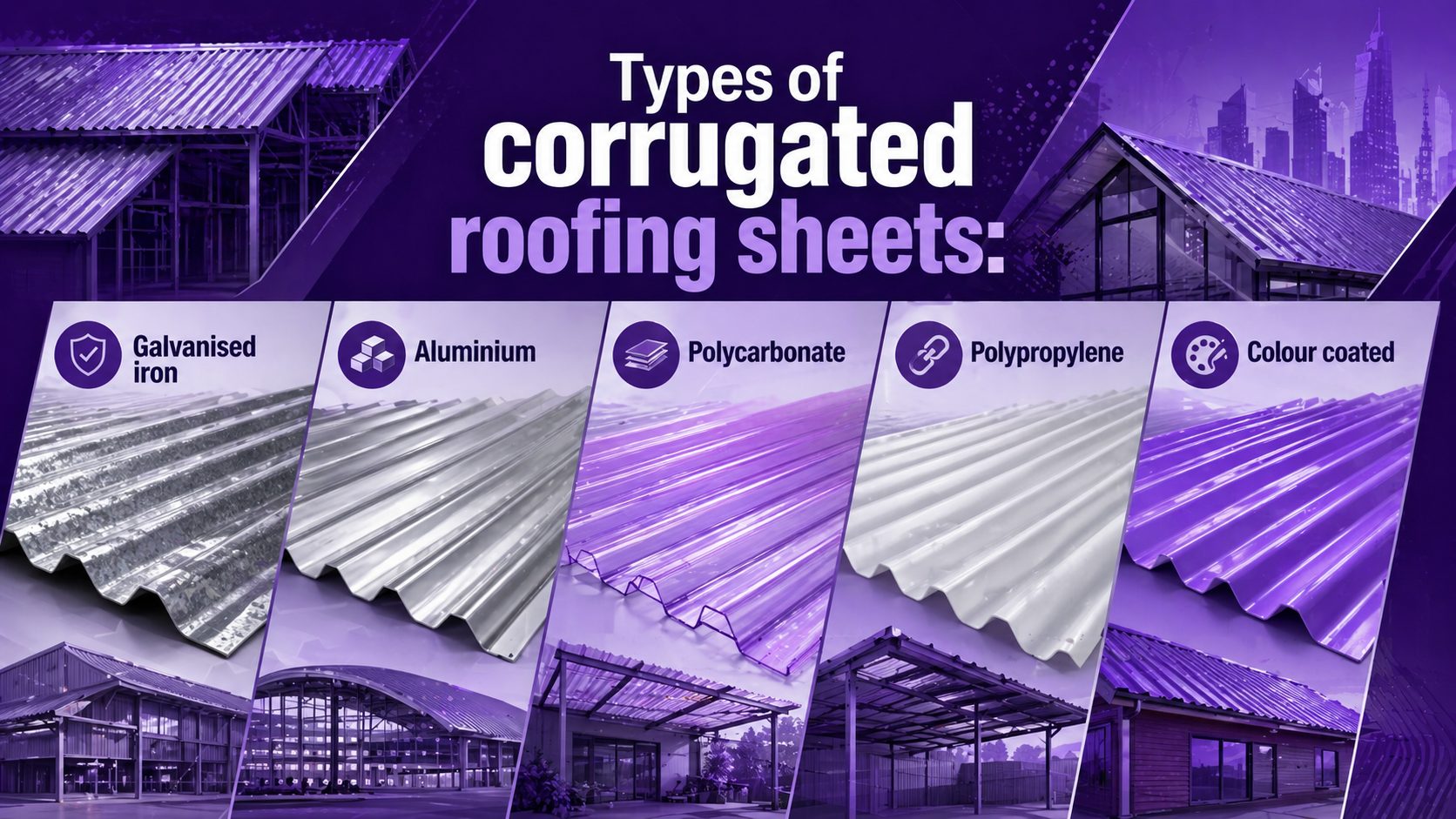
Understanding the different types of corrugated sheets helps you choose the best option based on durability, cost, and application.
Galvanised Iron (GI) corrugated sheets
GI sheets are among the most widely used corrugated roofing sheets. They are made from steel coated with zinc (galvanised coating), which improves corrosion resistance. These sheets are strong, cost-effective, and ideal for industrial sheds, warehouses, and roofing in non-coastal areas.
Aluminium corrugated sheets
Aluminium sheets are lightweight and naturally resistant to rust. They perform well in coastal and high-humidity environments where steel may corrode faster. While slightly more expensive than GI sheets, they offer longer durability with minimal maintenance.
Polycarbonate corrugated sheets
These sheets are commonly used where light transmission is needed, such as skylights, greenhouses, and patios. They are lightweight, impact-resistant, and available in transparent or coloured variants.
Polypropylene (PP) corrugated sheets
PP sheets are flexible, lightweight, and economical. They are mainly used in packaging, temporary structures, and low-load applications rather than heavy-duty roofing.
Colour-coated corrugated sheets
These are metal sheets (usually steel or aluminium) with a protective paint coating. They offer better aesthetics, improved weather resistance, and longer life, making them one of the best corrugated sheets for roofing in residential and commercial projects.
Also read: Corrugated metal pipe – Sizes, prices, uses
How are corrugated sheets manufactured?
The corrugated sheet manufacturing process varies by material, but metal sheets typically follow a standard, efficient workflow.
Step 1: Raw material preparation
The process begins with metal coils made from steel, aluminium, or other alloys. For steel sheets, a galvanisation process is often applied to add a protective zinc layer and improve corrosion resistance.
Step 2: Coil coating
The metal coils undergo coil coating, where paint or protective layers are applied and baked at high temperatures. This enhances durability, weather resistance, and finish quality.
Step 3: Roll forming and profiling
The coated coils are passed through a roll forming process, where rollers shape the flat metal into a ribbed or wavy pattern. This stage, known as profiling, gives corrugated sheets their characteristic design and required thickness.
Step 4: Cutting and finishing
The formed sheets are cut into standard or custom lengths based on application needs.
Step 5: Quality check
Each sheet undergoes inspection to ensure consistency in coating, thickness, and structural strength before dispatching.
The corrugated shape improves strength by increasing rigidity, allowing the sheet to handle higher loads without bending compared to flat sheets.
Applications of corrugated sheets
Corrugated sheets are widely used across India due to their durability, cost-effectiveness, and ease of installation. Their versatility makes them suitable for multiple construction and industrial needs.
| Application area | Typical use | Key benefits |
| Roofing (residential & industrial) | Houses, factories, and commercial buildings. | Lightweight, weather-resistant, cost-effective. |
| Siding (wall cladding) | Industrial units, warehouses. | Termite-proof, moisture-resistant, low maintenance. |
| Agriculture | Sheds, storage units, fencing. | Durable, easy to install, protects against harsh weather. |
| Warehouses & sheds | Garages, workshops, temporary structures. | Quick installation, economical for large spans. |
Why corrugated sheets are preferred
- Efficient water drainage due to ribbed design
- High load-bearing strength compared to flat sheets
- Suitable for varied climates across India
- Long lifespan with minimal maintenance
Corrugated roofing applications continue to grow across sectors, especially in industrial and agricultural projects. As highlighted by IMARC Group, increasing infrastructure and rural development are driving higher demand for corrugated sheets in India.
Benefits of corrugated sheets
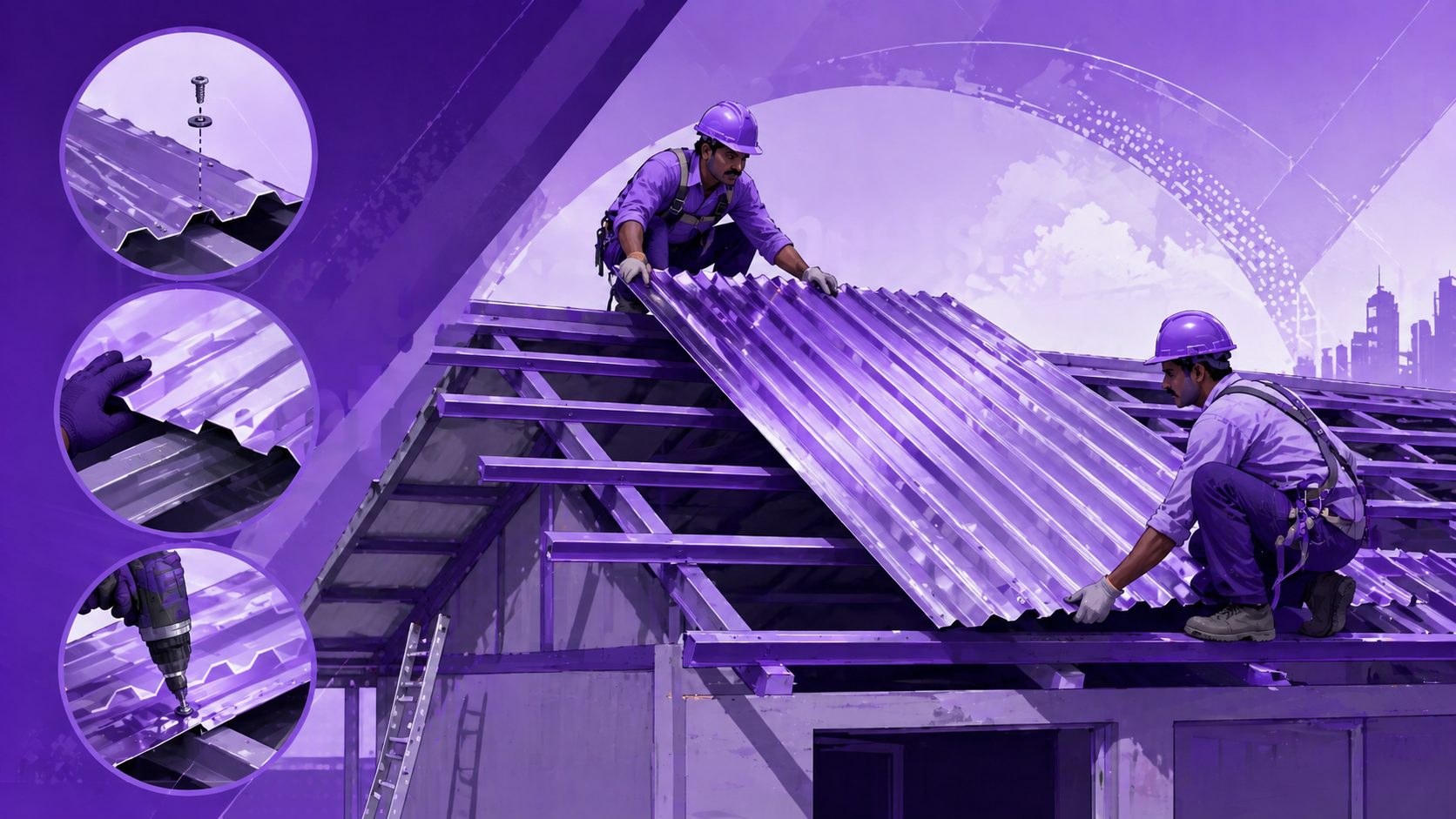
The advantages of corrugated sheets make them a preferred choice for roofing and cladding across residential and industrial projects.
Lightweight: Easy to transport, handle, and install, reducing labour time and cost.
Durable: Strong ribbed design offers high load-bearing strength and long service life.
Cost-effective: Lower material and installation costs compared to many roofing alternatives.
Weather resistant: Performs well in rain, heat, wind, and harsh environmental conditions.
Easy installation: Simple fixing methods make them suitable for quick construction projects.
Low maintenance: Requires minimal upkeep over time, saving long-term costs.
Corrosion resistant: Galvanised and coated sheets resist rust and extend lifespan.
Good water drainage: Wavy profile prevents water accumulation and leakage issues.
Versatile applications: Suitable for roofing, siding, sheds, and agricultural use.
These benefits make corrugated roofing sheets a practical and reliable solution for projects where performance, affordability, and ease of use are key considerations.
Standard sizes, thickness & specifications (buyer guide)
Understanding corrugated sheet size, thickness, and specifications is essential before making a purchase. These factors directly affect durability, cost, and suitability for your project.
| Specification | Standard range | Typical use |
| Sheet size | 4×8 ft, 5×10 ft (custom lengths available) | Residential & industrial roofing |
| Thickness | 0.3 mm – 1.2 mm | Thinner for sheds, thicker for heavy-duty use. |
| Width (effective) | ~800 mm – 1100 mm | Depends on profile type |
| Length | Up to 12 metres (custom) | Large span roofing |
Key specifications to check
Thickness (mm): Thicker sheets offer better strength and longer life.
GSM coating: Refers to zinc coating weight (e.g., 80–275 GSM); higher GSM means better corrosion resistance.
Profile type: Includes trapezoidal, sinusoidal (wave), and box profiles, affecting load-bearing capacity.
Material type: GI, aluminium, or colour-coated depending on application.
How to choose the right specs
- Use 0.3–0.5 mm sheets for temporary or light structures
- Opt for 0.5–0.8 mm for residential roofing
- Choose 0.8 mm and above for industrial or high-load applications
Selecting the right roofing sheet specifications ensures better performance, reduced maintenance, and long-term cost efficiency.
Price of corrugated sheets in India (October 2026)
The corrugated sheet price in India varies based on material, thickness, coating, and brand. Below are the latest price trends (October 2026) to help you estimate costs more accurately.
| Material type | Price range (Approx.) | Unit |
|---|---|---|
| GI (Galvanised Iron) sheets | ₹45–₹70 | per sq ft |
| Colour-coated (PPGI) sheets | ₹52–₹100 | per sq ft |
| Aluminium sheets | ₹70–₹165+ | per sq ft |
| Polycarbonate sheets | ₹110–₹260+ | per sq ft |
Recent market trends: Standard steel roofing sheets typically trade around ₹50–₹70 per sq ft, while premium industrial and specialised roofing sheets can range from ₹100 to ₹350+ per sq ft, depending on the material, coating, insulation, and specifications.
Prices are indicative and may vary based on location, specifications, and market conditions.
Factors affecting price
Thickness: Thicker sheets cost more but offer better durability
Coating (GSM): Higher zinc or paint coating increases lifespan and price
Material type: Aluminium and polycarbonate are more expensive than GI
Brand & quality: Premium brands offer better finish and warranties
Location & quantity: Prices vary by city and bulk order size
Checking current roofing sheet price per sq ft before purchase helps optimise budget while ensuring the right quality for your project.
Choosing the right corrugated sheet for your project
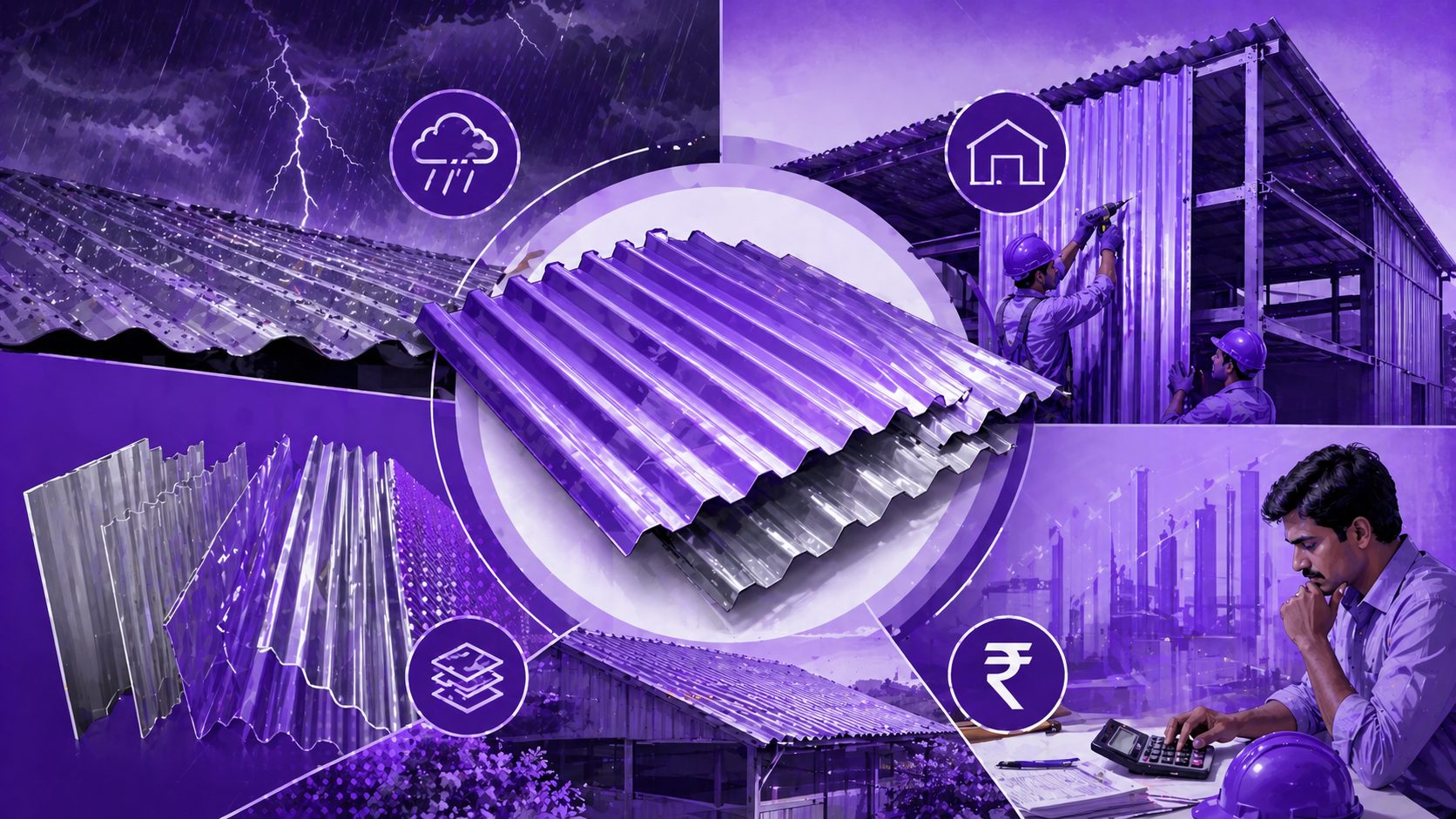
Selecting the right option depends on your project needs, environment, and budget. A well-informed choice helps improve durability and reduce long-term costs.
Based on application
Start by identifying where the sheet will be used. Residential roofing, industrial sheds, and agricultural structures have different load and durability requirements. For example, industrial projects may need thicker, high-strength sheets, while residential use can work with lighter options.
Based on weather conditions
Climate plays a key role. In areas with heavy rainfall or high humidity, opt for sheets with better corrosion resistance and coating. Coastal regions benefit from aluminium or high-GSM coated sheets, while standard GI sheets work well in dry conditions.
Based on material type
Each material offers different advantages. GI sheets are cost-effective and strong, aluminium resists rust, and polycarbonate allows light transmission. Choose based on performance needs rather than just price.
Based on budget
Balance upfront cost with long-term value. Thicker sheets with better coatings may cost more initially but reduce maintenance and replacement costs over time.
Before finalising, compare specifications, check supplier reliability, and review warranties. Taking a practical, need-based approach ensures you choose the best roofing sheet for your project without overspending.
Corrugated sheets vs other roofing materials
Choosing between different roofing options depends on cost, durability, and application. Here’s a simple comparison to help you decide:
| Feature | Corrugated sheets | Flat sheets | Roof tiles | Metal panels |
| Strength | High (ribbed design improves load-bearing) | Moderate | High but brittle | Very high |
| Cost | Affordable | Moderate | Expensive | Expensive |
| Installation | Easy & quick | Moderate | Labour-intensive | Moderate |
| Weight | Lightweight | Lightweight | Heavy | Moderate |
| Weather resistance | Excellent | Moderate | Good | Excellent |
| Maintenance | Low | Moderate | High (breakage risk) | Low |
Corrugated sheets vs metal roofing panels often comes down to cost and ease of installation – corrugated options are more economical and quicker to install, while premium metal panels offer a sleeker finish. Compared to flat sheets, corrugated profiles provide better strength and water drainage.
Maintenance & lifespan
The corrugated sheet lifespan depends on material, coating, and usage conditions. On average, these sheets last between 15 to 30 years with proper care.
GI sheets: 15–25 years
Colour-coated sheets: 20–30 years
Aluminium sheets: 25–30+ years
Polycarbonate sheets: 10–15 years
Basic maintenance tips
- Clean surfaces periodically to prevent dirt and debris buildup.
- Check for rust or coating damage, especially in humid areas.
- Ensure proper drainage to avoid water accumulation.
- Tighten or replace fasteners if required.
Regular inspection and minimal upkeep go a long way in maintaining performance. Following simple roofing maintenance tips helps extend lifespan and ensures consistent protection over time.
Conclusion
Corrugated sheets remain a practical roofing and cladding solution across a wide range of applications. With multiple material options, specifications, and price points available, making an informed choice is essential. Focus on selecting the right combination of thickness, coating, and material based on your project needs. Choosing the right sheet not only improves performance but also ensures long-term savings through reduced maintenance and better durability.
Looking to procure steel?
Tata nexarc helps manufacturers, builders and MSMEs source certified steel products, compare prices, and choose the right grade as per IS codes—with complete traceability and procurement confidence.
FAQs
What is the lifespan of corrugated sheets?
Which is best for roofing in India?
Are corrugated sheets waterproof?
What thickness is ideal for corrugated sheets?
Are corrugated sheets rust-proof?
What are the standard corrugated roofing sizes available?
Can corrugated sheets be used for walls?
Do corrugated sheets require maintenance?
Are they suitable for coastal areas?
What affects the price of corrugated sheets?
Swati is a passionate content writer with more than 10 years of experience crafting content for the business and manufacturing sectors, and helping MSMEs (Micro, Small and Medium Enterprises) navigate complexities in steel procurement, and business services. Her clear and informative writing empowers MSMEs to make informed decisions and thrive in the competitive landscape.