Check Price Now
Table of Contents
- What is MS Flat?
- Benefits of MS Flat (Mild Steel Flat)
- Uses of MS Flat (Mild Steel Flat Bars)
- MS Flat vs Other Steel Sections
- MS Flat Sizes & Price List in India (2026)
- Latest MS Flat Price Trends in India
- MS Flat Weight Calculation (Per Meter Guide)
- How to Buy Mild Steel Flats (MS Flat Buying Guide)
- Common Mistakes to Avoid When Buying MS Flats
- Common Mild Steel Products Used
- Conclusion
- FAQs
MS flat or Mild Steel flat is a term used to refer to mild steel flat strips. These flats are rectangular strips of mild steel with length usually starting at 20m. The thickness of the flats begins at 3mm. These flats are widely used in fabrication projects.
What is MS flat?
Mild Steel flat is simply a flat piece of mild steel in the form of a rectangular strip with fluctuating thickness of the strip. These flats have low carbon content, features good weldability and machinability making it a versatile material for industrial projects.
These are considered to be the most basic structural steel components. They are dimensionally superior and made with precision and accuracy. Coupled with flexibility and formability, it is a great material for manufacturing and construction uses.
Also read: Carbon content in steel: Carbon percentage, measuring carbon content, effect of carbon
Benefits of MS flat (Mild steel flat)
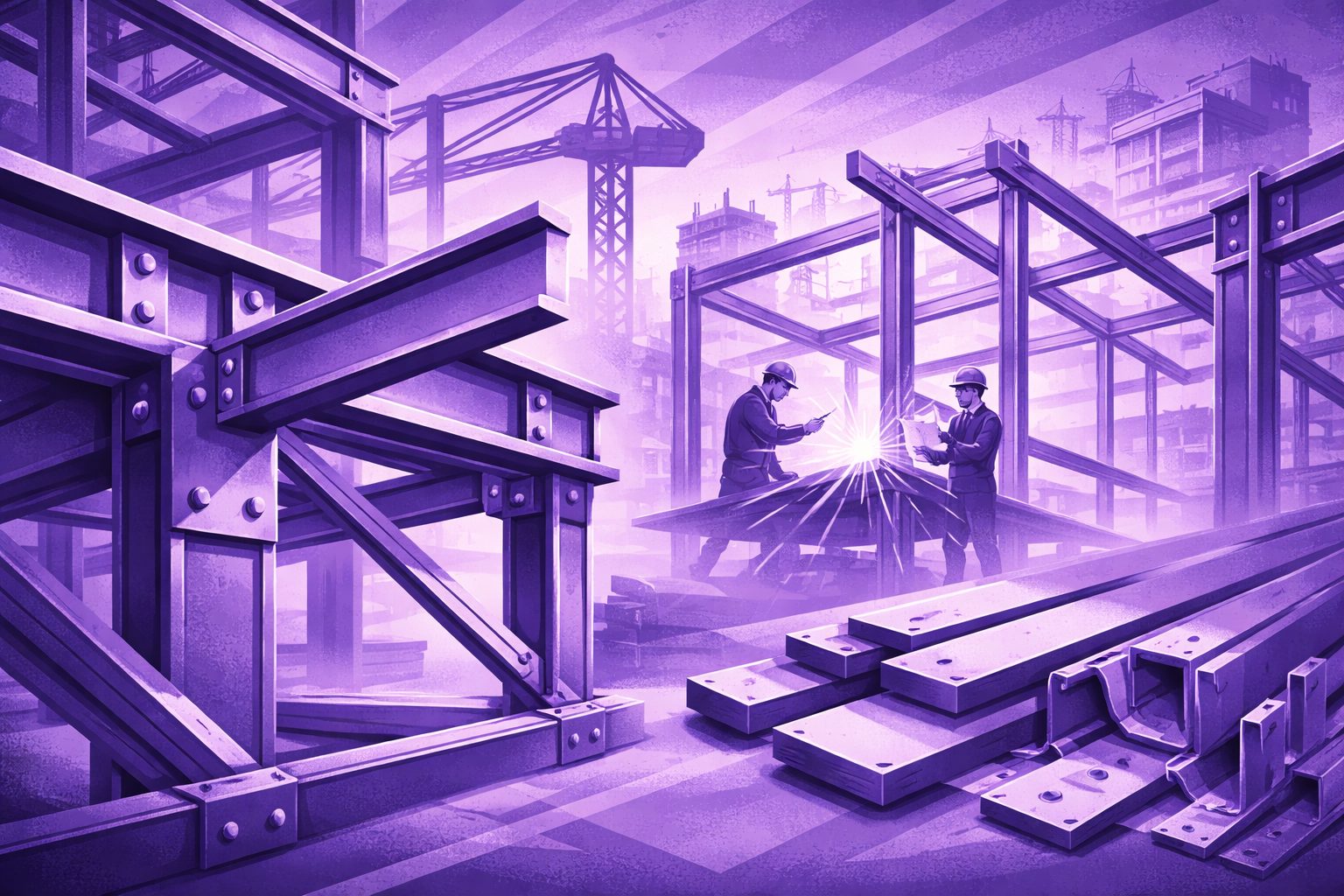
There are several advantages of using MS flat (mild steel flat bars) in manufacturing, construction, and fabrication projects.
Versatile
MS flat bars are highly versatile and widely used across industries such as construction, manufacturing, automotive, and infrastructure. These mild steel flats can be easily customised into different shapes, sizes, and thicknesses to meet specific project requirements.
Provides structural support
The strength and workability of MS flat make it ideal for structural applications. MS flat bars are commonly used as beams, frames, supports, brackets, and other load-bearing components in construction and fabrication projects.
Excellent machinability
MS flats offer excellent machinability, ensuring ease of fabrication. Their flat and uniform surface enables precise cutting, drilling, and welding, while straight edges simplify processing. This makes mild steel flats suitable for a wide range of industrial and engineering applications.
Durability
Mild steel flats are known for their durability and ability to withstand heavy use and demanding conditions. MS flat bars maintain structural integrity over time, making them suitable for long-term construction and industrial use.
Corrosion resistance
MS flats offer moderate corrosion resistance and can withstand exposure to moisture and environmental conditions to some extent. With proper surface treatment such as painting, coating, or galvanisation, the corrosion resistance and lifespan of MS flat bars can be significantly improved.
Cost-effective
MS flat bars are a cost-effective steel material compared to other structural steel products. Their affordability, combined with strength and versatility, makes mild steel flats a preferred choice for budget-friendly construction and fabrication projects.
Uses of MS flat
MS flat is a versatile structural steel product widely used across construction, fabrication, automotive, and industrial applications.
| Application area | Uses of MS flat bars | Details |
| Construction & infrastructure | Constructional frames, base plates, support structures. | Used in building frameworks, structural supports, and reinforcement due to strength, durability, and load-bearing capacity. |
| Automotive industry | Auto components, truck trailers, tippers, rail bodies. | Common in chassis parts, trailer bodies, and transport equipment due to ease of fabrication and weldability. |
| Fabrication & engineering | Link plates, brackets, supports. | Widely used in fabrication workshops for making joints, connectors, and custom steel components. |
| Material handling & equipment | Lift and elevator base plates, scaffolding. | Provides stability and strength in lifting equipment, platforms, and industrial machinery structures. |
| Home appliances & furniture | Frames, supports, appliance components. | Used in manufacturing durable frames and structural parts for appliances and metal furniture. |
| Design & architectural applications | Decorative grills, gates, railings, custom designs. | Preferred for aesthetic metalwork due to flexibility, formability, and ease of shaping into intricate designs. |
| General industrial use | Machine parts, supports, reinforcements. | Used across industries for manufacturing, repairs, and maintenance due to cost-effectiveness and versatility. |
Also read: Steel round bar: Types, advantages and uses
MS flat vs other steel sections (comparison guide)
Choosing the right structural steel product depends on the application, load requirements, and fabrication needs. Understanding the difference between MS flat, MS angle, and MS channel helps in selecting the most suitable material for construction and engineering projects.
| Type | Shape | Best use | Key advantage |
| MS flat | Rectangular (flat strip) | Base plates, brackets, frames, fabrication. | Easy to cut, weld, and customise. |
| MS angle | L-shaped (90°) | Structural supports, frames, reinforcements. | High strength with corner support. |
| MS channel | C-shaped | Beams, columns, heavy structural frameworks. | Excellent load-bearing capacity. |
| MS square/rectangular sections | Hollow sections | Columns, gates, furniture, structures. | Uniform strength and aesthetic finish. |
When to choose MS flat
MS flat bars are ideal for fabrication, light structural work, and applications requiring flexibility and customisation. In comparison, MS angles and channels are better suited for heavy structural support and load-bearing frameworks.
This structural steel comparison helps buyers and engineers select the right material based on strength, shape, and application, improving efficiency and cost-effectiveness in projects.
MS flat sizes & price list in India (2026)
While MS flat sizes can be customised by manufacturers, there are several standard sizes commonly available in the Indian steel market. Below are popular MS flat sizes along with indicative price ranges.
| MS flat size (length × thickness) | Typical width range | Weight (approx.) | Price range (₹/kg – Mar 2026) | Price per piece (₹) | Common applications |
| 20m × 4mm | 20–50 mm | ~12–30 kg | ₹58 – ₹72/kg | ₹700 – ₹2,100 | Light fabrication, grills, small structural components. |
| 25m × 4mm | 20–75 mm | ~15–45 kg | ₹58 – ₹72/kg | ₹900 – ₹3,200 | General fabrication, frames, brackets. |
| 25m × 8mm | 25–75 mm | ~30–90 kg | ₹60 – ₹75/kg | ₹1,800 – ₹6,700 | Medium-duty structural and industrial use. |
| 25m × 12mm | 25–100 mm | ~45–140 kg | ₹62 – ₹78/kg | ₹2,800 – ₹10,500 | Heavy fabrication, load-bearing supports. |
| 30m × 4mm | 20–75 mm | ~18–55 kg | ₹58 – ₹72/kg | ₹1,100 – ₹4,000 | Construction frames, railings. |
| 30m × 5mm | 25–75 mm | ~22–70 kg | ₹59 – ₹74/kg | ₹1,300 – ₹5,200 | Structural supports, machinery parts. |
| 32m × 6mm | 25–100 mm | ~30–95 kg | ₹60 – ₹76/kg | ₹1,800 – ₹7,200 | Industrial fabrication, base plates. |
| 32m × 10mm | 25–100 mm | ~50–160 kg | ₹62 – ₹78/kg | ₹3,200 – ₹12,000 | Heavy-duty structural applications. |
| 38m × 3mm | 20–50 mm | ~12–35 kg | ₹57 – ₹70/kg | ₹700 – ₹2,400 | Lightweight fabrication, decorative uses. |
| 38m × 5mm | 25–75 mm | ~20–75 kg | ₹59 – ₹74/kg | ₹1,200 – ₹5,500 | General engineering and fabrication. |
Prices mentioned are indicative and may vary based on location, supplier, quantity, and market fluctuations.
Latest MS flat price trends in India

The latest MS flat price in India (2026) is moderately volatile, typically ranging between ₹50 to ₹75 per kg, depending on size, thickness, grade (such as IS 2062), and supplier. In early 2026, prices have shown a slight upward trend, driven by strong demand from construction, infrastructure, and manufacturing sectors.
What is driving MS flat prices in 2026?
Raw material costs: Fluctuations in iron ore and coal prices directly impact mild steel rates.
Demand surge: Increased infrastructure and real estate activity is pushing prices upward.
Location variance: Prices differ across cities like Mumbai, Delhi, and Chennai due to logistics and supply chain costs.
Bulk purchasing: Large quantity orders often get better per kg pricing.
Quick price snapshot
| Parameter | Current trend |
| Price range | ₹50 – ₹75 per kg |
| Market trend | Slightly rising |
| Demand level | High |
| Price variation | City, quantity, and supplier dependent. |
For buyers, tracking the latest MS flat price today is essential for accurate cost planning and procurement. Monitoring steel price trends in India and comparing supplier quotes can help secure competitive pricing while ensuring consistent material quality.
MS flat weight calculation (per meter guide)
Understanding MS flat weight is essential for accurate cost estimation, load calculations, and material planning in construction and fabrication projects. The weight of a mild steel flat bar depends on its width, thickness, and density.
The standard MS flat weight formula is:
Weight (kg/m) = Width (mm) × Thickness (mm) × 0.00785
For example, a 50 mm × 5 mm MS flat will weigh:
50 × 5 × 0.00785 = 1.96 kg per meter (approx.)
This formula is based on the density of mild steel (7850 kg/m³) and is widely used across the steel industry in India. Calculating weight helps in determining the price per piece, transportation cost, and load-bearing capacity.
As a quick reference, thinner flats (3–5 mm) are lightweight and used in fabrication, while thicker flats (8–12 mm) are heavier and suitable for structural applications. Using an MS flat weight calculator or formula ensures better accuracy and cost efficiency.
How to buy mild steel flats (MS flat buying guide)

Buying mild steel flat bars requires careful evaluation of quality, specifications, and pricing to ensure suitability for construction, fabrication, and industrial applications. Choosing the right MS flat supplier in India can directly impact durability, performance, and project cost.
Before purchasing MS flats, consider these key factors:
Size specifications: Check length, width, and thickness based on project requirements.
Weight & density: Important for load-bearing and cost estimation.
Machinability & weldability: Ensures ease of fabrication and processing.
Tolerance & dimensional accuracy: Critical for precision engineering applications.
Tensile strength: Determines durability and structural performance.
Corrosion resistance: Look for coating or galvanisation if required.
Price per kg: Compare across suppliers for best value.
MS flat buying checklist
| Factor | What to check | Why it matters |
| Size & thickness | As per IS standards | Ensures correct fit and strength |
| Weight | kg per meter | Impacts cost and load capacity |
| Material grade | IS 2062, etc. | Defines quality and performance |
| Surface finish | Smooth, rust-free | Better durability and usability |
| Price | ₹55–₹75/kg (Mar 2026) | Budget planning and comparison |
The average MS flat price in India (early 2026) typically ranges between ₹55 to ₹75 per kg, depending on size, grade, and location.
Choosing reputed manufacturers and suppliers ensures compliance with IS standards and consistent quality. Some well-known MS flat manufacturers in India include Hindustan Ferro Alloy Industries Pvt. Ltd., Mahavir Steel Industries, Shree Ji Steel Corporation, Tata Steel, Vishal Steel Industries, Ferrite Structural Steels Pvt. Ltd., and Steelloys India Pvt. Ltd.
Common mistakes to avoid when buying MS flats
Avoid these costly mistakes when buying mild steel flat bars to ensure quality, performance, and long-term value.
Ignoring IS standards: Buying MS flats without checking IS 2062 or quality certifications can lead to poor performance.
Choosing the wrong thickness: Selecting incorrect thickness affects load-bearing capacity and structural safety.
Not checking weight tolerance: Variations in actual vs standard weight can impact cost and material estimation.
Overlooking surface quality: Rusted or uneven surfaces reduce durability and increase maintenance needs.
Buying only based on price: Cheaper MS flats may compromise on quality, strength, and lifespan.
Skipping supplier verification: Unreliable suppliers may not provide consistent quality or proper documentation.
Ignoring application requirements: Using the wrong MS flat type for the job can lead to structural inefficiencies.
Common mild steel products used in construction & fabrication
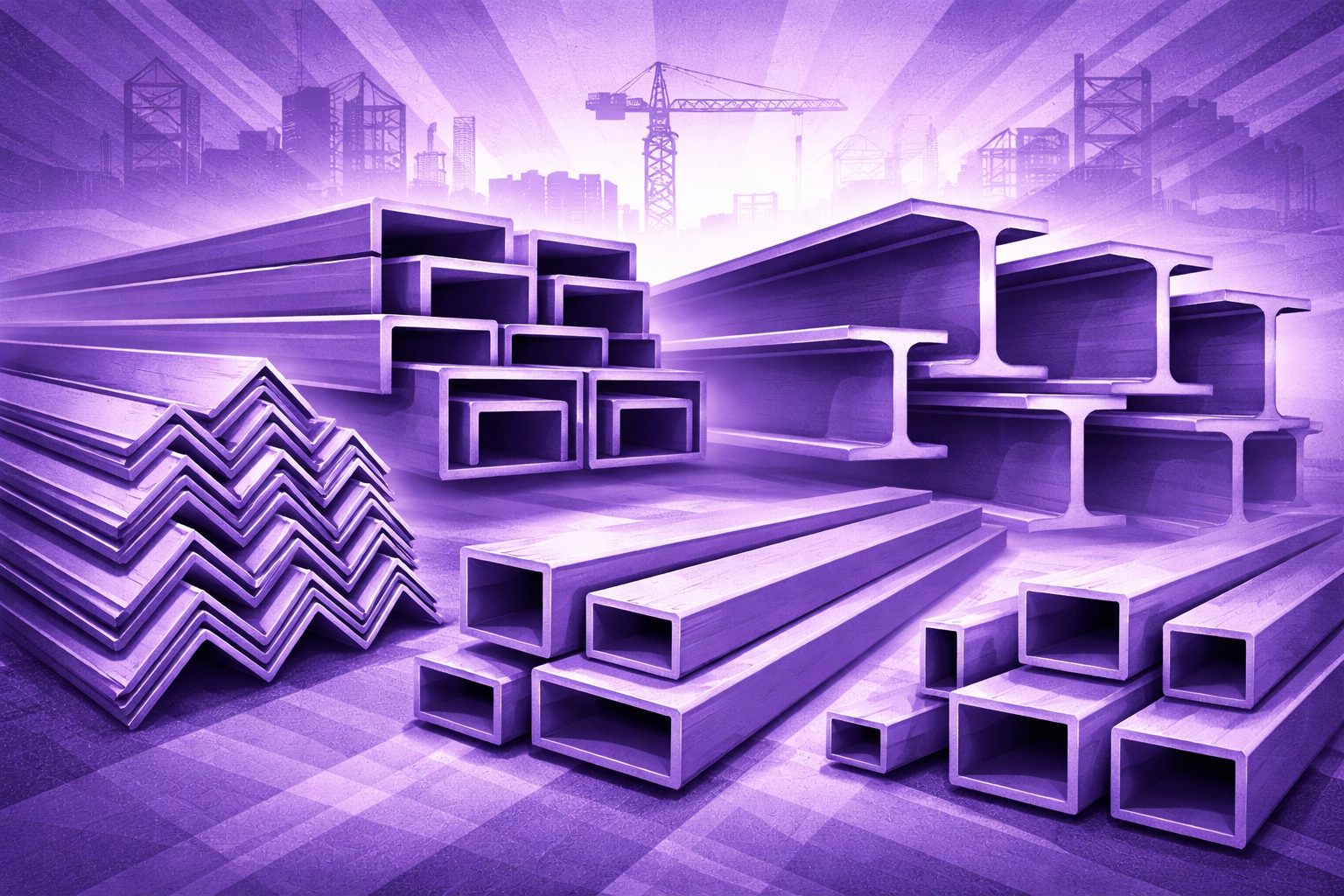
Mild steel products such as MS angles, MS channels, and MS sections are among the most commonly used structural steel components across construction, infrastructure, and industrial applications.
Mild steel angles: MS angles (steel angles) are hot-rolled mild steel products formed into L-shaped cross-sections, typically at a 90° angle. These are widely used in structural frameworks, supports, fabrication projects, and industrial construction due to their strength and versatility.
Mild steel channels: MS channels (steel channels) are extensively used in construction and civil engineering projects for masonry support, framing, and wall restraints. Known for their high load-bearing capacity and durability, MS channels are a preferred choice for structural steel applications in buildings and infrastructure.
Mild steel sections: MS sections (steel sections) are widely used as primary structural materials in construction and engineering. They are commonly used for columns, beams, shafts, and bridge components, making them essential for heavy-duty construction and infrastructure projects.
Conclusion
In a dynamic steel market, understanding MS flats goes beyond specifications – it’s about making informed, cost-efficient decisions. From selecting the right size to tracking price trends and supplier reliability, every factor influences project success. As demand for mild steel continues to grow across industries, staying updated with the latest insights ensures better procurement and performance. Whether for fabrication or construction, choosing the right MS flat can significantly enhance efficiency, durability, and overall value.
Looking to procure steel?
Tata nexarc helps manufacturers, builders and MSMEs source certified steel products, compare prices, and choose the right grade as per IS codes—with complete traceability and procurement confidence.
FAQs
What is MS flat?
What is the standard size of MS flat?
What is the weight formula for MS flat?
What is the price of MS flat per kg in India (2026)?
What are the uses of MS flat bars?
What is the density of mild steel?
Which grade is used for MS flat?
How to choose the right MS flat size?
Is MS flat corrosion resistant?
What is the difference between MS flat and MS angle?
Priyanka is a seasoned content marketing professional with more than 6 years of experience crafting various forms of business and technology sector content. Her insightful writing tackles critical issues faced by small-scale manufacturing businesses. Priyanka's clear and concise communication empowers businesses to make informed decisions and thrive in today's dynamic business environment.