Table of Contents
- Overview of GST Collection May 2026 in India
- How Does May 2026 Compare with Previous Months?
- Key Factors Driving GST Collection Growth in May 2026
- State-wise GST Collection May 2026
- Key Economic Insights from May 2026 GST Collections
- Implications for MSMEs and Businesses
- GST Collection Outlook for the Rest of FY 2026–27
- Conclusion
- FAQs
India’s GST collection in May 2026 reached ₹1.94 lakh crore, recording a 3.2% year-on-year increase from ₹1.88 lakh crore in May 2025. The latest GST revenue figures highlight continued economic activity despite moderating from April’s record collections. Strong import-related tax receipts, resilient consumer demand, and steady business transactions supported overall growth.

Monthly GST collection data is closely tracked because it provides an early indicator of consumption, manufacturing, and trade activity. For businesses, policymakers, and investors, the May 2026 GST collections suggest that economic momentum remains intact while compliance levels continue to improve across sectors.
Overview of GST collection May 2026 in India
India’s gross GST collection for May 2026 stood at ₹1,94,184 crore, reflecting a 3.2% year-on-year increase from ₹1,88,687 crore collected in May 2025. While collections moderated from the record ₹2.37 lakh crore reported in April 2026, they remained well above the ₹1.9 lakh crore mark, indicating continued economic resilience.
The latest GST figures point to steady business activity across the country. Higher revenues from imports played a significant role in supporting collections, while domestic GST revenues recorded modest growth. The data also reflects ongoing improvements in tax compliance and the continued formalisation of economic activity.
Key highlights
Gross GST collection (May 2026): ₹1,94,184 crore
Gross GST collection (May 2025): ₹1,88,687 crore
Year-on-year growth: 3.2%
Gross GST collection (April 2026): ₹2.37 lakh crore
Growth in GST from imports: 25.2%
Growth in domestic GST revenue: 0.9%
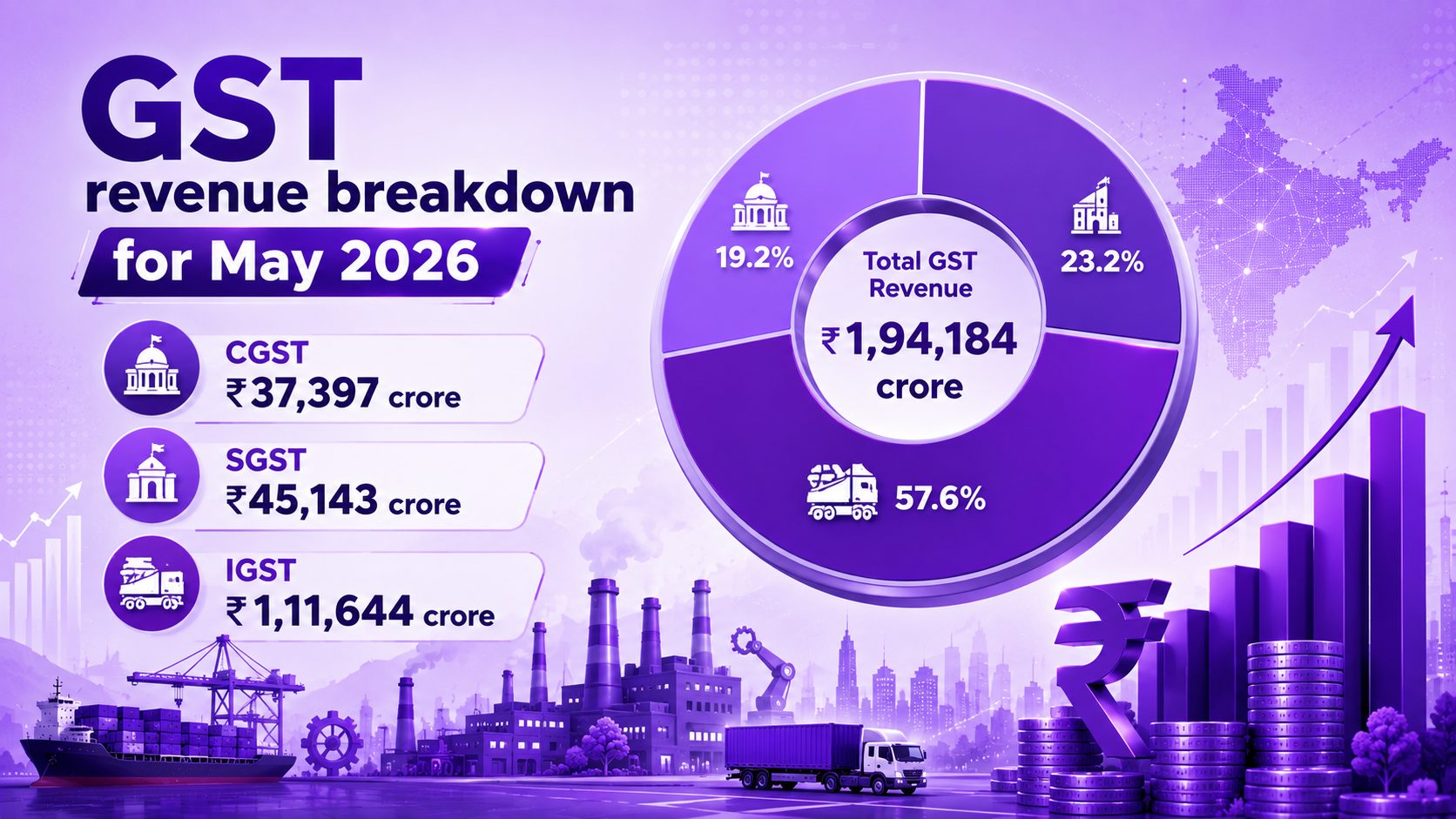
GST revenue breakdown for May 2026
CGST: ₹37,397 crore
SGST: ₹45,143 crore
IGST: ₹1,11,644 crore
The strong contribution from IGST highlights the importance of interstate trade and imports in India’s GST framework. Overall, the May 2026 GST collection figures suggest that consumption, trade and business activity remained healthy at the beginning of FY 2026–27.
Total GST revenue collected
India’s gross GST collection for May 2026 stood at ₹1,94,184 crore, compared to ₹1,88,172 crore in May 2025. This represents a 3.2% year-on-year increase, reflecting steady economic activity and continued improvements in GST compliance.
Collections moderated from the record ₹2.37 lakh crore reported in April 2026. This decline was expected, as April collections typically benefit from year-end business transactions and tax settlements. Despite the month-on-month drop, May 2026 recorded one of the highest GST collections to date, highlighting resilient demand and stable business activity.
Breakdown of collections
The May 2026 GST collection was distributed across the major tax components as follows:
| Component | May 2026 (₹ crore) | May 2025 (₹ crore) | Growth (%) |
|---|---|---|---|
| CGST | 37,397 | 35,434 | 5.5% |
| SGST | 45,143 | 43,902 | 2.8% |
| IGST (Domestic) | 51,990 | 50,548 | 2.9% |
| IGST (Imports) | 59,654 | 47,883 | 24.6% |
| Compensation cess | 12,879 | 10,405 | 23.8% |
| Total Gross GST Collection | 1,94,184 | 1,88,172 | 3.2% |
The strongest growth came from GST on imports, which increased by nearly 25% year-on-year. Domestic GST revenues also remained positive, indicating stable consumption and business transactions. The continued rise in CGST and SGST collections further reflects sustained economic activity across India’s formal sector.
How does May 2026 compare with previous months?

Comparison with April 2026
India’s GST collections moderated from a record ₹2,42,702 crore in April 2026 to ₹1,94,184 crore in May 2026. The month-on-month decline of ₹48,518 crore was largely expected, as April collections typically benefit from year-end sales, annual reconciliations and tax payments linked to the close of the previous financial year.
Despite the decline, May’s GST collections remained among the highest ever recorded. This indicates that underlying economic activity remained strong, supported by steady business transactions, consumer spending and trade activity.
Key highlights
April 2026 GST collection: ₹2,42,702 crore
May 2026 GST collection: ₹1,94,184 crore
Month-on-month difference: ₹48,518 crore
The decline was primarily driven by seasonal factors rather than weaker economic activity.
Comparison with May 2025
On a year-on-year basis, GST collections continued to grow. Gross GST revenue increased from ₹1,88,172 crore in May 2025 to ₹1,94,184 crore in May 2026, representing a 3.2% increase.
Import-related GST collections recorded the strongest growth during the month, while domestic GST revenues remained stable. This suggests that trade activity played an important role in supporting overall tax collections, even as domestic growth remained moderate.
| Month | Gross GST collection (₹ crore) | Growth |
|---|---|---|
| May 2025 | 1,88,172 | — |
| May 2026 | 1,94,184 | 3.2% |
GST collection trend in FY 2026–27 so far
The first two months of FY 2026–27 have delivered strong GST revenues. Collections crossed the ₹2 lakh crore mark in April before remaining close to ₹2 lakh crore in May. While April benefited from year-end factors, May’s performance demonstrates that the GST base remains healthy.
What the trend suggests:
- GST revenues continue to remain at historically high levels.
- Import-led collections are contributing significantly to growth.
- Tax compliance remains strong across sectors.
- The revenue outlook for FY 2026–27 remains positive if current trends continue.
Key factors driving GST collection growth in May 2026

Strong domestic consumption
Steady consumer spending supported GST collections in May 2026. Demand remained healthy across sectors such as FMCG, automobiles, hospitality and services. Strong retail activity helped maintain stable GST revenues despite a moderation from April’s record collections.
Manufacturing and industrial activity
Manufacturing continued to contribute significantly to GST collections. Production remained steady across sectors such as engineering goods, construction materials and automobiles. Ongoing infrastructure investments also supported business activity and the movement of goods across the country.
Increase in imports
Higher import-related tax collections were one of the biggest drivers of GST growth during the month. GST revenue from imports recorded strong year-on-year growth, reflecting increased trade activity and higher demand for raw materials, machinery and industrial inputs. This contributed substantially to overall GST collections.
Improved GST compliance
Better compliance also helped strengthen GST revenues. The growing adoption of e-invoicing and digital filing systems has improved reporting accuracy and reduced tax leakages. At the same time, technology-driven monitoring and reconciliation measures have increased transparency across the GST ecosystem.
Together, strong consumer demand, steady industrial activity, rising imports and improved compliance helped India maintain robust GST collections in May 2026, despite the expected decline from April’s record-high revenue.
State-wise GST collection May 2026
Top performing states
Maharashtra continued to lead GST collections in 2026, supported by its strong manufacturing, services and consumption sectors. Karnataka, Gujarat, Tamil Nadu and Uttar Pradesh also remained among the top contributors due to their large industrial bases and growing economic activity.
These states account for a significant share of India’s manufacturing output, exports and consumer spending, making them key drivers of GST revenue.
States recording fastest growth
States with expanding industrial activity and improving compliance recorded some of the strongest GST growth rates. Manufacturing investments, infrastructure projects and increased business formalisation helped boost collections across several regions.
Regional trends emerging in 2026
Manufacturing corridors across western and southern India continued to attract investment in sectors such as automobiles, electronics and engineering. At the same time, infrastructure development and logistics projects supported business growth in emerging industrial regions.
| State | Key GST growth driver |
|---|---|
| Maharashtra | Manufacturing, finance and consumption. |
| Karnataka | Technology, services and electronics. |
| Gujarat | Manufacturing, exports and trade. |
| Tamil Nadu | Automobiles, electronics and industry. |
| Uttar Pradesh | Consumption growth and industrial expansion. |
Key economic insights from May 2026 GST collections
Economic growth signals
The May 2026 GST collection figures suggest that economic activity remains resilient. Strong tax revenues point to steady consumer demand, continued business transactions and healthy trade activity across key sectors. GST collections are often viewed as a leading indicator of economic performance because they reflect real-time spending and commercial activity.
Formalisation of the economy
Consistently high GST collections also indicate continued formalisation of the economy. More businesses are operating within the tax system, supported by wider adoption of digital invoicing and online compliance tools. Improved reporting and monitoring mechanisms have helped expand the tax base while reducing revenue leakages.
Impact on government revenue
Strong GST collections strengthen government finances and provide greater fiscal flexibility. Higher revenues support public spending on infrastructure, logistics, manufacturing, and social development programmes.
Continued revenue growth also creates a more stable environment for long-term economic investment and development.
Implications for MSMEs and businesses

Stronger market demand
Healthy GST collections generally signal stable market demand. For manufacturers, suppliers and service providers, this can translate into more business opportunities and stronger order pipelines.
Importance of GST compliance
As compliance systems become more data-driven, accurate GST filing is increasingly important. Businesses must maintain proper documentation and manage input tax credits effectively to avoid disruptions and penalties.
Planning for growth
Stable economic activity allows businesses to plan with greater confidence. MSMEs can use market trends to make informed decisions on inventory, procurement and working capital management.
Digital tax management becoming essential
Digital tax management is no longer optional for growing businesses. Automated invoicing, GST software and regular reconciliations can improve accuracy, reduce compliance risks and save valuable time.
Businesses that invest in efficient GST processes will be better positioned to manage growth and changing regulatory requirements.
GST collection outlook for the rest of FY 2026–27
India’s GST collections are expected to remain strong through the rest of FY 2026–27, supported by steady consumption, ongoing infrastructure investments and continued industrial activity. While monthly collections may fluctuate due to seasonal factors, revenues are likely to stay at historically high levels if current economic trends continue.
Consumer spending is expected to remain a key growth driver, particularly in urban markets. Manufacturing activity, supported by government infrastructure projects and private sector investments, should also contribute to stable GST collections over the coming months.
| Factor | Potential impact on GST collections |
|---|---|
| Consumer demand | Higher spending can support stronger GST revenue growth |
| Manufacturing activity | Increased production and sales can boost collections |
| Infrastructure investment | Creates demand across supply chains and industries |
| GST Council decisions | Rate changes or policy reforms may influence revenues |
| Compliance enforcement | Improved monitoring can reduce tax leakages |
| E-invoicing adoption | Enhances reporting accuracy and compliance |
| Technology-driven audits | Helps identify mismatches and improve collections |
Policy and compliance factors to watch
Future GST collections will also depend on policy developments and compliance measures. GST Council decisions, technology-led enforcement initiatives and wider adoption of digital compliance tools are expected to remain important drivers of revenue growth.
Overall, the outlook for GST collections remains positive, reflecting continued economic activity and a steady expanding formal tax base.
Conclusion
The May 2026 GST figures highlight the continued strength of India’s formal economy and provide valuable insight into broader business and market trends. Beyond tax revenue alone, GST collections offer a real-time view of consumption patterns, trade activity and industrial performance across the country.
For businesses, especially MSMEs, tracking monthly GST data can help identify shifts in market demand, sectoral momentum, and overall economic sentiment. These trends can support better planning around production, procurement, and growth strategies.
As FY 2026–27 progresses, GST collections will remain an important indicator to watch. Continued economic expansion, infrastructure investment and improvements in compliance could help sustain healthy revenue growth, supporting both business confidence and India’s long-term growth trajectory.
Empowering MSMEs to grow smarter
Tata nexarc delivers powerful solutions for MSMEs—discover tenders, logistics solutions, and streamline procurement. Everything your business needs, all in one place.
FAQs
What was the GST collection in India for May 2026?
How much did GST collections grow compared to May 2025?
Which states recorded the highest GST collections in May 2026?
Why are GST collections considered an economic indicator?
How do higher GST collections benefit businesses and the economy?
What factors contributed to GST revenue growth in May 2026?
What is the difference between CGST, SGST and IGST?
How do GST collections affect government spending?
What does GST collection growth mean for MSMEs?
Where can businesses access official GST collection data?
A product manager with a writer's heart, Anirban leverages his 6 years of experience to empower MSMEs in the business and technology sectors. His time at Tata nexarc honed his skills in crafting informative content tailored to MSME needs. Whether wielding words for business or developing innovative products for both Tata Nexarc and MSMEs, his passion for clear communication and a deep understanding of their challenges shine through.