Check Price Now
Table of Contents
- Bitumen vs Asphalt: Key Differences at a Glance
- What is Bitumen?
- What is Asphalt?
- Bitumen vs Asphalt: Detailed Comparison
- How Bitumen and Asphalt Work Together in Road Construction
- Applications: Where Bitumen and Asphalt are Used
- How to Choose Between Bitumen and Asphalt for a Road Project
- Procurement and Quality Checks for Bitumen and Asphalt
- Bitumen vs Asphalt: Which One is Better?
- Conclusion
- FAQs
Bitumen vs asphalt is a common comparison in road construction, but the two materials are not the same. Bitumen acts as the binding material, while asphalt is generally a mixture of bitumen, aggregates, and other materials used for paving. This distinction matters for highway contractors, asphalt plant operators, engineers, and procurement teams because each material has different sourcing, specification and quality requirements. Project specifications, traffic load, climate, pavement design, and applicable standards also influence the material and mix selected for a project.
Bitumen vs asphalt: Key differences at a glance
The main difference between bitumen and asphalt is that bitumen is a petroleum-based binding material, while asphalt is a paving mixture that uses bitumen to bind aggregates together. In simple terms, bitumen acts as the binder, whereas asphalt forms the finished material used to construct roads and other paved surfaces.
For contractors and procurement teams, the distinction affects what they buy and how they assess it. Bitumen procurement focuses on the specified grade, material properties, and supply consistency. Asphalt procurement and production involve the overall quality of the prepared mix, including the aggregates and expected pavement performance.
| Parameter | Bitumen | Asphalt |
| Basic form | Binding material. | Composite paving material. |
| Main composition | Petroleum-derived binder. | Bitumen, aggregates and other mix components. |
| Primary role | Binds materials and provides waterproofing properties. | Forms the paving layer. |
| Supplied as | Bulk material for storage and further use. | Prepared paving mix. |
| Common uses | Asphalt production, waterproofing, and coating. | Roads, parking areas, and other paved surfaces. |
| Procurement focus | Specification, quality, and consistency. | Mix quality, aggregate properties, and required performance. |
What is bitumen?
Bitumen is a viscous, black, petroleum-based material that acts as a binding agent. Refineries produce it during crude oil processing, and its adhesive and waterproofing properties make it suitable for several infrastructure applications.
Role in road construction: Bitumen used in road construction coats and binds aggregates to form a stable paving mixture. It acts as the bitumen binder that helps hold aggregate particles together in an asphalt mix. Contractors select the binder based on project requirements, pavement conditions, and applicable specifications.
Common types: Contractors may encounter several bitumen grades and modified products, including Viscosity Grade (VG) bitumen, Polymer Modified Bitumen (PMB), Crumb Rubber Modified Bitumen (CRMB), bitumen emulsions and cutback bitumen. Each type serves specific construction and maintenance requirements, so buyers should check the project’s specification before selecting a material.
What is asphalt?
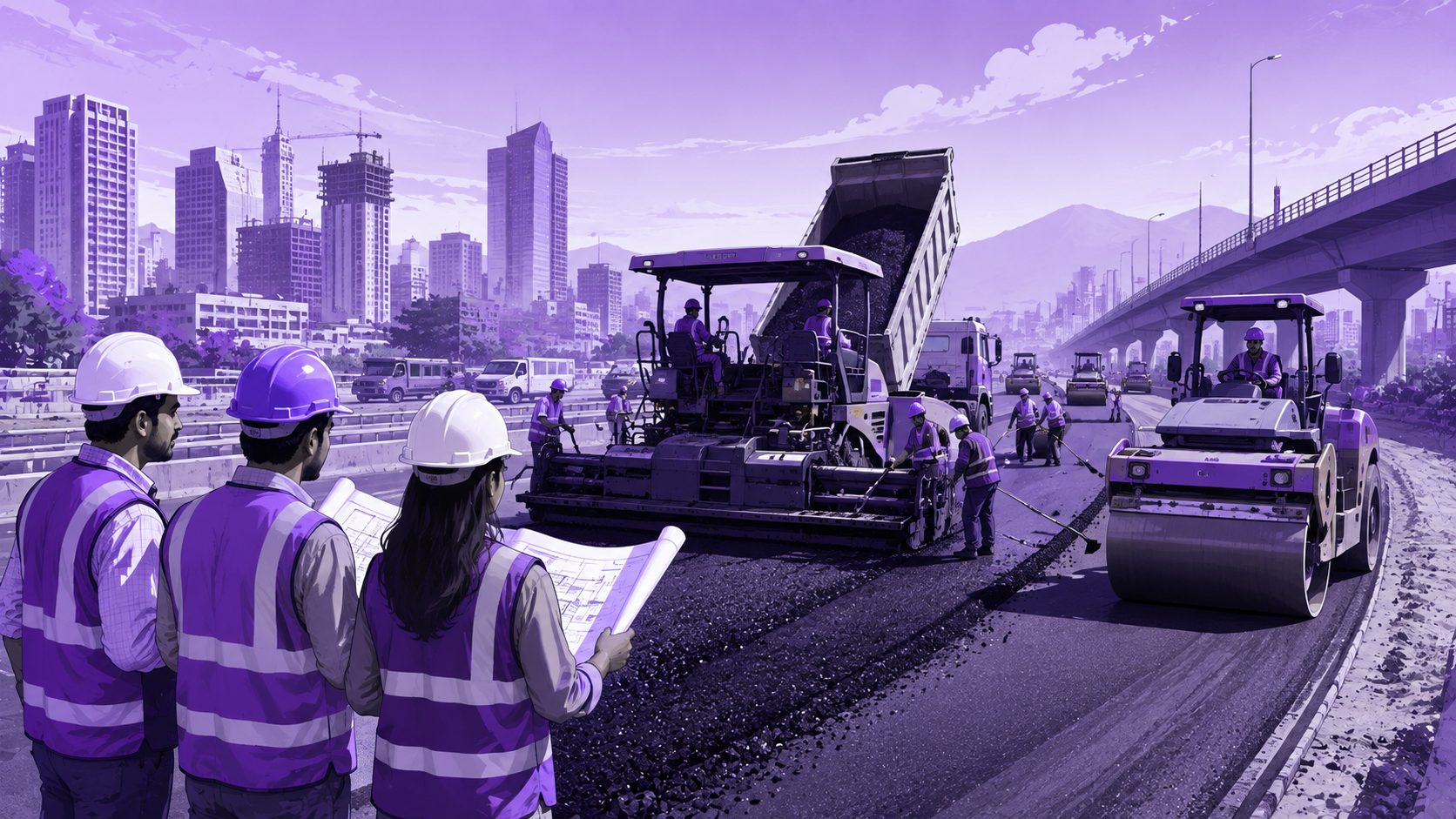
Asphalt is a paving material produced by combining bitumen with aggregates. These aggregates can include crushed stone, sand, and mineral filler. The bitumen acts as the binder that holds the aggregate structure together and creates the finished paving material.
What affects asphalt mix properties?
An asphalt mixture depends on several factors, including aggregate gradation, bitumen content, binder grade, air voids, mix design, production temperature, and the intended pavement application. Contractors and engineers control these factors to produce a mix that meets the project’s performance and specification requirements.
Where is asphalt used?
Asphalt pavement is widely used for highway surface layers, urban roads, airport pavements, parking areas and industrial yards. Hot mix asphalt is one of the common paving materials used in asphalt road construction, particularly where projects require a durable and properly designed pavement surface.
Bitumen vs asphalt: Detailed comparison
The bitumen vs asphalt comparison becomes more important when contractors move from material selection to procurement, production, and project execution. Although both materials are essential in road construction, they differ in how suppliers produce, test, transport and use them.
| Comparison factor | Bitumen | Asphalt |
| Material type | Binder | Paving mixture |
| Composition | Petroleum-derived hydrocarbon binder. | Bitumen, aggregates and mineral filler. |
| Primary function | Provides adhesion and binding properties. | Forms the finished pavement layer. |
| Production | Produced through crude oil refining and further processing. | Manufactured by mixing the required materials under controlled conditions. |
| Quality focus | Grade, consistency, and specified material properties. | Mix composition, material quality, and required pavement performance. |
| Transportation | Delivered in bulk using suitable storage and handling systems. | Transported from the asphalt plant to the paving site. |
| Site application | Used in mixes, coatings, and other specified treatments. | Laid, spread, and compacted to form the pavement. |
| Testing focus | Binder properties and specification compliance. | Aggregate quality, binder properties, and overall mix performance. |
| Procurement | Purchased as an input material, usually by weight. | Procured or produced according to the required mix and project quantity. |
| Key decision-makers | Procurement and quality teams. | Engineers, plant teams, contractors, and project managers. |
The practical difference
A contractor may procure bitumen as a raw material for an approved construction application. An asphalt contractor or plant operator, however, uses the selected binder and aggregates to produce the finished mix required for the pavement design. This distinction helps procurement managers, EPC contractors, asphalt plant owners, project engineers, and tender teams define the right material requirement before placing an order.
How bitumen and asphalt work together in road construction
From material selection to pavement
Bitumen and asphalt work together through a controlled construction process. The project first defines the pavement requirements based on traffic, climate, design, and applicable specifications. Engineers then determine the required material characteristics and asphalt mix.
How asphalt is made
The asphalt production process begins when the plant combines aggregates with the selected bitumen binder. The resulting asphalt mix must meet the requirements of the approved mix design. The binder grade and mix composition should suit the expected traffic load, climate, and pavement application.
From plant to finished road
The prepared asphalt mix is transported to the construction site, where paving equipment spreads across the required area. Compaction then creates the finished pavement layer. In this process, bitumen used in asphalt binds the aggregates, while the compacted mix forms the asphalt pavement that carries traffic.
Applications: Where bitumen and asphalt are used

Bitumen and asphalt serve different roles across road and infrastructure projects. Bitumen can act as an input material or binder in several applications, while asphalt mainly serves as the finished paving material.
| Application | Bitumen | Asphalt |
| Road construction | Used as the binder in asphalt mixes and other bituminous applications. | Used to construct pavement layers. |
| Asphalt production | Acts as the binding material for aggregates. | Forms the finished mix after combining aggregates and binder. |
| Surface treatments | Used in specified road surface treatments. | Not typically used as a standalone treatment material. |
| Highways | Used as an input in pavement materials. | Used for national, state and other highway pavement layers. |
| Urban roads | Used in asphalt mixes and maintenance applications. | Used for city roads and streets. |
| Airport pavements | Used as the binder in specified pavement mixes. | Used for runways, taxiways, and other paved areas. |
| Parking areas | May form part of the asphalt mix. | Used to create finished parking surfaces. |
| Industrial roads and yards | Used as a binder based on pavement requirements. | Used for paved industrial roads and loading areas. |
| Waterproofing | Used in waterproofing applications. | Not generally used for this purpose |
| Roofing and industrial applications | Used in selected roofing and industrial products. | Primarily used for paving applications. |
| Road maintenance | Used in emulsions and other specified maintenance treatments. | Used for resurfacing and pavement repair. |
The key difference: Bitumen has applications beyond paving because it can function as a binder and waterproofing material. Asphalt primarily serves as the finished material used to build and maintain paved surfaces.
How to choose between bitumen and asphalt for a road project
Contractors do not always choose bitumen instead of asphalt. The actual requirement depends on whether the project needs a binder as an input material or a finished asphalt mixture for paving.
Project requirement
Check the BOQ, pavement design, and technical specifications first. The project may require bulk bitumen, a specific binder grade, or a ready asphalt mix.
Traffic loading
Heavy traffic and high-load corridors may require specific binder properties and pavement mixes. The material should support the expected traffic conditions.
Climate and temperature
Temperature can affect both binder behaviour and pavement performance. Select materials that suit the project’s climatic conditions.
Applicable specifications
Follow the tender requirements and applicable IRC, MoRTH, BIS and project-specific specifications. The approved technical documents should guide material selection.
Asphalt plant capability
Check whether the asphalt plant can consistently produce the required mix. Plant controls, material handling, and production capacity can affect project execution.
Material availability and logistics
Assess bitumen supply, aggregate availability, transport distance and delivery schedules. Delays in material supply can affect paving timelines.
Lifecycle requirements
Consider expected pavement life, maintenance needs and long-term performance. The right material decision should support both project completion and future maintenance requirements.
Procurement and quality checks for bitumen and asphalt
Procurement teams should check more than price before placing an order. Bitumen and asphalt have different quality and delivery requirements, so the checks should match the material being sourced.
| Procurement and quality check | Bitumen | Asphalt |
| Specification compliance | Check the required grade and project specifications. | Check the approved mix design and project requirements. |
| Supplier documentation | Verify supplier documents and material details. | Review mix records and relevant supply documentation. |
| Consistency | Check batch consistency. | Check consistency across production batches. |
| Quality certificates | Review available test certificates. | Verify aggregate, binder and mix quality records. |
| Raw materials | Confirm the specified binder properties. | Check aggregate quality and the binder used in the mix. |
| Storage and handling | Assess storage and handling requirements before delivery. | Check production controls and material handling arrangements. |
| Temperature | Maintain suitable handling conditions. | Monitor production, delivery, and paving temperature requirements. |
| Logistics | Confirm quantity, delivery schedule, and transport arrangements. | Check transport time between the plant and project site. |
| Site quality control | Verify material acceptance before use. | Monitor paving, compaction and other site quality controls. |
Cost consideration: The lowest material price does not always result in the lowest project cost. Poor material consistency, rejection risk, plant downtime, rework, and construction delays can increase the overall cost of a road project.
Bitumen vs asphalt: Which one is better?
Is bitumen better than asphalt?: Neither is universally better because they perform different roles in road and infrastructure projects.
When to choose bitumen: Procure bitumen when the project requires a binder for asphalt production, surface treatment, waterproofing or another specified application.
When to choose asphalt: Use asphalt when the project requires a prepared paving material containing aggregates and a bituminous binder.
What should guide the choice?: Base the decision on project specifications, pavement design, traffic conditions, climate, approved standards and mix design requirements.
For contractors and buyers: The right choice depends on whether the project requires the binder itself or the finished paving material.
Conclusion
Understanding the difference between bitumen and asphalt helps project teams define material requirements more accurately and avoid sourcing mismatches. Clear specifications, reliable quality documentation, and dependable supply can also reduce execution risks during road construction. Before finalising a purchase, buyers should compare the material requirements, supplier capability, delivery terms, and total landed cost rather than focusing only on the quoted price.
Looking to procure steel?
Tata nexarc helps manufacturers, builders and MSMEs source certified steel products, compare prices, and choose the right grade as per IS codes—with complete traceability and procurement confidence.
FAQs
What is the main difference between bitumen and asphalt?
Is bitumen the same as asphalt?
Which is used to make roads, bitumen or asphalt?
Is bitumen used in asphalt?
Which is better for road construction, bitumen or asphalt?
What is asphalt made of?
Can bitumen be used without asphalt?
Why do contractors check the bitumen grade?
What should buyers check when procuring asphalt?
Does the lowest bitumen or asphalt price mean the lowest project cost?
A product manager with a writer's heart, Anirban leverages his 6 years of experience to empower MSMEs in the business and technology sectors. His time at Tata nexarc honed his skills in crafting informative content tailored to MSME needs. Whether wielding words for business or developing innovative products for both Tata Nexarc and MSMEs, his passion for clear communication and a deep understanding of their challenges shine through.