Check Price Now
Table of Contents
Roadway and infrastructure safety play a critical role in protecting people, vehicles, and assets. Modern road safety barriers now support safety across highways, bridges, warehouses, industrial facilities, and urban roads. Choosing the right system affects impact protection, maintenance costs, compliance requirements, and long-term value. This crash barrier comparison examines metal beam crash barrier systems against concrete, cable, plastic, and temporary barriers to help businesses and infrastructure decision-makers understand which option best suits different applications.
What is a metal beam crash barrier?
A metal beam crash barrier system is a roadside safety solution designed to reduce the impact of vehicle collisions and improve road safety. It helps redirect vehicles during crashes and lowers the risk of vehicles crossing into hazardous zones, opposing traffic lanes, or roadside obstacles.
These systems appear across highways, bridges, industrial facilities, logistics zones, and transport infrastructure where vehicle movement creates safety risks. Metal beam barriers are preferred because they balance protection, durability, and maintenance efficiency.
Metal beam barriers usually use galvanised steel to improve corrosion resistance and support long-term outdoor performance. Manufacturers design these systems to absorb and distribute crash forces rather than stop vehicles abruptly.
Key components
A standard steel crash barrier design commonly includes:
| Component | Purpose |
|---|---|
| Beam rail | Main impact-absorbing section |
| Posts | Support the barrier structure |
| Spacer blocks | Create distance between beam and post |
| Fasteners and bolts | Secure system components |
| End terminals | Improve safety at barrier ends |
Two common beam profiles are widely used:
| Configuration | Description | Common Application |
|---|---|---|
| W beam crash barrier | Features a double-wave profile that helps distribute impact forces | Highways, bridges, urban roads. |
| Thrie-beam barrier | Uses a three-wave profile that offers higher strength and containment capability | High-speed corridors, bridges, critical infrastructure. |
How energy absorption works
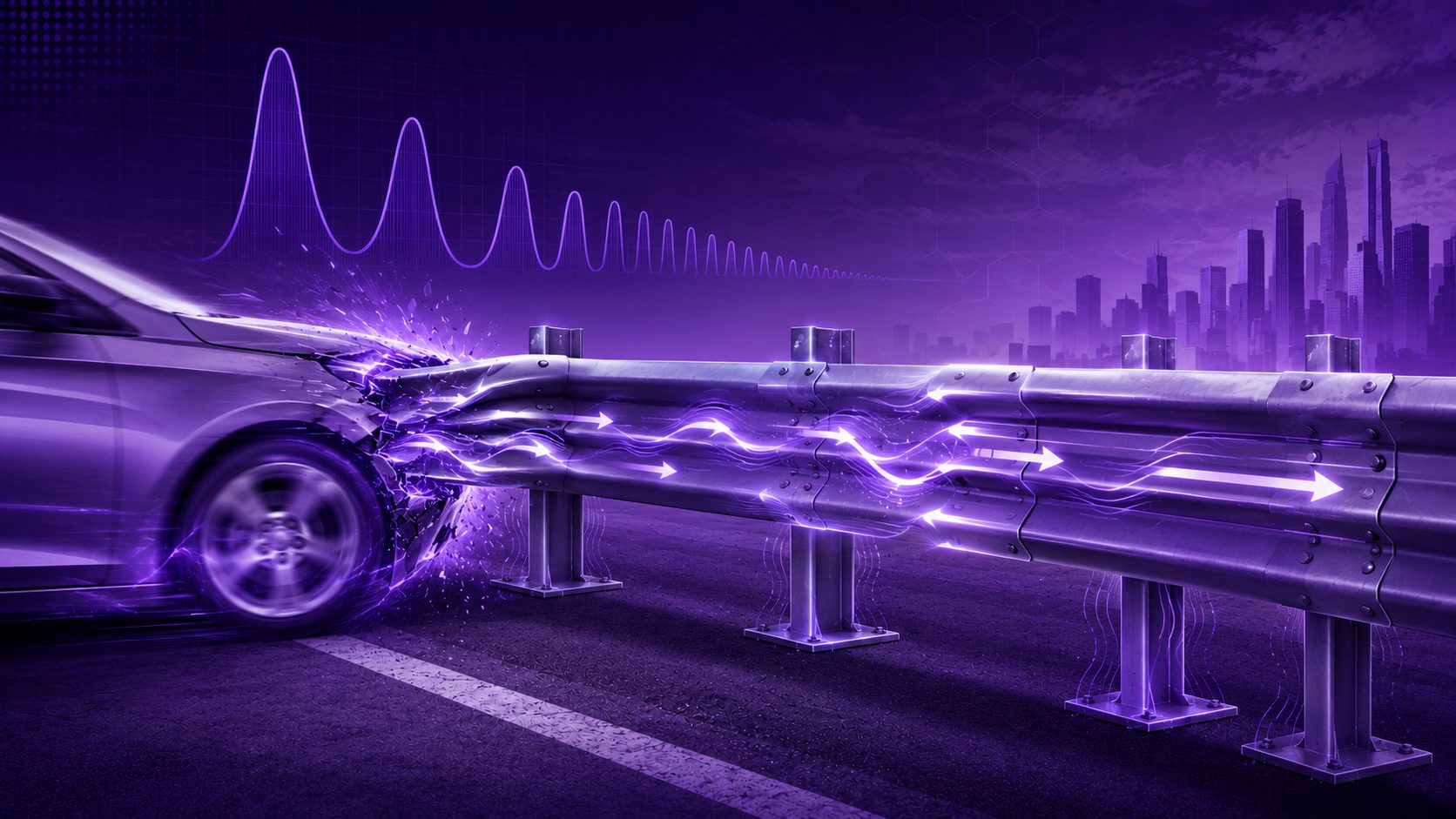
During a vehicle collision, the barrier does not simply block impact. The metal beam flexes and distributes crash energy across multiple components. Posts, beams, and connection points work together to reduce collision force and guide vehicles back towards their travel direction. This energy management capability makes highway crash barriers highly effective for modern transport infrastructure.
Common installation environments include:
- Highways
- Bridges
- Industrial sites
- Warehouse perimeters
- Parking infrastructure
- Logistics facilities
- Urban transport corridors
The combination of strength, controlled flexibility, and scalable installation makes metal beam systems a widely adopted safety solution across infrastructure projects.
Types of crash barriers used today
Different crash barrier types serve different safety requirements. Traffic speed, installation environment, vehicle movement patterns, and operational needs all influence barrier selection. Modern road crash protection systems support highways, industrial zones, warehouses, bridges, and construction areas.
Some barriers focus on vehicle redirection. Others prioritise containment or temporary protection. Understanding the differences helps infrastructure planners and businesses choose suitable solutions.
Metal beam crash barrier
Metal beam barriers use galvanised steel rails mounted on posts. These systems absorb and distribute impact energy to reduce collision severity. Their combination of strength and controlled flexibility makes them widely used as highway safety barriers.
Common applications:
- Highways
- Bridges
- Industrial facilities
- Parking infrastructure
- Warehouse traffic zones
Concrete crash barrier
Concrete barriers use reinforced concrete structures designed for high containment performance. Their rigid construction limits vehicle penetration and crossover incidents.
Common applications:
- High-speed highways
- Medians
- Urban roads
- Critical infrastructure corridors
Wire rope crash barrier
Wire rope systems use tensioned steel cables supported by posts. These barriers flex significantly during vehicle impact and gradually absorb crash energy.
Common applications:
- Highways
- Road medians
- Curved road sections
Plastic safety barrier
Plastic barriers commonly use polyethylene materials and often include water or sand filling for stability. These barriers prioritise visibility and temporary traffic management.
Common applications:
- Parking facilities
- Urban worksites
- Pedestrian management areas
Temporary construction barrier
Temporary barriers protect workers and vehicles around changing work environments. Manufacturers build these systems using steel, plastic, or concrete depending on project needs.
Common applications:
- Construction zones
- Diversion routes
- Maintenance operations
| Barrier type | Primary material | Protection mechanism | Flexibility level | Typical use |
|---|---|---|---|---|
| Metal beam | Galvanised steel | Energy absorption and redirection | Moderate | Highways, industrial safety barriers. |
| Concrete | Reinforced concrete | Vehicle containment | Low | Medians, highways. |
| Wire rope | Steel cable | Controlled deflection | High | Road corridors. |
| Plastic | Polyethylene | Visual guidance and separation | Moderate | Urban traffic areas. |
| Temporary barrier | Mixed materials | Worksite protection | Varies | Construction projects. |
Selecting suitable crash barrier types depends on safety goals, installation conditions, and long-term operational requirements.
Metal beam crash barrier vs concrete barrier
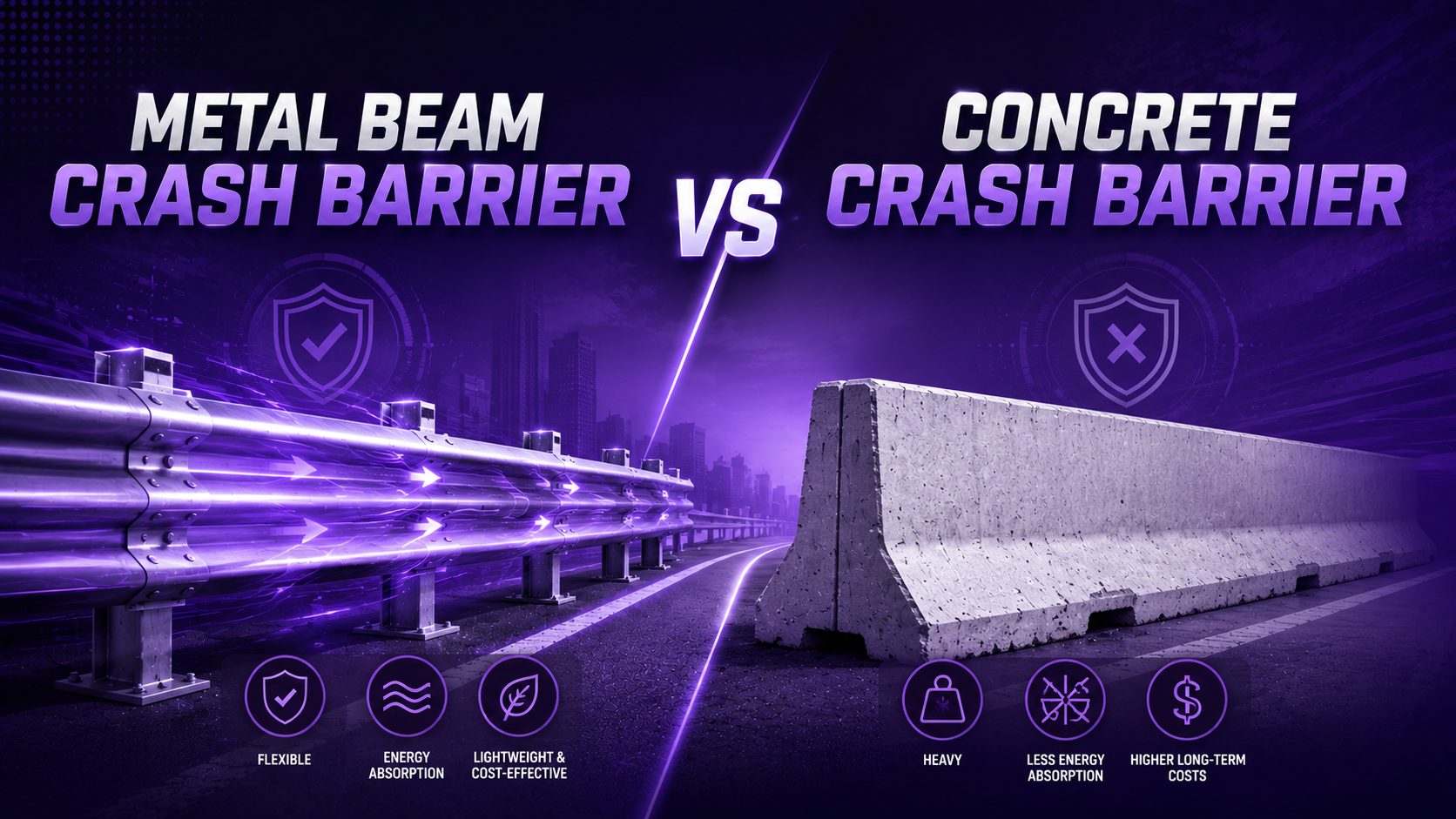
The choice between a metal beam system and a concrete barrier depends on safety requirements, traffic conditions, maintenance priorities, and project objectives. In many infrastructure projects, decision-makers compare these solutions because both serve different operational needs. Understanding metal beam crash barrier vs concrete barrier differences helps buyers make informed infrastructure investments.
Impact absorption
Metal beam barriers absorb and distribute impact energy through controlled flexing. The system redirects vehicles and helps reduce sudden collision forces. This vehicle redirection capability makes metal barriers suitable for locations where reducing impact severity matters.
Concrete barriers work differently. Their rigid structure limits barrier movement during impact. They focus more on containment and preventing vehicle crossover incidents. However, rigid impact forces can increase vehicle damage in certain collision situations.
Installation requirements
Metal beam systems usually require posts, beam sections, connectors, and installation space for controlled deflection. Teams can often install these systems faster across long highway stretches.
Concrete barriers involve heavier construction activity and greater structural requirements. Bridge installations and permanent road infrastructure often use concrete barriers where rigidity becomes a priority.
Repair and maintenance
Maintenance planning plays an important role in any road barrier comparison. Metal beam systems often allow damaged sections to be replaced without removing the full installation. Faster repairs can reduce maintenance downtime.
Concrete barriers generally require more extensive repair work after severe impact events. Structural damage may increase restoration effort and disruption.
Cost considerations
Initial project cost varies depending on material requirements, site conditions, and installation complexity.
Metal beam barriers may offer advantages where phased replacement and maintenance flexibility matter. Concrete barriers can support long-term fixed infrastructure strategies in selected environments.
| Factor | Metal beam | Concrete |
|---|---|---|
| Impact behaviour | Energy absorption and redirection | High containment |
| Flexibility | Moderate | Low |
| Vehicle damage potential | Lower in some impact scenarios | Higher rigidity impact |
| Maintenance approach | Section replacement possible | Larger repair requirements |
| Common applications | Highways, bridges, industrial zones. | Medians, permanent corridors. |
Many highway barrier systems India projects use both solutions depending on traffic flow, safety targets, and infrastructure design priorities.
Metal beam crash barrier vs wire rope and plastic barriers
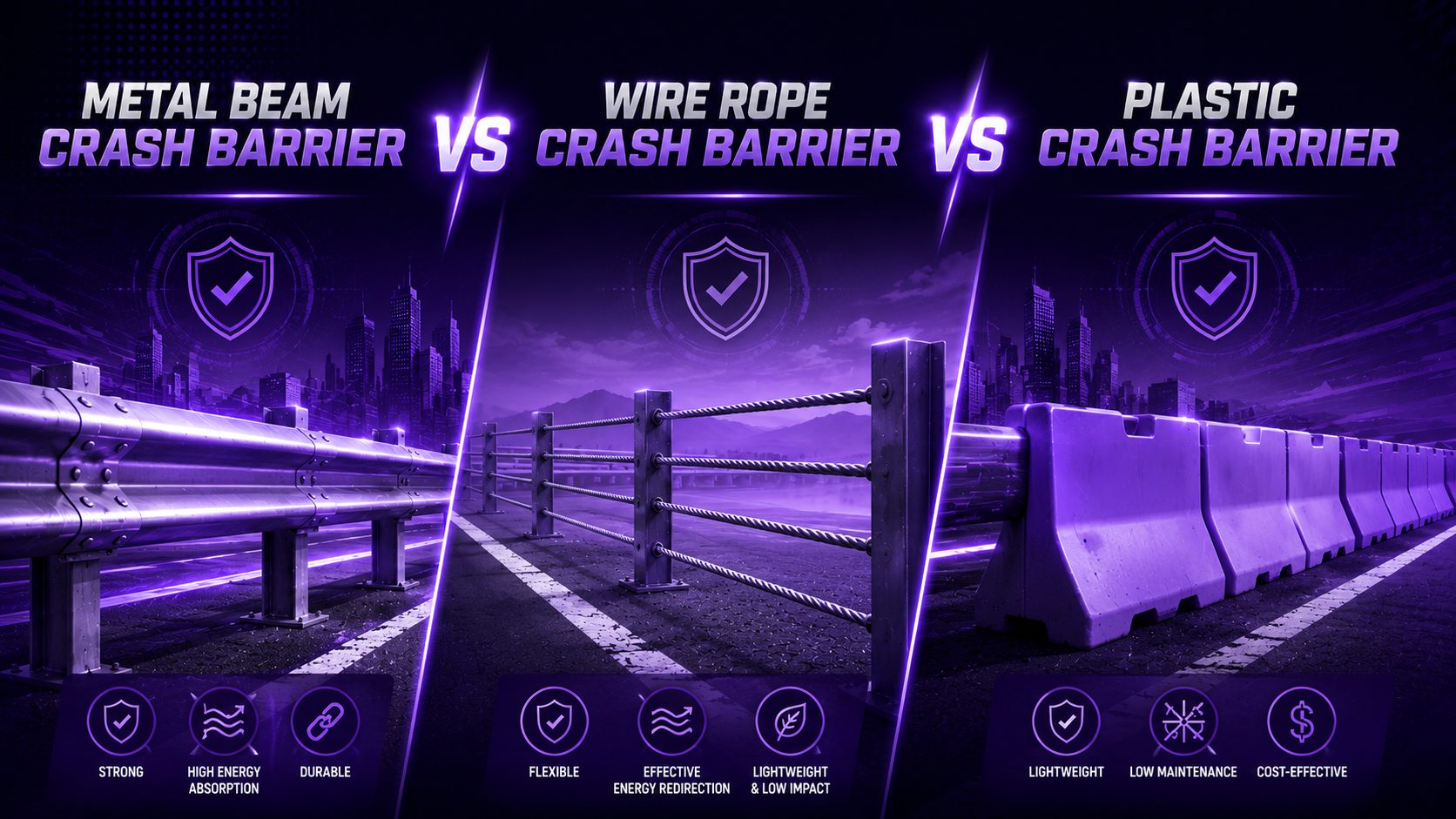
Barrier selection depends on safety objectives, operating conditions, and long-term infrastructure planning. While metal beam systems remain common across transport networks, wire rope and plastic barriers also serve important roles. A proper wire rope crash barrier comparison helps businesses and infrastructure planners understand where each option performs best.
Safety performance
Metal beam systems absorb and distribute impact forces while helping redirect vehicles back towards their travel path. This balance of strength and controlled movement supports containment performance across highways and industrial environments.
Wire rope barriers use tensioned steel cables that flex during impact. Their cable flexibility helps reduce collision force, but higher deflection levels may not suit every installation environment.
Plastic barriers focus more on visual separation and traffic guidance. They support lower-risk environments rather than heavy vehicle containment.
Durability
Metal barriers use galvanised steel construction designed for long operational life. Many permanent infrastructure projects choose steel systems because of their durability.
Wire rope systems also perform well outdoors but require tension management and routine inspection.
In a plastic barrier vs steel barrier assessment, plastic barriers generally suit shorter-term use because environmental exposure and repeated impact events can affect long-term performance.
Weather resistance
Steel crash barriers often include corrosion protection for outdoor deployment across varying weather conditions.
Wire rope systems also withstand outdoor exposure but require maintenance monitoring.
Plastic barriers resist moisture exposure well but may not provide the same structural performance needed for permanent infrastructure.
Lifecycle cost
Initial procurement cost tells only part of the story. Maintenance requirements, repair frequency, replacement cycles, and operational lifespan influence long-term ownership value.
One of the major metal beam barrier benefits involves balancing durability with maintenance efficiency for permanent infrastructure.
| Barrier type | Best environment | Deployment type | Protection capability |
|---|---|---|---|
| Metal beam | Highways, bridges, industrial facilities. | Permanent | High |
| Wire rope | Highway medians, road corridors. | Permanent | Moderate to high |
| Plastic | Urban roads, parking zones, work areas. | Temporary | Lower containment |
Urban roads, highways, and industrial protection requirements create different safety demands. Matching barrier capability with site conditions improves long-term infrastructure performance.
How MSMEs and infrastructure buyers choose the right barrier
Selecting the right barrier involves more than comparing materials or installation costs. Businesses and project teams must assess safety needs, operating conditions, compliance requirements, and long-term ownership value. A practical crash barrier procurement guide helps buyers make decisions that balance protection and cost efficiency.
Traffic conditions
Traffic volume, vehicle speed, and vehicle type influence barrier selection. High-speed highways often require stronger containment capability, while warehouses and logistics facilities may prioritise vehicle guidance and asset protection. Understanding traffic patterns supports better industrial crash barrier selection decisions.
Installation location
The installation environment affects barrier choice significantly. Highways, bridges, warehouse perimeters, parking areas, and industrial facilities create different operational demands. Infrastructure contractors and warehouse operators often evaluate available space, environmental exposure, and operational risks before finalising specifications.
Compliance and standards
Barrier systems should align with project standards and safety requirements. Compliance considerations become especially important for public infrastructure, transport projects, and industrial environments. Buyers often assess testing performance and product quality before procurement.
Maintenance planning
Barrier performance extends beyond installation. Maintenance planning affects operational continuity and ownership costs over time. Some systems allow faster replacement of damaged sections, while others may require larger repair interventions. Businesses managing large infrastructure safety systems often evaluate maintenance requirements during procurement rather than after deployment.
Procurement and lifecycle cost analysis
Initial purchase cost does not always reflect long-term value. Infrastructure contractors, logistics facilities, and industrial buyers often review ownership costs across the barrier lifecycle.
Key procurement considerations include:
- Steel quality assessment
- Galvanisation considerations for corrosion protection
- Repair frequency
- Installation complexity
- Long-term maintenance requirements
- Operational downtime implications
Many buyers evaluating steel safety barriers India requirements focus on lifecycle cost analysis rather than upfront pricing alone. A structured procurement approach helps businesses improve safety performance while supporting long-term infrastructure planning.
Conclusion
Barrier selection works best when it matches real operational needs rather than a one-size-fits-all approach. Different environments demand different protection strategies. Metal beam crash barriers stand out for their ability to combine containment capability, controlled flexibility, repair efficiency, and scalable deployment across varied infrastructure settings. The right choice depends on site conditions, safety priorities, and long-term operational goals. Evaluating performance, maintenance needs, and lifecycle value supports smarter infrastructure investment decisions.
Looking to procure steel?
Tata nexarc helps manufacturers, builders and MSMEs source certified steel products, compare prices, and choose the right grade as per IS codes—with complete traceability and procurement confidence.
FAQs
What is a metal beam crash barrier?
Where are metal beam crash barriers commonly installed?
What material is used in metal beam crash barriers?
What is the difference between W beam and Thrie-beam crash barriers?
Are metal beam crash barriers better than concrete barriers?
How do wire rope crash barriers work?
Are plastic safety barriers suitable for highways?
Why is galvanisation important in crash barriers?
How can businesses choose the right crash barrier?
Which industries commonly use crash barriers?
A product manager with a writer's heart, Anirban leverages his 6 years of experience to empower MSMEs in the business and technology sectors. His time at Tata nexarc honed his skills in crafting informative content tailored to MSME needs. Whether wielding words for business or developing innovative products for both Tata Nexarc and MSMEs, his passion for clear communication and a deep understanding of their challenges shine through.