Check Price Now
Table of Contents
Introduction
In India’s construction supply chain, sariya remains the most recognised name. Sariya in english refers to steel reinforcement bars and are also known as rebars or TMT bars. From residential plots to industrial sheds, these rods define the backbone of every structure. For MSMEs engaged in construction or subcontracting, sariya is more than a commodity. It is a cost centre, a compliance checkpoint, and a driver of timely project delivery.
Most buyers check the sariya price today or scan a dealer board for rates. That snapshot is useful, but incomplete. Prices fluctuate daily, influenced by freight costs, fuel surcharges, and mill production cycles. A decision taken only on “rate per kg” can expose small firms to overruns, penalties, or audit queries.
Procurement heads in MSMEs often struggle with three recurring questions. Which grade of TMT bar suits the site conditions? How to validate compliance against the IS 1786 standard? And what extra costs creep in between mill yard and project gate? These are not academic queries. They decide whether a tender is accepted, a balance sheet stays stable, or a delivery team avoids disputes.
This guide sets out a practical view for 2026. It explains price factors, grade selection, compliance tools, tender alignment, and wastage control. The aim is to equip MSME buyers with clarity beyond rate sheets, offering them the confidence to buy better, meet standards, and protect margins in a volatile steel market.

Sariya price factors MSMEs should track
Buying sariya is never just about checking the day’s rate. Dealers may display the latest sariya price, but that figure tells only one part of the story. For MSMEs, ignoring the hidden factors behind the rate may lead to higher costs, cash flow stress, and procurement disputes.
Location and freight
Prices differ across regions. A bar purchased from a local mill can end up cheaper than a branded option with higher transportation costs across states. Freight charges, tolls, and unloading costs can quietly add to the landed price.
Credit terms
Distributors may allow 30–90 days of credit, which may seem to ease payment pressure. In reality, the financing cost is often built into the quoted rate. Larger businesses typically calculate the total landed cost, including any financing or interest costs. MSMEs should do the same to understand the true cost of procurement.
Tax and compliance
A clean GST invoice helps eligible businesses claim input tax credit, subject to applicable GST conditions. Incorrect or delayed invoices can affect ITC claims and reconciliation. For businesses participating in government tenders, poor documentation can affect compliance and profit margins and may invite audit queries.
Timing of purchase
Sariya prices move with market demand. To secure better rates, buyers should track price trends and align purchases with project requirements rather than rely only on seasonal patterns. During periods of strong construction activity, prices may rise due to higher demand. Aligning orders with site schedules is a simple way to control procurement costs and price risk.
Note: In real procurement, the “rate per kg” is just the starting point. The true cost is revealed only after freight, credit, taxes, and purchase timing are factored in. Businesses that track these elements can make stronger buying decisions.

Sariya price per kg 2026: Top 10 brands
The following table shows indicative market price ranges for leading TMT bar brands in India as of October 2026. Actual prices may vary based on the city, bar diameter, grade, order quantity, GST, freight, and dealer margins. These figures can help contractors and MSME buyers benchmark dealer quotations before placing bulk orders.
| Brand | Indicative price per kg (₹) |
|---|---|
| Tata Tiscon | 63–82 |
| Jindal Panther | 62–81 |
| JSW NeoSteel | 60–79 |
| SAIL SeQR | 62–80 |
| Agni TMT | 71–84 |
| Kamdhenu Nxt | 60–76 |
| Vizag Steel | 60–77 |
| SRMB Steel | 60–77 |
| Shyam Steel | 60–77 |
| Amman TRY | 58–74 |
Note: These are indicative October 2026 market ranges and should not be treated as fixed pan-India prices. Actual dealer quotations can differ by location and product specifications.
In October 2026, Tata Tiscon, Jindal Panther, and JSW NeoSteel may remain towards the higher end of the indicative market range, although the exact ranking can change depending on the city and bar size. SAIL SeQR, Kamdhenu Nxt, Vizag Steel, SRMB Steel, and Shyam Steel generally occupy the mid-range, while some regional brands offer lower entry points. For MSMEs, the key is not just the quoted sariya price per kg but the final landed cost after GST, freight, unloading, and credit terms. Buyers should use these indicative ranges as a benchmark and compare same-day quotations from authorised dealers before closing an order.

Sariya weight and price calculator: How to calculate price per rod
Knowing the sariya price per kg is useful, but buyers often need to know the weight and price of each rod before placing an order. The calculation depends on the bar diameter, length, and quoted price per kg. For standard TMT bars, the theoretical weight can be calculated using the formula below.
Formula to calculate sariya weight
Weight per metre (kg) = D² ÷ 162
To calculate the weight of a full bar:
Weight of bar (kg) = (D² ÷ 162) × Length in metres
Here, D is the nominal diameter of the sariya in millimetres.
For example, for a 12 mm TMT bar with a standard length of 12 metres:
Weight per metre = 12² ÷ 162 = 0.888 kg
Weight of a 12 m bar = 0.888 × 12 = approximately 10.67 kg
How to calculate sariya price per piece
Once you know the weight of the bar, multiply it by the quoted sariya price per kg:
Price per rod = Weight of rod × Price per kg
For example, if a 12 mm, 12 m TMT bar weighs approximately 10.67 kg and the quoted price is ₹70 per kg:
10.67 × ₹70 = approximately ₹747 per rod
The final amount may vary based on the actual weight, applicable taxes, freight, dealer margins, and whether these charges are included in the quoted rate.
Sariya weight chart for common TMT bar sizes
The table below shows the theoretical unit weight and approximate weight of a 12 m bar for commonly used TMT sariya sizes.
| Sariya size | Theoretical weight per metre | Approximate weight of 12 m bar |
| 8 mm | 0.395 kg | 4.74 kg |
| 10 mm | 0.617 kg | 7.41 kg |
| 12 mm | 0.888 kg | 10.67 kg |
| 16 mm | 1.580 kg | 18.96 kg |
| 20 mm | 2.469 kg | 29.63 kg |
Note: These are theoretical weights calculated using the D² ÷ 162 formula. Actual delivered weight can vary within the applicable tolerances and product specifications. Buyers should check the purchase order, applicable standards, and manufacturer documentation rather than rely on theoretical weight alone.
For MSME procurement teams, this calculation makes it easier to compare a sariya price per kg with the actual price per piece or total order value. It also helps buyers estimate material requirements, verify quotations, and identify significant weight variations at the time of delivery.
Understanding sariya grades and standards
Every project demands a different type of steel. Sariya may look similar on site, but its grade defines how it performs under stress, bending, or corrosion. For businesses, getting this choice right affects both structural performance and cost control.
Common grades in use
- Fe 500: Widely used for general residential and commercial construction.
- Fe 500D: More ductile, making it suitable for structures designed to meet higher ductility requirements, including seismic applications where specified by the structural design.
- Fe 550D:Offers higher strength with enhanced ductility and may be used in high-rise buildings, bridges, and other projects where the structural design specifies it.
- CRS (Corrosion Resistant Steel):Designed to offer improved resistance to corrosion and may be considered for coastal, humid, or other corrosive environments, depending on project requirements and specifications.
These grades and properties are not simply trade names. IS 1786:2008 specifies requirements for high-strength deformed steel bars and wires used for concrete reinforcement, including mechanical properties, chemical composition, dimensions, mass, and testing requirements.
Why the right grade matters
Selecting the wrong grade has a direct cost. Using conventional reinforcement in a corrosive environment without considering the project’s durability requirements may increase the risk of corrosion and future maintenance costs. Choosing Fe 550D for a small two-storey structure when the structural design does not require it may increase material costs without providing a proportional benefit.
The role of IS 1786
IS 1786 sets the rules for:
- Minimum mechanical properties, including yield or proof stress and tensile strength.
- Elongation and other ductility-related requirements.
- Chemical composition requirements and carbon equivalent limits for applicable grades.
- Allowable variation in nominal mass and dimensions.
- Testing requirements, including tensile, bend, and rebend tests, where applicable.
Orders that mention this code upfront leave little room for dispute. Clearly specifying the applicable grade, size, and IS 1786 compliance in procurement documents also helps buyers verify product requirements and quality documentation.
Key takeaway for MSMEs
It’s best to link the steel grade and product specification to the project environment and structural requirements, and then specify them clearly in RFQs and BOQs. This helps reduce supplier ambiguity, supports quality checks, and can lower the risk of procurement-related disputes or tender compliance issues.
Practical tools for procurement teams
Price and grade are only part of the decision. Day-to-day procurement also depends on whether the buyer can verify material quickly and document it correctly. MSMEs that use simple, reliable tools can reduce disputes and improve procurement control and compliance.
Quick weight checks
The basic formula D²/162 helps calculate the theoretical weight of a TMT bar per metre (where D is the nominal diameter in mm). For example, a 12 mm bar should weigh approximately 0.89 kg per metre. At the delivery point, measuring a random sample against this value can help buyers check whether the material is broadly consistent with the specified size and applicable tolerance requirements under IS 1786. Small firms that use this simple check can identify potential weight variations before accepting or processing payment for the consignment.
Reading a Mill Test Certificate (MTC)
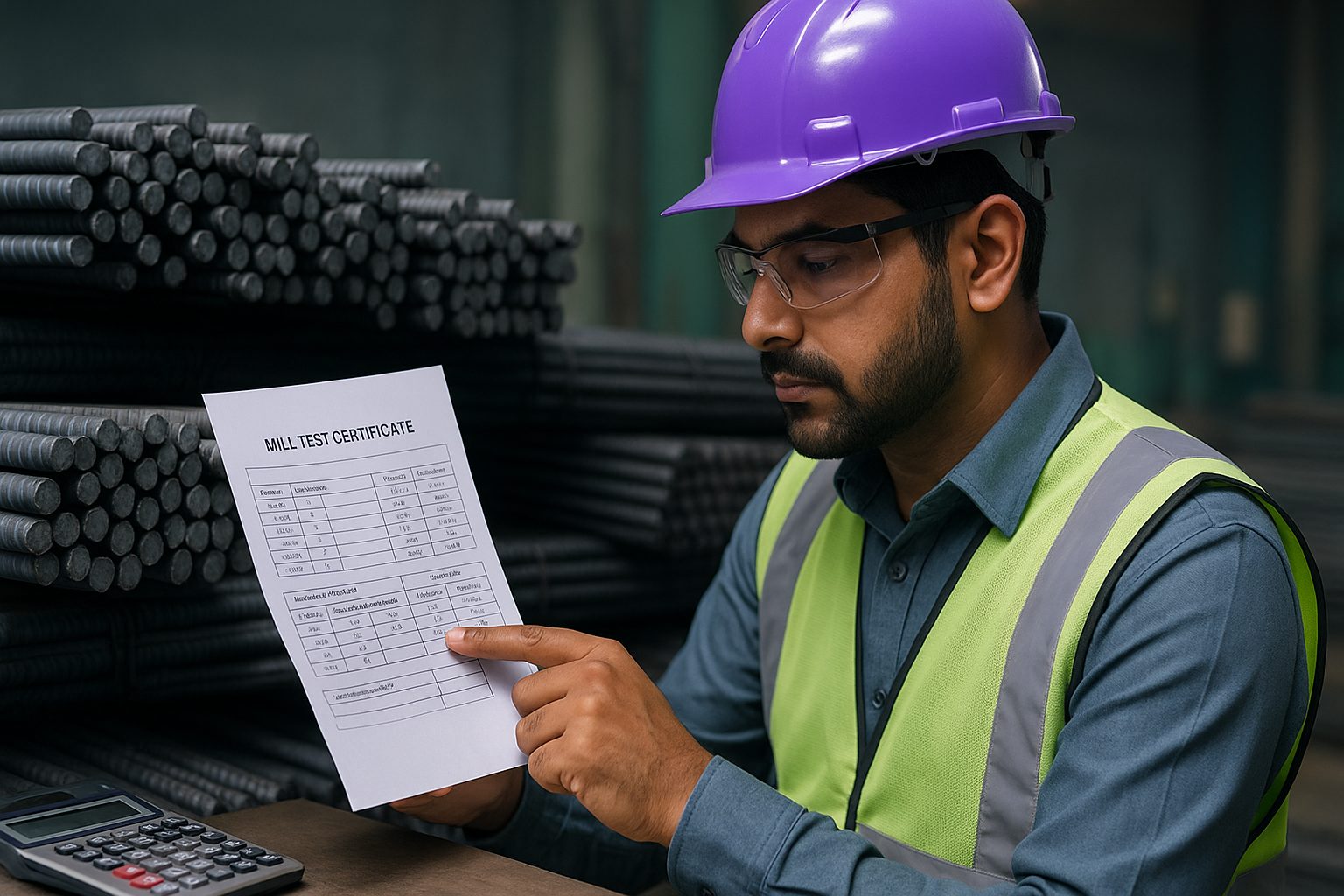
Where required under the purchase order, project specification, or quality requirements, the consignment should be supported by relevant test documentation, such as a Mill Test Certificate. The MTC typically includes:
- Grade and relevant product specification
- Heat number and batch details
- Chemical composition and mechanical test results
Procurement officers should cross-check the heat or batch details, where traceability markings are available, with the MTC. If the paperwork and physical lot do not match, the material may require further verification before acceptance, especially for quality-sensitive or government projects.
Delivery acceptance checklist
A structured delivery acceptance checklist can help reduce receiving and documentation errors. Key checks may include:
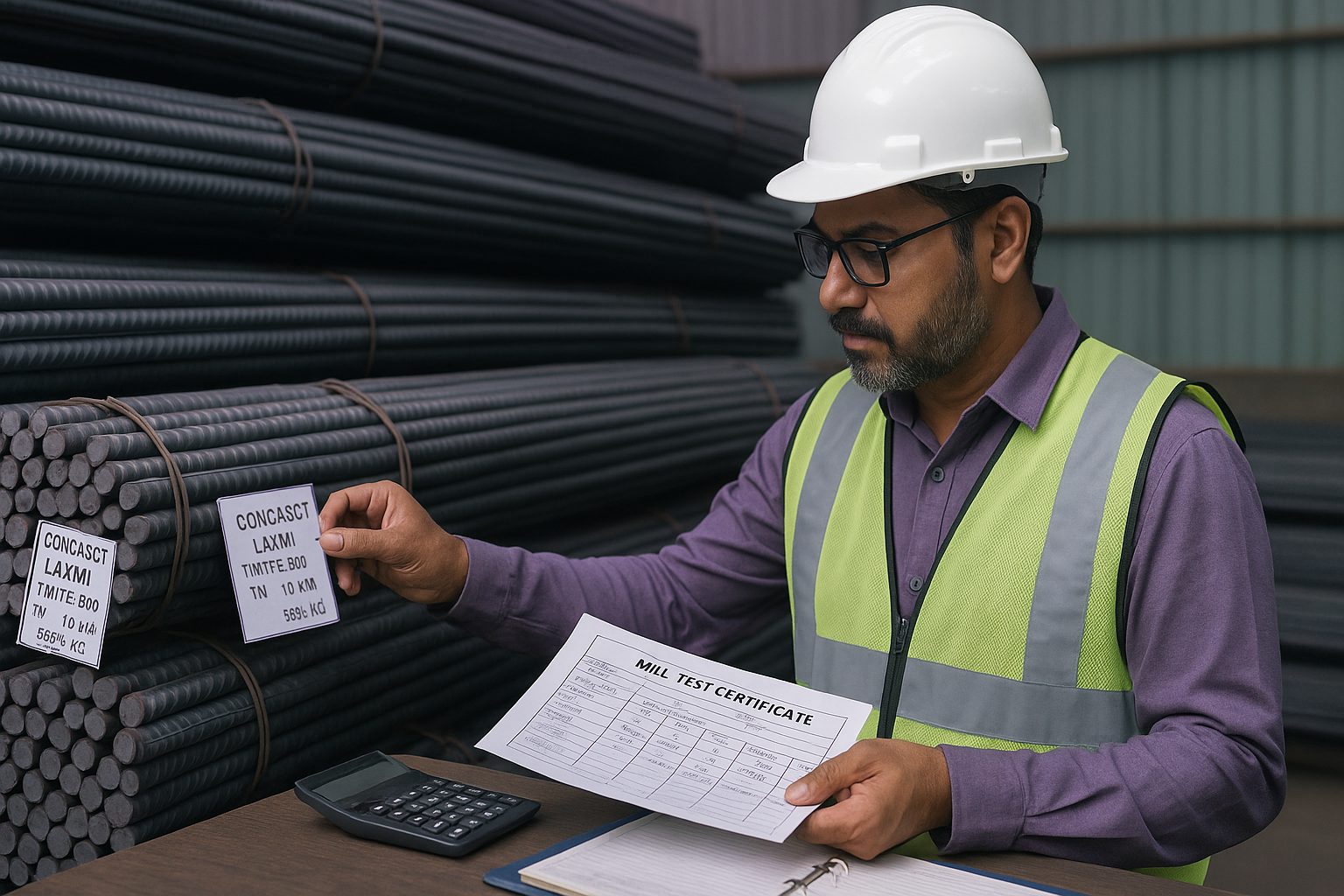
- Confirm the product markings, brand identification, and applicable BIS certification or standard markings, where required.
- Match the delivered quantity, weight, size, and grade with the order sheet.
- Verify the GST invoice and other supporting documents for accurate accounting and eligible input tax credit claims.
- Note any variation in bundle count, quantity, visible damage, or binding condition.
This checklist should be signed off by the receiving officer and filed with accounts. It can help create a clear record of material receipt and reduce the risk of later disputes with suppliers, auditors, or project teams.
Tender & documentation alignment
For MSMEs, the steel price is only half the story. In government work and large contracts, paperwork can play a major role in determining whether a supply is accepted or rejected. A missing test certificate or a vague specification can delay material acceptance and, in some cases, payment processing.
RFQs and BOQs
Quotations and quantity sheets should be written without ambiguity. Clearly state the required grade, ductility class, and applicable requirements under IS 1786, along with the bar size and relevant tolerance requirements. Apart from this, specify whether Mill Test Certificates with heat numbers or other traceability details are required, and define the sampling and testing requirements where applicable. When these points are clear, vendor quotes can be compared on equal terms.
Purchase orders
Purchase orders should clearly reference the applicable material specification, such as IS 1786 for TMT reinforcement bars, along with the required grade, size, quantity, and other project-specific requirements. This helps reduce ambiguity during inspections and material acceptance. It also provides a clear reference point if a quality or supply dispute arises later.
Supporting records
Keep copies of MTCs, signed goods receipt notes, GST invoices, and lab reports where required. Having these in order can simplify audits, tender reviews, and quality verification and reduce last-minute documentation issues.
Many small firms face delays or compliance issues not because their rates are high, but because their paperwork is weak. Strong documentation is as important as material quality and price competitiveness when it comes to executing and retaining work contracts.

Wastage reduction and improving efficiency
Steel wastage is one of the biggest hidden costs for businesses. It comes from poor cutting, careless storage, and poor scrap management. A few basic practices can help bring this under control.
Plan with BBS
Always prepare a Bar Bending Schedule (BBS). It specifies the required bar lengths, shapes, bends, and quantities, helping teams plan cutting more efficiently and reduce avoidable offcuts and wastage.
Standard bundles
Specify clearly labelled bundles and verify bar sizes and quantities at delivery. Mixed or loose bars can increase handling and cutting errors and leave behind odd lengths that may be difficult to use elsewhere in the project.
Scrap control
Collect every offcut and segregate it by size or type where practical. Record it by weight. Even if it cannot be used in the main structural work, it may have resale value or be used for suitable non-structural or project-approved applications.
Proper storage
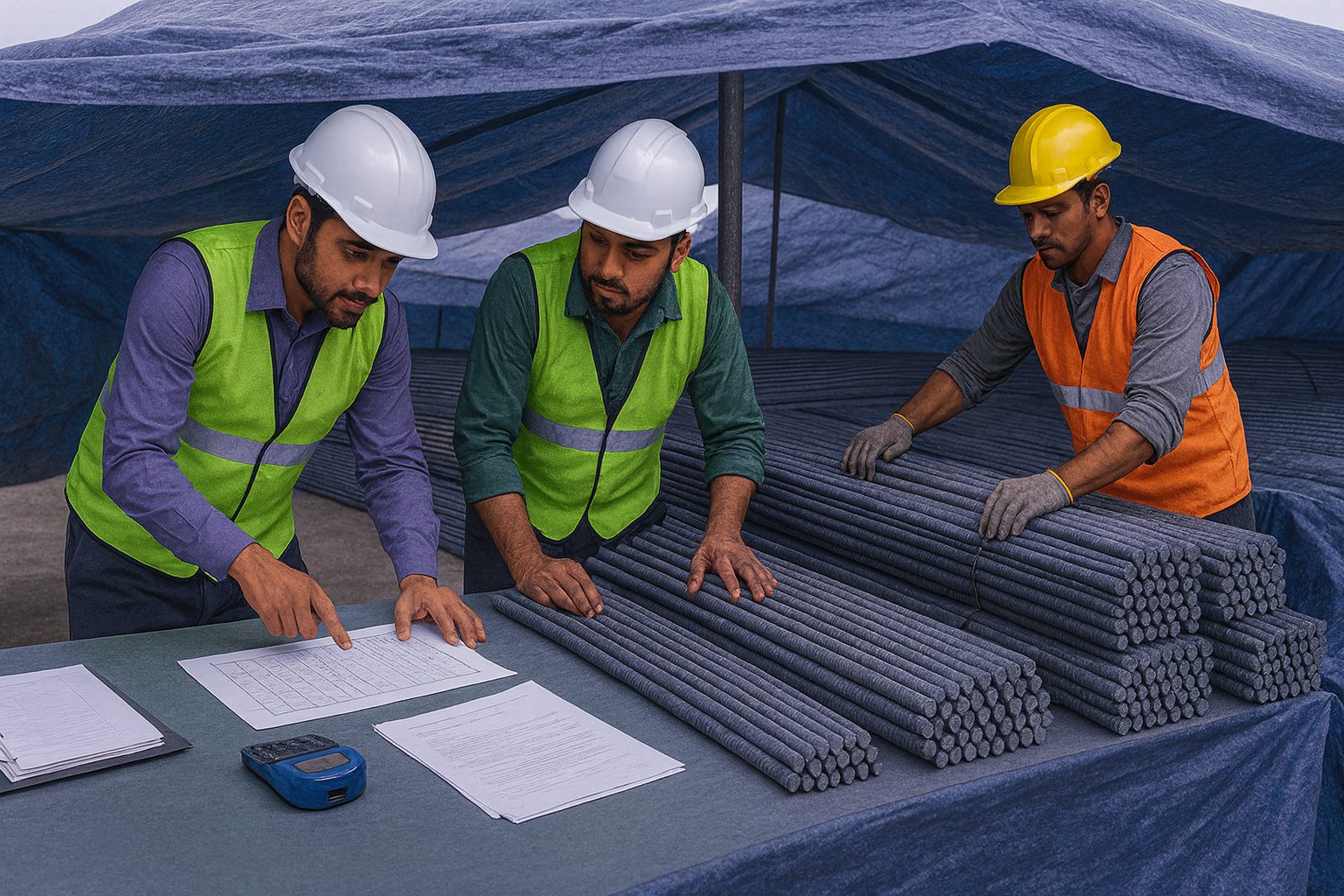
Never dump steel on bare ground or leave it exposed to prolonged moisture. Keep it raised above the ground on suitable supports and protect it from excessive water exposure while allowing adequate ventilation. Inspect bars showing significant corrosion, scaling, or pitting before use, as excessive corrosion may affect their condition and acceptance.
Note:Treating steel as inventory, not as disposable material, is an effective way to control material costs, reduce wastage, and protect project margins.
Conclusion
For small firms, buying sariya is never just about today’s rate. The real cost shows up once freight, unloading, credit, and applicable taxes and other charges are added. A cheaper quote on paper can often turn out to be more expensive at the site.
Grades and paperwork matter just as much. Using the wrong grade or failing to provide required test documentation, where specified, can lead to material rejection or compliance issues in government and other quality-sensitive projects. One failed inspection can significantly affect the margin on an entire order.
The way forward is simple:
- Calculate the landed cost before confirming an order.
- Verify the delivered grade, size, quantity, markings, and supporting documents against the purchase order and applicable specifications.
- Keep bar bending schedules, test reports, goods receipt records, and invoices on file.
Following these steps can help protect margins, reduce material disputes, and improve audit and tender compliance.
In 2026, businesses that treat procurement as a process, not just a purchase, will have the edge. They will finish projects on time, clear tender checks, and stand stronger against bigger competitors.

Looking to procure steel?
Tata nexarc helps manufacturers, builders and MSMEs source certified steel products, compare prices, and choose the right grade as per IS codes—with complete traceability and procurement confidence.
FAQs
What is the current sariya price per kg for bulk orders?
Which sariya grade do tenders usually accept?
How can I check quality when the truck arrives?
What papers are asked for in tenders?
How does a Bar Bending Schedule help?
Do credit terms change the real price?
Why bring IS 1786 into every order?
How should steel be stored on site?
Can MSMEs claim GST input credit on sariya
What is the value of an MTC in audits?
Charul is a content marketing professional and seasoned content writer who loves writing on various topics with 3 years of experience. At Tata nexarc, it has been 2 years since she is helping business to understand jargon better and deeper to make strategical decisions. While not writing, she loves listing pop music.