Check Price Now

Table of Contents
If you are confused about the term ‘Fe 500’ used in TMT bar advertisements, it refers to the grade of steel used for concrete reinforcement. Fe 500 steel is a High-strength Deformed (HSD) steel grade commonly used in the construction industry, particularly for Reinforced Cement Concrete (RCC) structures. It is used to manufacture TMT bars and reinforcement wires that must meet specified mechanical and chemical properties under the relevant Indian Standard.
As per IS 1786:2008 – High Strength Deformed Steel Bars and Wires for Concrete Reinforcement, the recognised reinforcement steel grades include:
- Fe 415, Fe 415D, Fe 415S
- Fe 500, Fe 500D, Fe 500S
- Fe 550, Fe 550D
- Fe 600
According to IS 1786:2008, the figures following the symbol Fe indicate the specified minimum 0.2% proof stress or yield stress in N/mm². Therefore, Fe 500 steel has a minimum specified yield stress of 500 N/mm² (500 MPa).
The 0.2% proof stress is the stress at which a permanent, non-proportional elongation equal to 0.2% of the original gauge length occurs in a steel specimen under tensile loading. It is used to determine the yield strength of steel when the material does not show a clearly defined yield point.
These grades define the mechanical and chemical requirements that manufacturers must follow during the steel manufacturing process. These requirements include specific limits for yield strength, tensile strength, elongation, chemical composition, and bend and rebend performance. They help ensure that TMT bars meet the required strength, ductility, and quality standards for construction applications.
What is Fe 500 steel?
Fe 500 is a grade designated under the Indian Standard (IS) code for manufacturing TMT bars and other steel products used for concrete reinforcement. Fe stands for iron, and 500 denotes the minimum specified yield strength of the steel in megapascals (MPa), equivalent to 500 N/mm². As mentioned above, Fe 500 steel must meet specific mechanical and chemical properties prescribed under IS 1786:2008.
Here are the mechanical properties of Fe 500 steel according to IS 1786:2008 – High Strength Deformed Steel Bars and Wires for Concrete Reinforcement, including Amendment No. 1. These properties are determined through standardised tests on steel test pieces. The gauge length for measuring elongation is calculated using the formula 5.65√A, where A is the cross-sectional area of the test piece.
| Property | Mechanical property requirement for Fe 500 steel |
|---|---|
| Minimum yield stress (0.2% proof stress) | 500 N/mm² (MPa) |
| Tensile strength to yield strength ratio | ≥ 1.08, with tensile strength not less than 545 N/mm² |
| Minimum elongation (on gauge length 5.65√A) | 12% |
Have a look at the definitions of the terms given in the table above:
Tensile strength
The maximum load that a steel test piece withstands during a tensile test, divided by its effective cross-sectional area.
According to IS 1786:2008, tensile strength is the maximum load reached during a tensile test divided by the effective cross-sectional area of the gauge-length portion of the test piece.
Yield stress
The stress at which the steel test piece begins to deform plastically under tensile loading is called yield stress. Yield stress is denoted by Fy. For Fe 500 steel, the minimum specified yield stress is 500 N/mm².
According to IS 1786:2008, yield stress is the stress (load per unit cross-sectional area) at which elongation first occurs in the test piece without an increase in load during the tensile test. Where there is no clearly defined yield point, the 0.2% proof stress is used.
Elongation
Elongation refers to the increase in the length of a steel test piece when subjected to tensile stress. It indicates the ductility of steel, or its ability to stretch before breaking. According to IS 1786:2008, the minimum elongation for Fe 500 steel is 12%.
Important procurement note: The 12% elongation requirement applies to standard Fe 500. Fe 500D has a higher minimum elongation requirement of 16%, making it important not to confuse the two grades when comparing TMT bar specifications.
Chemical composition of Fe 500 steel
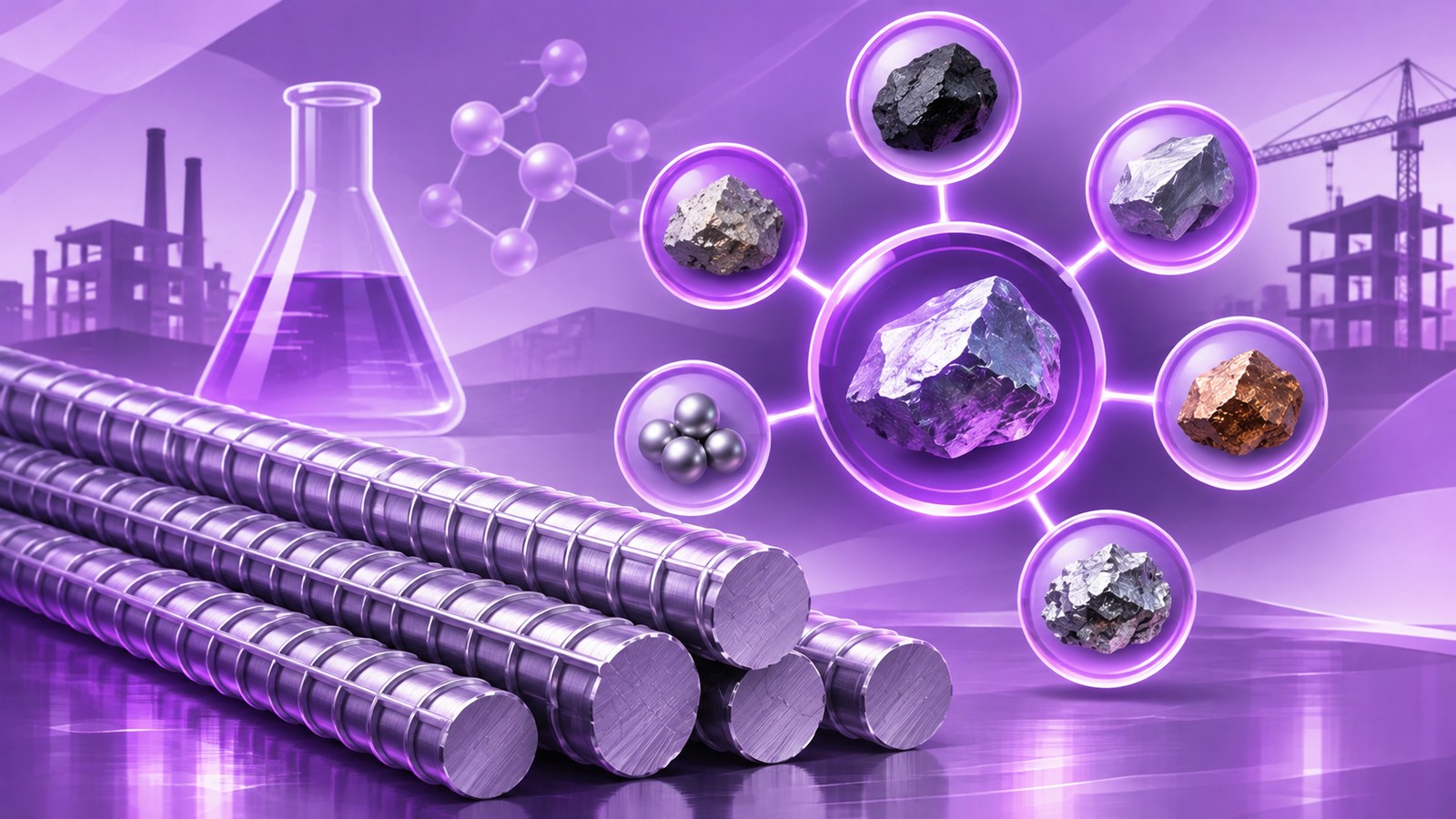
The chemical composition of Fe 500 steel plays an important role in determining its strength, ductility, weldability, and overall performance in reinforced concrete structures. The proportions of carbon, sulphur, and phosphorus must remain within the limits specified under IS 1786:2008 – High Strength Deformed Steel Bars and Wires for Concrete Reinforcement.
According to Clause 4.2 of IS 1786:2008, the chemical composition is determined through ladle analysis. The standard specifies maximum permissible limits for individual constituents and their combined content.
The following table gives the permissible chemical composition of Fe 500 steel
| Component | Maximum permissible composition (%) |
|---|---|
| Carbon | 0.30 |
| Sulphur | 0.055 |
| Phosphorus | 0.055 |
| Sulphur and phosphorus combined | 0.105 |
How do these chemical elements affect Fe 500 steel properties?
Each chemical element contributes differently to the mechanical performance of reinforcement steel. Maintaining the prescribed limits helps manufacturers produce steel bars with consistent quality.
1. Carbon (C)
Carbon is an important element that influences the strength and hardness of steel.
-
Higher carbon content generally increases steel strength and hardness.
-
Excessive carbon can reduce ductility and make steel less suitable for bending and welding.
-
The maximum permissible carbon content for Fe 500 is 0.30%.
2. Sulphur (S)
Sulphur is generally considered an undesirable impurity in reinforcement steel when present in excessive quantities.
-
Excessive sulphur can reduce ductility and adversely affect hot-working properties.
-
It can increase the risk of hot shortness, which may cause cracking during hot rolling.
-
The maximum permissible sulphur content for Fe 500 is 0.055%.
3. Phosphorus (P)
Phosphorus influences the strength and toughness of steel.
-
Excessive phosphorus can increase brittleness.
-
It can reduce ductility and adversely affect the performance of reinforcement bars.
-
The maximum permissible phosphorus content for Fe 500 is 0.055%.
4. Combined sulphur and phosphorus
IS 1786 also specifies a combined limit for sulphur and phosphorus.
-
This ensures that the total concentration of these impurities remains within the prescribed range.
-
The combined maximum permissible content for Fe 500 is 0.105%.
What is carbon equivalent in Fe 500 steel?
Apart from individual chemical composition limits, Carbon Equivalent (CE) is another important parameter used to assess the weldability of reinforcement steel.
Carbon equivalent considers the combined influence of carbon and other alloying elements on steel’s tendency to harden during welding.
For applicable steel grades, the carbon equivalent is calculated using the following formula:
Where:
-
C = Carbon
-
Mn = Manganese
-
Cr = Chromium
-
Mo = Molybdenum
-
V = Vanadium
-
Ni = Nickel
-
Cu = Copper
Important for procurement: Do not assume that meeting the individual carbon, sulphur, and phosphorus limits automatically guarantees weldability. Check the manufacturer’s test certificate for the chemical composition and carbon equivalent wherever welding is part of the project specification. Follow the applicable welding recommendations, including IS 9417.
Fe 500 vs Fe 500D: Chemical composition comparison
For MSME buyers, contractors, and procurement teams, it is important to understand that Fe 500 and Fe 500D have different chemical composition requirements.
| Chemical constituent | Fe 500 (%) | Fe 500D (%) |
|---|---|---|
| Carbon | 0.30 | 0.25 |
| Sulphur | 0.055 | 0.040 |
| Phosphorus | 0.055 | 0.040 |
| Sulphur and phosphorus combined | 0.105 | 0.075 |
All values are maximum permissible percentages.
Fe 500D has tighter limits for carbon, sulphur, and phosphorus. It also has higher ductility requirements than standard Fe 500, making it an important option for applications where greater deformation capacity is required.
What should buyers check before purchasing Fe 500 TMT bars?
When procuring Fe 500 steel for construction projects, check the following:
-
BIS certification: Verify that the manufacturer holds a valid BIS licence for the relevant product and grade.
-
Chemical composition: Check carbon, sulphur, and phosphorus levels against IS 1786 requirements.
-
Mill Test Certificate (MTC): Request a batch-specific test certificate showing chemical and mechanical properties.
-
Carbon equivalent: Check the CE value if the project involves welding.
-
Grade identification: Ensure that the supplied bars are Fe 500 and not Fe 500D or another grade unless specified in the purchase order.
Remember: Chemical composition is only one part of TMT bar quality. Buyers should also verify yield strength, tensile strength, elongation, bend and rebend performance, and dimensional tolerances.
Applications of Fe 500 TMT bars in building and infrastructure projects
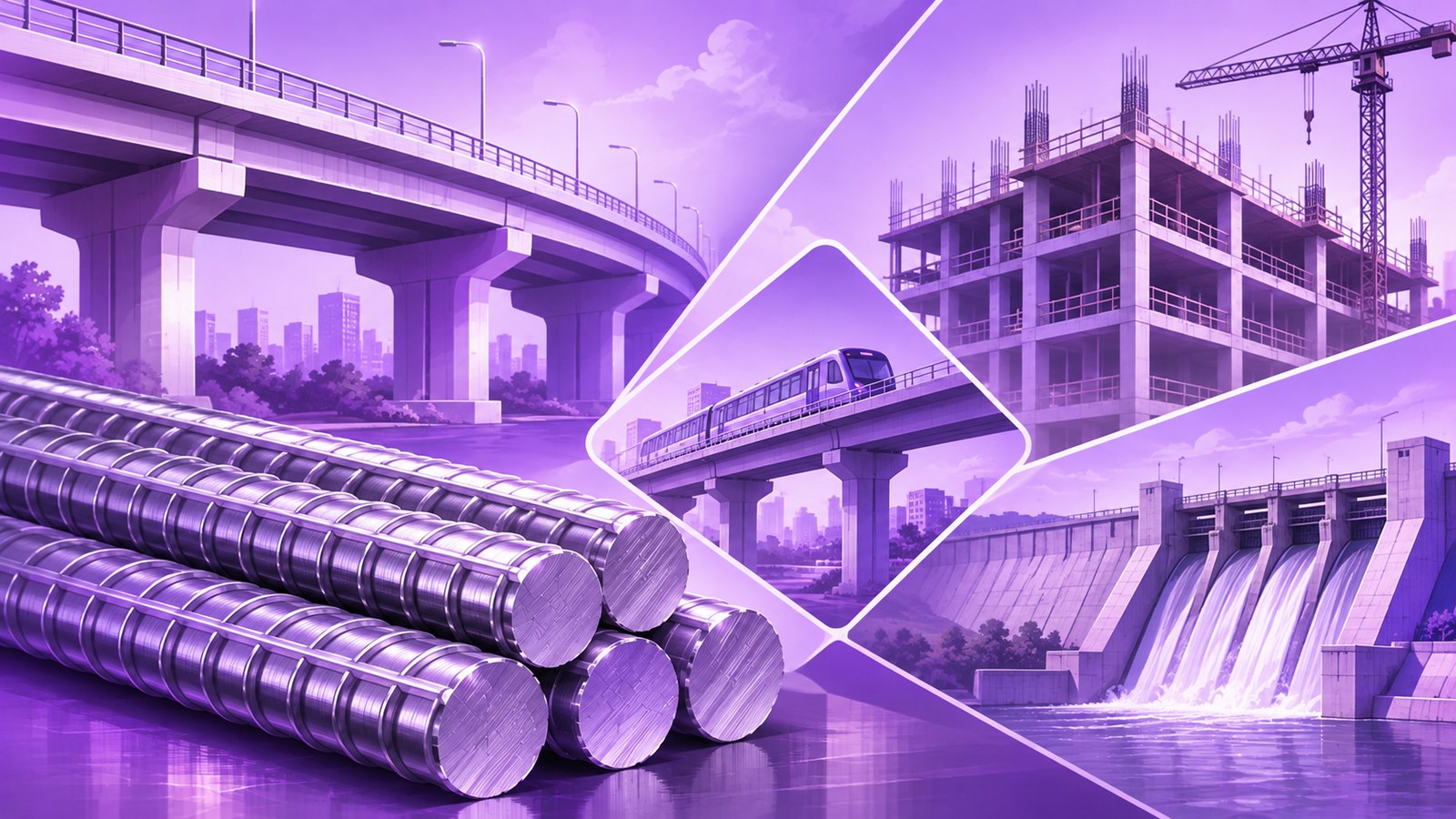
Fe 500 TMT bars are commonly used reinforcement bars in residential, commercial, and infrastructure construction. Manufactured from Fe 500-grade steel, these bars offer a combination of strength, ductility, and durability required for Reinforced Cement Concrete (RCC) structures.
Fe 500 TMT bars are popular because of their high yield strength compared with lower-grade reinforcement bars. Under IS 1786:2008, Fe 500 TMT bars must meet a minimum yield stress of 500 N/mm² and specified tensile strength and elongation requirements.
These properties make them suitable for applications where concrete structures need reliable reinforcement to withstand structural loads, bending stresses, and other forces.
Here are the features of Fe 500 TMT bars which make them one of the most preferred raw materials for the construction industry:
-
High yield strength: Fe 500 TMT bars have a minimum yield strength of 500 N/mm², allowing them to withstand considerable tensile stress before permanent deformation.
-
Strength and ductility: These bars offer a balance of strength and elongation. Their minimum specified elongation is 12%, helping them accommodate deformation under loading.
-
Controlled carbon content: The chemical composition requirements help maintain the balance between strength, ductility, and weldability.
-
Weldability: Fe 500 bars can be welded when their chemical composition, carbon equivalent, and applicable welding procedures meet the relevant requirements. Welding should follow the project specifications.
-
Corrosion resistance: The TMT manufacturing process produces a characteristic surface and core structure. However, corrosion resistance also depends on concrete quality, cover thickness, exposure conditions, and construction practices.
-
Seismic performance: Fe 500 reinforcement can be used in earthquake-resistant construction when the structural design and applicable seismic codes permit it. For structures requiring greater ductility, Fe 500D or Fe 500S may be specified.
-
Construction versatility: These bars are available in different diameters and are used in RCC foundations, columns, beams, slabs, and other reinforced concrete components.
Fe 500 TMT bars are widely used in construction because they provide the strength required for load-bearing RCC structures. However, their suitability depends on structural design, grade specifications, and the conditions in which the bars will be used.
Where are Fe 500 TMT bars used?
Fe 500 TMT bars are commonly used in the following construction applications:
| Application | How Fe 500 TMT bars are used |
|---|---|
| Residential buildings | Reinforcement in foundations, columns, beams, and slabs. |
| Commercial buildings | Reinforcement in multi-storey buildings and other RCC structures. |
| Industrial structures | Reinforcement in factory floors, columns, foundations, and structural components. |
| Bridges and flyovers | Reinforcement in concrete decks, piers, abutments, and other components, subject to design specifications. |
| Roads and infrastructure | Reinforcement in concrete pavements, retaining walls, drainage structures, and other infrastructure projects. |
| Water-retaining structures | Reinforcement in concrete tanks, reservoirs, and similar structures, with appropriate corrosion protection and detailing. |
Fe 500 vs Fe 500D TMT bars: What should buyers know?
Although both grades have a specified minimum yield strength of 500 MPa, Fe 500 and Fe 500D differ in their ductility and mechanical property requirements.
| Parameter | Fe 500 | Fe 500D |
|---|---|---|
| Minimum yield strength | 500 MPa | 500 MPa |
| Minimum tensile strength | 545 MPa | 565 MPa |
| Minimum elongation | 12% | 16% |
| Tensile strength-to-yield strength ratio | 1.08 | 1.10 |
Fe 500D offers higher ductility and a higher tensile strength requirement than standard Fe 500. This makes it an important consideration for projects where greater deformation capacity is required.
Procurement tip: Do not select TMT bars based on yield strength alone. Compare elongation, tensile strength, chemical composition, carbon equivalent, and BIS certification before finalising your purchase.
What should MSME buyers check when purchasing Fe 500 TMT bars?
Before placing a bulk order, verify these essential parameters:
-
BIS certification: Check the manufacturer’s valid BIS licence and applicable IS 1786 marking.
-
Grade specification: Confirm whether the purchase order requires Fe 500, Fe 500D, or another grade.
-
Test certificates: Request a batch-specific Mill Test Certificate (MTC).
-
Bar diameter: Check whether the supplied diameter matches the structural drawings and purchase order.
-
Weight tolerance: Verify the actual mass against the nominal mass requirements under IS 1786.
-
Surface quality: Inspect the bars for cracks, harmful surface defects, and other visible imperfections.
Remember: Fe 500 TMT bars are not automatically suitable for every construction project. The structural engineer must specify the appropriate reinforcement grade based on design loads, ductility requirements, seismic conditions, and applicable Indian Standards.
Fe 500 vs Fe 500D
Fe 500 and Fe 500D are two commonly used grades of high-strength deformed steel bars and wires for concrete reinforcement, specified under IS 1786:2008. Both grades have a minimum specified yield strength of 500 MPa, but they differ in their tensile strength, elongation, and chemical composition requirements.
The letter ‘D’ in Fe 500D stands for ductility. Fe 500D is designed to offer greater elongation and ductility than standard Fe 500, making it an important choice for construction projects where structural deformation capacity is a consideration.
Here’s a look at the key differences between Fe 500 and Fe 500D
| Parameter | Fe 500 | Fe 500D |
|---|---|---|
| Minimum yield strength | 500 MPa | 500 MPa |
| Minimum tensile strength | 545 MPa | 565 MPa |
| Tensile strength-to-yield strength ratio | 1.08 | 1.10 |
| Minimum elongation | 12% | 16% |
| Maximum carbon content | 0.30% | 0.25% |
| Maximum sulphur content | 0.055% | 0.040% |
| Maximum phosphorus content | 0.055% | 0.040% |
| Maximum sulphur + phosphorus | 0.105% | 0.075% |
Key differences between Fe 500 and Fe 500D
-
Carbon content: Fe 500D has a maximum carbon content of 0.25%, compared with 0.30% for Fe 500. Lower carbon content can help improve ductility and weldability, subject to the overall chemical composition.
-
Sulphur and phosphorus: Fe 500D has stricter limits for sulphur and phosphorus. Their combined maximum permissible content is 0.075%, compared with 0.105% for Fe 500.
-
Yield strength: Both grades have the same minimum specified yield strength of 500 MPa (N/mm²).
-
Tensile strength: Fe 500D has a higher minimum tensile strength of 565 MPa, compared with 545 MPa for Fe 500.
-
Elongation: Fe 500D has a minimum elongation requirement of 16%, while Fe 500 requires 12%. This indicates greater ductility and deformation capacity.
-
Ductility: Fe 500D is better suited to applications where greater deformation capacity is required, subject to structural design specifications.
Which grade should you choose: Fe 500 or Fe 500D?
The choice depends on the structural design, project requirements, and expected loading conditions.
| Selection criteria | Recommended grade | Reason |
|---|---|---|
| General RCC construction | Fe 500 | Provides the specified strength for conventional reinforcement applications. |
| Greater ductility requirements | Fe 500D | Offers a higher minimum elongation of 16%. |
| Earthquake-resistant structures | Fe 500D, where specified by design. | Higher ductility can support seismic deformation requirements. |
| Applications involving dynamic loading | As specified by the structural engineer | Grade selection depends on loading, detailing, and design requirements. |
| Projects requiring stricter chemical composition limits | Fe 500D | Has lower permissible carbon, sulphur, and phosphorus content. |
Applications of Fe 500 and Fe 500D in construction
Both grades are used in reinforced concrete construction. However, Fe 500D may be preferred where higher ductility is required.
Common applications include:
-
Residential and commercial buildings.
-
Industrial buildings and factory structures.
-
RCC foundations, columns, beams, and slabs.
-
Bridges, flyovers, and infrastructure projects.
-
Structures designed to withstand seismic forces, subject to applicable design codes.
Why is Fe 500D preferred for earthquake-resistant construction?
During an earthquake, structures experience repeated lateral forces and deformation. Reinforcement steel must have sufficient strength and ductility to accommodate these forces without sudden failure.
Fe 500D offers a minimum elongation of 16%, compared with 12% for Fe 500. This higher elongation requirement makes Fe 500D a useful option for structures requiring greater deformation capacity.
However, using Fe 500D alone does not make a building earthquake-resistant. Proper structural design, reinforcement detailing, concrete quality, and compliance with applicable seismic standards, such as IS 13920, are equally important.
What should MSME buyers remember?
Fe 500 and Fe 500D have the same minimum yield strength, but Fe 500D has higher ductility and stricter chemical composition limits. Always check the grade specified in the structural drawings and purchase order before procurement.
Conclusion
Choosing the right Fe 500 steel grade is an important part of construction planning and procurement. Understanding its specifications helps buyers make informed decisions, evaluate supplier offerings, and avoid quality-related issues. Whether sourcing reinforcement for residential buildings, commercial projects, or infrastructure development, always align steel procurement with structural requirements and applicable BIS standards. A well-informed purchase can support construction quality, project efficiency, and long-term structural performance.
Also read: How TMT steel bars provide safety against natural disasters
Looking to procure steel?
Tata nexarc helps manufacturers, builders and MSMEs source certified steel products, compare prices, and choose the right grade as per IS codes—with complete traceability and procurement confidence.
FAQs
What is Fe 500 steel?
What is the full form of Fe 500?
What is the minimum yield strength of Fe 500 steel?
What are the mechanical properties of Fe 500 steel?
What is the chemical composition of Fe 500 steel?
What is the difference between Fe 500 and Fe 500D?
What does the D stand for in Fe 500D?
Is Fe 500 steel suitable for earthquake-resistant construction?
What is the carbon equivalent formula for Fe 500 steel?
Which IS code specifies Fe 500 TMT bars?
Priyanka is a seasoned content marketing professional with more than 6 years of experience crafting various forms of business and technology sector content. Her insightful writing tackles critical issues faced by small-scale manufacturing businesses. Priyanka's clear and concise communication empowers businesses to make informed decisions and thrive in today's dynamic business environment.