
 Check Price Now

Table of Contents
- Understanding Online and Offline TMT Bar Procurement
- Buying TMT Bars Online in India: Benefits and Limitations
- Buying TMT Bars Offline in India: Benefits and Limitations
- Online vs Offline TMT Bar Procurement: Key Differences
- Essential Checks Before Purchasing TMT Bars
- Which TMT Bar Buying Method Should MSMEs Choose?
- Conclusion
- FAQs
TMT bars are an essential raw material for construction, infrastructure, and reinforced concrete projects across India. For MSMEs, contractors, builders, and fabricators, choosing the right supplier involves balancing material quality, pricing, availability, and delivery timelines.
Online vs offline TMT bar procurement presents two distinct ways to meet these requirements. While local dealers and distributors offer direct negotiations and access to nearby stock, online platforms and manufacturer websites enable buyers to explore suppliers, compare quotations, and source steel digitally. Understanding the differences between these channels can help businesses make informed purchasing decisions, manage procurement costs, and select a sourcing method that suits their requirements.
Understanding online and offline TMT bar procurement
TMT bar procurement in India generally takes place through two channels: online platforms and traditional offline supplier networks. Each offers a different way for businesses to identify vendors, compare prices, verify product details, and place orders.
What is online TMT bar procurement?
Online TMT bar procurement involves sourcing reinforcement steel through digital channels, allowing buyers to explore suppliers and initiate purchases without visiting physical markets.
Common online sourcing channels include:
| Channel | How it works |
|---|---|
| Manufacturer websites | Explore product specifications and contact authorised sales channels. |
| B2B steel procurement platforms | Discover suppliers, submit requirements, and request quotations. |
| Online supplier directories | Identify vendors based on product availability and location. |
| Digital sales channels | Manage enquiries, quotations, order confirmations, and payment coordination. |
Important: Online procurement does not necessarily involve instant checkout. Bulk TMT bar purchases often require quotation requests, price negotiations, stock confirmation, and delivery coordination before an order is finalised.
What is offline TMT bar procurement?
Offline TMT bar procurement involves purchasing steel through physical supplier networks and direct business interactions.
Common offline sourcing channels include:
-
Local steel dealers and distributors: Source TMT bars from nearby suppliers.
-
Authorised brand dealers: Purchase products through established manufacturer-appointed networks.
-
Wholesalers and stockists: Procure larger quantities based on available inventory.
-
Manufacturer sales representatives: Discuss bulk requirements, pricing, and supply arrangements directly.
Key characteristics: Buyers can visit supplier premises, check available stock, inspect visible product markings, negotiate commercial terms, and coordinate transportation before confirming purchases.
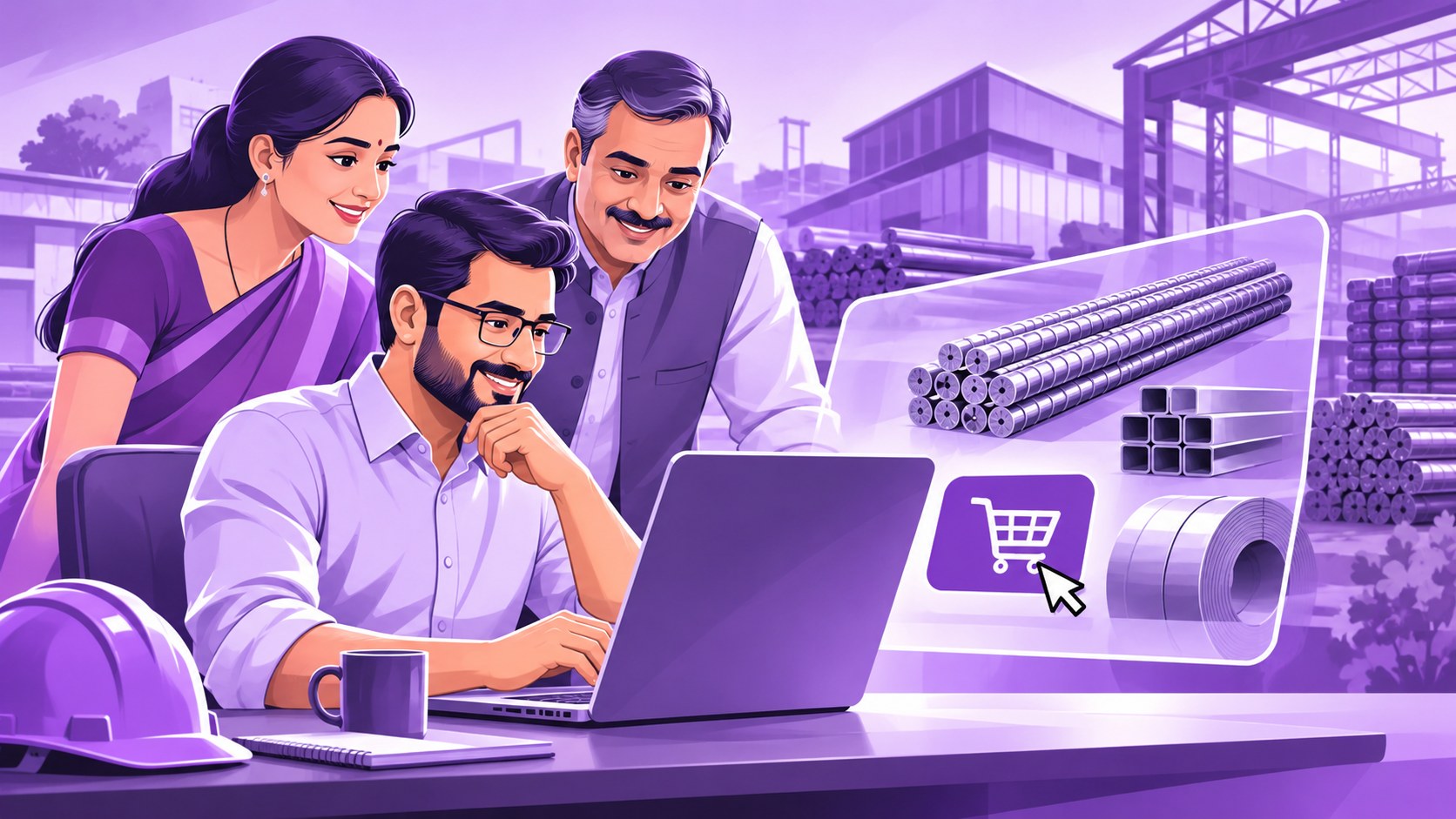
Buying TMT bars online in India: Benefits and limitations
Online TMT bar procurement is gaining relevance among Indian MSMEs as digital platforms make it easier to discover suppliers, compare quotations, and explore sourcing options. However, buyers must evaluate the benefits and limitations before placing orders, particularly for bulk requirements.
Advantages and limitations of online TMT bar procurement
| Procurement factor | Advantages of buying TMT bars online | Limitations and considerations |
|---|---|---|
| Supplier discovery | Access multiple manufacturers, authorised dealers, distributors, and steel suppliers through digital platforms. | Supplier listings do not automatically establish credibility or authorisation. Verify business credentials before ordering. |
| Price comparison | Request quotations from multiple vendors and compare prices across brands, grades, diameters, and quantities. | Listed prices may be indicative and exclude GST, freight, unloading, and other charges. |
| Product selection | Explore different TMT bar brands, grades such as Fe 500 and Fe 500D, and available diameters. | Product specifications and stock availability must be confirmed with the supplier before placing an order. |
| Convenience | Explore sourcing options, submit enquiries, and communicate with suppliers without visiting multiple steel markets. | Digital interactions may require additional calls, discussions, and physical verification before order confirmation. |
| Quality verification | Access product specifications, BIS licence details, and test documentation shared by suppliers. | Buyers cannot physically examine the supplied material before dispatch. Documentation and certification claims require independent verification. |
| Procurement documentation | Maintain digital quotations, purchase orders, invoices, and supplier communications for easier record-keeping. | Documentation quality depends on the platform and supplier’s processes. |
| Supplier reach | Discover vendors beyond immediate geographical markets and explore alternative sourcing locations. | Longer distances can increase transportation costs and complicate delivery coordination. |
| Bulk purchasing | Compare multiple bulk quotations and negotiate quantities, pricing, and commercial terms. | Large orders may require additional discussions, stock confirmation, and customised delivery arrangements. |
| Payment arrangements | Use documented digital payment channels and maintain transaction records. | Advance payment requirements, credit availability, payment security, and refund conditions vary by supplier. |
| Delivery and logistics | Coordinate delivery requirements and track order-related communication digitally where supported. | Delivery timelines, vehicle availability, unloading arrangements, and transit risks need confirmation. |
What MSMEs should consider: In the online vs offline TMT bar procurement decision, digital sourcing offers greater convenience and supplier comparison opportunities. However, buyers should verify supplier credentials, applicable BIS certification, product specifications, final landed costs, and delivery commitments before confirming an order.
Buying TMT bars offline in India: Benefits and limitations
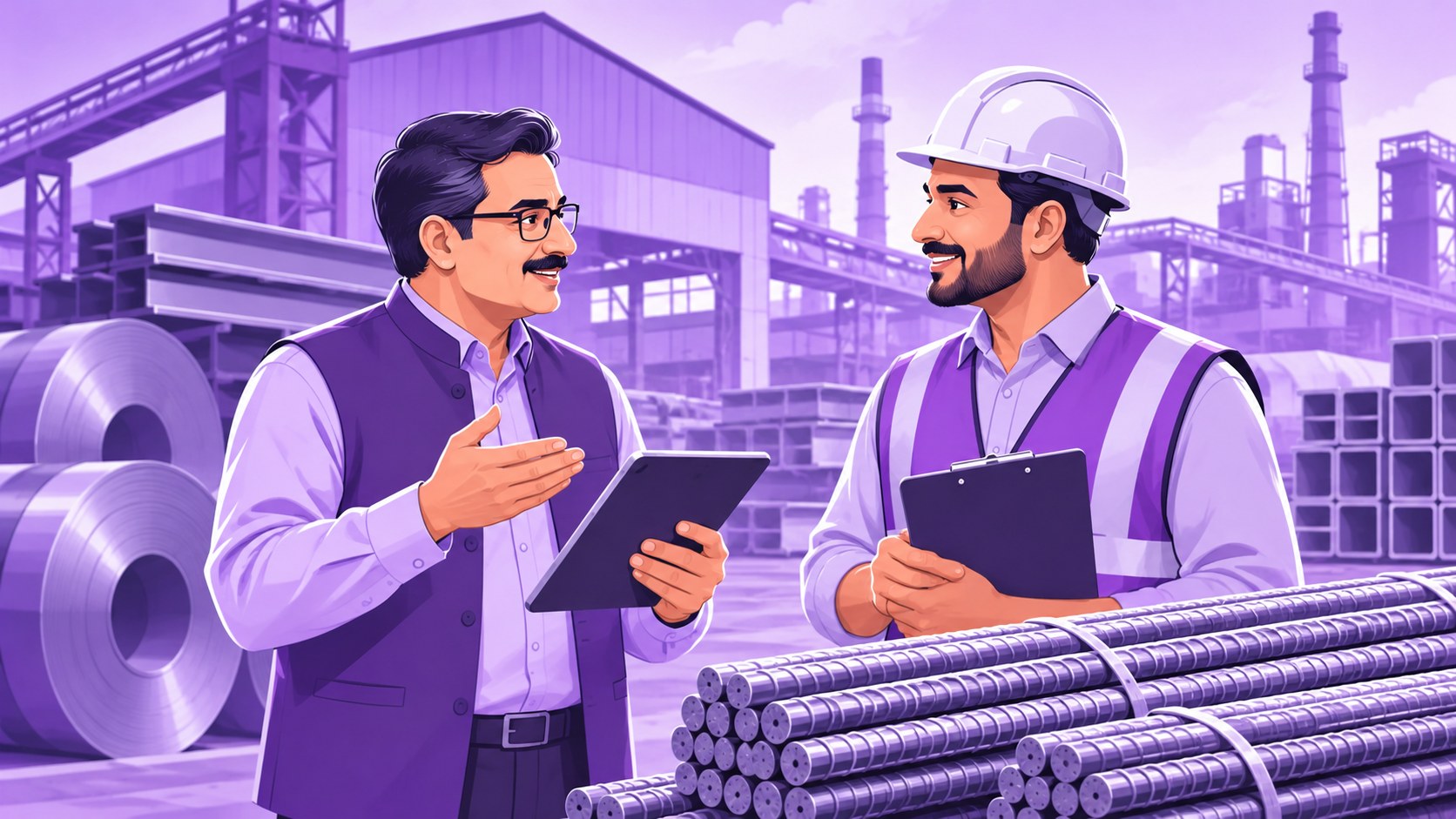
Offline TMT bar procurement remains a common sourcing method for Indian MSMEs, contractors, and builders. It involves purchasing reinforcement steel through local dealers, authorised distributors, wholesalers, and stockists. Direct interaction allows buyers to discuss requirements, inspect available stock, and negotiate commercial terms. However, traditional sourcing also involves certain operational challenges.
Advantages and limitations of offline TMT bar procurement
| Procurement factor | Advantages of buying TMT bars offline | Limitations and considerations |
|---|---|---|
| Physical inspection | Buyers can examine visible product markings, bundle condition, dimensions, and surface appearance before purchase or acceptance. | Visual inspection cannot establish mechanical properties, chemical composition, or complete BIS compliance. |
| Price negotiation | Direct discussions with dealers can help negotiate prices, bulk discounts, credit periods, and repeat-order terms. | Comparing prices across multiple dealers requires individual enquiries and negotiations. |
| Local availability | Nearby dealers and stockists may offer quicker access to available inventory for urgent or smaller requirements. | Stock availability depends on local inventory, brand, grade, and diameter requirements. |
| Supplier relationships | Established relationships can support repeat purchases, familiar payment arrangements, and easier coordination. | Dependence on a limited number of dealers may restrict supplier choice and price comparisons. |
| Product selection | Buyers can discuss specifications and explore available TMT bar brands and grades directly with suppliers. | Local dealers may not stock every brand, grade, or diameter required. |
| Supplier verification | Buyers can visit business premises, interact with dealers, and assess their operations. | Physical presence alone does not establish supplier authorisation or product authenticity. |
| Procurement time | Direct interactions can help clarify requirements and resolve queries during negotiations. | Visiting multiple dealers, collecting quotations, and coordinating purchases can be time-consuming. |
| Delivery and logistics | Local suppliers may offer convenient transportation and unloading arrangements for nearby construction sites. | Delivery capacity, transport charges, and schedules vary between suppliers. |
What MSMEs should consider: Offline TMT bar buying offers direct interaction and opportunities for physical inspection, but it does not eliminate quality or procurement risks. Buyers should still verify applicable BIS certification, manufacturer test certificates, supplier credentials, and final delivered costs before accepting an order.
Online vs offline TMT bar procurement: Key differences
The choice between online and offline TMT bar procurement depends on a business’s sourcing requirements, order volume, supplier network, and delivery location. While online channels simplify supplier discovery and quotation comparison, offline purchasing offers direct interaction and access to local inventory.
Online vs offline TMT bar procurement: A comparison
| Procurement parameter | Online TMT bar procurement | Offline TMT bar procurement |
|---|---|---|
| Supplier discovery | Discover manufacturers, authorised dealers, distributors, and vendors through digital platforms. | Identify suppliers through local dealer networks, referrals, and physical steel markets. |
| Price comparison | Request and compare quotations from multiple suppliers digitally. | Collect quotations through dealer visits, calls, and direct enquiries. |
| Product inspection | Review specifications, product images, markings, and test documentation before dispatch; physical inspection may follow delivery. | Examine available stock, visible markings, and bundle condition at the supplier’s premises. |
| Supplier reach | Explore suppliers beyond local markets, subject to delivery feasibility. | Primarily access suppliers within established local or regional networks. |
| Price negotiation | Negotiate through digital enquiries, calls, or supplier representatives. | Discuss prices, discounts, and commercial terms face-to-face. |
| Documentation | Maintain digital quotations, purchase orders, invoices, and communication records. | Receive physical or digital documentation, depending on supplier practices. |
| Delivery coordination | Coordinate transportation and delivery schedules remotely with suppliers. | Discuss local transportation, collection, and unloading arrangements directly. |
| Bulk procurement | Compare multiple supplier quotations for large-volume requirements. | Leverage established dealer relationships and negotiated bulk-order arrangements. |
| Payment terms | Depend on supplier policies, platform arrangements, and negotiated credit facilities. | Depend on dealer relationships, payment history, and negotiated commercial terms. |
| Convenience | Explore sourcing options and initiate enquiries without travelling between suppliers. | Requires physical visits or direct coordination with individual dealers. |
Which TMT bar procurement method offers better value for money?
In online vs offline TMT bar procurement, the lowest quoted price does not necessarily represent the most economical purchase. MSMEs should compare the total landed cost to understand the actual expenditure involved in sourcing and delivering TMT bars to their project site.
Consider these cost components before confirming an order:
-
Base material price: Quoted TMT bar rate per kg or tonne.
-
GST: Applicable tax on the transaction.
-
Freight charges: Transportation costs from the supplier’s location to the delivery site.
-
Loading and unloading: Handling expenses at dispatch and delivery points.
-
Payment terms: Advance payments, credit periods, and associated financing costs.
-
Order conditions: Minimum order quantities, delivery schedules, and other applicable charges.
Total landed cost calculation: Total landed cost = Material cost + Applicable taxes + Freight charges + Other charges
For an accurate comparison, obtain quotations for the same TMT bar brand, grade, diameter, quantity, delivery location, and tax basis. This helps MSMEs assess whether online or offline sourcing offers better overall value rather than choosing a supplier solely on the basis of the quoted per-kg price.
Essential checks before purchasing TMT bars
Regardless of whether businesses choose online or offline TMT bar procurement, they must verify product specifications and quality before accepting an order.
Verify BIS certification
Check whether the TMT bars comply with the applicable requirements of IS 1786:2008. Verify the BIS Standard Mark and manufacturer’s licence details through the official BIS CARE app.
Check the manufacturer’s test certificate
Request the test certificate for the relevant cast or lot. Check tensile strength, yield strength, elongation, and bend and rebend test results against the applicable grade requirements.
Confirm grade and diameter
Ensure the supplied TMT bars match the specifications mentioned in the purchase order. Verify the grade (Fe 500, Fe 500D, or Fe 550D), nominal diameter, and required quantity.
Check weight and dimensional tolerances
Compare the actual mass per metre with the nominal unit weight and applicable IS 1786 tolerances. This helps buyers identify potential weight discrepancies during material receipt.
Inspect material condition on delivery
Check bundle identification, surface condition, visible markings, and physical damage. Match the delivered quantity and product details against the purchase order and delivery documentation.
Online or offline: Which TMT bar buying method should MSMEs choose?
The choice between online and offline TMT bar procurement depends on order volume, urgency, supplier availability, and business requirements. MSMEs can use the following guide to identify a suitable sourcing approach.
| Buying requirement | Recommended TMT bar procurement method |
|---|---|
| Comparing prices across multiple suppliers | Online procurement |
| Urgent, small-quantity requirements | Local offline purchase |
| Regular bulk purchases | Online comparison followed by supplier negotiation |
| Assessing a new supplier | Online discovery with physical verification |
| Established local dealer relationships | Offline or repeat digital ordering |
| Sourcing from multiple locations | Online supplier discovery |
Why choose a hybrid procurement model?
Combining online and offline channels can help MSMEs improve sourcing flexibility and make informed purchasing decisions. Businesses can discover suppliers and compare quotations online, verify shortlisted vendors and product documentation, and negotiate commercial terms before confirming orders. For repeat purchases, they can continue using established dealer relationships or digital ordering channels.
Conclusion
Online vs offline TMT bar procurement offers Indian MSMEs different ways to manage steel sourcing requirements. While online channels simplify supplier discovery, quotation comparisons, and procurement documentation, offline purchasing allows direct negotiations and access to local stock.
The right approach depends on order volume, delivery urgency, supplier credibility, product quality, and total landed cost. By combining digital sourcing with physical verification and established supplier relationships, businesses can make informed purchasing decisions while improving procurement efficiency and cost control.
Looking to procure steel?
Tata nexarc helps manufacturers, builders and MSMEs source certified steel products, compare prices, and choose the right grade as per IS codes—with complete traceability and procurement confidence.
FAQs
Is it better to buy TMT bars online or offline?
Can I buy TMT bars online in India?
How can I verify the quality of TMT bars purchased online?
How do I compare TMT bar prices from different suppliers?
Is buying TMT bars online cheaper than offline?
Can MSMEs buy TMT bars in bulk online?
What should I check before choosing a TMT bar supplier?
What is the BIS certification required for TMT bars in India?
What documents should I collect when purchasing TMT bars?
How can MSMEs reduce TMT bar procurement costs?
Sohini is a seasoned content writer with 12 years’ experience in developing marketing and business content across multiple formats. At Tata nexarc, she leverages her skills in crafting curated content on the Indian MSME sector, steel procurement, and logistics. In her personal time, she enjoys reading fiction and being up-to-date on trends in digital marketing and the Indian business ecosystem.
I have 1 thought – ‘buy it nice or buy it twice’.I make sure to choose a BIS and ISO certified supplier to ensure the TMT bars for my project are top-notch.
Great, you should also check documents against the TMT bars.