Check Price Now
Table of Contents
- Why is Steel in Construction Preferred?
- Uses of Steel in Construction
- Types of Steel Used in Construction
- Steel vs Concrete in Construction
- Why Structural Steel is Widely Used in Construction
- Steel Price in India (2026)
- Latest Trends in Steel Construction and Sustainability
- Lifespan and Maintenance of Steel Structures
- Conclusion
- FAQs
Steel in construction is one of the most widely used construction materials, known for its strength, durability, and versatility. From structural steel frameworks to TMT bars and steel plates, it forms the backbone of modern infrastructure. First used in large-scale buildings in the 19th century, steel is now common in homes, modular buildings, and green construction. Its recyclability and wide structural steel uses make it a preferred choice for sustainable and long-lasting construction projects.
Why is steel in construction preferred?
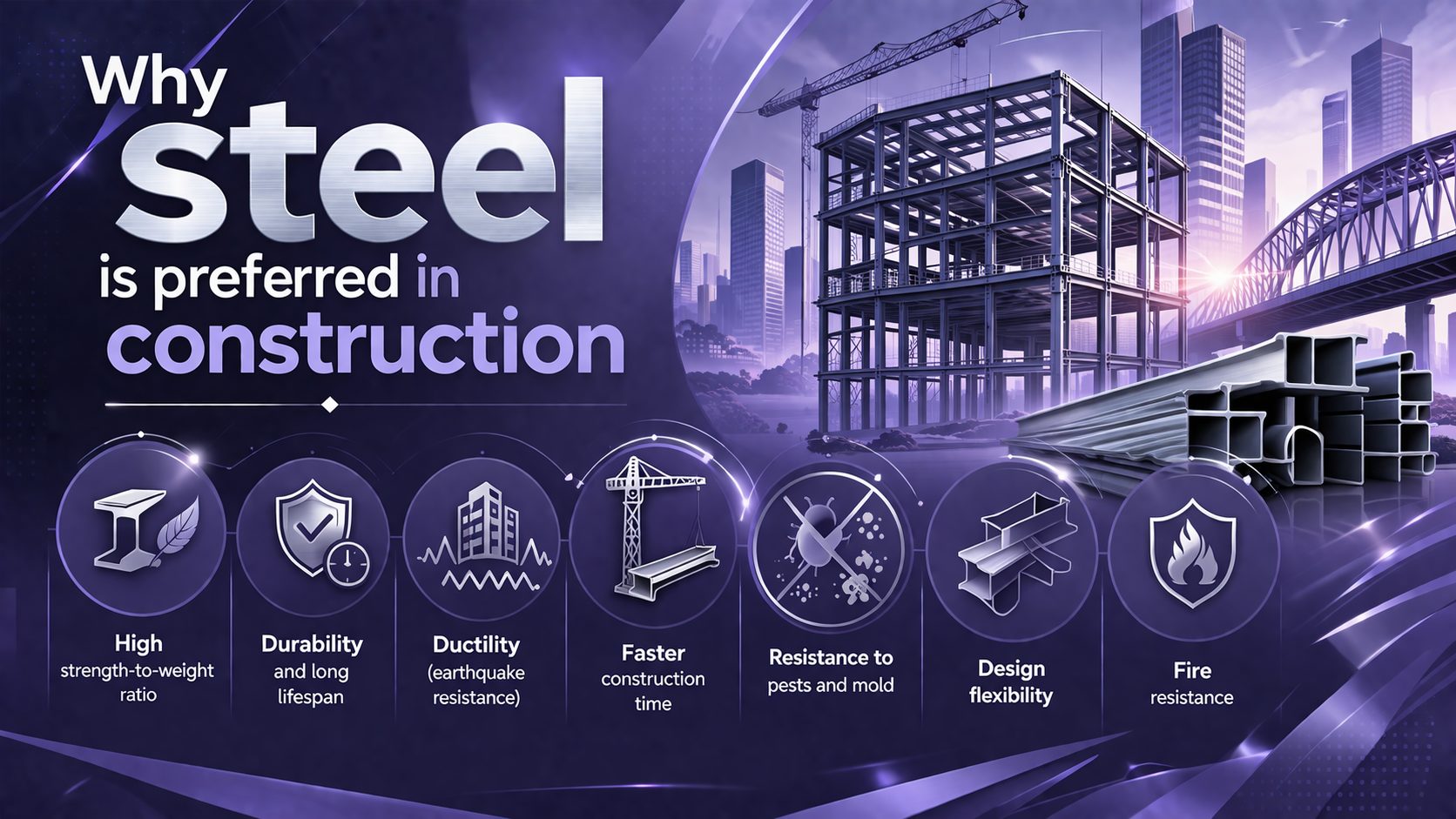
Steel is widely preferred in modern building projects due to its performance, durability, and efficiency. Below are the key advantages of steel in construction and why it is often chosen over traditional materials.
Key benefits of steel in construction
High strength-to-weight ratio
Steel offers excellent strength without adding excessive weight. This makes structures lighter yet highly stable.
Durability and long lifespan
Steel structures can last 50–100 years with proper maintenance, making them a long-term investment.
Ductility (earthquake resistance)
Steel can bend without breaking, helping buildings withstand earthquakes and high-impact forces.
Faster construction time
Prefabricated steel components reduce on-site work, speeding up project timelines.
Resistance to pests and mould
Unlike wood, steel does not attract termites or support mold growth.
Design flexibility
Steel allows for modern architectural designs, including large spans and unique shapes.
Fire resistance
Steel is non-combustible, meaning it does not catch fire. However, at very high temperatures, it can lose strength. This is why fire-resistant coatings or cladding are used to enhance safety in buildings.
Steel vs traditional materials
| Feature | Steel | Wood/concrete |
| Strength | Very high | Moderate |
| Earthquake resistance | Excellent | Limited |
| Construction speed | Fast | Slower |
| Maintenance | Low | Moderate to high |
Uses of steel in construction
Steel is used across a wide range of structures due to its strength, flexibility, and ease of installation. Below are the most common applications where steel plays a key role in modern construction.
High-rise buildings
Steel is used in high-rise buildings for its high strength-to-weight ratio, allowing structures to reach greater heights without excessive load. Its flexibility helps buildings withstand wind and seismic forces, making it ideal for urban construction.
Industrial sheds
Steel is widely used in industrial sheds due to its ability to handle heavy loads and vibrations from machinery. Prefabricated steel components also make installation faster and more cost-effective for large-scale operations.
Residential buildings
Steel is increasingly used in homes, especially in light gauge steel construction. It provides durability and disaster resistance while enabling faster project completion. Learn more about choosing the best steel for house construction for long-term performance.
Bridges
Steel is used in bridges because of its high tensile strength and load-bearing capacity. It supports heavy traffic while maintaining structural stability over long spans.
Parking structures
Steel is used in parking structures for its lightweight nature and quick assembly. It helps reduce construction time while maintaining strength and durability.
Pre-engineered buildings (PEB)
Steel is used in pre-engineered buildings where components are designed and manufactured off-site. This ensures precision, reduces waste, and speeds up construction timelines significantly.
Modular and prefab construction
Steel is used in modular construction for factory-built units that are assembled on-site. It supports sustainable building practices and improves efficiency in modern projects.
Types of steel used in construction
Different types of steel are chosen based on strength, durability, and application. Understanding these options helps in deciding which steel is best for construction.
Structural steel
Structural steel is used for beams, columns, and frameworks. It provides high strength and stability, making it ideal for large buildings and infrastructure projects.
TMT bars (Thermo-Mechanically Treated bars)
TMT bars are commonly used for reinforcement in concrete structures. They offer excellent tensile strength and ductility, making them suitable for earthquake-resistant construction.
Mild steel
Mild steel is a low-carbon steel known for its flexibility and ease of fabrication. It is widely used in general construction, including frames, pipes, and supports.
Stainless steel
Stainless steel is corrosion-resistant and durable. It is often used in areas exposed to moisture, such as coastal structures or water-related projects.
Galvanised steel
Galvanised steel is coated with zinc to prevent rusting. It is commonly used in outdoor structures, roofing, and applications where protection against corrosion is essential.
Steel vs concrete in construction
When comparing steel vs concrete, both materials have their advantages. However, steel often stands out in modern construction due to speed, durability, and long-term value.
Steel vs concrete comparison
| Factor | Steel | Concrete |
| Strength | High strength-to-weight ratio, supports large spans. | High compressive strength but heavier. |
| Construction speed | Faster due to prefabrication and easy assembly. | Slower due to curing time and on-site work. |
| Durability | Long-lasting with proper coating and maintenance. | Prone to cracks and degradation over time. |
| Maintenance | Lower maintenance if protected from corrosion. | Requires regular repairs and upkeep. |
| Design flexibility | Allows modern, complex architectural designs. | Limited flexibility once set. |
| Lifecycle cost | Higher upfront cost but lower long-term cost. | Lower initial cost but higher maintenance over time. |
| Environmental impact | Recyclable and reusable, supports sustainable construction. | Generates more waste, difficult to recycle. |
| Weight | Lightweight, reduces foundation load. | Heavy, increases structural load. |
Which is better: Steel or concrete?
Steel is often the better choice for projects that require speed, flexibility, and long-term durability. Concrete may suit budget-restricted projects initially, but steel offers better value over the building’s lifecycle. Overall, the choice depends on project needs, but steel continues to gain preference in modern construction.
Why structural steel is widely used in construction
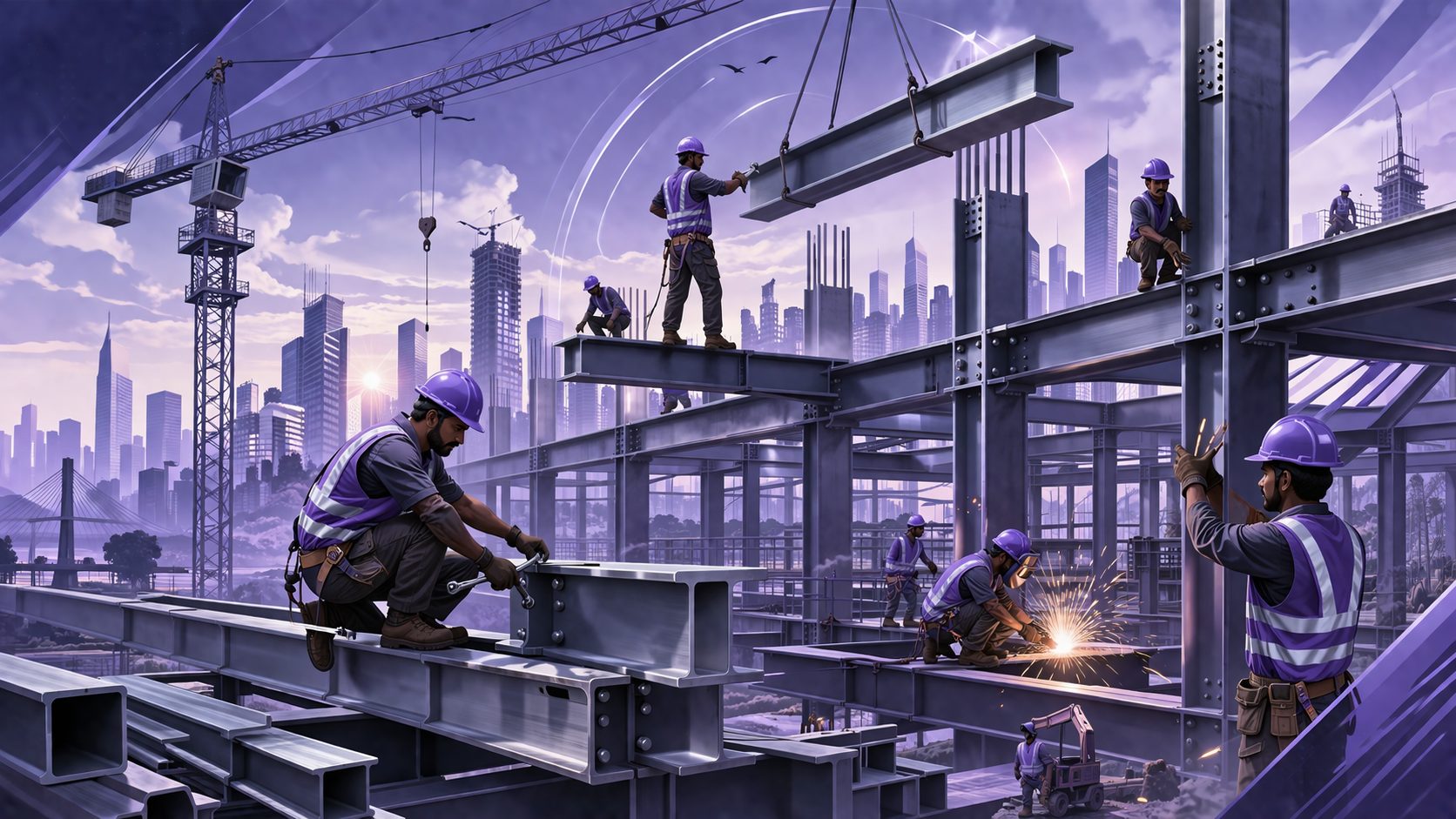
Designers and architects prefer steel for its efficiency, flexibility, and modern construction advantages. Below are the key structural steel benefits and why it remains a top choice.
Faster construction with prefabrication
Many steel components are manufactured off-site and delivered ready to install. This reduces construction time, labour costs, and on-site errors.
High design flexibility
Steel allows for large open spaces, longer spans, and creative architectural designs. It supports modern structures that are difficult to achieve with traditional materials.
Lightweight yet strong
Steel reduces the overall load on foundations while maintaining structural strength, making it efficient for both small and large projects.
BIM (Building Information Modeling) compatibility
Structural steel integrates well with BIM tools, enabling precise planning, better visualisation, and improved project coordination.
Cost efficiency over time
Faster construction, reduced labour, and lower maintenance contribute to long-term savings despite slightly higher upfront costs.
Consistency and quality control
Factory-made steel components ensure uniform quality and minimise material wastage.
Steel price in India (2026)
Understanding the steel price per kg in India is important for budgeting any construction project. Prices vary based on the type of steel, location, and market conditions. As of April 2026, the following are approximate market ranges.
Steel price per Kg in India (2026)
| Type of steel | Price range (₹/kg) | Common usage |
| TMT bars | ₹58 – ₹75 | Reinforcement in concrete structures. |
| Structural steel | ₹62 – ₹85 | Beams, columns, frameworks. |
| Steel plates | ₹72 – ₹100 | Heavy-duty construction, fabrication. |
Steel prices are indicative and may vary based on brand, location, order quantity, and market fluctuations. Always check with suppliers for the latest rates before making purchase decisions.
Factors affecting steel prices
Raw material costs: Prices of iron ore and coking coal directly impact steel rates.
Demand and supply: Infrastructure growth and construction demand can push prices up.
Logistics and transportation: Fuel costs and regional supply chains affect final pricing.
Global steel trends: International markets, exports, and policy changes influence domestic prices.
Latest trends in steel construction and sustainability
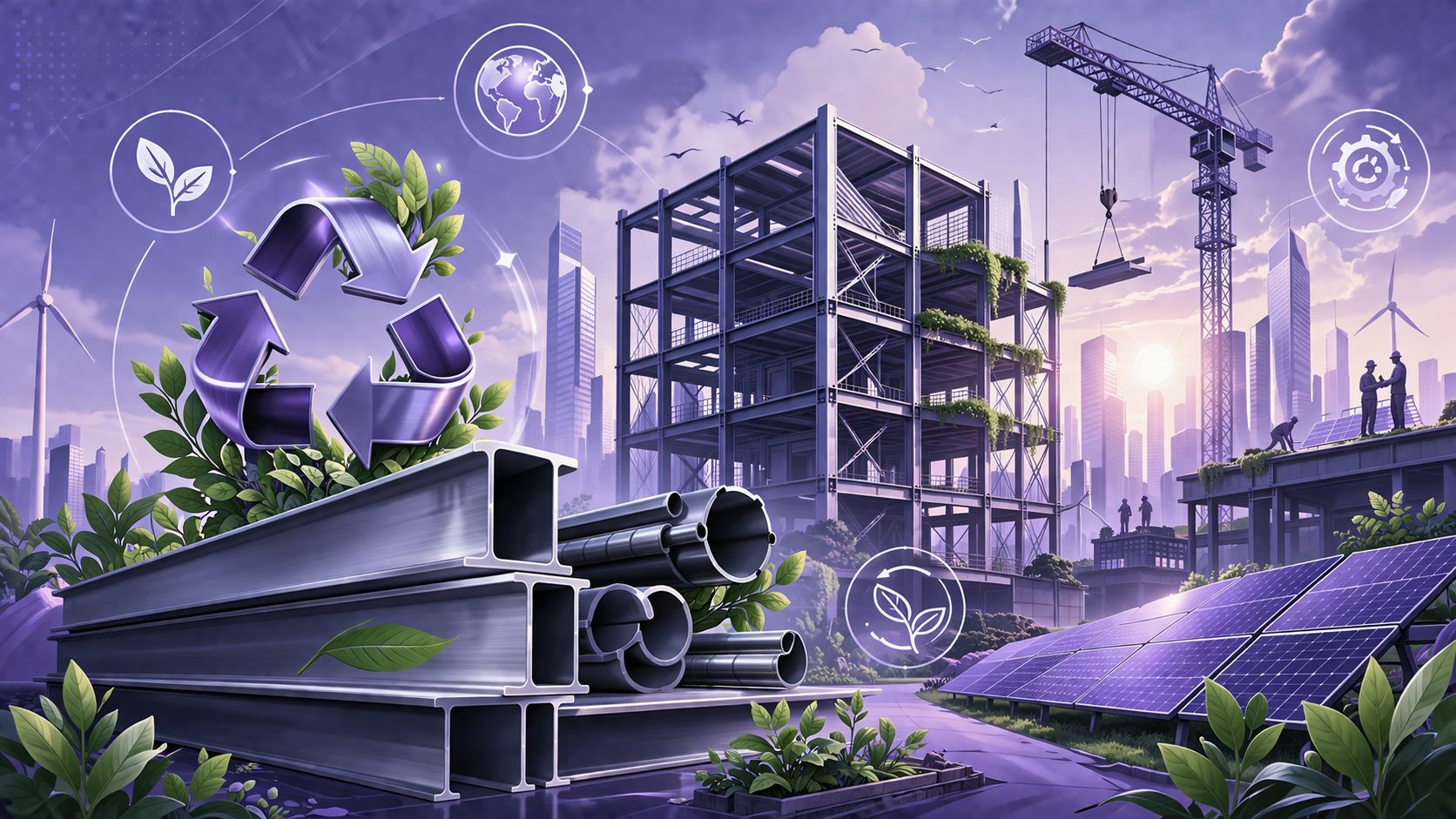
Steel continues to evolve as one of the most sustainable construction materials, with new technologies shaping the future of the industry. Below are the key trends driving the future of steel construction in 2026.
Key trends in steel construction
Green steel and low-carbon production
Manufacturers are adopting cleaner processes to reduce carbon emissions, making steel more eco-friendly.
Smart steel structures
Integration of sensors and digital monitoring helps track structural health and improve safety over time.
Prefabrication and modular construction
Off-site manufacturing is growing rapidly, reducing construction time, labour, and material waste.
AI-driven construction planning
Advanced tools and automation improve design accuracy, project efficiency, and cost control.
Sustainability and environmental benefits of steel
Highly recyclable material
Steel can be reused multiple times without losing its properties, reducing the need for new raw materials.
Reduced construction waste
Prefabrication ensures precise material usage, minimising on-site waste.
Long lifecycle and reuse
Steel structures have a long lifespan and can be dismantled and repurposed, supporting circular construction practices.
With these advancements, eco-friendly steel is becoming central to modern, efficient, and sustainable construction.
Lifespan and maintenance of steel structures
The lifespan of steel structures typically ranges between 50 to 100 years, depending on usage, environment, and maintenance practices. With proper care, steel can remain strong and reliable for decades, making it a long-term construction solution.
Maintenance tips for longer lifespan
Protective coatings: Applying paint or specialised coatings helps shield steel from moisture and environmental exposure.
Anti-corrosion treatments: Galvanisation and other treatments prevent rust, especially in coastal or humid areas.
Regular inspection: Periodic checks help identify early signs of wear, corrosion, or structural issues.
Timely repairs: Addressing minor damage early prevents costly repairs and extends durability.
Overall, with the right maintenance, steel offers excellent longevity, answering the common question of how long does steel last in construction.
Conclusion
Steel in construction continues to stand out as a future-ready material that balances performance, cost, and sustainability. Its ability to support faster building methods, adapt to modern design needs, and align with eco-friendly practices makes it a strong choice for evolving infrastructure demands. As construction moves towards efficiency and greener solutions, steel remains a reliable option for long-term value and scalable development.
Looking to procure steel?
Tata nexarc helps manufacturers, builders and MSMEs source certified steel products, compare prices, and choose the right grade as per IS codes—with complete traceability and procurement confidence.
FAQs
What is steel in construction?
What are the types of steel?
What is the steel price per kg in India today?
Why is steel better than concrete?
What is the lifespan of steel structures?
Which steel is best for house construction?
Is steel eco-friendly?
What are common steel sizes?
What is structural steel?
Does steel rust easily?
Priyanka is a seasoned content marketing professional with more than 6 years of experience crafting various forms of business and technology sector content. Her insightful writing tackles critical issues faced by small-scale manufacturing businesses. Priyanka's clear and concise communication empowers businesses to make informed decisions and thrive in today's dynamic business environment.