Check Price Now
Table of Contents
- What is a Steel Column?
- Steel Column Sizes
- Types of Steel Columns
- Steel Column Uses
- Steel Column Price in India (October 2026)
- Top Steel Column Companies in India
- Key Considerations While Selecting Steel Columns
- Steel Column Grades & Standards in India
- Advantages of Steel Columns
- Steel vs Concrete Columns
- Conclusion
- FAQs
A steel column is a key structural steel column used to support buildings by transferring loads vertically to the foundation. Commonly used across residential, commercial, and industrial projects, it plays a vital role in ensuring strength and stability. In this updated guide, we cover steel column meaning, types, sizes, and steel column uses, along with the latest price in India. Designed as a vertical load-bearing element, steel columns are widely specified by engineers for modern construction.
What is a steel column?
A steel column is a vertical structural member that carries loads from a building down to its foundation. In construction, it forms a critical part of the structural framework, ensuring stability and strength. Steel columns are designed to handle axial load, meaning they support weight coming from above, such as floors, roofs, and beams. This load transfer helps distribute forces safely throughout the structure.
They are widely used in high-rise buildings, warehouses, bridges, and industrial sheds, where strength and durability are essential. Made from high-strength steel, these columns are engineered to resist bending, compression, and external forces like wind or seismic activity.
What does a steel column do?
It transfers loads vertically, supports the overall structure, and maintains the building’s stability over time.
Steel column sizes
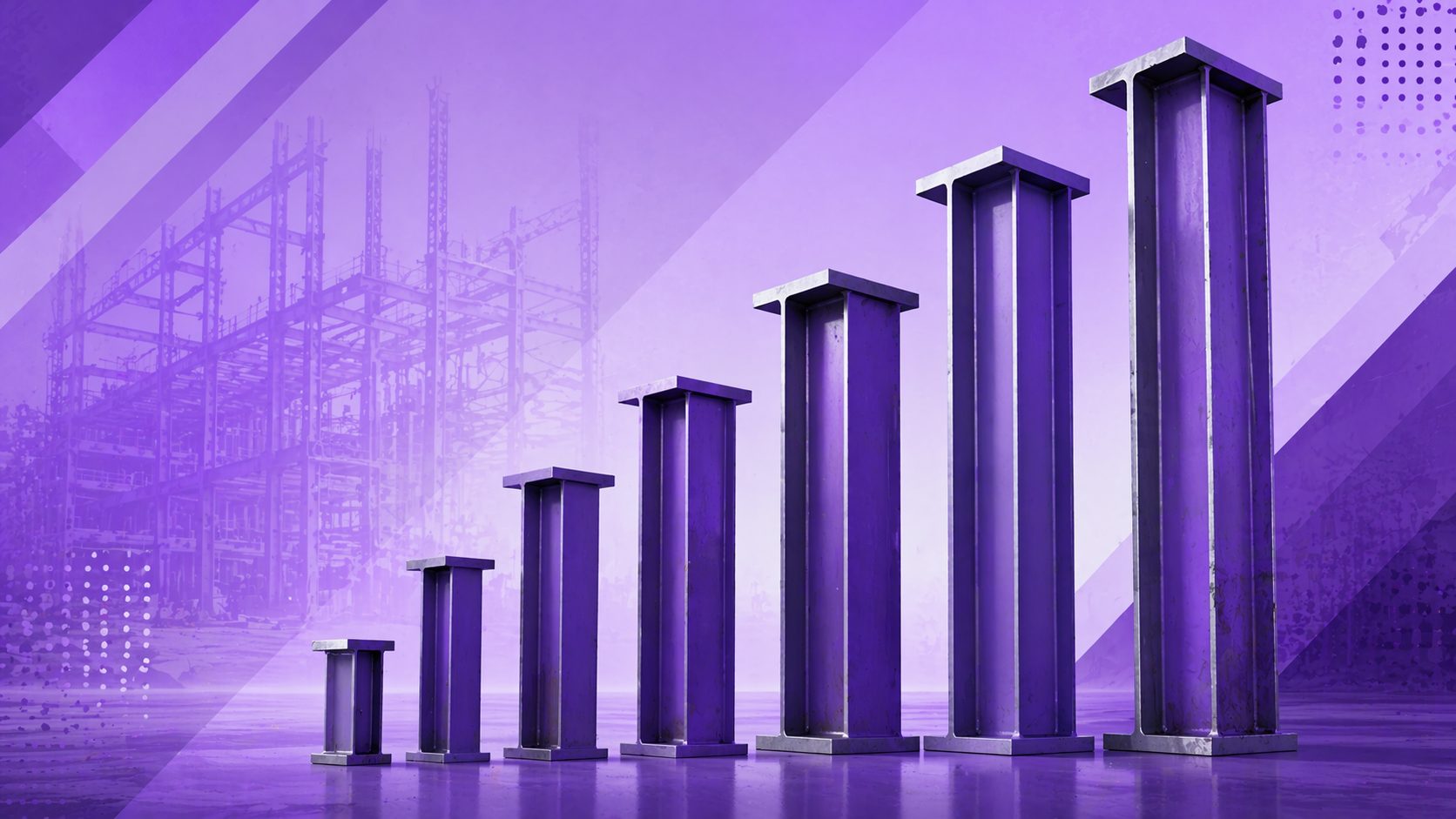
Steel column sizes vary based on load requirements, building type, and design standards. A typical steel column size chart includes parameters such as depth, flange width, thickness, and weight per metre. In simple terms, deeper and heavier sections are used for high-load applications like high-rise buildings, while lighter sections suit smaller structures.
In India, standard steel column dimensions are selected based on structural design and availability. Understanding these sizes helps buyers and engineers choose the right section for safety and cost efficiency.
| Section size (mm) | Depth (mm) | Flange width (mm) | Thickness (mm) | Weight (kg/m) | Typical use |
| 200–250 | 200–260 | 200–250 | 8–12 | 25–45 | Small structures, residential. |
| 300–350 | 300–350 | 250–300 | 10–16 | 45–75 | Medium buildings and warehouses. |
| 400–500 | 400–500 | 300–400 | 14–25 | 75–120 | High-rise, industrial projects. |
Practical guide:
Small sections → low-rise buildings
Medium sections → commercial use
Heavy sections → large-scale infrastructure
Types of steel columns
Steel columns are classified based on shape, composition, and application. Understanding the different types of steel columns in construction helps in selecting the right option for strength, cost, and design efficiency.
Based on shape
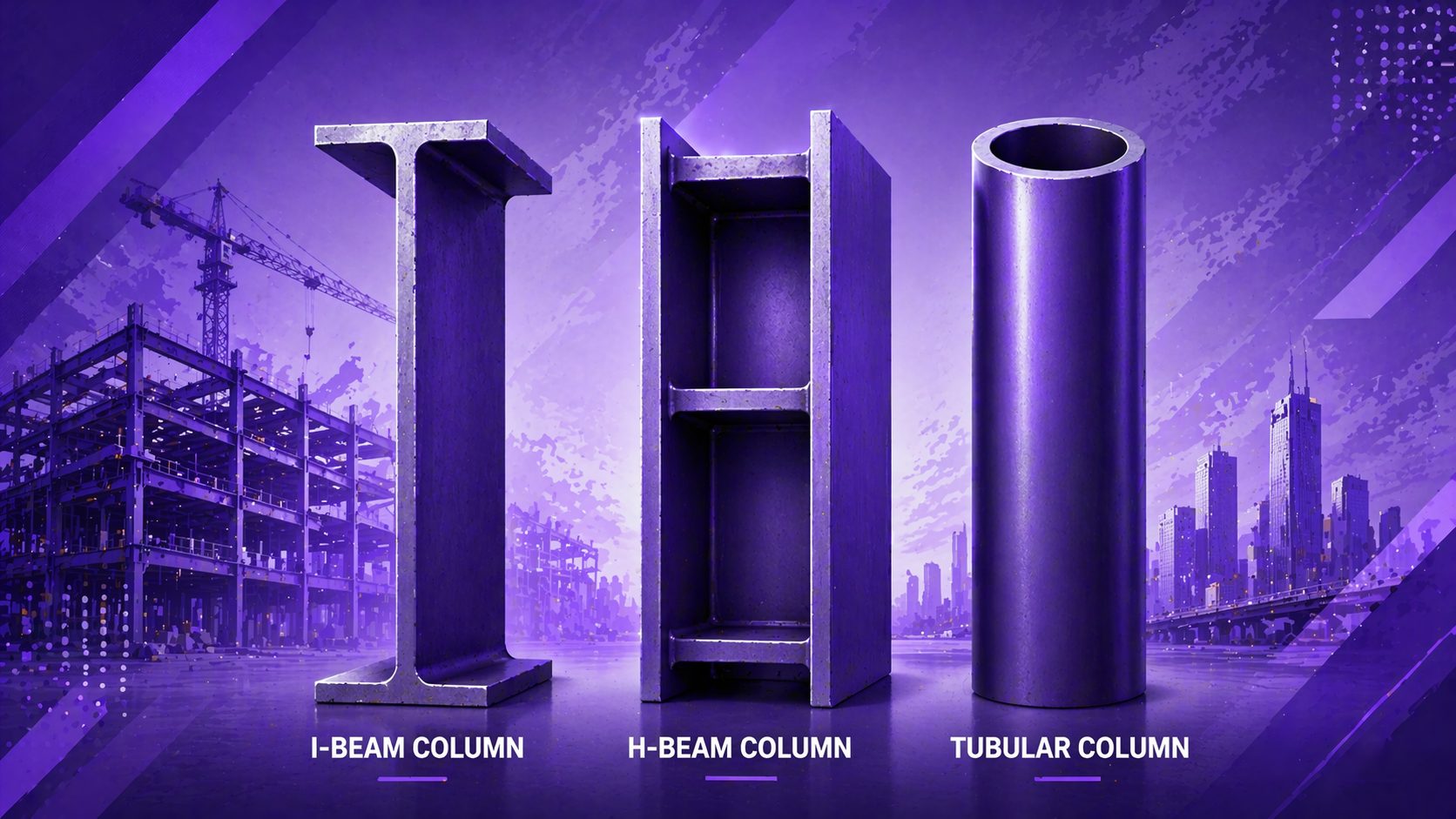
I-beam columns
I-beam columns have an I-shaped cross-section designed for efficient load transfer and bending resistance. They are commonly used with beams in building frameworks. Use case: mid-rise buildings and structural frames.
H-beam (universal) columns
H-beam columns have wider flanges and offer better load-bearing capacity than I-beams. These structural steel column types are widely used in heavy construction. Use case: high-rise buildings and industrial structures.
Tubular columns (CHS/SHS)
These include Circular Hollow Sections (CHS) and Square Hollow Sections (SHS). Their hollow design offers strength with reduced weight. Use case: bridges, aesthetic structures, and exposed frameworks.
Based on composition
Composite columns
Composite columns combine steel and concrete to improve strength and fire resistance. They perform well under high loads. Use case: commercial buildings and infrastructure projects.
CFT (concrete-filled tube) columns
CFT columns consist of steel tubes filled with concrete, enhancing durability and load capacity. Use case: high-load and seismic-prone structures.
Based on application
PEB columns
Used in Pre-engineered Buildings (PEB structures), these are factory-made and quick to install. Use case: warehouses, factories, and industrial sheds.
Residential & commercial columns
Designed for specific building needs; these columns vary in size and grade. Use cases: homes, offices, malls, and hotels.
Steel column uses
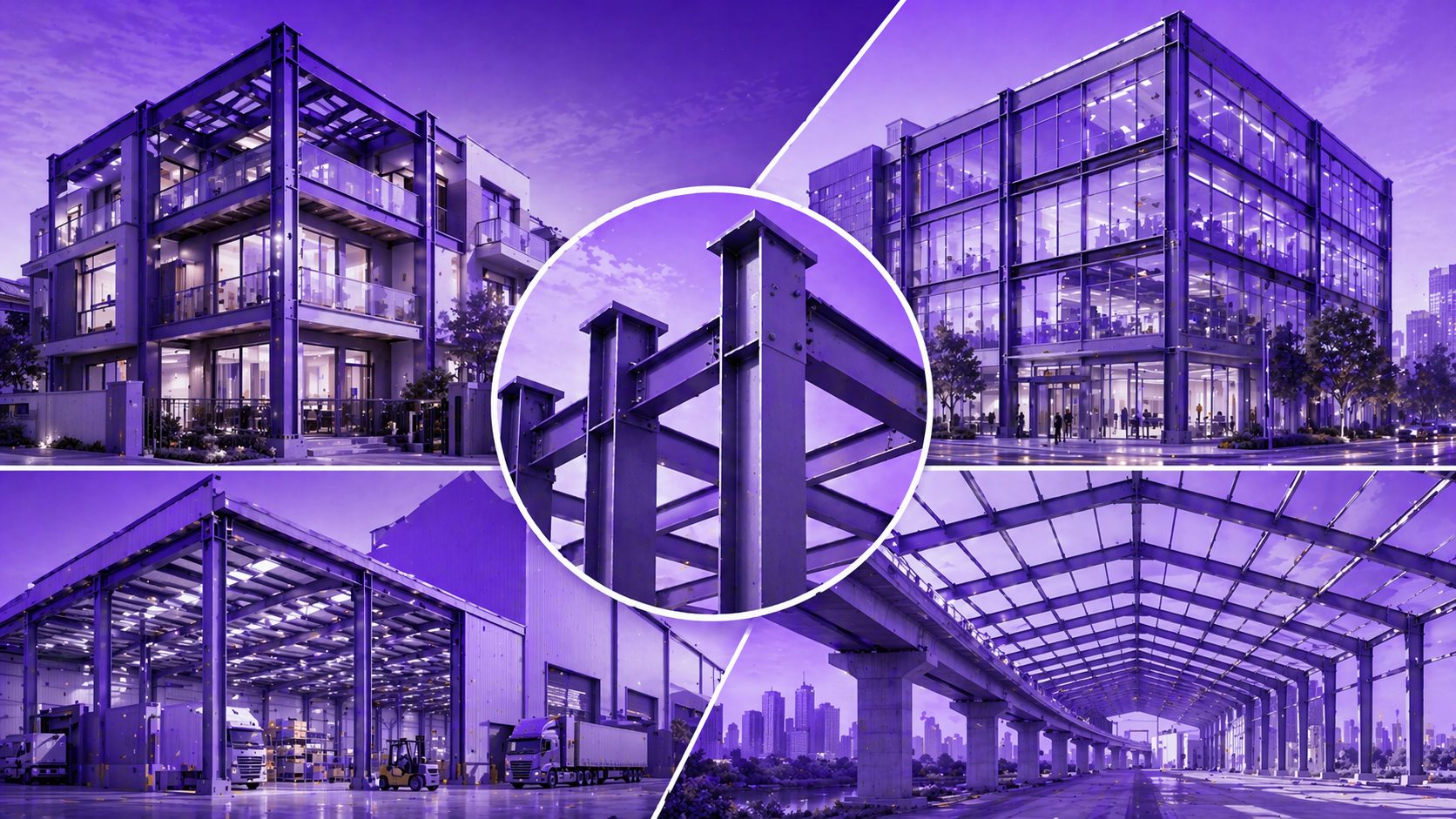
Steel columns are widely used across construction projects due to their strength, durability, and design flexibility. Below are the key uses of steel columns in construction:
Residential buildings
Steel columns provide structural support in homes and apartments, especially in multi-storey designs. They help distribute loads safely while allowing flexible layouts.
Commercial and office spaces
Used in malls, offices, and hotels, steel columns support large floor areas with fewer supports, creating open and usable spaces.
Industrial sheds and warehouses
Steel columns are essential in factories and warehouses where large spans and heavy loads are common. They enable faster construction and easy expansion.
Infrastructure projects
Widely used in bridges, metro stations, airports, and transport hubs, steel columns ensure high load-bearing capacity and long-term reliability.
Pre-engineered Buildings (PEB)
In modern PEB structures, steel columns allow quick installation and cost-efficient construction.
Why steel columns are used: They offer high strength, long lifespan, and adaptability across different construction needs.
Steel column price in India (October 2026)
Steel column prices in India vary based on grade, section size, and supplier. As of October 2026, the steel column price per kg in India typically ranges between ₹62 and ₹85 per kg, depending on specifications and market conditions.
| Specification | Price range (INR) |
|---|---|
| Price per kg | ₹62–₹85 per kg |
| Price per tonne | ₹62,000–₹85,000 per tonne |
| Light sections (200–250 mm) | ₹62–₹70 per kg |
| Medium sections (300–350 mm) | ₹68–₹78 per kg |
| Heavy sections (400–500 mm) | ₹75–₹85 per kg |
Prices are indicative estimates for October 2026, not verified quotations for each section size. Actual prices vary by grade, dimensions, location, supplier, and order quantity.
Steel grade: Higher grades like Fe 500 cost more than Fe 450 or Fe 250 due to better strength.
Section size: Heavier and larger columns require more material, increasing cost.
Location: Prices vary across regions due to transport and local demand.
Brand: Established manufacturers may charge a premium for quality and certification.
Prices may also fluctuate based on raw material costs and market demand. For the most accurate rates, it is advisable to compare quotes from multiple suppliers before purchasing.
Top steel column companies in India
Choosing from the best steel companies in India ensures quality, compliance, and long-term reliability. Here are some of the top structural steel manufacturers in 2026:
Tata Steel – Known for high-quality steel products, strong certifications, and nationwide availability.
JSW Steel – Offers a wide product range with competitive pricing and strong market presence.
SAIL – A government-backed brand trusted for large infrastructure projects.
Jindal Steel & Power – Focuses on high-strength structural steel for industrial use.
Essar Steel – Known for consistent supply and quality-controlled production.
Kamdhenu Limited – Popular for cost-effective options in residential and commercial projects.
Comparison tip: Balance quality, price, and availability when selecting a supplier.
Key considerations while selecting steel columns
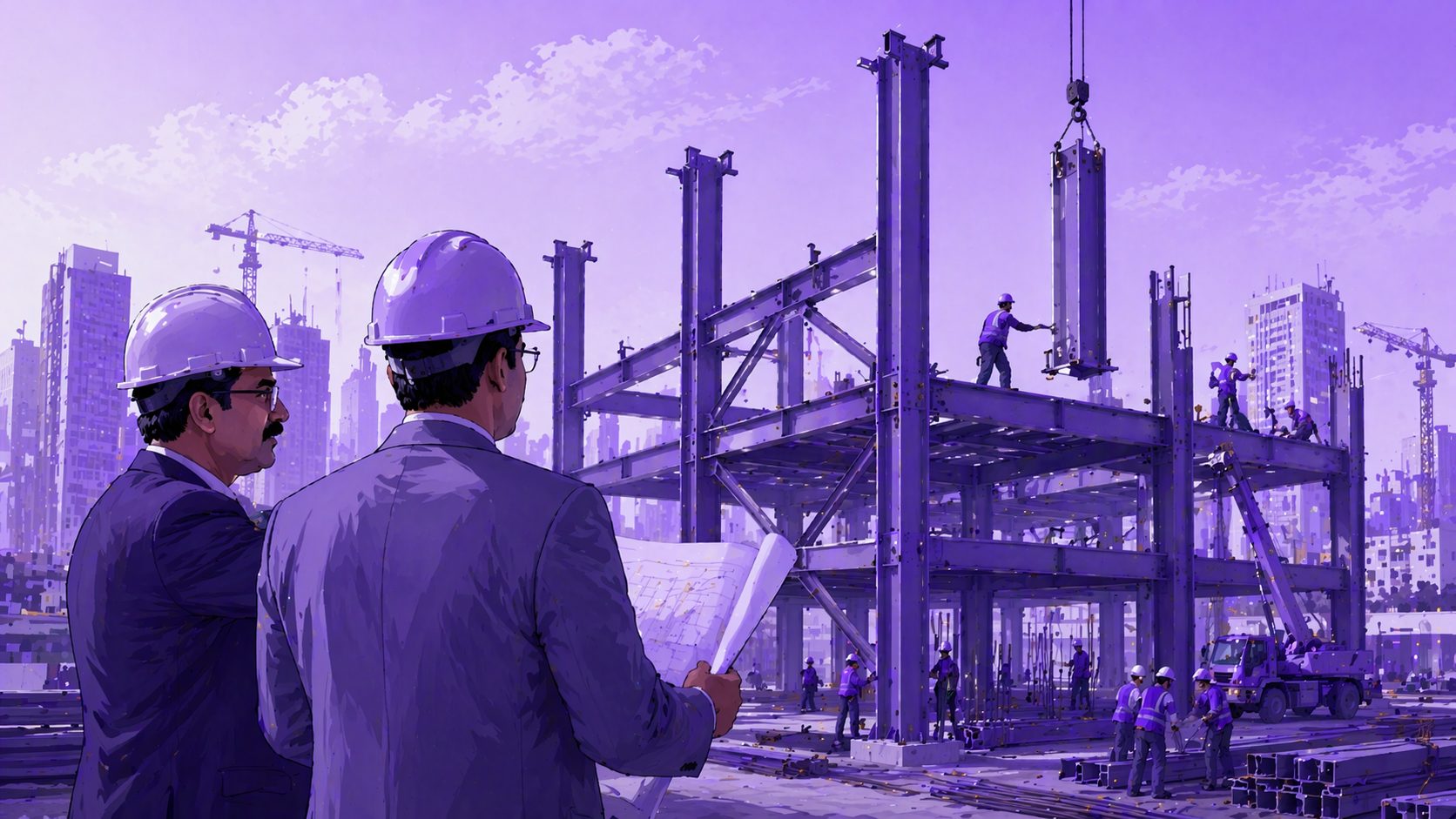
Choosing the right steel column depends on your project type, load requirements, and budget. Use this checklist to simplify your decision:
Load and building type: If you’re building a high-rise or industrial structure, choose heavy-duty sections with higher load capacity. For homes, lighter sections are usually sufficient.
Steel grade and strength: Higher grades like Fe 500 offer better strength and durability. Select based on structural needs and safety margins.
Fire protection: For commercial or public buildings, opt for fire-resistant coatings or composite columns to improve safety.
Corrosion resistance: In coastal or humid areas, choose galvanised or coated steel to prevent rust and extend lifespan.
Seismic performance: If you’re building in earthquake-prone zones, select columns designed to handle lateral forces and vibrations.
Fabrication and installation: Choose sections that are easy to transport, fabricate, and install to reduce construction time and cost.
Sustainability: Consider green steel or recycled materials for environmentally responsible construction.
Lifecycle cost: Look beyond initial price – durability and maintenance costs impact long-term value.
Steel column grades & standards in India
Steel columns in India are classified based on strength and governed by standard codes to ensure safety and performance. Understanding steel grades in India construction helps in selecting the right material for different applications.
| Steel grade | Strength level | Standard | Typical use |
| Fe 250 | Basic strength | IS 2062 | Light structures, small residential projects. |
| Fe 450 | Medium strength | IS 2062 | Commercial buildings, medium-load applications. |
| Fe 500 | High strength | IS 2062 | High-rise buildings, heavy-duty structures. |
- IS 2062 defines material properties for structural steel.
- IS 800 provides design guidelines for steel structures in India.
- Fe 500 vs Fe 450 steel: Fe 500 offers higher strength and is preferred for heavy-load applications, while Fe 450 balances strength and cost for general construction.
Advantages of steel columns
Steel columns offer several benefits that make them a preferred choice in modern construction. Below are the key advantages of structural steel:
High strength-to-weight ratio: Steel columns provide excellent strength while remaining relatively lightweight, reducing foundation load and material usage.
Faster construction: Pre-fabricated steel sections allow quick installation, helping complete projects on time and reduce labour costs.
Durability and reliability: Steel resists cracking, warping, and pests, ensuring long-term structural performance with minimal maintenance.
Design flexibility: Steel columns can be customised into different shapes and sizes to suit various architectural and structural needs.
Recyclability and sustainability: Steel is 100% recyclable, making it an environmentally responsible choice for modern projects.
These benefits of steel columns make them ideal for both residential and large-scale infrastructure projects.
Steel vs concrete columns
When choosing between steel and concrete, understanding the difference helps in making the right structural decision. Below is a practical comparison of steel vs concrete column performance:
| Factor | Steel columns | Concrete (RCC) columns |
| Strength | High strength-to-weight ratio; handles heavy loads efficiently. | Strong in compression but heavier and bulkier. |
| Cost | Higher upfront cost but efficient in long term. | Lower initial cost but higher maintenance over time. |
| Construction time | Faster due to prefabrication and easy installation. | Slower due to curing time and on-site work. |
| Durability | Long lifespan with proper coating; resistant to pests and cracking. | Durable but prone to cracks and environmental damage. |
Which is better – steel or RCC?
Steel columns are ideal for speed, flexibility, and modern construction, while RCC suits cost-sensitive, traditional projects.
Latest trends in steel columns

The future of steel construction in India is evolving with new technologies and sustainability goals. Here are the key steel industry trends in 2026:
Pre-engineered buildings (PEB): Increasing demand for faster, cost-efficient construction is driving the growth of PEB structures in industrial and commercial projects.
Green steel adoption: Manufacturers are focusing on low-carbon and recycled steel to meet sustainability targets and reduce environmental impact.
Modular construction: Off-site fabrication and modular assembly improve efficiency, reducing waste, and speeding up project timelines.
High-strength alloys: Advanced steel grades offer better performance with less material, improving cost efficiency and structural strength.
These trends highlight a shift towards faster, smarter, and more sustainable construction practices in 2026.
Conclusion
Steel columns in construction continue to play a key role in shaping modern buildings, driven by faster project timelines and evolving design needs in 2026. With growing demand across residential, commercial, and infrastructure sectors, choosing the right column depends on balancing strength, cost, and application. Understanding these factors helps ensure better project outcomes. Before making a purchase, it is advisable to compare suppliers and specifications to get the best value and long-term performance.
Looking to procure steel?
Tata nexarc helps manufacturers, builders and MSMEs source certified steel products, compare prices, and choose the right grade as per IS codes—with complete traceability and procurement confidence.
FAQs
What is a steel column?
What is the latest steel column price per kg?
Which steel is best for columns?
What is the dfference between I-beam and H-beam?
What is the lifespan of steel columns?
Where are steel columns used?
Are steel columns better than concrete?
Do steel columns rust easily?
What factors affect steel column selection?
Are steel columns eco-friendly?
Charul is a content marketing professional and seasoned content writer who loves writing on various topics with 3 years of experience. At Tata nexarc, it has been 2 years since she is helping business to understand jargon better and deeper to make strategical decisions. While not writing, she loves listing pop music.