Check Price Now
Table of Contents
- What is Bitumen and Why is it Used in Road Construction?
- Step-by-Step Manufacturing Process
- Types of Bitumen Produced and Where They are Used
- Applications of Bitumen Across Infrastructure Projects
- How to Select the Right Bitumen for Different Projects
- Quality Tests That Ensure Bitumen Performance
- Common Challenges in Bitumen Handling and Storage
- Future Trends in Bitumen Manufacturing and Sustainable Roads
- Conclusion
- FAQs
How is bitumen made? Bitumen is produced during the crude oil refining process, where the heaviest petroleum fractions are separated and processed into a durable binding material used in asphalt pavements. Understanding the bitumen manufacturing process helps highway contractors, engineers, and procurement teams select the right material for long-lasting infrastructure. Whether planning highways, airport runways or urban roads, knowing how bitumen production works supports better purchasing decisions, improved pavement performance, and reliable bitumen in road construction.
What is bitumen and why is it used in road construction?
Bitumen is a black, sticky, and highly viscous material produced during crude oil refining. It is the binder that holds aggregates such as crushed stone, sand, and gravel together to form asphalt. Without bitumen, road materials would not stay bonded under traffic loads.
So, why do roads use bitumen instead of rigid binding materials?
Flexibility: It bends with the pavement instead of cracking under heavy traffic.
Strong adhesion: It firmly binds aggregates to create a stable road surface.
Water resistance: It helps protect pavements from moisture damage.
Durability: It performs well under heavy traffic and varying weather conditions.
Easy application: It can be mixed, transported, and laid efficiently during construction.
These properties make petroleum bitumen a preferred material for highways, expressways, airport runways, city roads and other infrastructure projects across India.
It is also important to understand the difference between bitumen, asphalt, and coal tar. These terms are often confusing, but they are not the same.
| Material | Source | Primary use |
|---|---|---|
| Bitumen | Petroleum refinery | Binder that holds aggregates together |
| Asphalt | Bitumen + aggregates | Finished material used for road pavements |
| Coal tar | Coal processing | Industrial coatings and specialised applications |
How is bitumen made? Step-by-step manufacturing process
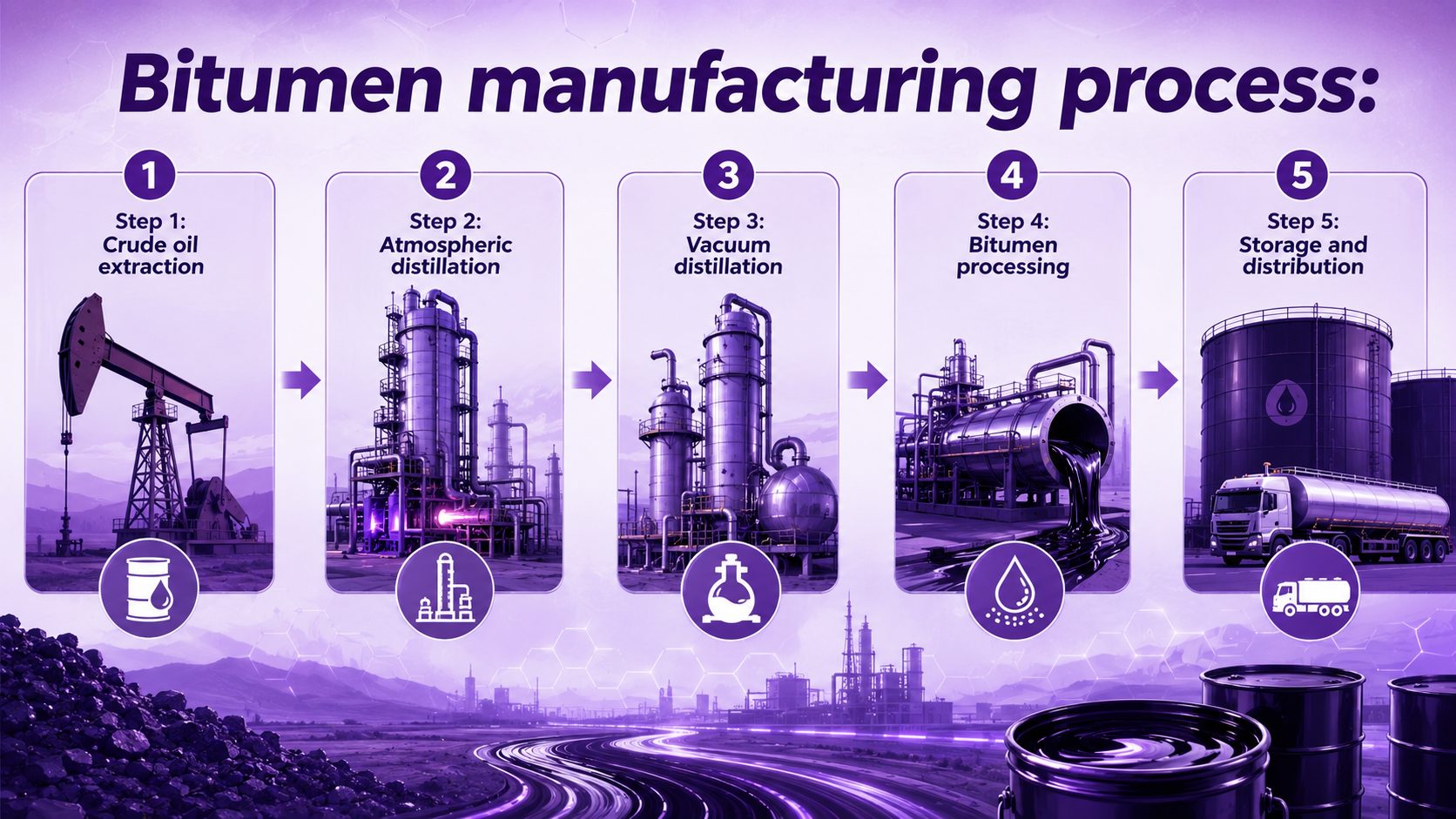
The bitumen manufacturing process begins with crude oil refining. During refining, different petroleum products are separated based on their boiling points. Lighter fuels such as petrol and diesel are extracted first, while the heaviest residue is further processed to produce bitumen. Understanding how bitumen is manufactured helps contractors and procurement teams evaluate product quality and suitability for infrastructure projects.
Step 1: Crude oil extraction
The process starts with crude oil extracted from onshore and offshore oil fields. The crude oil is transported to petroleum refineries through pipelines, ships, rail wagons or road tankers, depending on the location.
Step 2: Atmospheric distillation
At the refinery, crude oil is heated to approximately 350–400°C inside a distillation unit. As the temperature rises, lighter hydrocarbons separate and are collected as different petroleum products.
Products recovered during this stage include:
- LPG
- Petrol
- Naphtha
- Kerosene
- Diesel
The heavy residue left behind moves to the next stage of the bitumen refinery process.
Step 3: Vacuum distillation
The remaining heavy residue is processed under reduced pressure in a vacuum distillation unit. Lower pressure allows separation at lower temperatures, preventing the heavy hydrocarbons from breaking down.
The output of this stage is known as vacuum residue, which forms the base material used in the bitumen production process.
Step 4: Bitumen processing
The vacuum residue is processed further to achieve the required performance characteristics for different infrastructure needs.
Common processing methods include:
- Air blowing – increases hardness and improves temperature resistance.
- Blending – adjusts consistency by mixing different refinery streams.
- Polymer modification – enhances flexibility and durability.
- Rubber modification – improves crack resistance using recycled crumb rubber.
Step 5: Storage and distribution
Finished bitumen is stored in insulated, heated tanks to maintain the required temperature and viscosity before dispatch.
It is commonly supplied through:
- Heated bulk tankers
- Steel drums
- Bitutainers (insulated containers)
- Bulk storage terminals
Maintaining the correct temperature throughout storage and transport helps preserve product quality until it reaches the construction site.
Bitumen manufacturing process flow
Crude oil → Atmospheric distillation → Vacuum distillation → Vacuum residue → Bitumen processing → Storage & dispatch
Types of bitumen produced and where they are used
The types of bitumen produced during refining are designed to meet different performance requirements. Manufacturers modify the base bitumen to improve properties such as flexibility, durability, and resistance to temperature changes. Choosing the right type depends on how and where it will be used.
VG Bitumen (Viscosity Grade)
VG bitumen is the most widely used paving binder in India. It is classified by viscosity and is available in four common grades: VG-10, VG-20, VG-30, and VG-40. These grades are commonly used in highways, city roads, rural roads, and other asphalt pavements, depending on traffic conditions and climate.
Polymer Modified Bitumen (PMB)
PMB is produced by blending polymers with conventional bitumen. The added polymers improve flexibility, reduce rutting, and help pavements withstand repeated traffic loads. It is commonly used for expressways, flyovers, bridges, and airport pavements where higher performance is required.
Crumb Rubber Modified Bitumen (CRMB)
CRMB contains processed crumb rubber from recycled tyres. The rubber improves elasticity, enhances crack resistance, and supports longer pavement life. It is widely used on highways carrying heavy traffic and offers an environmentally friendly way to recycle waste rubber.
Oxidised bitumen
Oxidised bitumen is manufactured by passing air through hot bitumen, making it harder and more resistant to heat. Unlike paving grades, it is mainly used in waterproofing membranes, roofing materials, pipe coatings, and other industrial applications.
| Type | Best use | Key advantage |
|---|---|---|
| VG bitumen | Roads and highways | Reliable all-round paving performance |
| PMB | Expressways, bridges and airports | Better flexibility and rut resistance |
| CRMB | Heavy-duty highways | Improved crack resistance and sustainability |
| Oxidised bitumen | Waterproofing and industrial products | Higher hardness and heat resistance |
Applications of bitumen across infrastructure projects
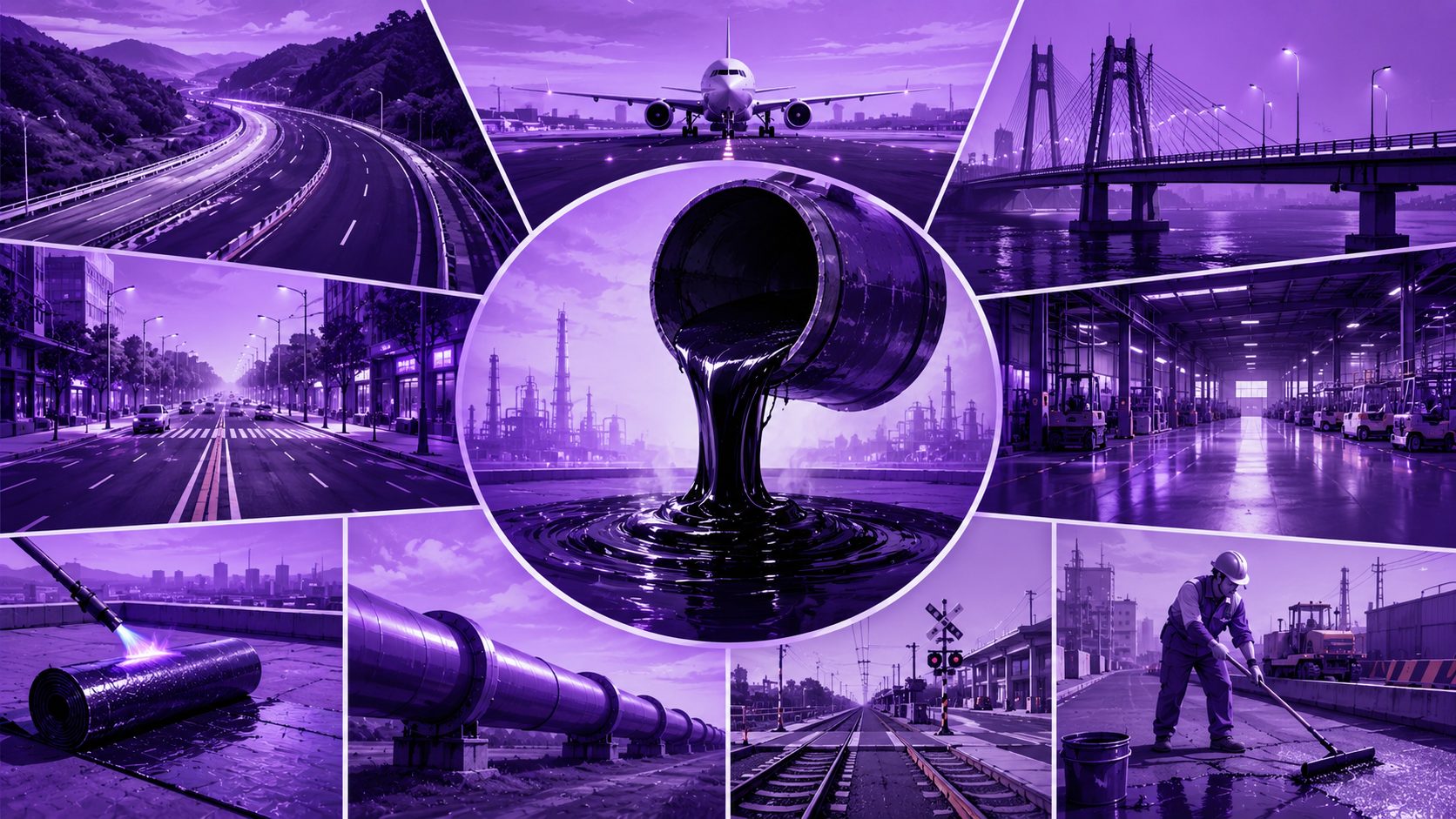
The wide range of bitumen applications makes it an essential material for transport, industrial and construction projects. Its durability, flexibility, and waterproofing properties support reliable performance across diverse infrastructure. Some of the most common uses of bitumen include:
Roads and expressways: Binds aggregates to create durable asphalt pavements for highways and major roads.
Airport runways: Provides strong, flexible surfaces that withstand heavy aircraft loads.
Bridges: Protects bridge decks through waterproofing and asphalt wearing courses.
Urban roads: Enables smooth, durable and easily maintainable city streets and intersections.
Industrial flooring: Creates robust pavements for factories, warehouses, and logistics parks.
Waterproofing: Prevents water ingress in roofs, basements, foundations, and underground structures.
Pipe coating: Protects steel pipelines against corrosion and moisture.
Railway infrastructure: Used in level crossings, station access roads, and maintenance areas.
| Sector | Typical application |
|---|---|
| Roads and expressways | Asphalt pavements |
| Airports | Runways and taxiways |
| Bridges | Waterproofing and wearing courses |
| Urban infrastructure | Municipal roads |
| Industrial facilities | Factory and warehouse flooring |
| Buildings | Roofing and waterproofing |
| Pipelines | Protective coatings |
| Railways | Level crossings and access roads |
How to select the right bitumen for different projects
Selecting bitumen goes beyond choosing a grade. The right material should match the project’s technical requirements, expected traffic conditions, and long-term performance goals. For contractors, engineers and procurement teams, careful selection helps improve pavement life, reduce maintenance costs, and meet project specifications.
When selecting bitumen, consider the following factors
Traffic volume: Heavier traffic requires bitumen with higher resistance to rutting and deformation.
Climate: Temperature and rainfall influence the type and grade of bitumen best suited for the project.
Pavement design: Flexible pavements, overlays and special applications may require different binders.
Project life: Long-life infrastructure often benefits from higher-performance modified bitumen.
Type of pavement: Highways, airport runways, urban roads, and industrial pavements have different performance requirements.
IRC recommendations: Follow the latest Indian Roads Congress guidelines for material selection.
MoRTH specifications: Ensure the selected bitumen complies with applicable Ministry of Road Transport and Highways specifications.
Budget: Consider both the initial material cost and long-term lifecycle value.
Maintenance expectations: Durable binders can reduce future repair frequency and associated costs.
Recommended bitumen types for common projects
| Project | Recommended bitumen type |
|---|---|
| National and state highways | VG-30 or PMB* |
| Expressways | PMB |
| Heavy traffic corridors | CRMB or PMB |
| Urban roads | VG-30 |
| Rural roads | VG-10 or VG-20 |
| Airport runways | PMB |
| Bridge decks | PMB |
*The final bitumen type should always be selected based on project specifications, traffic loading, climatic conditions and applicable IRC and MoRTH guidelines.
Quality tests that ensure bitumen performance
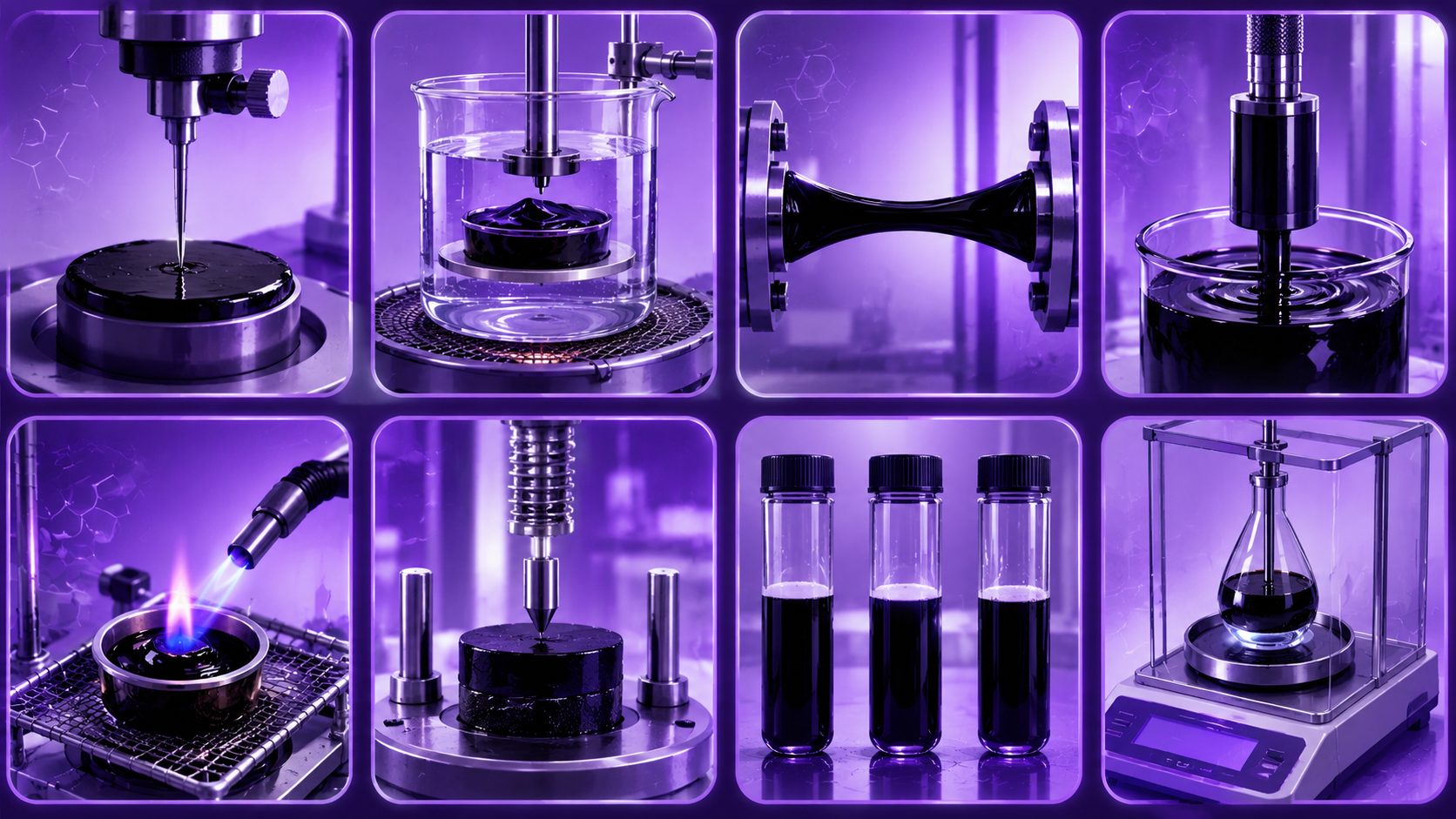
Quality testing helps ensure bitumen meets the required performance standards before it is used in construction. It verifies consistency, durability, and suitability for the intended application, reducing the risk of premature pavement failures. Regular bitumen testing also supports quality control and helps contractors comply with project specifications.
Some of the most common bitumen quality tests include
Penetration test: Measures the hardness or consistency of bitumen.
Softening point test: Determines the temperature at which bitumen begins to soften.
Ductility test: Assesses the material’s ability to stretch without breaking.
Viscosity test: Evaluates flow characteristics for mixing and paving.
Flash point test: Confirms the safe heating temperature during handling.
Elastic recovery test: Measures the ability of modified bitumen to return to its original shape after deformation.
Storage stability test: Checks whether modified bitumen remains uniform during storage.
Specific gravity test: Determines the density of bitumen for mix design calculations.
| Test | Why it matters |
|---|---|
| Penetration | Measures hardness and consistency |
| Softening point | Indicates high-temperature performance |
| Ductility | Assesses flexibility and crack resistance |
| Viscosity | Ensures proper mixing and application |
| Flash point | Improves handling safety |
| Elastic recovery | Evaluates performance of modified bitumen |
| Storage stability | Confirms uniformity during storage |
| Specific gravity | Supports accurate asphalt mix design |
Bitumen used in road projects should comply with applicable BIS, IRC and MoRTH specifications to ensure consistent quality, reliable pavement performance, and long-term durability.
Common challenges in bitumen handling and storage
Proper bitumen storage, handling, and transportation are essential for maintaining product quality from the refinery to the construction site. Poor storage practices can affect bitumen performance, increase material waste, and lead to application issues during paving. Contractors, asphalt plant operators, and procurement teams should pay attention to the following:
Maintain storage temperature: Keep bitumen within the recommended temperature range to preserve its properties.
Prevent contamination: Protect bitumen from water, dust and other foreign materials during storage and handling.
Avoid overheating: Excessive heating can accelerate ageing and reduce performance.
Follow transport precautions: Use insulated tankers or bitutainers to minimise temperature loss during bitumen transportation.
Maintain storage tanks: Inspect tanks regularly to prevent leaks, corrosion, and temperature fluctuations.
Implement safety measures: Follow safe heating, handling and fire protection practices at asphalt plants.
Handle modified bitumen carefully: PMB and CRMB require controlled storage temperatures and continuous circulation where recommended to maintain uniformity.
Following these best practices helps preserve bitumen quality, reduce material losses, and support consistent pavement performance on site.
Future trends in bitumen manufacturing and sustainable roads
The future of bitumen is centred on sustainability, improved pavement performance, and lower environmental impact. As India’s highway network continues to expand, manufacturers, and contractors are adopting innovative technologies that support more efficient and green road construction.
| Trend | How it supports the industry |
|---|---|
| Warm Mix Asphalt (WMA) | Reduces production temperatures, fuel consumption and emissions during paving. |
| Bio-based binders | Uses renewable materials to partially replace conventional petroleum-based binders. |
| Reclaimed Asphalt Pavement (RAP) | Reuses existing asphalt to reduce raw material consumption and project costs. |
| Lower-emission refining | Improves refinery efficiency while reducing the carbon footprint of bitumen production. |
| Smart refinery technologies | Uses automation and digital systems to improve process control and consistency. |
| AI-enabled quality monitoring | Enables real-time monitoring to maintain consistent bitumen quality. |
| Circular economy practices | Promotes recycling and reuse of road construction materials to minimise waste. |
| India’s infrastructure growth | Rising investments in highways, expressways and airports continue to drive innovation in sustainable bitumen and advanced paving technologies. |
Conclusion
Bitumen remains one of the most important materials used in modern infrastructure because it delivers reliable performance across a wide range of applications. Understanding how it is produced, tested, and selected enables contractors, engineers and procurement teams to make more informed material decisions.
Matching the right bitumen to project requirements and complying with recognised standards can improve pavement durability, optimise lifecycle costs and support the delivery of safer, longer-lasting road and infrastructure projects.
Looking to procure steel?
Tata nexarc helps manufacturers, builders and MSMEs source certified steel products, compare prices, and choose the right grade as per IS codes—with complete traceability and procurement confidence.
FAQs
What is bitumen made from?
How is bitumen manufactured from crude oil?
What is the difference between bitumen and asphalt?
Which type of bitumen is best for highways?
Why is vacuum distillation used in bitumen production?
What quality tests are performed on bitumen?
How should bitumen be stored before use?
What are the major applications of bitumen?
What are the common types of bitumen used in India?
Why is bitumen widely used in road construction?
A product manager with a writer's heart, Anirban leverages his 6 years of experience to empower MSMEs in the business and technology sectors. His time at Tata nexarc honed his skills in crafting informative content tailored to MSME needs. Whether wielding words for business or developing innovative products for both Tata Nexarc and MSMEs, his passion for clear communication and a deep understanding of their challenges shine through.