Check Price Now
Table of Contents
Construction steel bars are a core material in India’s building and infrastructure sector. They provide strength, stability, and long-term safety to concrete structures such as homes, offices, bridges, highways, and metro projects. As India continues to invest heavily in housing, transport, industrial corridors, and urban infrastructure in 2026, the demand for steel reinforcement bars remains strong across the country.
Choosing the right type of steel bar is critical for structural performance, cost control, and compliance with Indian standards. This article explains the main types of construction steel bars used in India, their uses, common sizes, and current price per tonne, helping buyers and contractors make informed procurement decisions.
Types of construction steel bars used in India
Construction projects in India use different types of steel bars based on structural needs, location, and budget. Each steel bar category is designed to perform a specific role in reinforced concrete structures.
Major types of construction steel bars in India
| Steel bar type | Key feature | Common use |
| TMT bars | High strength, ductility, seismic resistance. | Buildings, bridges, metros, infrastructure. |
| Mild steel plain bars | Smooth surface, easy to weld. | Low-rise and non-structural works. |
| Hot rolled deformed bars | Ribbed surface for better bonding. | Foundations and heavy concrete works. |
| Prestressing steel bars | High tensile strength under tension. | Bridges, flyovers, long-span structures. |
| Cold rolled steel bars | Precise size and smooth finish. | Industrial and mechanical applications. |
Why different bar types are used
Different construction applications require different steel properties. For example, high-rise buildings and metro projects need high-strength and ductile bars, while small buildings can use lower-strength, cost-effective bars. Coastal and industrial environments also demand steel with better corrosion resistance.
Key factors influencing steel bar selection
- Structural load and design requirements
- Environmental exposure (coastal, industrial, seismic zones)
- Project cost and material budget
- Compliance with IS standards and quality certifications
Selecting the right steel bar ensures safety, durability, and cost efficiency in Indian construction projects.
1. TMT bars
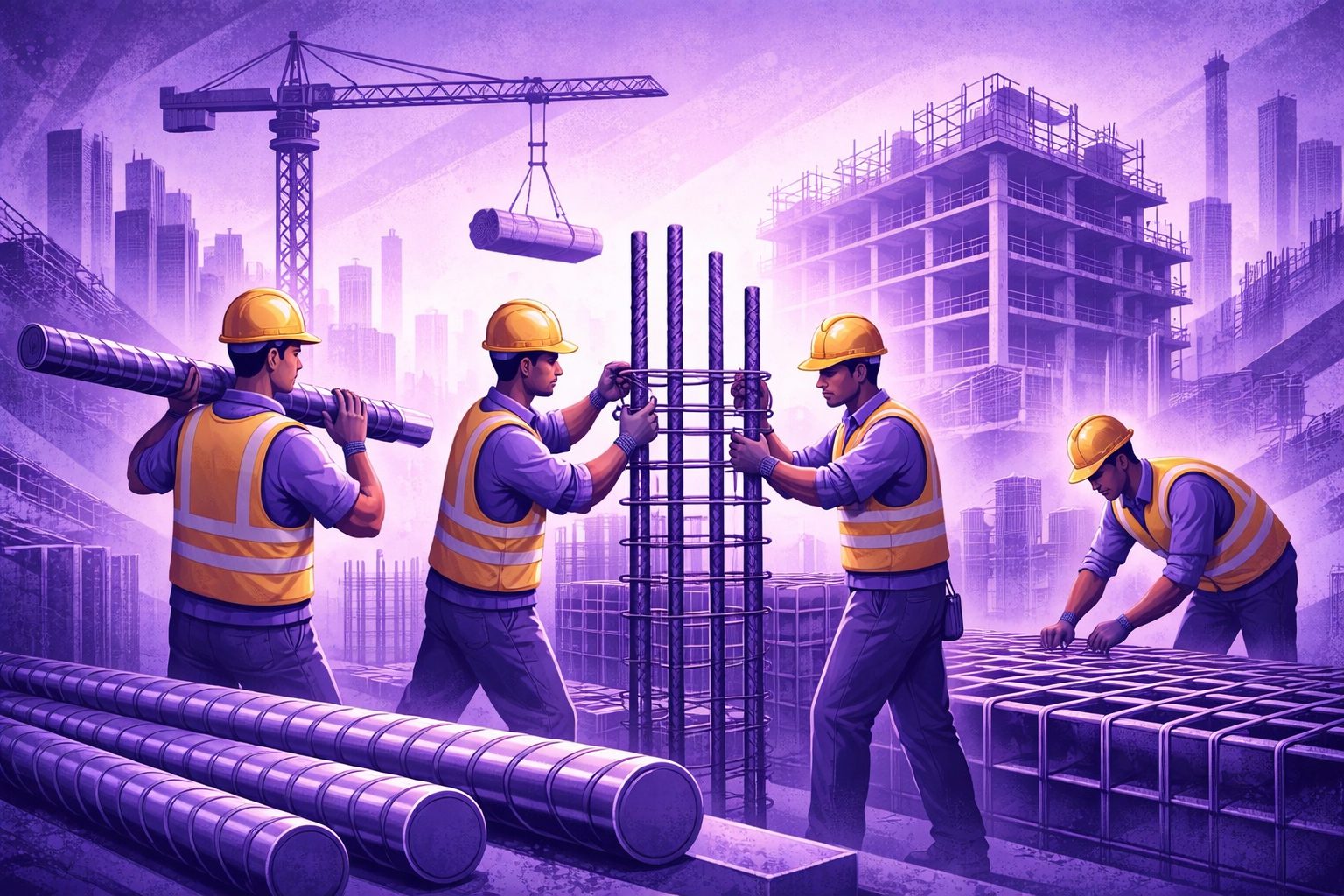
TMT bars are the most widely used construction steel bars in India and form the backbone of modern reinforced concrete structures.
Thermo-Mechanically Treated (TMT) bars are reinforcement steel bars produced using a controlled heat treatment and rapid water-quenching process. During manufacturing, hot-rolled steel bars are passed through water jets, which create a hard outer layer and a softer, ductile core.
Key mechanical properties of TMT bars include:
- High tensile and yield strength
- Excellent ductility and elongation
- Strong bonding with concrete due to ribbed surface
- Better corrosion and fire resistance
- High energy absorption, suitable for earthquake-prone zones
In India, TMT bars are manufactured as per IS 1786 standards and are available in commonly used grades such as Fe 415, Fe 500, Fe 500D, and Fe 550, depending on structural requirements.
Uses of TMT bars
TMT bars are used across almost all major construction segments in India, including:
- Residential and commercial buildings
- High-rise apartments and towers
- Bridges, flyovers, and highways
- Metro rail and railway projects
- Industrial plants and warehouses
- Coastal and seismic-zone structures
Their strength and flexibility make them ideal for load-bearing and safety-critical applications.
Sizes & grades of TMT bars
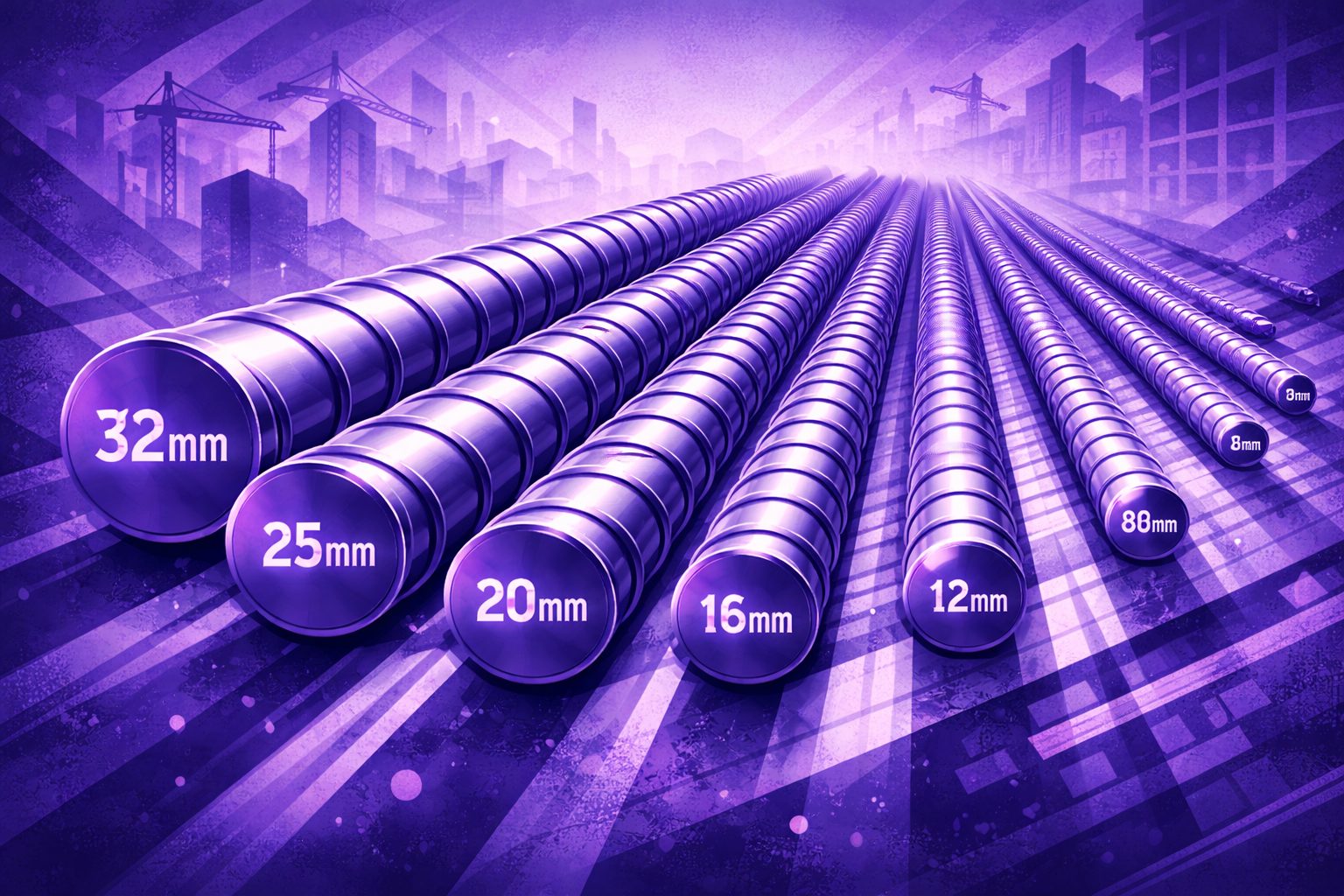
TMT bars are available in standard diameters such as:
- 8 mm, 10 mm, 12 mm
- 16 mm, 20 mm
- 25 mm, 32 mm
Common grades used are Fe 500 and Fe 500D, which offer a balance of strength and ductility.
Price of TMT bars per tonne in India
The price of TMT bars in India typically ranges from ₹58,000 to ₹78,000 per tonne in 2026. Prices vary by brand, grade, location, and raw material costs.
Note: Steel prices are subject to frequent market fluctuations. Buyers should check current rates with authorised suppliers.
2. Mild steel plain bars
Mild steel plain bars are made from low-carbon steel, usually containing less than 0.25% carbon. They have a smooth, plain surface, unlike ribbed TMT or deformed bars. Due to their low carbon content, mild steel bars are easy to weld, bend, and fabricate, making them suitable for simple construction and fabrication works.
In terms of strength, mild steel bars offer lower tensile and yield strength compared to TMT bars. They are also more prone to corrosion, especially in humid or coastal environments, and therefore are not recommended for long-term load-bearing structures. However, their high ductility and cost advantage keep them relevant for specific applications where heavy structural strength is not required.
Uses of mild steel bars
Mild steel bars are commonly used in:
- Small residential buildings
- Low-rise and temporary structures
- Non-structural reinforcement work
- Fabrication, grills, railings, and frames
- Repair and maintenance projects
They are mainly chosen for low-load and non-critical applications.
Mild steel bars sizes available
Mild steel plain bars in India are available in a wide size range, including:
- 10 mm, 12 mm
- 16 mm, 20 mm
- 25 mm, 32 mm
- 36 mm, 40 mm and above
Price of mild steel bars
The price of mild steel bars in India starts at around ₹55,000 per tonne. Prices vary based on size, finish, and local market conditions.
Note: Steel prices fluctuate frequently and should be confirmed with suppliers before purchase.
3. Hot rolled deformed bars
Hot rolled deformed (HRD) bars are produced through a hot rolling process, where steel billets are heated and rolled into bars with surface ribs or deformations. These surface patterns improve the bonding strength between steel and concrete, reducing the risk of slippage.
HRD bars generally offer high tensile strength, making them suitable for reinforced concrete structures that require better load distribution. Although TMT bars have largely replaced HRD bars in many modern projects, they are still used in foundations and heavy concrete works where strong anchorage is required.
Uses of hot rolled deformed bars
Hot rolled deformed bars are used in:
- Building foundations
- Columns and beams
- Industrial structures
- Road and pavement construction
- Heavy concrete reinforcement works
Hot rolled deformed bars sizes
Commonly available sizes of HRD bars include:
- 8 mm, 10 mm, 12 mm
- 16 mm, 20 mm
- 25 mm, 32 mm
- 40 mm
Hot rolled deformed bars price per tonne in India
The price of hot rolled deformed bars in India usually starts from ₹62,000 per tonne. Prices depend on steel grade, location, and market demand.
Note: Steel prices fluctuate frequently and should be confirmed with suppliers before purchase.
4. Prestressing steel bars
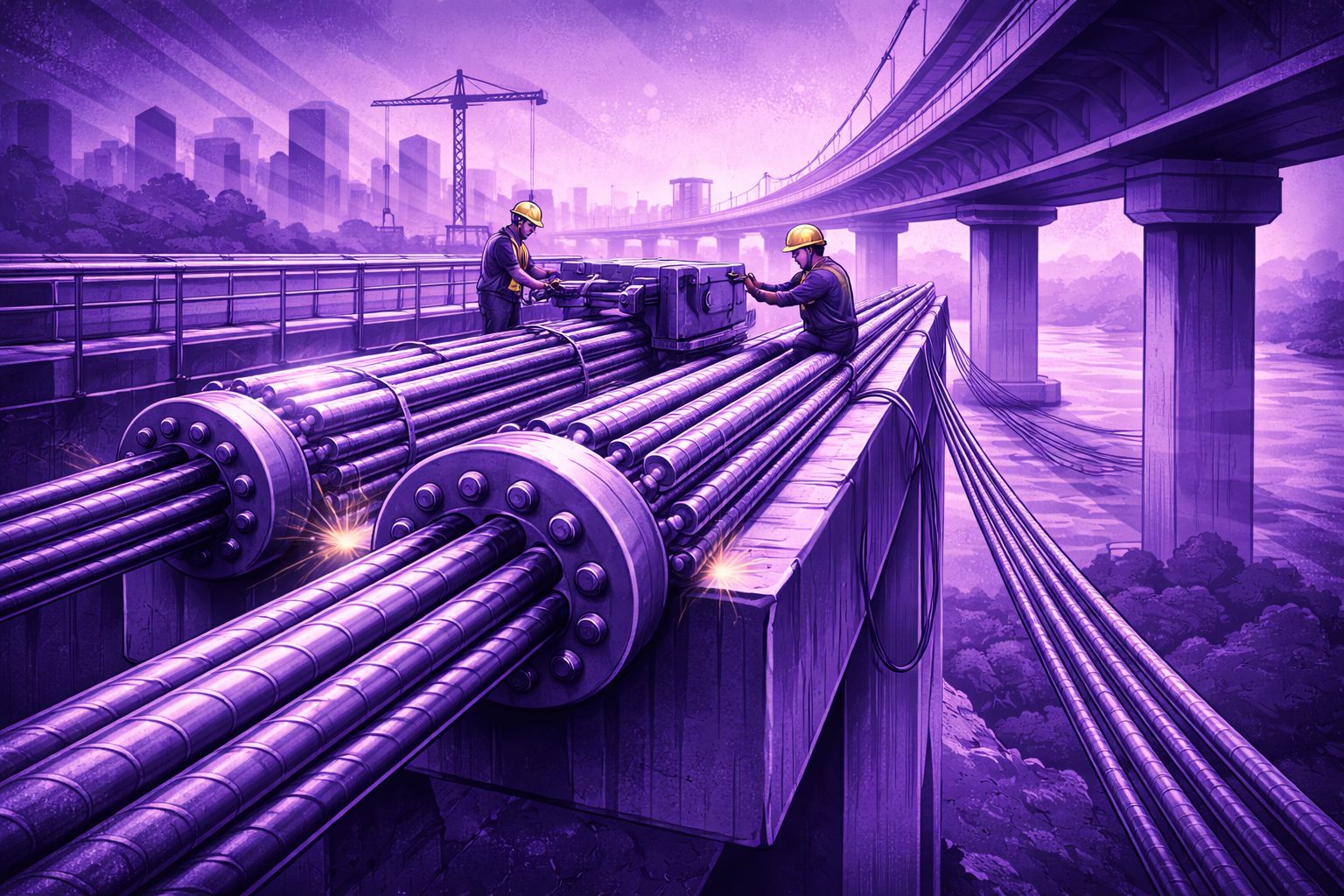
Prestressing steel bars are high-strength steel bars or strands used in advanced concrete construction. In this system, steel is placed under controlled tension before or after concrete casting. This creates compressive stress in the concrete, allowing the structure to carry higher loads with reduced cracking.
Prestressing technology improves structural efficiency, durability, and service life, making it ideal for large infrastructure projects. In India, prestressing steel is widely used in bridges and long-span structures as part of modern infrastructure development.
Uses of prestressing steel bars
Prestressing steel bars are commonly used in:
- Bridges and flyovers
- Metro viaducts
- Parking structures
- Water tanks and reservoirs
- High-rise commercial and industrial buildings
Price of prestressing steel bars
The price of prestressing steel bars in India is around ₹70,000 per tonne and above, depending on tensile strength and specification.
Note: Prices are indicative and subject to market changes.
5. Cold rolled steel bars
Cold rolled steel bars are manufactured by further processing hot rolled bars at room temperature through drawing or twisting. This cold working process improves surface finish, dimensional accuracy, and hardness, but reduces ductility.
Cold rolled bars have higher strength and better finish compared to hot rolled bars, making them suitable for applications where precision is important. However, they are harder to bend and are not commonly used for standard reinforced concrete structures.
Uses of cold rolled steel bars
Cold rolled steel bars are used in:
- Precision construction components
- Industrial fabrication
- Machine building
- Automotive and engineering parts
- Structural components with tight tolerances
Sizes available
Cold rolled steel bars in India are available in sizes ranging from:
- 5 mm to 70 mm
Price of cold rolled steel bars per tonne
The price of cold rolled steel bars generally starts at around ₹65,000 per tonne. Prices vary based on finish, size, and processing quality.
Note: Always check current market rates before procurement.
How to choose the right steel bars for construction
Load requirements
The first step in selecting the right steel bar is understanding the load the structure will carry. High-rise buildings, bridges, and infrastructure projects require high-strength and ductile bars, such as Fe 500 or Fe 500D TMT bars. For low-rise or non-load-bearing structures, lower-strength steel bars may be sufficient. Choosing steel based on load ensures structural safety and long-term stability.
Environmental exposure
Environmental conditions play a major role in steel selection. In coastal, marine, or industrial areas, steel is exposed to moisture, chemicals, and pollution, increasing the risk of corrosion. In such cases, corrosion-resistant TMT bars are preferred. In earthquake-prone zones, high-ductility bars are essential to absorb seismic energy and prevent sudden failure.
IS codes and certifications
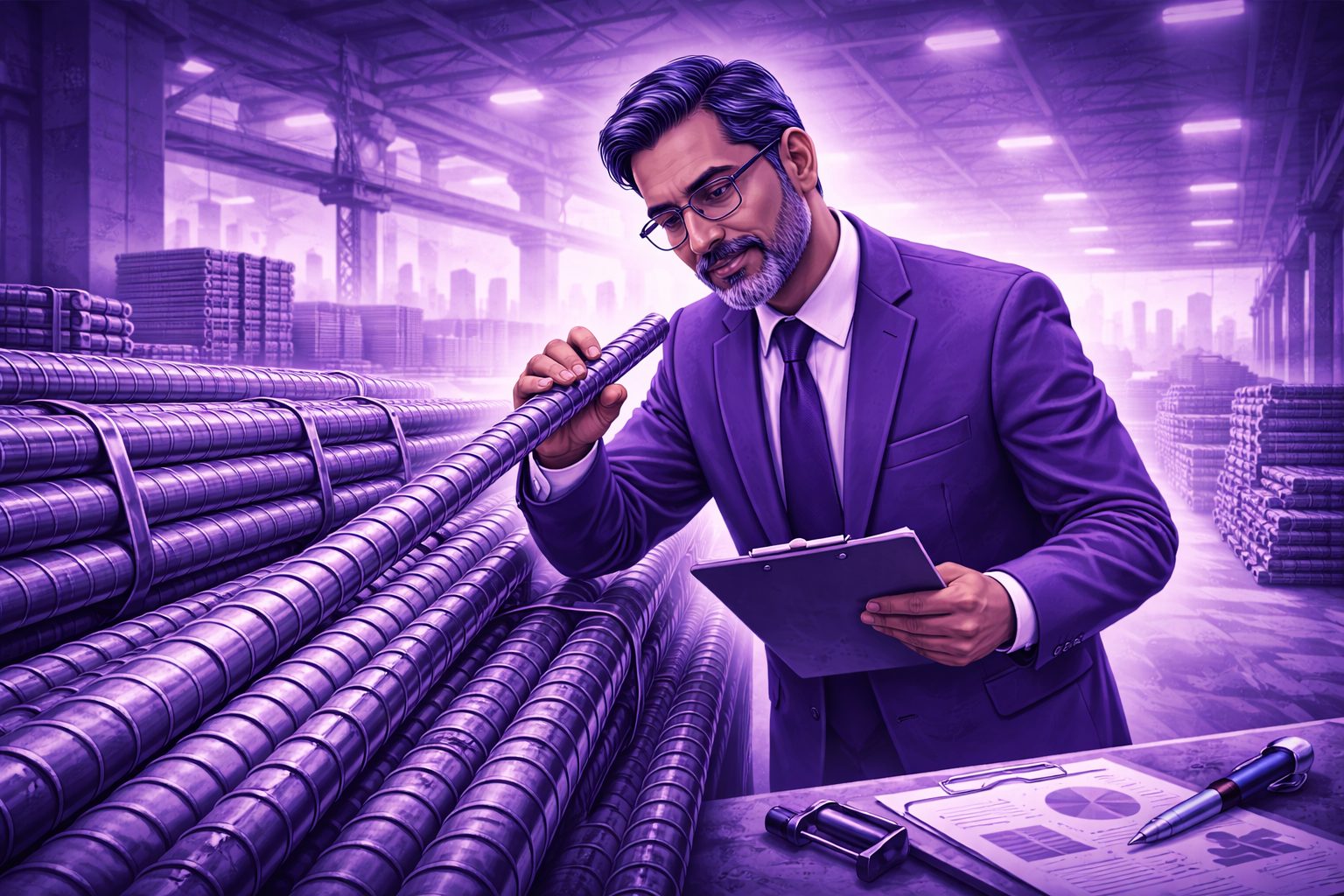
Always select steel bars that comply with Indian Standards (IS) such as IS 1786. Certified steel ensures consistent quality, tested mechanical properties, and regulatory compliance. Mill test certificates and brand reputation also help verify reliability.
Cost vs. performance trade-offs
While low-cost steel may reduce upfront expenses, it can increase maintenance and repair costs over time. Balancing price with performance helps achieve durability, safety, and overall cost efficiency in construction projects.
How to procure construction steel bars in India
| Procurement aspect | What it means | Why it matters |
| Offline procurement | Buying steel bars directly from local dealers, stockists, or distributors. | Allows physical inspection but offers limited price comparison and depends heavily on local availability. |
| Online procurement | Sourcing steel bars through digital B2B platforms and authorised online marketplaces. | Enables easy comparison of prices, brands, and specifications across regions. |
| Vendor verification | Checking supplier credentials, IS certification, and mill test certificates. | Ensures steel quality, standard compliance, and reduces risk of counterfeit material. |
| Price comparison | Comparing quotes from multiple vendors before finalising purchase. | Helps buyers secure competitive rates in a volatile steel market. |
| Logistics and delivery | Managing transportation, unloading, and site delivery schedules. | Timely delivery reduces project delays and storage costs. |
| Payment terms | Evaluating credit period, advance payment, and invoicing clarity. | Improves cash flow management for contractors and developers. |
Conclusion
Construction steel bars are a critical component of India’s building and infrastructure ecosystem. From TMT bars used in high-rise and infrastructure projects to mild steel bars for low-load applications, hot rolled deformed bars for strong concrete bonding, prestressing steel for long-span structures, and cold rolled bars for precision work, each type serves a specific purpose.
Selecting the right steel bar based on load requirements, environmental conditions, IS standards, and cost-performance balance is essential for safe and durable construction. For builders and procurement teams, informed steel selection and reliable sourcing help control costs, reduce risk, and ensure long-term structural performance.
Looking to procure steel?
Tata nexarc helps manufacturers, builders and MSMEs source certified steel products, compare prices, and choose the right grade as per IS codes—with complete traceability and procurement confidence.
FAQs
What are the main types of construction steel bars used in India?
Which steel bar is most commonly used in Indian construction?
What is the difference between TMT bars and mild steel bars?
Which steel bars are suitable for earthquake-prone areas in India?
Are hot rolled deformed bars still used in construction?
Where are prestressing steel bars used?
What sizes of steel bars are commonly available in India?
What is the average price of steel bars per tonne in India in 2026?
Why is IS certification important when buying steel bars?
What is the best way to procure construction steel bars in India?
A product manager with a writer's heart, Anirban leverages his 6 years of experience to empower MSMEs in the business and technology sectors. His time at Tata nexarc honed his skills in crafting informative content tailored to MSME needs. Whether wielding words for business or developing innovative products for both Tata Nexarc and MSMEs, his passion for clear communication and a deep understanding of their challenges shine through.