Table of Contents
- August 2026 GST Collection: Key Highlights at a Glance
- What Drove GST Revenue Growth in August 2026?
- CGST, SGST, IGST, and Cess: August 2026 GST Collection Breakdown
- Domestic GST Revenue vs Import GST Revenue
- GST Refunds and Net GST Revenue in August 2026
- August 2026 vs Previous Months
- What Does the August 2026 GST Collection Mean for MSMEs?
- Why Are GST Collections Increasing in India?
- GST Collection Trends in India: The Bigger Picture
- What Should MSMEs Do With GST Data?
- Conclusion
- FAQs
India’s August 2026 GST collection reached ₹1,99,853 crore, up 14.8% year-on-year from ₹1,74,116 crore in August 2025. Domestic GST revenue grew 9.3% to ₹1,37,249 crore, while revenue from imports rose 29% to ₹62,604 crore. The monthly collection was lower than July’s level but remained close to ₹2 lakh crore. For MSMEs, manufacturers, and suppliers, these figures offer a useful view of wider business activity, domestic demand, trade, and the formal economy.

August 2026 GST collection: Key highlights at a glance
The August 2026 GST collection stood at ₹1,99,853 crore, marking a 14.8% increase from ₹1,74,116 crore in August 2025. Domestic revenue reached ₹1,37,249 crore, while GST revenue from imports stood at ₹62,604 crore. After refunds of ₹31,795 crore, net GST revenue came to ₹1,68,057 crore. For the April–August 2026 period, cumulative gross GST collections reached ₹10,42,757 crore. The figures remain provisional, as released through the GSTN reporting system.
| GST collection metric | August 2026 figures |
| Total gross GST collection | ₹1,99,853 crore |
| YoY growth | 14.8% |
| Gross domestic GST revenue | ₹1,37,249 crore |
| GST revenue from imports | ₹62,604 crore |
| Total refunds issued | ₹31,795 crore |
| Net GST revenue | ₹1,68,057 crore |
| FY 2026–27 cumulative gross collection (April–August) | ₹10,42,757 crore |
| GST collection in August 2025 | ₹1,74,116 crore |
What drove GST revenue growth in August 2026?
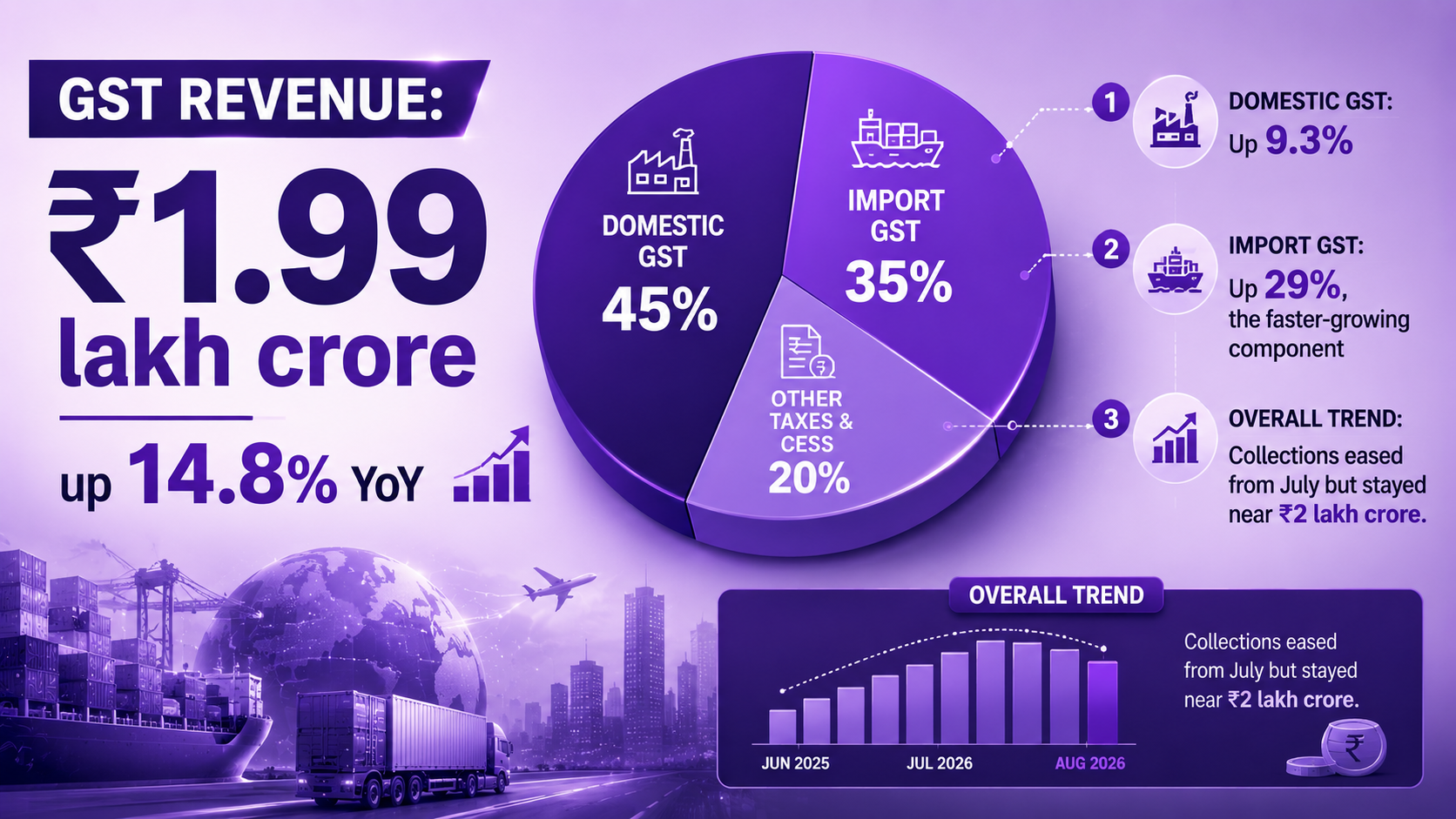
India’s gross GST revenue increased 14.8% year-on-year in August 2026, with growth coming from both domestic transactions and imports. Domestic GST revenue rose 9.3%, while revenue from imports grew 29%, making imports the faster-growing component during the month.
The month-on-month comparison also adds context. Collections eased from July 2026 but remained close to the ₹2 lakh crore mark, highlighting continued high levels of GST collections.
India’s expanding formal economy and growing GST taxpayer base also provide important context for these numbers. The GST taxpayer base had reached around 1.65 crore by May 2026, according to government data. For MSMEs, manufacturers, and suppliers, these trends can help track changes in the wider business environment, although GST collections alone do not indicate demand or performance in a specific industry.
CGST, SGST, IGST, and Cess: August 2026 GST collection breakdown
The GST collection breakup shows how revenue is distributed across different tax components. CGST and SGST apply to intra-state supplies, while IGST applies to inter-state supplies and imports. The official August 2026 GSTN data reports the following collections:
| GST component | August 2026 collection |
| CGST | ₹38,413 crore |
| SGST | ₹46,316 crore |
| IGST | ₹1,15,124 crore |
| Total Gross GST revenue | ₹1,99,853 crore |
CGST is collected by the Central Government on eligible intra-state transactions. SGST is collected by the respective State Government on the same category of supplies. IGST applies when goods or services move across state borders and imports.
For MSMEs involved in inter-state procurement, manufacturing, trading or distribution, understanding the difference between these tax components can help with invoice treatment and transaction planning. The IGST figures can also provide context on the scale of inter-state and import-linked taxable activity.
Domestic GST revenue vs import GST revenue
Gross domestic GST revenue: ₹1,37,249 crore, up 9.3% year-on-year.
GST revenue from imports: ₹62,604 crore, up 29% year-on-year.
Stronger growth segment: Import-related GST revenue grew faster than domestic GST revenue.
What domestic collections indicate: They offer broader context on taxable business activity and consumption within India.
What import collections indicate: They can reflect changes in taxable imports and trade activity.
What this means for MSMEs: GST collection trends provide useful market context but do not directly reflect sales or performance in a specific industry or business.
GST refunds and net GST revenue in August 2026
Total GST refunds issued: ₹31,795 crore, up 67.9% year-on-year.
Domestic refunds: ₹18,490 crore, up 72.6% from August 2025.
Export GST refunds through ICEGATE: ₹13,305 crore, up 61.8% year-on-year.
Net GST revenue: ₹1,68,057 crore after adjusting for refunds.
YoY growth in net GST revenue: 8.3%, compared with ₹1,55,181 crore in August 2025.
Why refunds matter for MSMEs: Businesses with accumulated eligible input tax credit and exporters may depend on timely refunds to maintain working capital.
Key takeaway: Gross collections show total revenue before refunds, while net GST revenue presents the amount remaining after refunds are adjusted.
August 2026 vs previous months
A month-wise comparison can help place the latest GST collection trend in India in context. Rather than focusing on one month’s figure alone, businesses should look at how collections and growth rates move over several months.
| Month | Gross GST collection | YoY growth |
| June 2026 | ₹1,94,812 crore | 13.9% |
| July 2026 | ₹2,11,205 crore | 15.4% |
| August 2026 | ₹1,99,853 crore | 14.8% |
Month-on-month trend: Collections rose from June to a higher level in July before easing in August.
Growth trend: YoY growth strengthened from 13.9% in June to 15.4% in July and moderated slightly to 14.8% in August.
Import trend: Import-related GST collections remained a key contributor to overall growth across these months.
Business takeaway: The three-month trend points to consistently high GST collections, but individual MSMEs should assess their own sales and sector conditions separately.
What does the August 2026 GST collection mean for MSMEs?
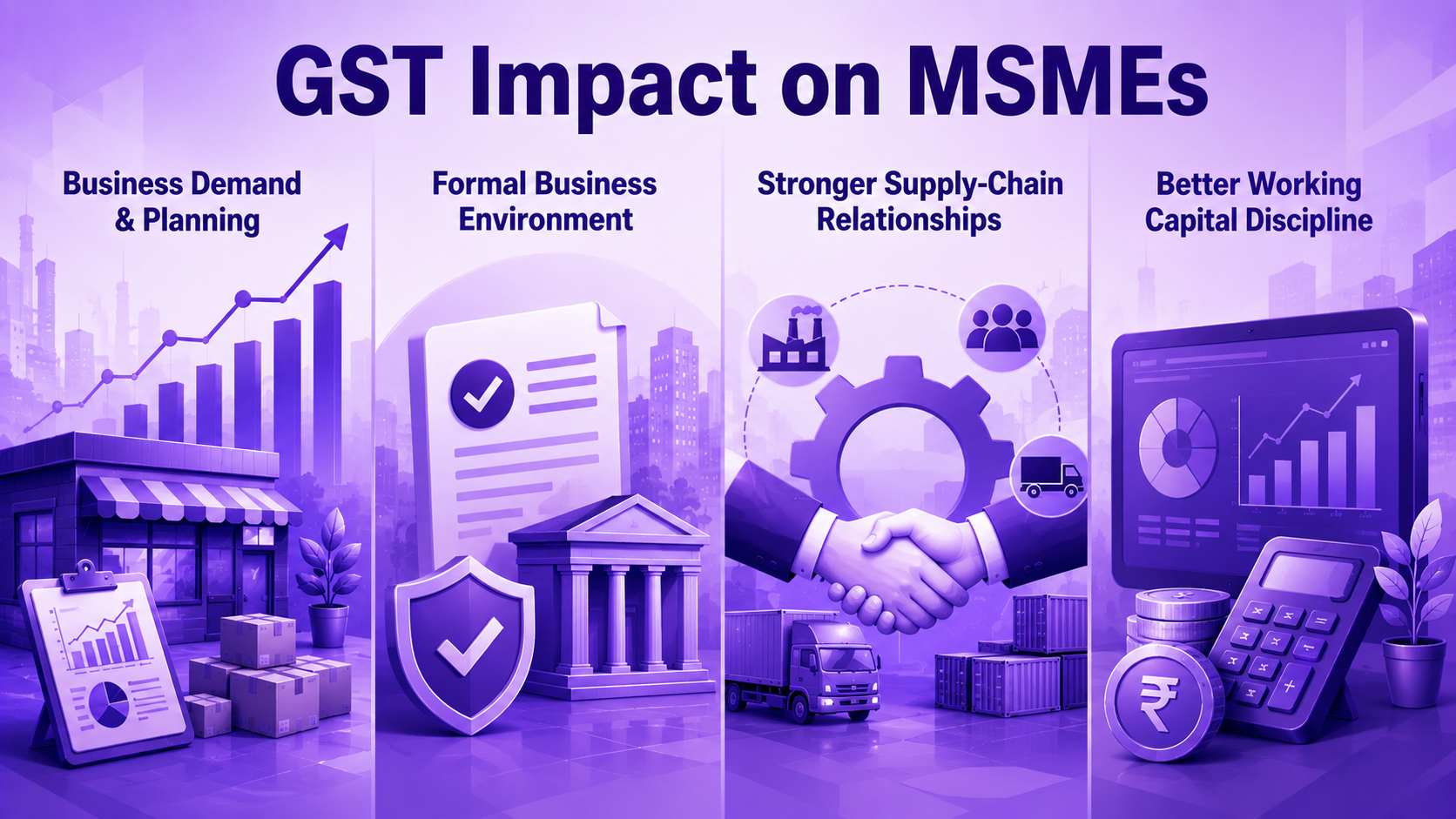
Business demand and planning
Higher domestic GST collections can signal sustained taxable business activity across the economy. MSMEs can use this as one input when reviewing customer demand, order pipelines, inventory levels, and production plans. However, GST collections show the broader market picture and may not reflect demand in every sector.
A more formal business environment
GST has expanded India’s formal business ecosystem. The GST taxpayer base grew from 66.5 lakh in 2017 to around 1.65 crore by May 2026, according to PIB data. This shift places greater importance on proper documentation, accurate invoices, and regular compliance. It also helps MSMEs build verifiable transaction records when working within organised supply chains.
Stronger supply-chain relationships
Large buyers, manufacturers, government purchasers, and corporate procurement teams often require suppliers to maintain proper tax and business documentation. Consistent GST compliance can therefore support MSMEs seeking to participate in larger and more formal supply networks.
Better working capital discipline
GST compliance also affects day-to-day cash flow. MSMEs should reconcile eligible input tax credit, file returns on time, and maintain accurate invoices. Businesses expecting GST refunds should also track pending claims, as delays can affect working capital availability.
For MSMEs, the August 2026 GST collection is best viewed as a broader business indicator alongside their own sales, procurement, and cash-flow data.
Why are GST collections increasing in India?
GST collections can rise for several reasons. The following factors have supported the long-term growth of India’s GST ecosystem, although they should not be treated as direct explanations for the August 2026 increase.
| Factor | How it can support GST collections |
| Expanding taxpayer base | More registered taxpayers can bring a larger number of businesses and taxable transactions into the GST system. PIB reported that the GST taxpayer base grew from 66.5 lakh in 2017 to around 1.65 crore by May 2026. |
| Greater formalisation | More documented transactions and formal business records can improve tax visibility across supply chains. |
| Digital tax infrastructure | Technology-driven registration, return filing, and invoice reporting can make tax administration more efficient. |
| Improved compliance | Better reporting and invoice-based processes can help reduce gaps in tax reporting and improve compliance. |
| Higher taxable activity | Growth in domestic transactions, consumption, or trade can increase GST collections when more goods and services are supplied. |
These factors provide useful context for the broader GST collection trend in India. However, one month’s GST revenue should not be used alone to conclude that the economy or consumer demand has strengthened.
GST collection trends in India: The bigger picture
India’s GST collection history shows significant growth since the system was introduced in 2017. According to a PIB review published in June 2026, gross GST collections increased from around ₹7.4 lakh crore in 2017–18 to approximately ₹22.27 lakh crore in 2025–26. GST collections also reached around ₹4.37 lakh crore during April and May 2026.
This long-term growth reflects several changes across India’s tax and business ecosystem:
- Economic activity: More taxable transactions can increase GST revenue.
- Taxpayer base expansion: More registered businesses widen the GST tax base.
- Formalisation: Documented transactions improve visibility across supply chains.
- Technology adoption: Digital systems have streamlined registration, filing, and reporting.
- Compliance: Invoice-based reporting can strengthen tax compliance.
These wider factors provide important context for GST collection trends in 2026. They also show why GST revenue growth in India reflects more than changes in monthly consumer spending alone.
What should MSMEs with GST data?
Monitor industry demand: Use GST trends alongside customer orders, procurement activity, and sector-specific data to understand changes in the wider market.
Maintain GST compliance: Issue accurate invoices, file returns on time, and reconcile eligible input tax credit regularly.
Improve cash-flow planning: Track upcoming GST liabilities, available ITC, and pending refund receivables to avoid unexpected pressure on working capital.
Strengthen business documentation: Maintain accurate purchase and sales records, particularly when supplying larger corporates, manufacturers or government buyers.
Use data for better decisions: GST collection figures provide useful economic context, but they should not drive business decisions in isolation. MSMEs should assess them alongside their own sales, cash flow, order book, and sector trends.
Conclusion
The latest GST collection figures add another data point to India’s evolving business and tax landscape. For MSMEs, the real value lies in turning broader market signals into practical business decisions. Rather than reacting to a single monthly number, businesses should focus on trends that affect their customers, suppliers, and operations. A disciplined approach to financial planning and business data can help MSMEs respond faster to changing market conditions and identify opportunities with greater confidence.
Empowering MSMEs to grow smarter
Tata nexarc delivers powerful solutions for MSMEs—discover tenders, logistics solutions, and streamline procurement. Everything your business needs, all in one place.
FAQs
What was the GST collection in August 2026?
How much did GST collection grow in August 2026?
What was India's GST collection in August 2025?
What was the net GST revenue in August 2026?
How much GST revenue came from domestic transactions in August 2026?
How much GST revenue came from imports in August 2026?
How much GST refund was issued in August 2026?
What was the GST collection in July 2026?
Why is GST collection important for MSMEs?
Does higher GST collection mean stronger business growth?
A product manager with a writer's heart, Anirban leverages his 6 years of experience to empower MSMEs in the business and technology sectors. His time at Tata nexarc honed his skills in crafting informative content tailored to MSME needs. Whether wielding words for business or developing innovative products for both Tata Nexarc and MSMEs, his passion for clear communication and a deep understanding of their challenges shine through.