
Table of Contents
Small‑scale industries (SSIs), now commonly covered under India’s MSME framework, include small enterprises with investment in plant and machinery or equipment up to ₹25 crore and annual turnover up to ₹100 crore, under the classification effective from 1 April 2025. MSMEs now account for roughly 35.4% of India’s manufacturing output and employ more than 32.8 crore people. Their appeal is straightforward: low entry barriers, fast pivot capability, and tight links to local supply chains.
The policy climate is equally favourable. Updated Udyam thresholds, Production‑linked Incentives (PLI) for sectors such as electronics and renewables, and easier credit through CGTMSE have strengthened the growth environment for small businesses. MSMEs contributed 48.58% of India’s exports in FY 2024–25, underlining their growing role in domestic and global supply chains. For larger manufacturers, partnering with agile neighbourhood units has become a strategic hedge against global supply shocks.
This guide breaks the landscape into 30 distinct small-scale industry categories and business ideas – from agro‑processing and textiles to drone components and circular‑economy ventures. Each section offers:
- A concise market context (demand drivers, profitability cues)
- Hand‑picked product examples
- A photo for visual scale and layout reference
Whether you’re exploring the best small-scale business ideas, scoping a new venture, seeking suppliers, or benchmarking sector trends, the list that follows serves as a practical field manual rather than a generic directory.
What qualifies as a small‑scale industry in 2026?
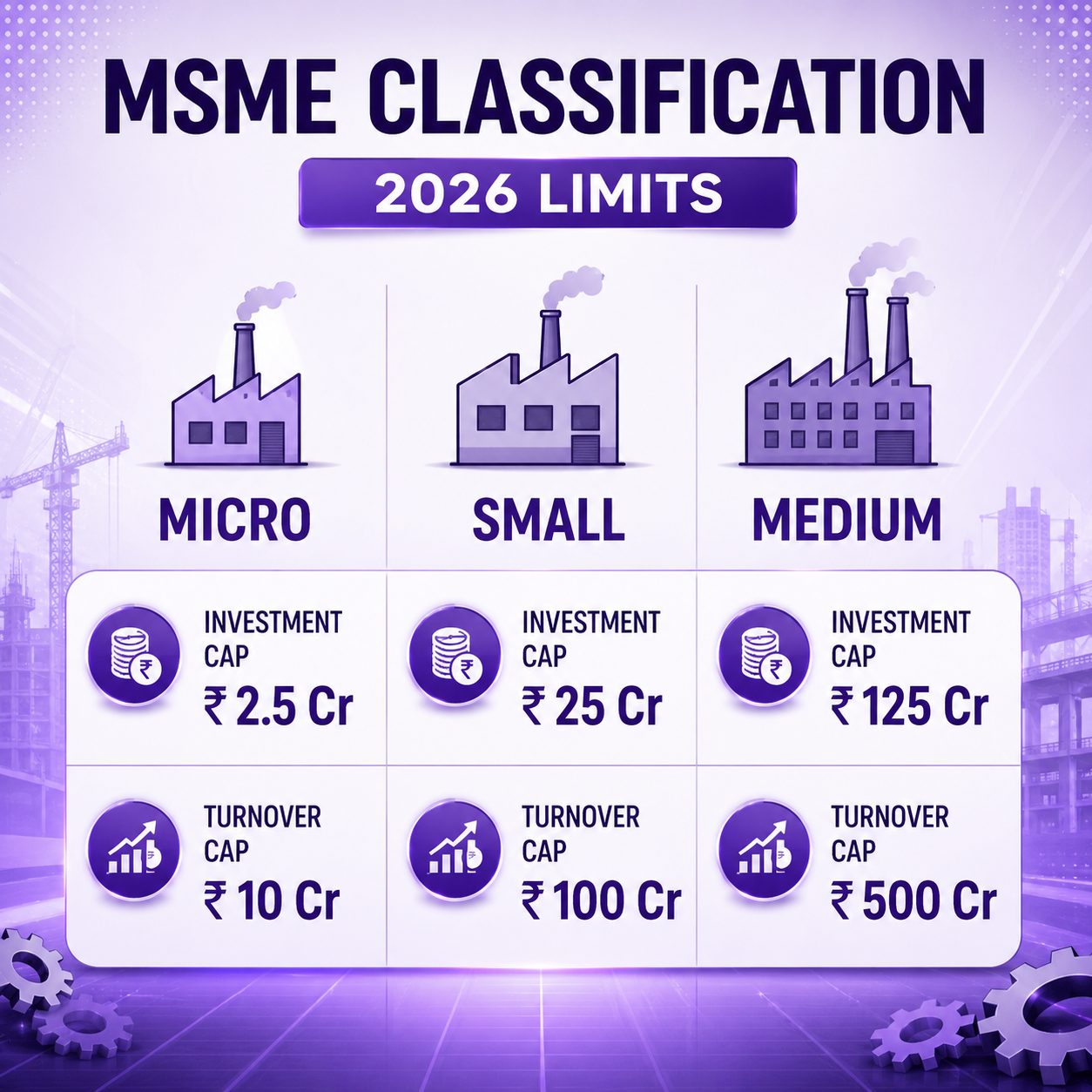
Under the revised MSME rules effective from 1 April 2025, an enterprise counts as small-scale if its investment in plant and machinery or equipment does not exceed ₹25 crore and its annual turnover does not exceed ₹100 crore. The revised composite criteria apply to manufacturing enterprises as well as enterprises rendering services, so the old “manufacturing vs. services” split no longer matters.
For quick context, here are the latest MSME classification brackets for 2026:
| Category | Investment cap | Turnover cap |
| Micro | up to ₹2.5 crore | up to ₹10 crore |
| Small | up to ₹25 crore | up to ₹100 crore |
| Medium | up to ₹125 crore | up to ₹500 crore |
Importance of small‑scale industries in India’s economy
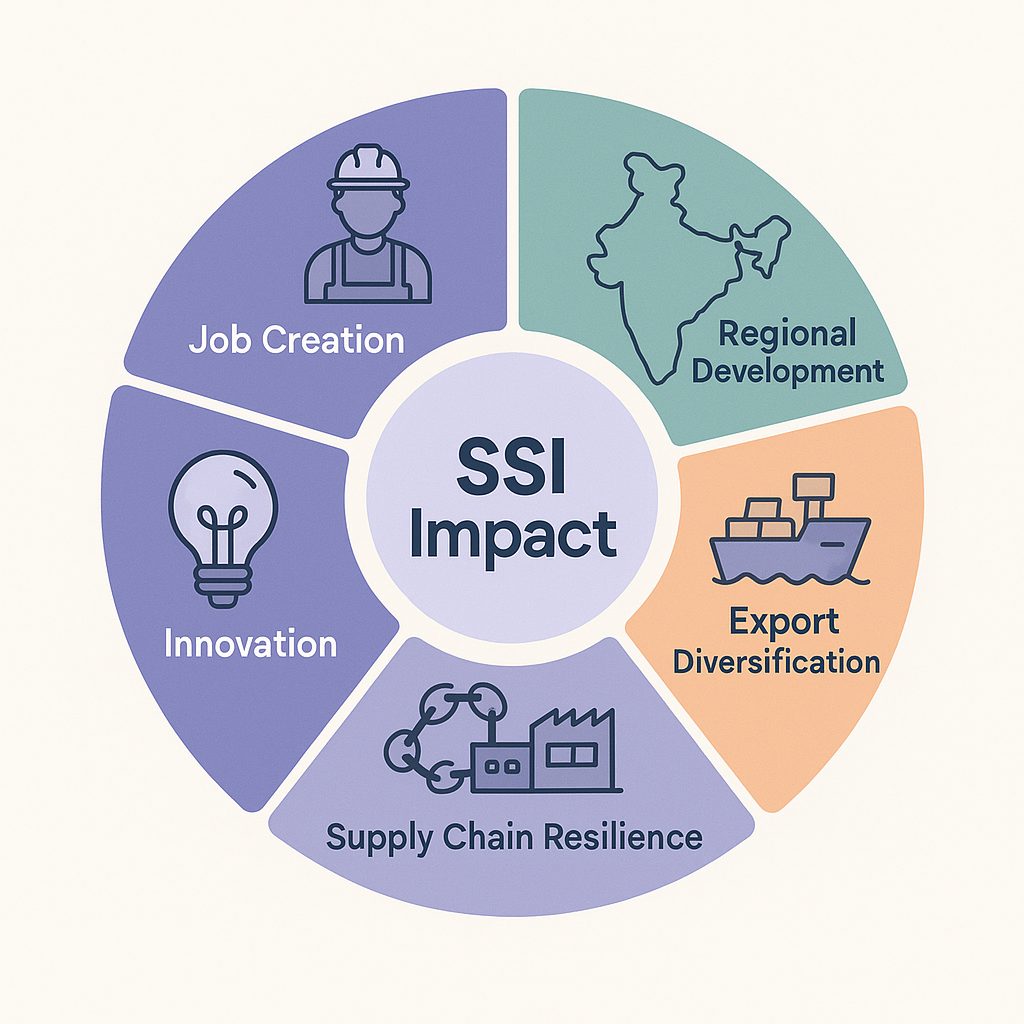
Strip away the jargon and you’ll see a simple fact: small‑scale industries keep India’s economic engine turning when bigger gears stall. MSMEs now contribute around 35.4% of India’s manufacturing output and employ more than 32.8 crore people, making them a major source of jobs, production, and local economic activity. They hire workers across cities, towns, and rural areas, plugging them straight into the production line instead of the unemployment queue.
- Jobs where people live
A loom in Kannur or a spice‑grinding unit in Kota means fewer families uprooting themselves for metro wages. Local income stays local, fuelling everything from kirana shops to coaching centres. - Balanced regional growth
Think Morbi’s ceramic belt or Sivakasi’s manufacturing clusters: entire districts have reinvented themselves around one craft, spreading prosperity far beyond the usual big‑city bubbles. - A natural export hedge
Millions of small businesses contribute to India’s export base across sectors, from textile trims here to engineering components and brass hardware there. Diversity equals resilience. - Supply‑chain shock absorbers
Small manufacturers and suppliers can help larger businesses diversify sourcing and respond quickly to supply-chain disruptions, particularly when demand, logistics, or material availability changes. - Innovation on a shoestring
3-D printed drone casings, solar-powered cold rooms, eco-friendly packaging – all examples of the kind of specialised products and solutions that small businesses can develop with relatively lean operations.
In short, SSIs and other MSMEs aren’t just a policy checkbox; they’re the flexible, future-ready layer of India’s economy, helping larger businesses diversify supply chains, create jobs, and respond to changing market demand.
Government support & incentives for SSIs
A supportive policy environment is reshaping India’s small-industry landscape. Revised MSME thresholds widen the “small” category, while stronger credit guarantees, quality-upgradation support, and public procurement opportunities are helping banks, buyers, and innovators back the sector. Below are the key government schemes and policy measures for small businesses in 2026.
| Programme/ Policy | 2026 Update | Why it matters |
|---|---|---|
| Revised MSME definition | Investment cap: up to ₹25 crore; Turnover cap: up to ₹100 crore. The revised limits took effect on 1 April 2025, with micro and medium limits also increased. | More growing businesses can retain small-enterprise status as they scale, potentially widening their access to MSME benefits and support. |
| Credit-Guarantee (CGTMSE) | The guarantee coverage ceiling was raised from ₹5 crore to ₹10 crore for eligible MSE credit facilities, with the revised limit applicable to guarantees approved from 1 April 2025. | Banks can extend larger eligible credit facilities with CGTMSE guarantee support, helping MSEs fund capex and working capital without relying solely on collateral. (CGTMSE) |
| Production-Linked Incentive (PLI) | PLI schemes continue to support domestic manufacturing across sectors including electronics, pharmaceuticals, automobiles, and solar PV. | Small manufacturers and component suppliers can benefit indirectly by supplying larger PLI-backed manufacturers and participating in expanding domestic value chains. |
| ZED Certification (Zero Defect Zero Effect) | ZED continues to offer Bronze, Silver, and Gold certification, with graded government support for certification costs. Current assistance includes an 80% subsidy for micro, 60% for small and 50% for medium enterprises, subject to scheme conditions. | Quality, productivity, and sustainability credentials can strengthen competitiveness and improve readiness for domestic and export markets. |
| Cluster Development (MSE-CDP) | The MSE-CDP continues to support Common Facility Centres and infrastructure development for clusters. Government grant support for eligible CFC projects is subject to scheme limits, with the current guidelines providing a project-cost ceiling of ₹15 crore for calculating the central grant. | Shared testing facilities, design centres, production infrastructure, and other common facilities can reduce costs and improve capabilities for participating units. (MSME) |
| Public Procurement Policy | The policy continues to require Central Ministries, Departments and CPSEs to target 25% of annual procurement from MSEs, including a 3% sub-target for women-owned MSEs and 4% for SC/ST-owned MSEs. | Government procurement gives eligible MSEs access to a large institutional buyer base, while the reserved targets create additional opportunities for specific categories of enterprises. (MSME) |
Quick take‑away
The 2026 MSME landscape offers small businesses more room to scale, stronger credit support and established routes into government procurement and quality-upgradation programmes. If you run an SSI or small enterprise, keeping your Udyam registration and financial details updated, checking scheme eligibility and matching the right scheme to your funding, technology, or market-access needs can help you make the most of these opportunities.
List of small‑scale industries in India
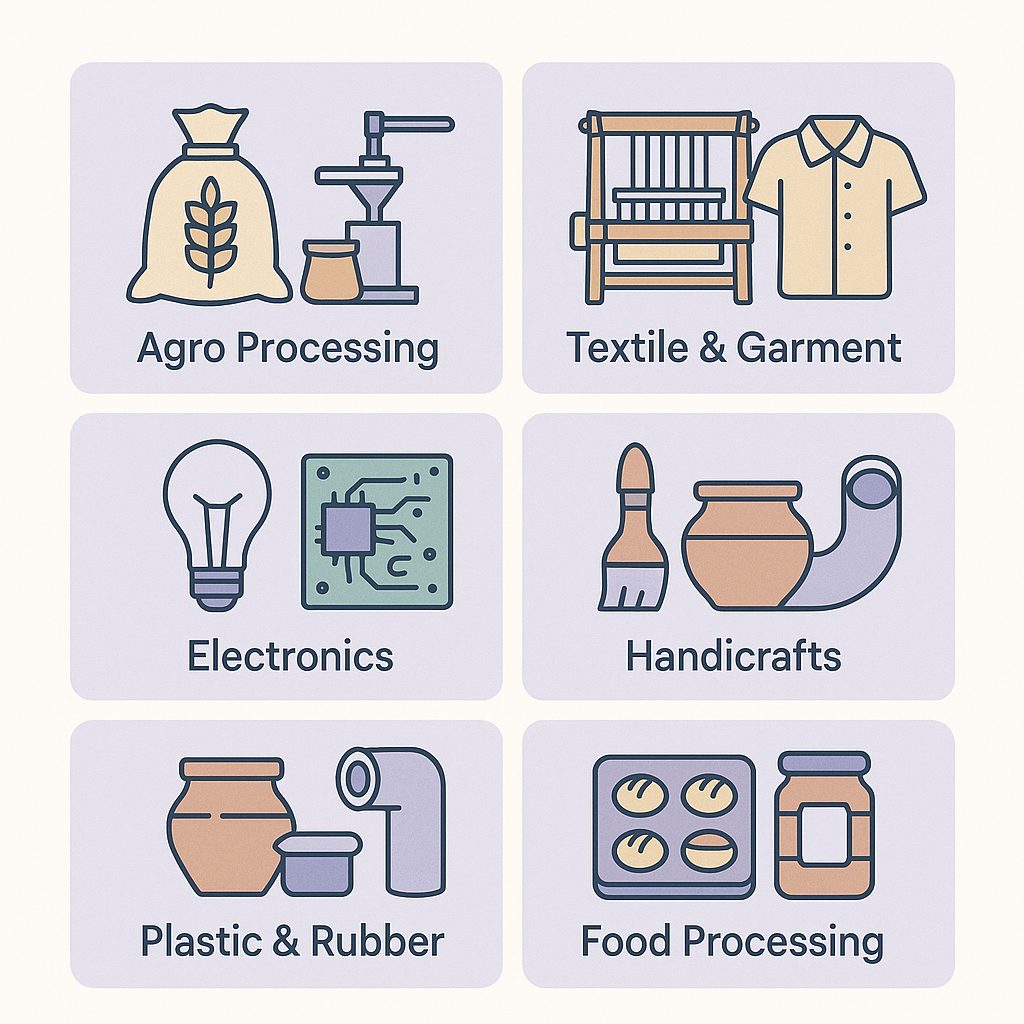
Below is a walk-through of thirty distinct segments of India’s small-industry and MSME universe. Think of it less as a directory and more as a travel journal – quick notes on what each sector makes, why it matters, and where you’ll find it humming away behind the shutters.
1. Agro‑processing
Small plants turn farm harvests into shelf‑ready goods within days of picking.
- Flour and rice mills
- Cold‑pressed edible oils (ground‑nut, sesame)
- Fruit‑pulp and jam units
- Spice‑grinding lines
- Micro‑honey bottling
2. Textiles & garments
From yarn to finished tee, many steps still sit best in nimble neighborhood workshops.
- Handloom weaving units
- Ready‑made garment stitching lines
- Natural‑dye houses
- Wool‑knit studios
- Embroidery job‑shops
3. Household chemicals
Low‑capex batches, steady local demand, quick cash cycle.
- Herbal bath soaps
- Powder and liquid detergents
- Incense‑stick rolling
- All‑purpose cleaners
- Small-batch paint and coating manufacturing
4. Bakery & snacks
Freshness sells; local ovens keep transport costs low.
- Artisan bread and buns
- Regional snack lines (banana chips, namkeen)
- Sugar candy / toffee molding
- Pickle units
- Packaged drinking-water and beverage units
5. Forest & bamboo crafts
Tapping nearby wood, bamboo, and other natural materials for furniture and décor.
- Custom wooden chairs and tables
- Wood-based boards and panels
- Bamboo basketry
- Hand‑carved home décor
- Wooden and bamboo utility products
6. Light engineering
Job‑shops feed parts to larger manufacturers on tight lead times.
- Sheet‑metal fabrication
- Precision tool‑room jobs
- Machining of bicycle and engineering components
- Small electric‑motor repair
- Farm‑implement welding
7. Mineral‑based goods
Earthy inputs, modest kilns, constant demand from construction.
- Fly‑ash brick making
- AAC and cement blocks
- Stone‑crushing aggregates
- Studio pottery tiles
- Sand‑cast jewellery findings
8. Handmade & heritage
Craft traditions that double as domestic products and export opportunities.
- Terracotta pottery wheels
- Jute and cotton handicrafts
- Mirror‑work and zardozi embroidery
- Leather tooling (belts, pouches)
9. Paper & board
E‑commerce keeps corrugated cartons and kraft bags in heavy rotation.
- Recycled‑paper notebooks
- Kraft carry‑bags
- Corrugated‑box die‑cutting
- Handmade cotton‑rag paper
10. Plastics & rubber
Everyday utility items, now with growing demand for recycled and bio-based alternatives.
- Injection‑molded household buckets
- PVC irrigation pipes
- Rubber gaskets and seals
- Compostable food-service products
11. Electronics & electricals
Domestic electronics manufacturing and localisation of component supply chains make local assembly and job-work opportunities viable.
- LED bulb assembly
- Small solar‑panel lamination
- Wiring‑harness crimping
- Low‑rating transformer winding
- PCB soldering
12. Leather goods
Export clusters thrive on footwear, fashion accessories and industrial-product orders.
- Leather finishing and processing
- Footwear uppers stitching
- Industrial safety gloves
- Premium wallets and belts
13. Auto & EV ancillaries
Tier‑II units supply both legacy and electric platforms.
- Metal body parts
- Alloy‑wheel refurbishment
- Electric-vehicle components and assemblies
- Tyre retreading
14. Printing & signage
Short‑run jobs for local businesses and events.
- Offset printing presses
- Screen‑printed merchandise
- Flex and vinyl banner shops
- Book‑binding services
15. Construction inputs
Housing and infrastructure activity continues to support demand for locally manufactured construction products.
- Modular kitchen panels
- Aluminium window fabrication
- Decorative paint rollers
- Building‑grade adhesives
16. Circular & green products
Demand for resource-efficient and sustainable products opens fresh niches.
- Biomass briquettes
- Composting drum kits
- Eco‑friendly packaging molds
- Point‑of‑use water filters
17. Sports & fitness gear
Domestic health and fitness demand along with established export markets supports small manufacturers.
- Willow cricket bats
- Yoga‑mat heat presses
- Protective gear stitching
- Dumb‑bell casting
18. Medical consumables
Healthcare demand and recurring institutional procurement support opportunities in this segment.
- First‑aid kit kitting
- Cotton gauze rolls
- Stainless surgical tools
- Non-prescription healthcare and hygiene products
19. Gem & precious craft
Low‑volume, high‑value; skill, not scale, drives margins.
- Gemstone faceting
- Custom silver jewellery
- Small precision components for watches and jewellery
- Silk artificial flowers
20. Tech maker‑spaces
Garage labs that service start-ups, manufacturers, and R&D teams.
- 3‑D printing bureaus
- Drone frame fabrication
- IoT sensor assembly
- DIY robotics kits
21. Education & learning kits
Demand for experiential and hands-on learning tools creates opportunities for small manufacturers.
- Montessori wooden sets
- STEM experiment boxes
- Acrylic math manipulatives
- Refurbished tablets for e‑learning
22. Advanced packaging
Safety, shelf‑life, sustainability rolled into one.
- Multi‑layer pouch lamination
- Decorative glass frosting
- Biodegradable and compostable film products
- Corrugated pizza‑box lines
23. Agri‑support hardware
Helping farmers boost yield and efficiency.
- Drip‑irrigation punch presses
- Seed sorting and packing
- Greenhouse film installation
- Hand‑held farm tools
24. Fisheries & marine processing
Coastal livelihood backbone with export upside.
- Nylon fishing‑net knitting
- Flake‑ice plants
- Vacuum‑packed fish fillets
- Wooden boat repairs
25. Renewable‑energy hardware
India’s expanding solar and EV ecosystem creates opportunities for local manufacturing and assembly.
- Rooftop solar mounts
- Small wind‑turbine blades
- LED street‑light casings
- EV charger enclosures
26. Tourism souvenir lines
Micro‑units turn local motifs into carry‑home mementos.
- Sandstone fridge magnets
- Block‑printed scarves
- Pottery workshop kits
- Tribal art painting studios
27. Safety & defence essentials
Stringent specifications and institutional procurement requirements create opportunities for specialised MSME suppliers.
- Protective helmet components
- Fire‑extinguisher cylinders
- CCTV mounting brackets
- Industrial PPE suits
28. Toys & early‑learning
Domestic manufacturing initiatives and demand for locally made toys create an opportunity for small manufacturers.
- Wooden learning toys
- Plush‑toy stitching
- Baby and child-care products
- Puzzle and board‑game printing
29. Hospitality supplies
Hotels and restaurants need reliable, local replenishment.
- Stainless kitchenware
- Institutional bed linen
- Melamine tableware
- Eco cleaning brushes
30. Art & event fabrication
Events, film sets, and OTT content drive niche demand.
- Handmade musical instruments
- Period costume tailoring
- Theatre prop carpentry
- Stage‑lighting rig welding
How to use this list:
- Match raw materials you already control to one of these sectors.
- Check local demand within a half‑day truck radius.
- Check which government scheme (credit guarantee, cluster support, quality certification or procurement) best matches your business before investing.
Visual examples: Small‑scale industries in action
| Example | Visuals |
| A rice‑mill operator bagging freshly polished grains | 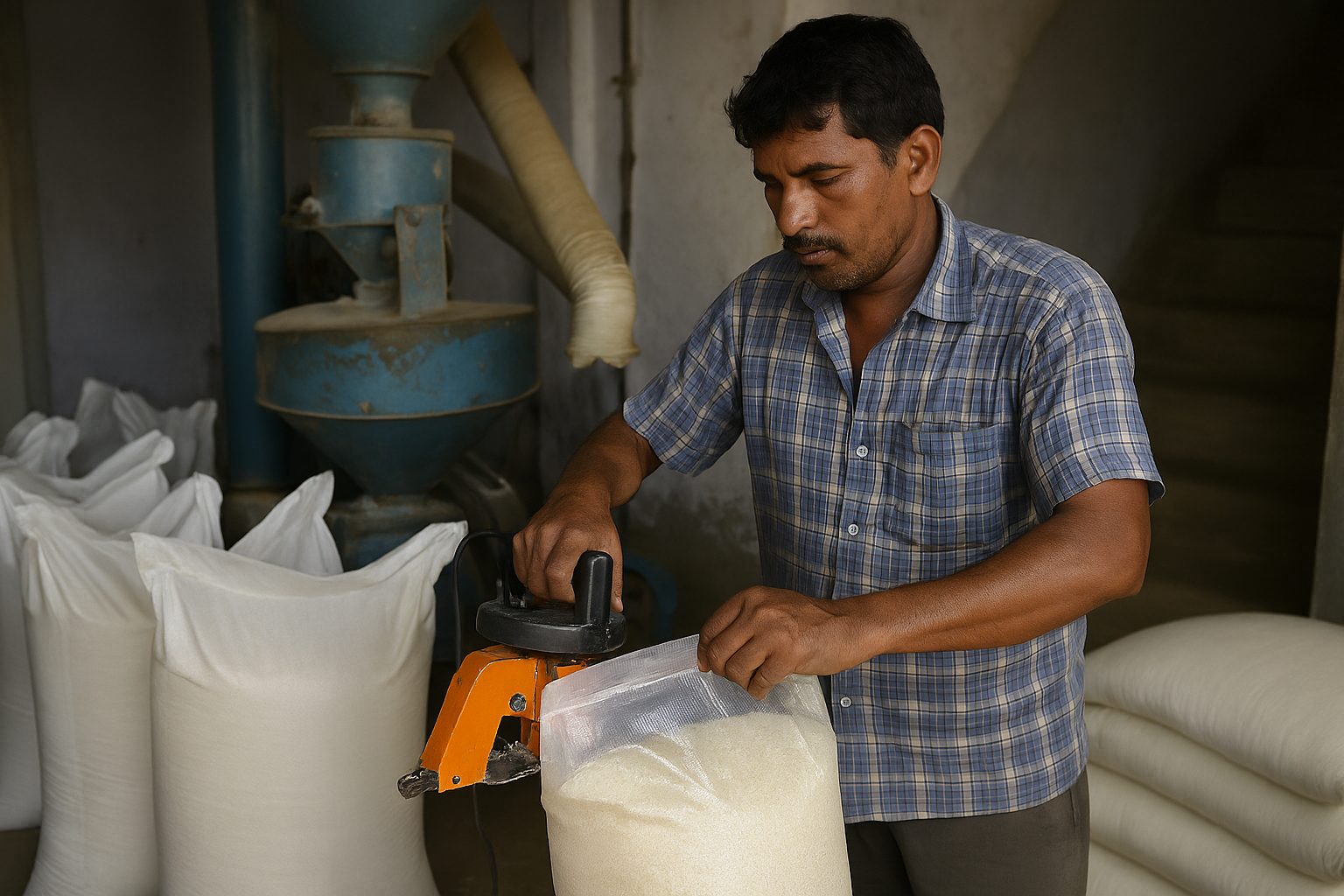 |
| Handloom weaver working a brightly coloured cotton wrap |  |
| Two women filling silicone moulds in a small soap unit | 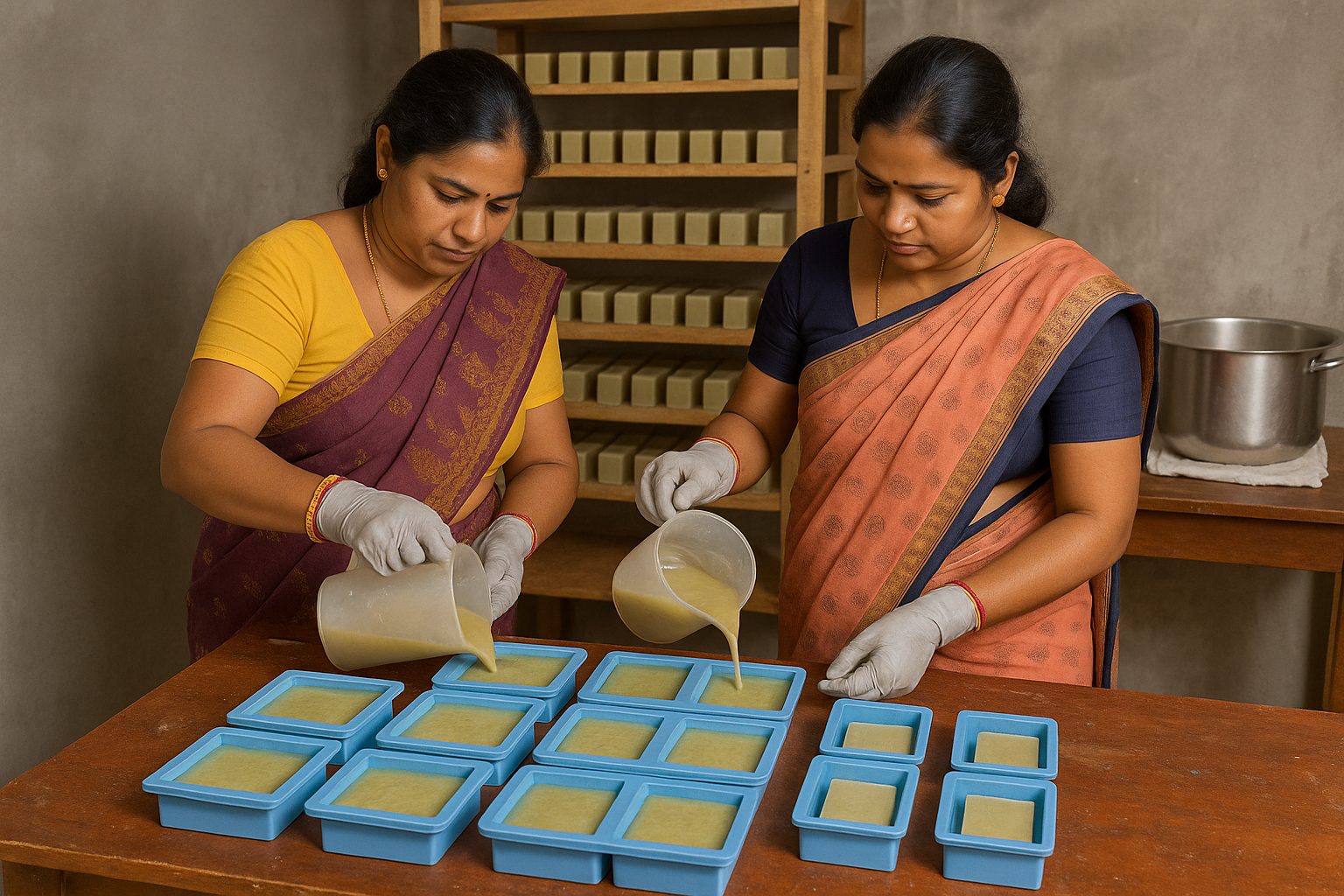 |
| Potter trimming clay on a kick wheel at dusk | 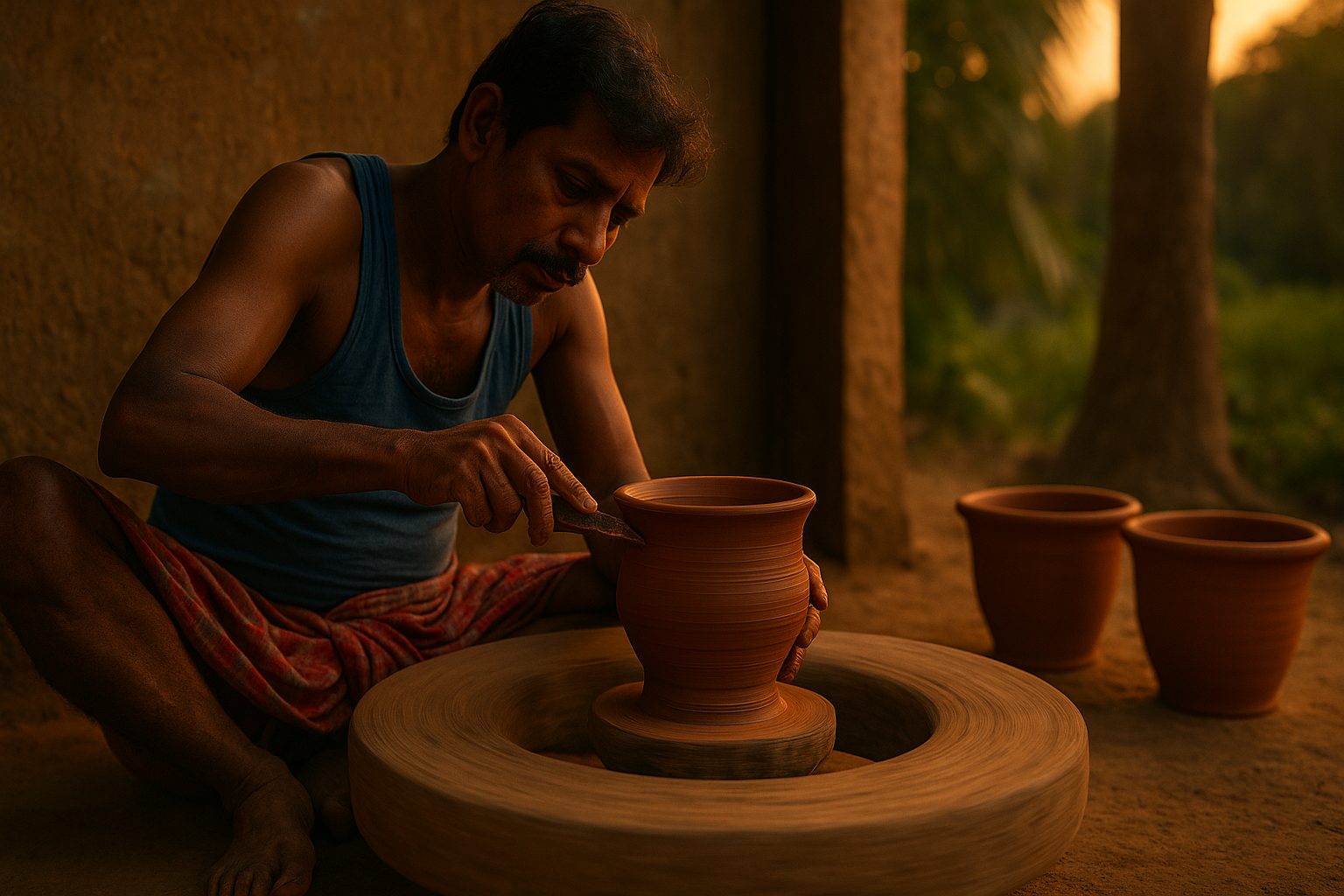 |
| Carpenter gluing bamboo strips for a lampshade | 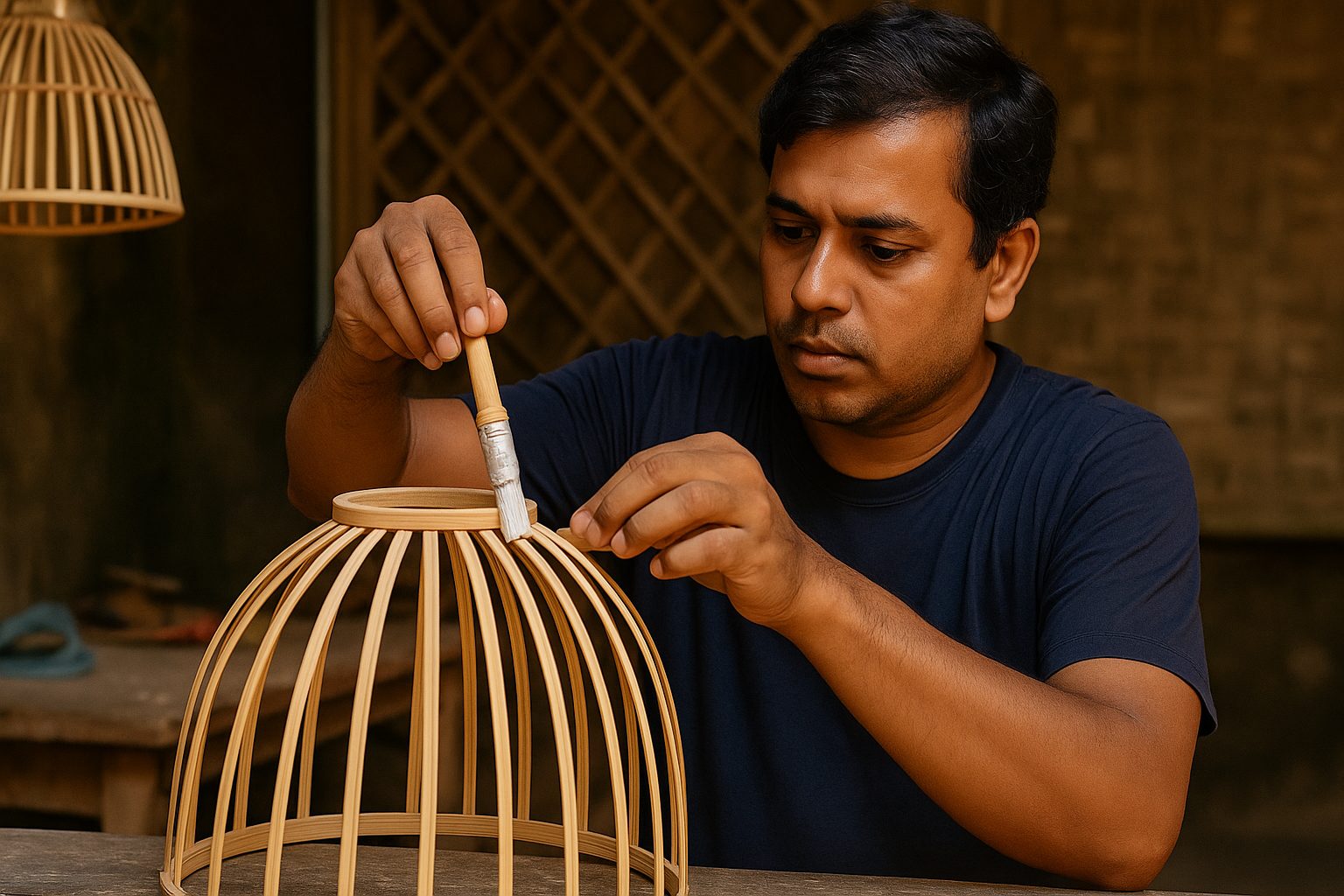 |
Conclusion
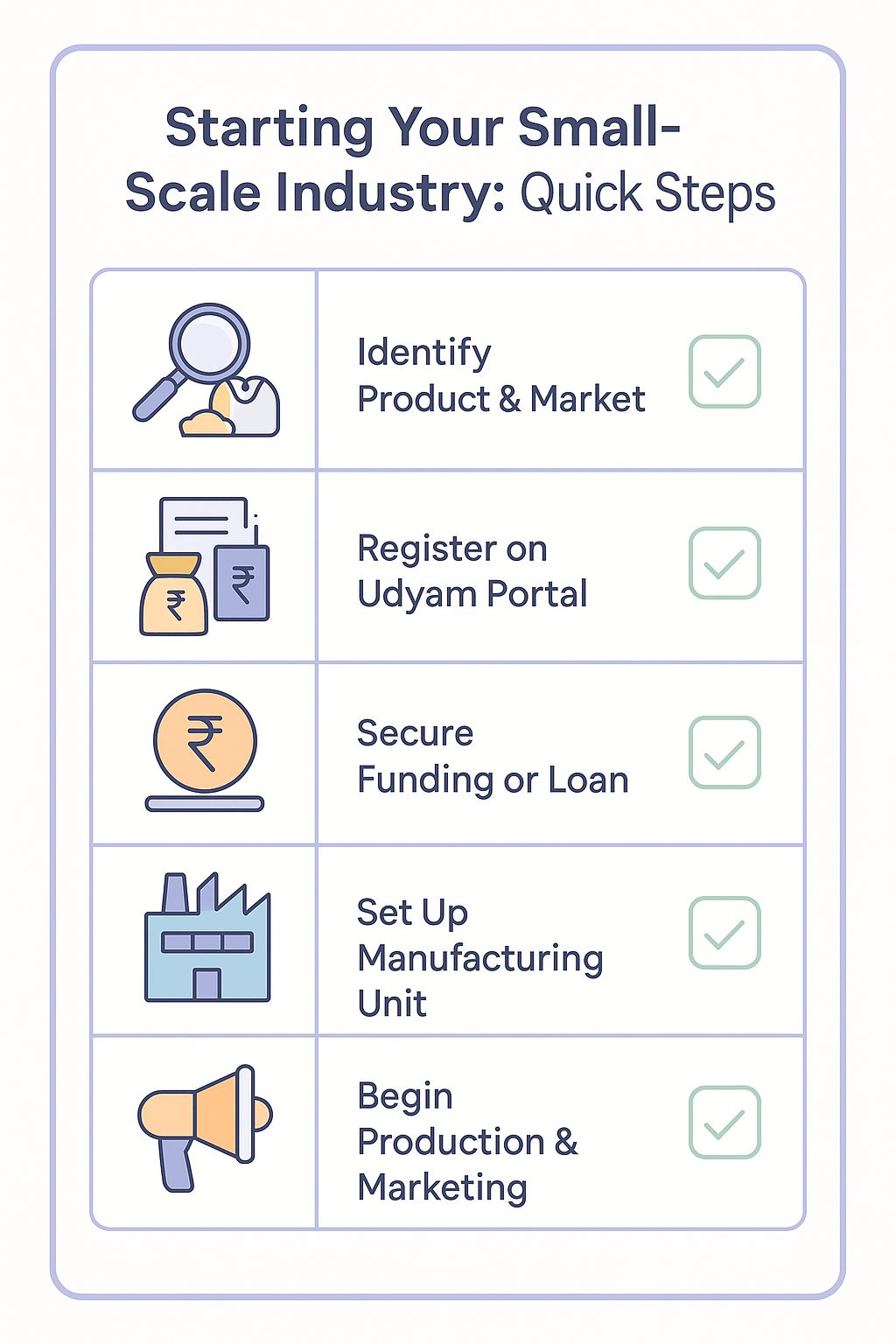
Small-scale industries thrive on speed, proximity, and the sheer grit of their founders. They convert raw produce, scrap metal, timber off-cuts (whatever is at hand) into goods that move quickly through local markets and, increasingly, global supply chains. Each category in the list above shows that you don’t need deep pockets to carve out a profitable small-scale business or manufacturing niche; you need sharp eyes for local demand, disciplined cost control, and a willingness to tweak processes the moment feedback lands.
Take the next practical step: audit the resources you already own (skills, space, supplier contacts), match them to one of the 30 small-scale industry ideas outlined, and sketch a pilot run. File your Udyam registration early, keep books transparent from day one, and reinvest in better tooling as orders pick up. In the world of small-scale manufacturing, momentum compounds faster than capital. Start modest, test demand, iterate relentlessly, and let consistent quality do your marketing.
Empowering MSMEs to grow smarter
Tata nexarc delivers powerful solutions for MSMEs—discover tenders, logistics solutions, and streamline procurement. Everything your business needs, all in one place.
FAQs
What licenses are required to start a small-scale industry in India?
Are small-scale industries eligible for government tenders?
How can I get a loan to start a small-scale industry?
You can explore schemes like CGTMSE, PMEGP, or Stand-Up India. Loan amounts, collateral requirements, and eligibility vary by scheme, lender, and borrower, so there is no single ₹2 crore collateral-free limit that applies to all three.
Can I run a small-scale industry from home?
What is the difference between a cottage industry and a small-scale industry?
Are there tax benefits for small-scale industries in India?
Which states in India are best for setting up small-scale industries?
Can NRIs or foreign nationals invest in small-scale industries in India?
How is quality certification managed for small-scale industries?
Through programmes and standards such as ZED (Zero Defect Zero Effect), BIS certification, FSSAI requirements for food businesses, and ISO standards, depending on the product and market.
What are some digital tools useful for managing a small-scale industry?
A product manager with a writer's heart, Anirban leverages his 6 years of experience to empower MSMEs in the business and technology sectors. His time at Tata nexarc honed his skills in crafting informative content tailored to MSME needs. Whether wielding words for business or developing innovative products for both Tata Nexarc and MSMEs, his passion for clear communication and a deep understanding of their challenges shine through.

18. Medical and Health – First aid kits
– Bandages
– Medical instruments
– Herbal products
– Health supplements