Check Price Now
Table of Contents
Steel reinforcement bars are the backbone of modern construction. In India, discussions around Fe 415 vs. Fe 500 often come up when selecting TMT bars for residential, commercial, and infrastructure projects. These grades are defined under IS 1786 standards, which specify the strength, ductility, and chemical composition required for reinforcement steel.
Understanding the difference between Fe 415 and Fe 500 steel helps builders choose the right material for their project. Each grade offers different yield strength and performance under load. The right choice can improve structural safety, optimise steel consumption, and control project costs. Let us understand Fe 415 vs. Fe 500 TMT bars and how they compare in strength, applications, and price.
Differences between Fe 415 and Fe 500
Builders often compare Fe 415 vs. Fe 500 TMT bars when selecting reinforcement steel. Both grades are widely used in Indian construction and follow IS 1786 standards for TMT steel bars. The main difference between them is yield strength, which determines how much load the steel can carry before it starts to deform permanently.
Key differences between Fe 415 and Fe 500 steel include
Strength: Fe 500 has higher yield strength than Fe 415.
Load capacity: Higher strength allows structures to handle heavier loads.
Structural use: Fe 500 is commonly used in high-rise buildings, bridges, highways, and infrastructure projects.
Ductility: Fe 415 offers higher ductility and flexibility.
Seismic performance: Fe 415 performs well in RCC structures located in earthquake-prone areas.
Weldability: Lower carbon content makes Fe 415 easier to weld.
Because of its higher strength, Fe 500 TMT steel is widely used in modern large-scale construction. Engineers often select it for projects where structural load and durability are critical. Fe 415 remains a reliable choice for low-rise buildings, residential construction, beams, and columns. Its higher ductility helps the structure absorb stress without sudden failure.
Understanding Fe 415 vs. Fe 500 properties helps contractors optimise steel usage, improve structural safety, and control construction costs.
Fe 415 vs. Fe 500 comparison
| Particulars | Fe 415 | Fe 500 |
| Yield strength | 415 N/mm² | 500 N/mm² |
| Tensile strength | ~485 MPa | ~545 MPa (up to 565 MPa for Fe 500D) |
| Elongation | ~20% | ~16% (higher in Fe 500D) |
| Ductility | Higher | Moderate (higher in Fe 500D variant) |
| Weldability | Better due to lower carbon content | Lower than Fe 415 |
| Corrosion resistance | Good | Very good |
| Typical applications | Low-rise residential structures, beams, columns. | High-rise buildings, bridges, highways. |
Why yield strength matters
Yield strength refers to the stress level at which steel begins to deform permanently. In reinforced concrete structures, this indicates the load capacity of the reinforcement bar. Higher yield strength allows the steel to carry greater loads without bending or failing. This is important for multi-storey buildings and heavy infrastructure projects.
Because Fe 500 TMT bars have about 20% higher yield strength than Fe 415, engineers can often reduce the total quantity of steel required in a project. This improves structural efficiency and helps optimise overall construction costs.
Fe 415 vs. Fe 500 properties
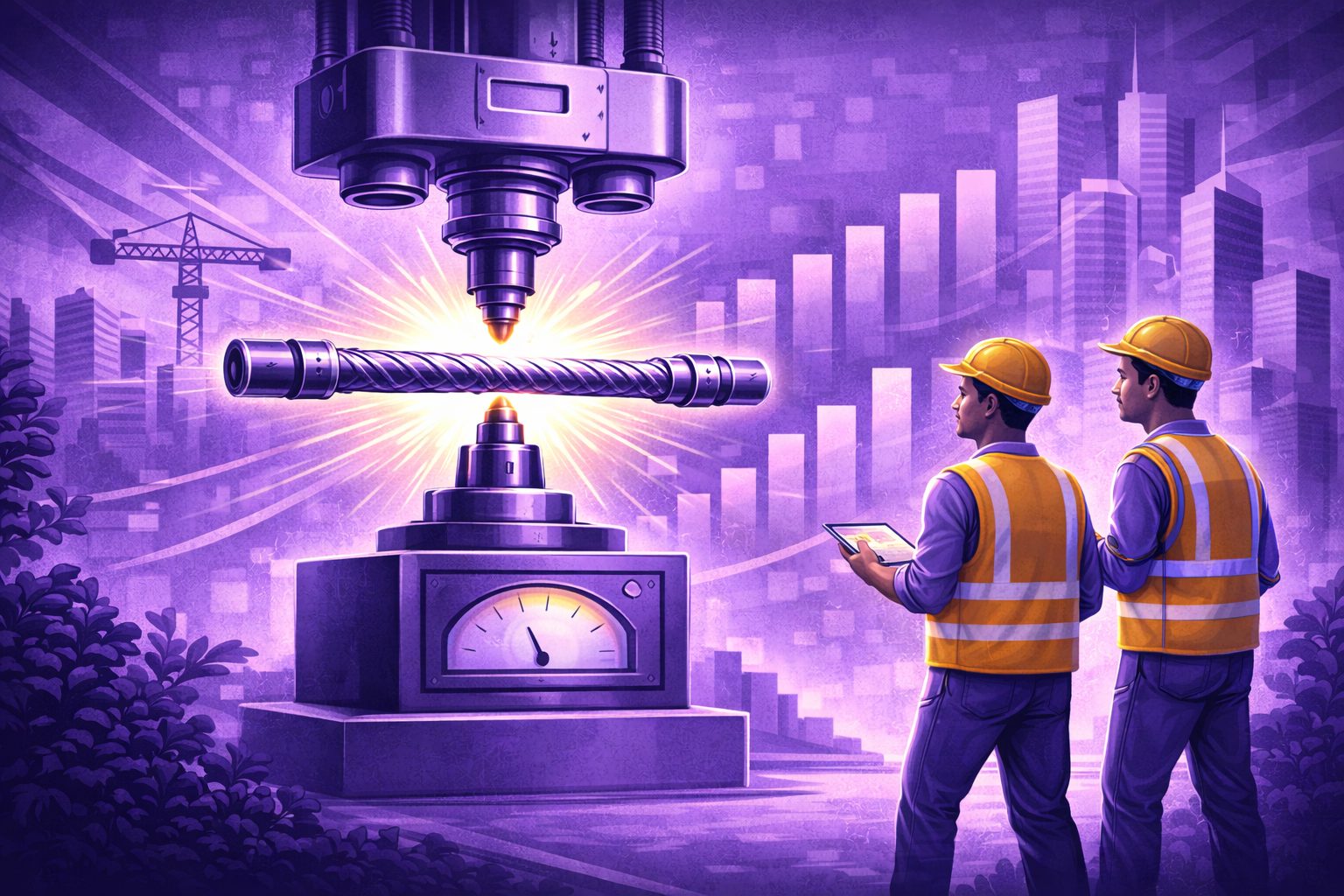
Understanding the mechanical properties of Fe 415 steel and Fe 500 TMT bars helps builders choose the right reinforcement for a project. While both grades meet IS 1786 standards, they differ in strength, ductility, chemical composition, and resistance to environmental stress.
Yield strength vs. tensile strength
Yield strength refers to the stress level at which steel begins to deform permanently. For Fe 415 TMT bars, the yield strength is 415 N/mm², while Fe 500 steel offers 500 N/mm². This higher yield strength allows Fe 500 bars to support heavier structural loads.
Tensile strength indicates the maximum stress steel can withstand before breaking. Fe 500 tensile strength is typically around 545 MPa, compared to about 485 MPa for Fe 415. Because of this difference, engineers often prefer Fe 500 for high-rise buildings and infrastructure projects where structural strength is critical.
Ductility and elongation in TMT steel
Ductility describes how much a steel bar can stretch without breaking. Higher ductility helps structures absorb stress during earthquakes or sudden load changes.
Elongation in TMT steel measures this flexibility. Fe 415 bars usually provide around 20% elongation, while Fe 500 offers about 16% elongation. Variants such as Fe 500D improve ductility while maintaining high strength, which is why they are widely used in seismic zones in India.
Carbon composition and weldability
Chemical composition affects both strength and weldability. Fe 415 steel generally has slightly lower carbon content, which improves weldability and flexibility. Fe 500 contains marginally higher carbon levels to achieve greater strength. However, higher carbon can reduce weldability if not properly controlled during manufacturing.
Corrosion resistance in Indian conditions
Reinforcement steel in India often faces humid weather, coastal environments, and monsoon exposure. Modern TMT bars use thermo-mechanical treatment to create a tough outer layer and a softer core. Both Fe 415 and Fe 500 offer good corrosion resistance, but high-quality Fe 500 TMT bars are often preferred for infrastructure and coastal construction projects where durability is critical.
Fe 415 vs. Fe 500 price in India
The Fe 415 TMT bar price per kg in India and Fe 500 steel price in India change frequently because steel is traded as a commodity. Prices vary by city, brand, diameter, and supply conditions. As of early 2026, most TMT bars in India typically sell between ₹50 and ₹75 per kg, depending on the grade and manufacturer.
Recent market data shows TMT bar prices around ₹56,000–₹68,000 per tonne in many Indian markets, which equals roughly ₹56–₹68 per kg before taxes and transport.
Typical price range (Indicative)
| Grade | Typical price range (India) |
| Fe 415 | ₹50 – ₹65 per kg |
| Fe 500/Fe 500D | ₹55 – ₹75 per kg |
Prices are indicative retail ranges and vary by location, brand, size, and order volume.
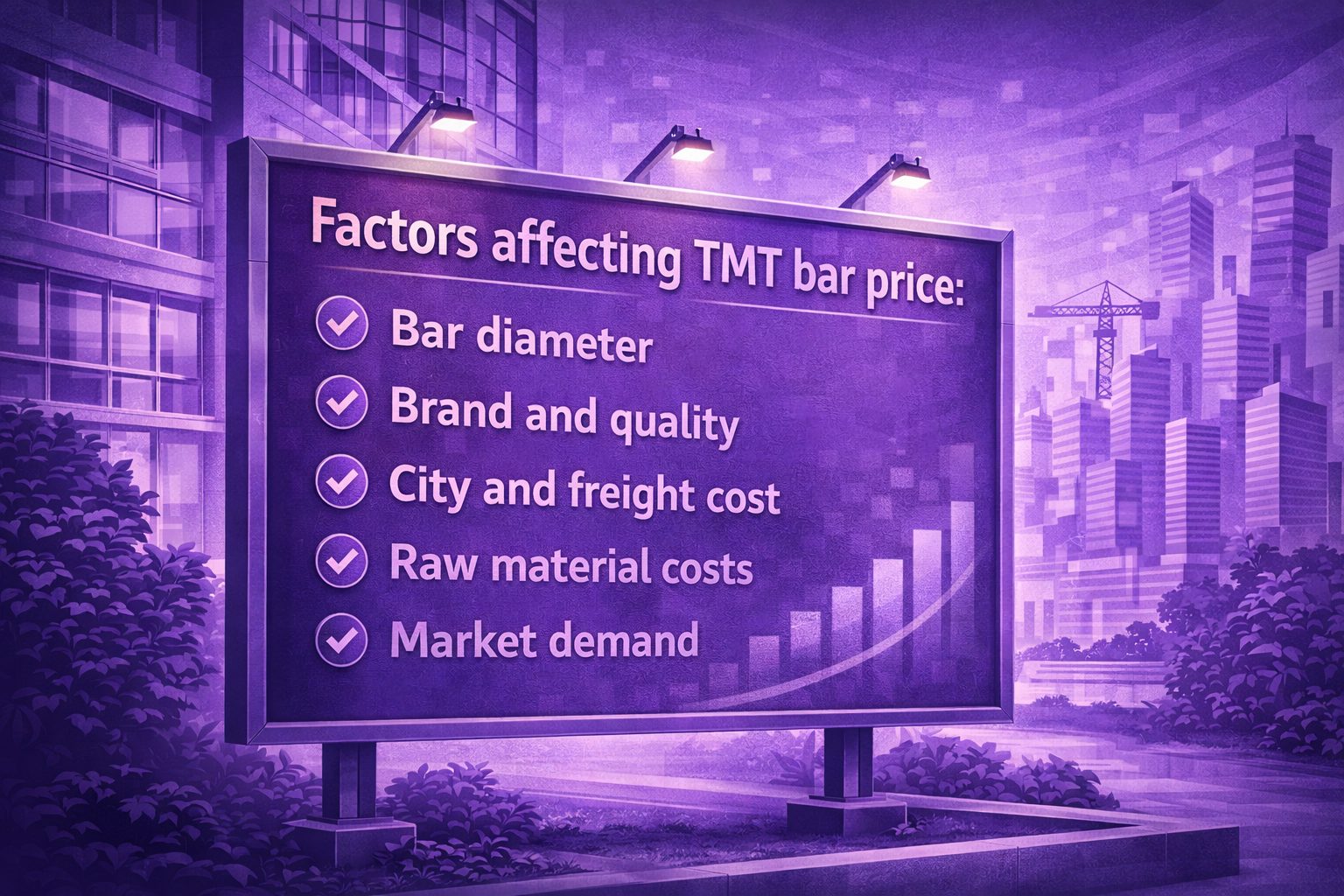
Factors affecting TMT bar prices
Several factors influence the construction steel cost in India:
Bar diameter: Larger sizes such as 16 mm or 20 mm may have slightly different rates.
Brand and quality: National brands often cost more than regional mills.
City and freight cost: Prices differ between cities like Mumbai, Delhi, and Kolkata due to logistics and dealer margins.
Raw material costs: Iron ore, scrap, and coking coal prices affect steel manufacturing costs.
Market demand: Infrastructure spending and construction activity also influence steel prices.
Why Fe 500 can reduce total steel cost
Although Fe 500 TMT bars are usually priced slightly higher than Fe 415, they offer higher yield strength. This means engineers can often use less steel quantity for the same structural load, which helps reduce the overall reinforcement cost in large projects.
Keep in mind that steel prices are highly dynamic. Contractors and builders typically check daily TMT bar rates with local dealers before placing bulk orders.
Meaning and key properties of Fe 415 and Fe 500
Understanding the TMT bar grade meaning helps builders and engineers choose the right reinforcement steel for construction. Grades such as Fe 415 and Fe 500 indicate the minimum yield strength of the steel bar, which determines how much stress the bar can withstand before permanent deformation.
What does “Fe” mean in TMT steel grades?
In TMT bar grading, “Fe” stands for ferrum, the Latin word for iron. The number that follows indicates the minimum yield strength measured in N/mm² (MPa). For example, Fe 415 means the steel bar has a minimum yield strength of 415 N/mm², while Fe 500 indicates 500 N/mm². These grades are specified under IS 1786 standards, which regulate reinforcement steel used in Indian construction.
What is Fe 415 steel?
Fe 415 steel is a TMT bar grade with a minimum yield strength of 415 N/mm². It offers high ductility and flexibility, which allows structures to absorb stress without sudden failure.
Because of its higher elongation, Fe 415 is commonly used in RCC structures, beams, columns, and low-rise residential buildings. Engineers also prefer this grade in earthquake-prone regions where controlled deformation improves structural safety.
What is Fe 500 steel?
Fe 500 steel is a stronger reinforcement grade with a minimum yield strength of 500 N/mm². The higher strength allows it to carry greater loads, making it suitable for multi-storey buildings, bridges, highways, and infrastructure projects.
Variants such as Fe 500D and Fe 500S offer improved ductility while maintaining high strength. Because of this balance between strength and flexibility, Fe 500 has become one of the most widely used TMT bar grades in India for modern construction.
Industry applications and uses
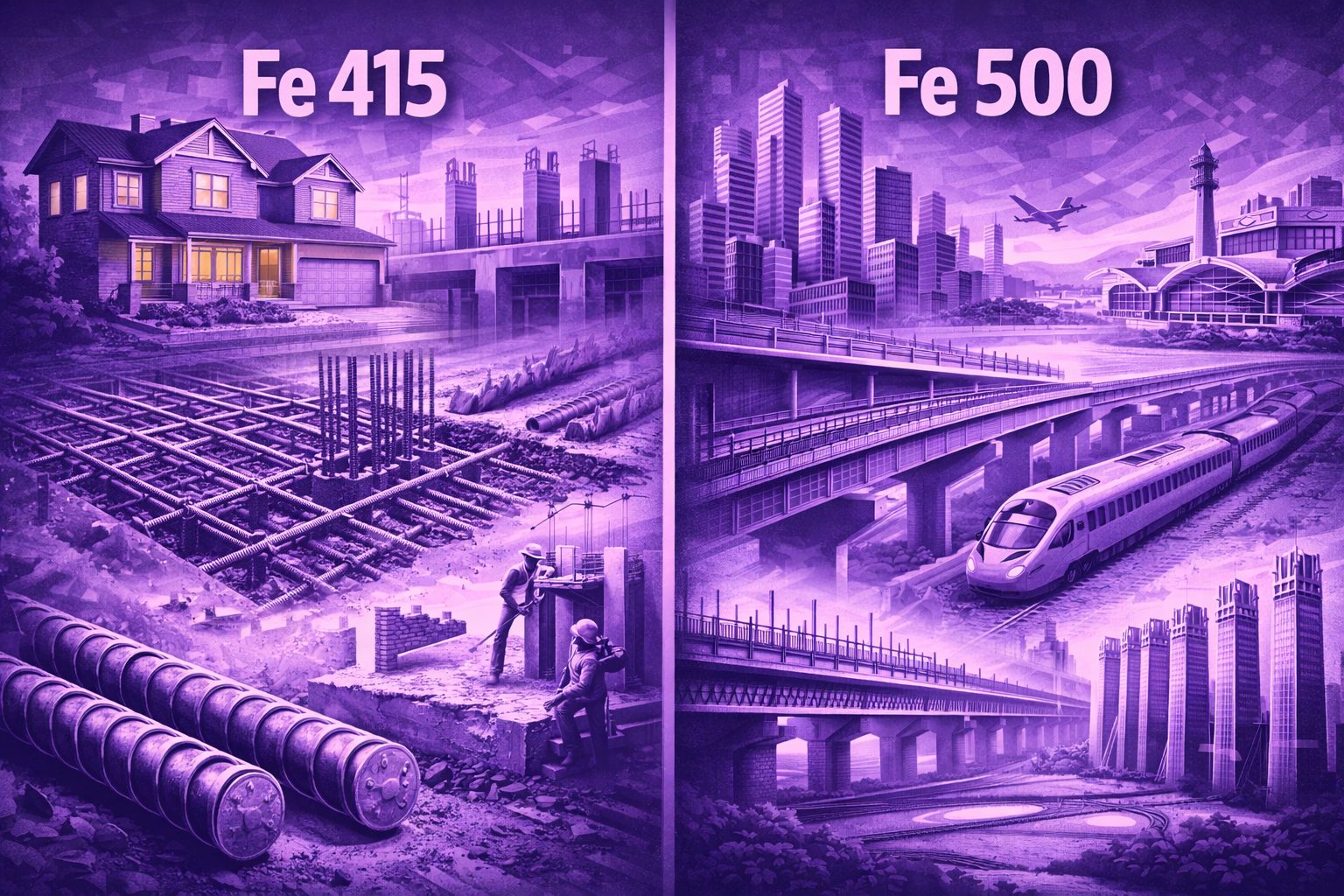
Different TMT bar grades in India are selected based on the structural load, building height, and environmental conditions. When comparing Fe 415 vs. Fe 500 construction use, the key factor is how much load the structure must carry. Engineers select reinforcement grades that balance strength, ductility, and durability for the specific project.
Fe 415 applications
Fe 415 TMT bars are widely used in projects where flexibility and ductility are important. The grade offers good elongation, which helps structures absorb stress and minor ground movement without sudden cracking.
Residential buildings: Often used in small to medium residential construction such as houses and low-rise apartments.
Beams and columns: Suitable for reinforcement in RCC beams, slabs, and columns where moderate load-bearing capacity is required.
Earthquake-prone zones: Higher ductility helps the structure absorb seismic stress, making Fe 415 useful in regions with moderate seismic activity.
General RCC work: Used in foundations, slabs, and structural reinforcement for small construction projects.
Fe 500 applications
Fe 500 TMT bars are designed for projects that require higher structural strength and load-bearing capacity. The grade provides higher yield strength, which allows engineers to reduce steel quantity while maintaining structural stability.
High-rise buildings: Preferred for multi-storey residential and commercial buildings.
Bridges and highways: Commonly used in infrastructure projects that experience heavy loads and continuous stress.
Airports and heavy infrastructure: Suitable for large projects such as airport terminals, metro structures, flyovers, and industrial construction.
Large RCC structures: Used in dams, parking structures, and commercial complexes where stronger reinforcement is required.
How to decide between Fe 415 and Fe 500
Choosing the right reinforcement grade is an important part of steel selection for construction. Builders often ask Fe 415 vs. Fe 500 which is better, but the answer depends on the project’s structural requirements, location, and budget. Engineers typically evaluate a few practical factors before buying TMT bars in India.
Key factors to consider
Several project conditions influence how to choose TMT bars for construction:
Project load requirement: High-rise buildings and heavy infrastructure require stronger reinforcement such as Fe 500.
Seismic zone: Projects in earthquake-prone regions may require higher ductility grades like Fe 415 or Fe 500D.
Project budget: Fe 415 bars may have slightly lower upfront cost, but Fe 500 can reduce overall steel quantity in large projects.
Availability of brands: Availability of major manufacturers can vary across cities and suppliers.
IS standards compliance: Always ensure the bars comply with IS 1786 certification and BIS quality standards.
Fe 415 vs. Fe 500 selection guide
| Factor | Fe 415 | Fe 500 |
| Strength requirement | Moderate load structures | High load structures |
| Building height | Low-rise buildings | Multi-storey buildings |
| Ductility | Higher ductility | Moderate ductility (higher in Fe 500D) |
| Steel quantity required | Higher | Lower due to higher strength |
| Typical project type | Houses, small RCC structures. | Infrastructure, high-rise projects. |
Buyer checklist for TMT bars
Before placing an order, builders should verify a few practical points:
- Confirm IS 1786 and BIS certification.
- Check the manufacturer’s reputation and quality standards.
- Verify bar diameter and grade markings on the steel.
- Compare current TMT bar prices across suppliers.
- Ensure proper logistics and delivery timelines for the project.

Quality and safety are critical when selecting reinforcement steel. In India, TMT bars are regulated under the IS 1786 TMT bar standard, issued by the Bureau of Indian Standards (BIS). This standard defines the mechanical properties, chemical composition, and testing requirements for reinforcement bars used in concrete structures.
BIS certification for TMT bars
Manufacturers must obtain BIS certification to legally sell reinforcement steel that complies with Indian quality norms. BIS certified TMT bars in India carry the ISI mark, which confirms that the steel has passed required quality checks and production audits. Builders and contractors should always verify the ISI mark and manufacturer code stamped on the bar surface. This ensures the product meets approved safety and performance standards.
IS 1786 grades for reinforcement steel
The IS 1786 specification categorises TMT bars based on their yield strength and ductility. Common grades available in the Indian market include:
Fe 415 – Higher ductility, suitable for general RCC structures.
Fe 500 – Higher strength, widely used in modern construction.
Fe 500D/Fe 500S – Improved ductility for seismic resistance.
Fe 550 and Fe 600 – Higher-strength grades used in specialised projects.
Each grade must meet specific mechanical strength and chemical composition limits defined in the standard.
Why standards compliance matters
Following steel quality certification and IS standards ensures the reinforcement steel performs reliably under load. Compliance reduces structural risks, improves durability, and helps builders meet regulatory and project safety requirements in residential, commercial, and infrastructure construction.
Conclusion
Selecting between Fe 415 and Fe 500 depends on project requirements rather than one grade being universally better. Structural load, building height, seismic conditions, and budget all influence the choice. Fe 415 may suit smaller RCC structures that need higher flexibility, while Fe 500 is commonly used where higher strength improves structural efficiency. Builders should also check IS 1786 compliance, manufacturer quality, and current market prices before procurement to ensure reliable reinforcement and better long-term performance in construction projects.
Looking to procure steel?
Tata nexarc helps manufacturers, builders and MSMEs source certified steel products, compare prices, and choose the right grade as per IS codes—with complete traceability and procurement confidence.
FAQs
What is the main difference between Fe 415 and Fe 500 steel?
Which is better for construction: Fe 415 or Fe 500?
Why is Fe 500 commonly used in modern construction?
What does the number in Fe 415 and Fe 500 indicate?
Is Fe 500 more expensive than Fe 415?
Which TMT bar grade is better for earthquake-prone areas?
Are Fe 415 and Fe 500 both compliant with Indian standards?
What are the common sizes available for Fe 415 and Fe 500 TMT bars?
Which industries commonly use Fe 500 TMT bars?
How can buyers ensure the quality of TMT bars?
Sohini is a seasoned content writer with 12 years’ experience in developing marketing and business content across multiple formats. At Tata nexarc, she leverages her skills in crafting curated content on the Indian MSME sector, steel procurement, and logistics. In her personal time, she enjoys reading fiction and being up-to-date on trends in digital marketing and the Indian business ecosystem.