Check Price Now
Table of Contents
- Meaning & definition
- Mechanical & chemical properties
- Key features of Fe 415 TMT bars
- Corrosion resistance & durability considerations
- Benefits of using Fe 415 steel in construction
- Applications of Fe 415 TMT bars
- Fe 415 steel TMT bar price in India (2026)
- Fe 415 vs. Fe 500 TMT bars
- How to procure Fe 415 TMT bars reliably
- Conclusion
- FAQs
Fe 415 steel TMT bars are widely used reinforcement steel in Indian construction. The term Fe 415 steel means the bar has a minimum yield strength of 415 MPa, as defined under IS 1786. Despite newer grades, Fe 415 grade steel remains popular for cost-sensitive and low-rise projects. It offers a practical balance of strength, ductility, and price.
This guide explains Fe 415 properties, pricing trends, differences from Fe 500, and buying tips. It is especially useful for builders, contractors, and small developers planning efficient RCC structures.
Meaning & technical definition of Fe 415 steel
Fe 415 steel is a commonly used grade of TMT reinforcement steel in India. The term Fe 415 TMT bars meaning can be broken down as follows:
- Fe stands for iron
- 415 refers to the minimum yield strength of 415 MPa, as specified under IS 1786
What does yield strength mean?
Yield strength is the load at which steel starts to deform permanently. Once this limit is crossed, the bar will not return to its original shape.
Tensile strength, on the other hand, is the maximum load the steel can withstand before breaking. For Fe 415, tensile strength is typically around 485 MPa.
Role of Fe 415 in RCC structures

In reinforced cement concrete (RCC), Fe 415 steel bars absorb tensile forces while concrete resists compression. This combination improves structural stability in beams, slabs, columns, and footings.
Real-life example:
In a residential beam, Fe 415 bars bend slightly under load during stress events. This controlled deformation helps prevent sudden structural failure.
Why Fe 415 became popular in India
Fe 415 was historically dominant due to:
- Better ductility than mild steel
- Lower cost than higher-strength grades
- Wide acceptance by engineers and local authorities
Fe 415 vs. mild steel (Fe 250)
| Property | Fe 250 (Mild Steel) | Fe 415 |
| Yield strength | 250 MPa | 415 MPa |
| Ductility | High | Balanced |
| RCC suitability | Limited | High |
Fe 415 TMT bars comply with IS 1786:2008, 2013, and later revisions, making them suitable for modern construction needs.
Mechanical & chemical properties of Fe 415 TMT bars
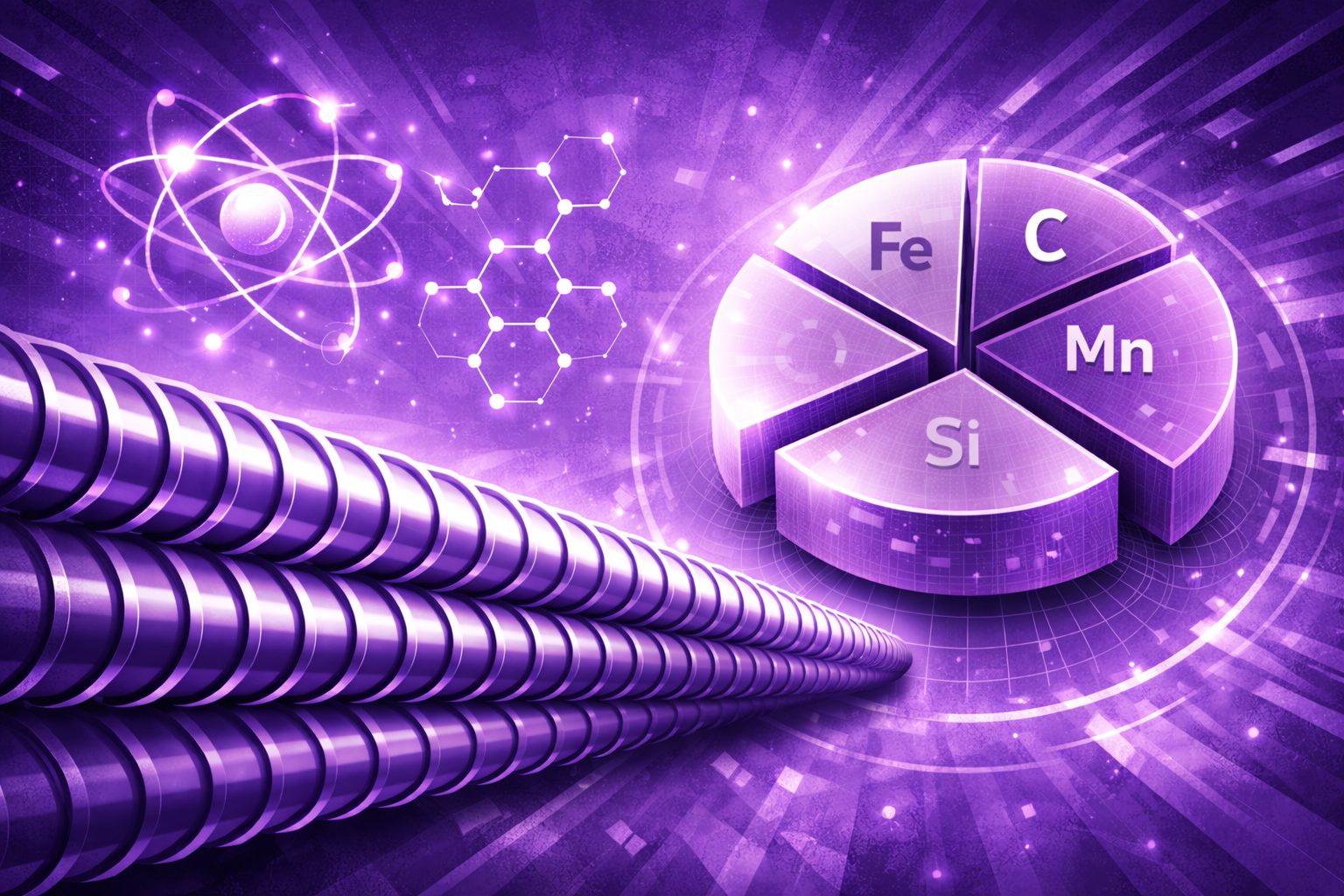
Understanding the Fe 415 mechanical properties helps engineers and builders select the right reinforcement steel for RCC structures. These properties are defined under IS 1786 and verified through standard quality tests.
Key mechanical properties
Yield strength: Minimum 415 MPa, ensuring controlled deformation under load.
Tensile strength: Approximately 485 MPa, providing resistance against breaking.
Elongation: Minimum 14.5%, which supports ductility and energy absorption.
Ductility: Allows bending without sudden fracture, important for structural safety.
Higher elongation improves performance during dynamic loads such as wind or minor seismic activity.
Chemical composition and weldability
The Fe 415 chemical composition is designed for strength and ease of fabrication:
- Carbon content: ≤ 0.30%, which improves weldability
- Controlled levels of sulphur and phosphorus reduce brittleness
Lower carbon content makes Fe 415 TMT bars suitable for site welding without compromising strength.
Fire and fatigue performance
Fe 415 bars retain structural integrity during short-duration fire exposure, as concrete cover protects the steel. The grade also performs well under repeated loading cycles, making it suitable for residential and low-rise commercial buildings.
Quality tests and certification
Fe 415 TMT bars must pass:
- Bend and rebend tests, ensuring flexibility and crack resistance.
- Tensile and yield strength tests, as per IS 1786.
- ISI marking, which confirms compliance with Indian standards.
Fe 415 TMT bar specifications
| Property | Typical value |
| Yield strength | 415 MPa |
| Tensile strength | ~485 MPa |
| Elongation | ≥14.5% |
| Carbon content | ≤0.30% |
Key features of Fe 415 TMT bars

Balanced strength and ductility
One of the most important features of Fe 415 steel is its balance between strength and ductility. With a yield strength of 415 MPa and adequate elongation, the bar can absorb stress and deform gradually. This reduces the risk of sudden structural failure in RCC members.
Good weldability for site work
Fe 415 TMT bars have a controlled carbon content, which makes them suitable for site welding. This allows easy fabrication, extensions, and modifications without significantly affecting mechanical performance, provided welding follows standard procedures.
Strong bonding with concrete
Fe 415 bars have a uniform rib pattern that improves mechanical bonding with concrete. The ribs help resist slippage under load, ensuring efficient stress transfer between steel and concrete in beams, slabs, columns, and footings.
Compatibility with RCC construction
These bars are widely used in reinforced cement concrete structures. Fe 415 TMT bar characteristics make them suitable for residential houses, low-rise apartments, boundary walls, staircases, and foundations.
Available in standard diameters
Fe 415 TMT bars are readily available across India in diameters ranging from 8 mm to 32 mm. This wide availability helps engineers optimise reinforcement quantities and control project costs.
Comparison with Fe 500D
Compared to Fe 500D, Fe 415 offers higher ductility but lower strength. This makes Fe 415 easier to bend and work with, especially in smaller projects where extreme load capacity is not required.
Thermal performance
Fe 415 bars maintain structural stability during short-term fire exposure, as concrete cover delays heat transfer. This improves safety in residential and commercial buildings.
Corrosion resistance & durability considerations

Corrosion resistance: Fe 415 is not corrosion-resistant steel. It is carbon steel and can corrode when exposed to moisture, chlorides, or aggressive environments. This answers a common question: Is Fe 415 corrosion resistant? The answer is no, without protection.
Performance in normal environments: In dry and moderate exposure conditions, Fe 415 steel durability is satisfactory when proper concrete cover and good construction practices are followed. Most residential and low-rise buildings fall into this category.
Performance in coastal environments: In coastal India and high-humidity zones, Fe 415 bars face a higher risk of corrosion due to salt-laden air. In such cases, additional protection measures are necessary to maintain long-term durability.
Role of TMT manufacturing: The thermo-mechanical treatment process improves surface strength but does not make the steel corrosion proof. Corrosion resistance depends more on concrete quality, cover thickness, and exposure conditions than on TMT processing alone.
Protective coatings: Epoxy-coated, fusion-bonded, or zinc-coated Fe 415 bars can be used in aggressive environments. These coatings act as a barrier and slow down corrosion.
Concrete cover: Adequate concrete cover is one of the most effective ways to protect Fe 415 bars. Proper cover reduces moisture and chloride penetration to the steel.
Maintenance requirements: Structures using Fe 415 may require periodic inspection and repair in corrosive environments. Preventive maintenance helps extend service life.
Life-cycle comparison with Fe 500D: Fe 500D offers better long-term durability in severe exposure conditions due to improved ductility and controlled chemistry, though at a higher cost.
Benefits of using Fe 415 steel in construction

Reliable structural performance: Fe 415 TMT bars offer a yield strength of 415 MPa, which provides dependable load-bearing capacity for RCC structures. The steel deforms gradually under stress, helping structures withstand everyday loads safely.
Strong value for money: One of the main benefits of Fe 415 steel is its efficient cost per unit of strength. Compared to Fe 500, it meets structural requirements for many projects at a lower material cost, making it budget-friendly.
Suitable for practical design needs: Fe 415 bars are easy to bend, cut, and weld. This simplifies reinforcement detailing in beams, slabs, footings, and columns. Engineers can design efficiently without complex anchorage or congestion issues.
Avoids unnecessary overengineering: Using Fe 500 in low-rise structures often leads to overengineering. Fe 415 helps match steel strength with actual load demand, reducing excess steel consumption and overall project cost.
Easy to source: Fe 415 TMT bars are produced by most Indian steel manufacturers. Availability across regions ensures faster procurement, stable supply, and competitive pricing even in tier-2 and tier-3 markets.
Contractor and SME friendly: Small builders and contractors prefer Fe 415 due to predictable on-site behaviour. It reduces fabrication errors and speeds up construction.
Smart choice for standard projects: Choose Fe 415 for residential buildings, small commercial units, and low-rise projects where strength, economy, and ease of use matter most.
Applications of Fe 415 TMT bars
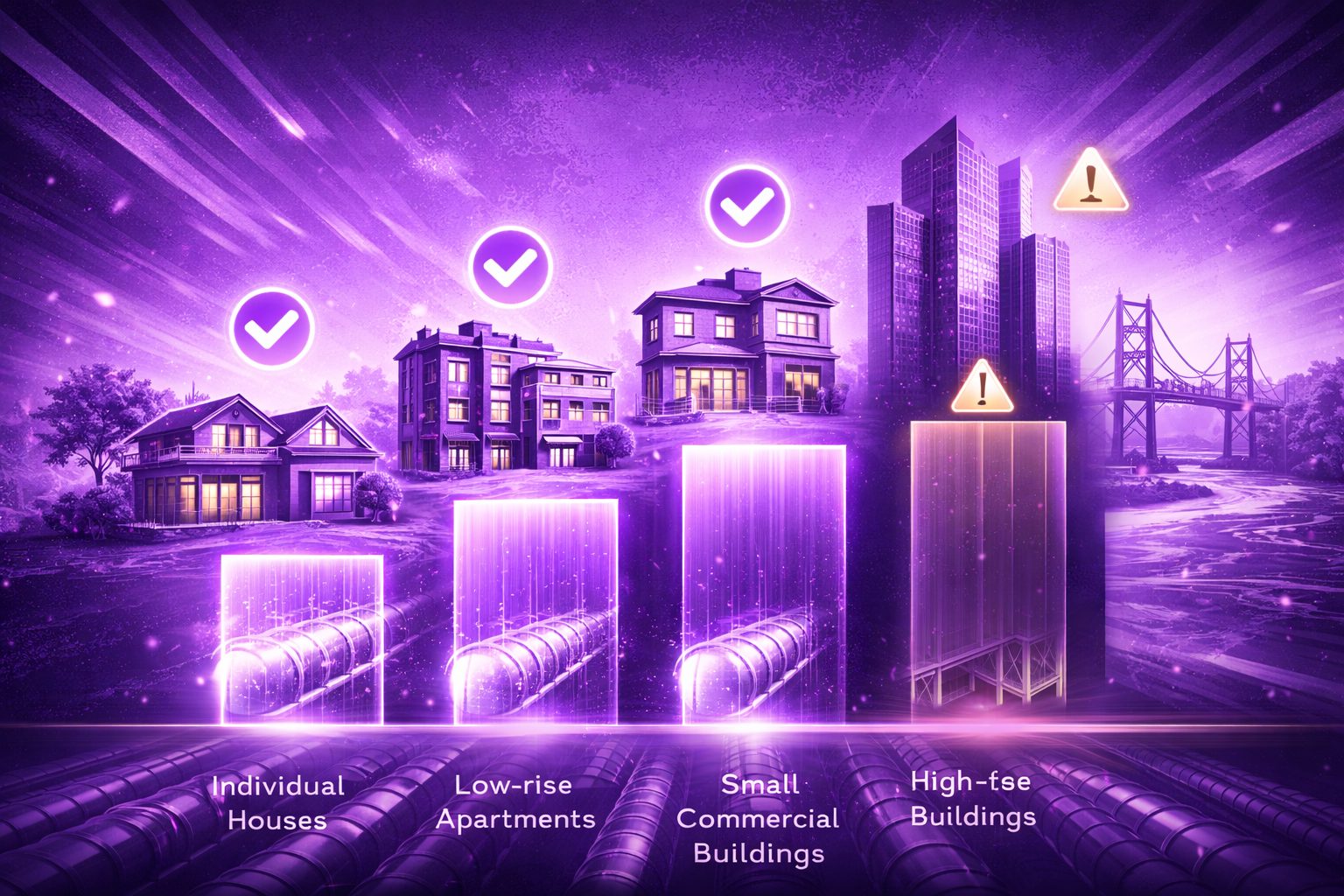
Fe 415 TMT bars are commonly used in projects where structural loads are moderate and cost efficiency is important. Understanding the applications of Fe 415 steel helps avoid overengineering while maintaining safety and compliance with Indian standards.
Common uses in building construction
Fe 415 is widely used in low-rise reinforced cement concrete (RCC) structures. Its strength and ductility are suitable for everyday load conditions.
Typical applications include:
- Residential houses such as G+1 and G+2 buildings.
- Low-rise apartment blocks up to 3–4 storeys.
- Small commercial buildings including shops, clinics, and offices.
- RCC beams, slabs, columns, staircases, and footings.
Use in infrastructure works
Fe 415 TMT bars are also used in secondary infrastructure where loads are predictable and not extreme. Examples include culverts, drainage channels, compound walls, and minor bridges.
Practical load and height guidance
Fe 415 is generally recommended for buildings up to 15 metres in height, provided the structure is designed as per IS 456 and IS 1786.
Where Fe 415 should be avoided
Fe 415 is not the best choice for:
- High-rise or multi-storey towers.
- Heavy industrial buildings with high dynamic loads.
- Projects in high seismic zones (IV and V), where higher ductility grades are preferred.
| Structure type | Fe 415 suitability |
| Individual houses | High |
| Low-rise apartments | High |
| Small commercial buildings | High |
| High-rise buildings | Not recommended |
| Major bridges | Not recommended |
Real-life site example:
A G+2 residential project in a tier-2 Indian city typically uses Fe 415 to balance safety, availability, and construction cost.
Fe 415 steel TMT bar price in India (2026)
The Fe 415 steel price per kg in India varies based on size, brand, location, and order volume. Prices also fluctuate with raw material costs and regional demand.
Indicative Fe 415 TMT bar price range
| Parameter | Typical range |
| Base price (ex-GST) | ₹52 – ₹68 per kg |
| GST applicable | 18% |
| Price including GST | ~₹61 – ₹80 per kg |
| HSN code | 7214 |
Prices are indicative and may vary daily depending on market conditions and other factors.
City-wise indicative pricing (ex-GST)
| City/region | Price range (₹/kg) |
| Mumbai | 55 – 68 |
| Delhi NCR | 54 – 66 |
| Chennai | 56 – 67 |
| Bengaluru | 55 – 67 |
| Kolkata | 52 – 64 |
| Tier-2 cities | 52 – 63 |
Prices are indicative and may vary daily depending on market conditions and other factors.
Bulk vs. retail pricing
| Purchase type | Typical impact |
| Retail purchase (small quantity) | Higher per-kg price |
| Bulk orders (truckload or more) | 3-7% lower rates |
| Project-based procurement | Negotiable pricing |
Key factors affecting Fe 415 TMT bar price
Diameter: Larger diameters cost more per kg
Brand: Primary producers price higher than secondary mills
Location: Freight and local demand influence rates
Order quantity: Bulk buying reduces landed cost
Important pricing note
The Fe 415 TMT bar price in India is sensitive to iron ore prices, fuel costs, and regional supply. Always request a mill test certificate (MTC) and confirm GST inclusion before finalising a purchase.
Fe 415 vs. Fe 500 TMT bars
| Criteria | Fe 415 TMT bars | Fe 500 TMT bars | Fe 500D TMT bars |
| Minimum yield strength | 415 MPa | 500 MPa | 500 MPa |
| Typical tensile strength | ~485 MPa | ~545 MPa | ~565 MPa |
| Elongation (ductility) | ≥14.5% | ~12% | ≥16% |
| Strength–ductility balance | Moderate strength, good ductility. | Higher strength, lower ductility. | High strength with high ductility. |
| Indicative price (ex-GST, 2026) | ₹52-₹68/kg | ₹56-₹72/kg | ₹58-₹75/kg |
| Cost efficiency | High for low-rise projects | Moderate | Lower due to premium grade |
| Recommended building height | Up to ~15 m | ~15-30 m | High-rise structures |
| Load suitability | Moderate static loads | Higher loads | High and dynamic loads |
| Seismic zone suitability (India) | Zone II–III | Zone II–III | Zone IV–V (preferred) |
| Earthquake performance | Limited ductility for high seismic demand | Not ideal for seismic design | Best choice due to higher ductility |
| Typical applications | Individual houses, low-rise apartments, small commercial buildings. | Mid-rise residential and commercial buildings. | High-rise, critical and seismic-resistant structures. |
| IS code reference | IS 1786 | IS 1786 | IS 1786 |
| Engineer recommendation | Use where design loads are low and predictable | Use only if strength demand justifies | Recommended for seismic safety |
How to procure Fe 415 TMT bars reliably

Define specifications clearly: Confirm Fe 415 grade, diameter, length, and IS 1786 compliance before placing any order.
Choose authorised sellers: Buy only from authorised dealers or primary producers to reduce the risk of substandard or fake steel.
Check ISI marking: Ensure the bars carry a visible ISI mark, manufacturer name, and heat number for traceability.
Verify the Mill Test Certificate (MTC): Match the heat number on the bars with the MTC to confirm yield strength, tensile strength, and chemical composition.
Inspect physical quality: Check for uniform rib pattern, clean surface finish, and absence of cracks or excessive rust.
Offline vs. online procurement: Offline buying allows physical inspection, while online platforms offer wider price comparison and transparent quotations.
Buy Fe 415 TMT bars online cautiously: Use established B2B platforms that connect buyers with verified suppliers and provide documentation support.
Bulk buying advantage: Ordering in bulk can reduce per-kg cost by 3-7% and improve negotiation leverage.
Logistics and storage: Ensure proper unloading and dry storage to prevent surface corrosion before use.
Use digital procurement platforms wisely: Platforms such as Tata nexarc can help request multiple quotes and compare authorised vendors, without replacing due diligence.
Beware of fake steel: Avoid unusually low prices, missing documentation, or sellers unwilling to share test certificates.
Engineer approval: Always get procurement validated by a structural engineer to ensure grade suitability and compliance.
Conclusion: Is Fe 415 steel still relevant in 2026?
Fe 415 steel TMT bars remain a practical choice for low-rise and moderate-load structures in India. They offer a good balance of strength, ductility, and cost, making them ideal for homes, small apartments, and commercial buildings. For high-rise, heavy-load, or seismic-sensitive projects, higher grades such as Fe 500 or Fe 500D are recommended. Selecting the right steel should always consider building height, load, location, and IS 1786 compliance. With proper planning and supplier verification, Fe 415 TMT bars continue to be a reliable and cost-effective option for many construction projects.
Looking to procure steel?
Tata nexarc helps manufacturers, builders and MSMEs source certified steel products, compare prices, and choose the right grade as per IS codes—with complete traceability and procurement confidence.
FAQs
What is Fe 415 steel?
Is Fe 415 suitable for high-rise buildings?
What is the tensile strength of Fe 415?
Can Fe 415 be used in seismic zones?
Is Fe 415 corrosion-resistant?
What are standard diameters of Fe 415 TMT bars in India?
How much does Fe 415 cost in India (2026)?
How to verify Fe 415 quality?
Can Fe 415 be welded on-site?
Where is Fe 415 commonly used?
Swati is a passionate content writer with more than 10 years of experience crafting content for the business and manufacturing sectors, and helping MSMEs (Micro, Small and Medium Enterprises) navigate complexities in steel procurement, and business services. Her clear and informative writing empowers MSMEs to make informed decisions and thrive in the competitive landscape.