Check Price Now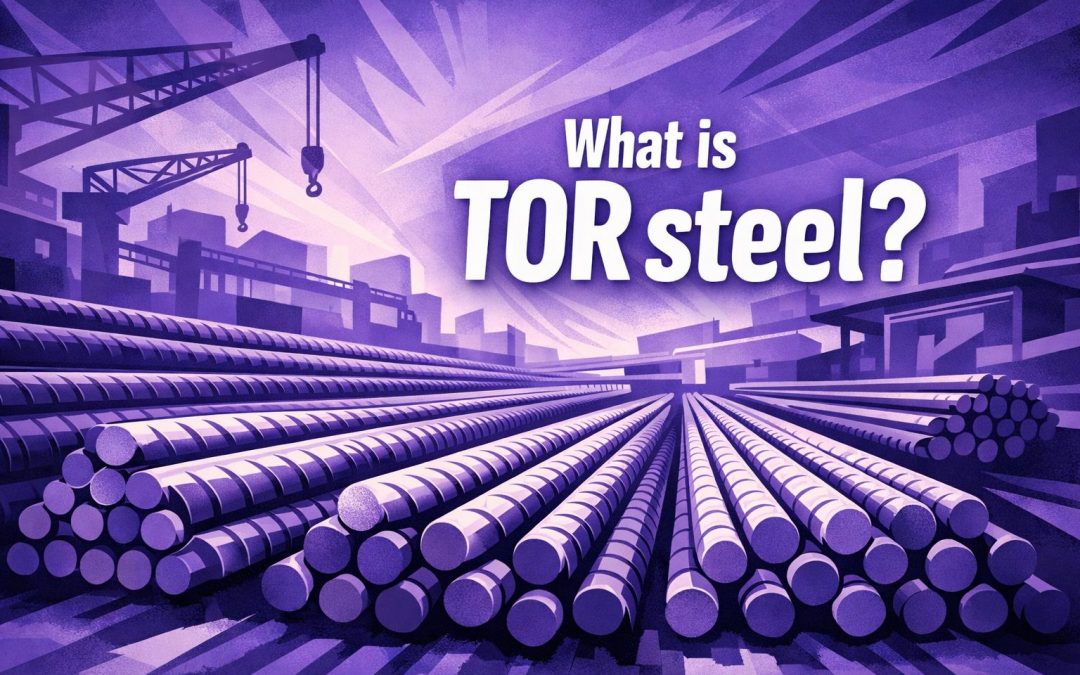
Table of Contents
- What is TOR Steel?
- Manufacturing Process of TOR Steel Bars
- Key Features & Mechanical Properties of TOR Steel
- TOR Steel vs. TMT Bars
- Applications of TOR Steel in Construction
- TOR Steel Bar Prices in India 2026
- Advantages and Disadvantages of TOR Steel (CTD Bars)
- Should You Choose TOR Steel in 2026?
- Conclusion
- FAQs)
TOR steel (also known as CTD bars) remains a common search term among contractors, civil engineers, and steel buyers in 2026. It is often compared with other reinforcement steel types when evaluating project requirements, and was widely used in Indian construction from the 1970s to the 1990s.
They were the standard before TMT bars took over the market. The main difference is the manufacturing process. TOR bars are heat treated and cold twisted, while TMT bars use thermo-mechanical treatment.
In today’s price-sensitive steel market, understanding TOR vs. TMT helps buyers make smarter procurement decisions.
What is TOR steel?

TOR is a type of high-tensile reinforcement bar widely used in RCC construction in India. It is important to clarify that TOR is not a generic steel category. It originated as a brand name from Toristeg Steel Corporation of Luxembourg. Over time, the term became commonly used for a process-based product known as Cold Twisted Deformed (CTD) bars in India.
In simple terms, TOR steel refers to Cold Twisted Deformed bars (CTD bars India market) that are mechanically twisted after rolling to increase strength.
Key technical characteristics
- Made from mild steel billets
- Undergo heat treatment followed by cold twisting
- Surface deformation improves bonding with concrete
- Higher tensile strength than plain mild steel bars
- Widely used before the rise of TMT bars
TOR steel vs. mild steel
| Parameter | TOR steel (CTD Bars) | Mild steel bars |
| Strength | High tensile strength | Lower strength |
| Surface | Ribbed/deformed | Plain surface |
| Concrete bonding | Strong | Weak |
| Usage | RCC structures | Light fabrication |
Available grades & sizes in India
TOR bars were manufactured as per older specifications of IS 1786 (BIS standards for high strength deformed bars). Today, TMT bars dominate under updated BIS norms, but CTD bars remain part of India’s reinforcement steel history.
Manufacturing process of TOR steel bars
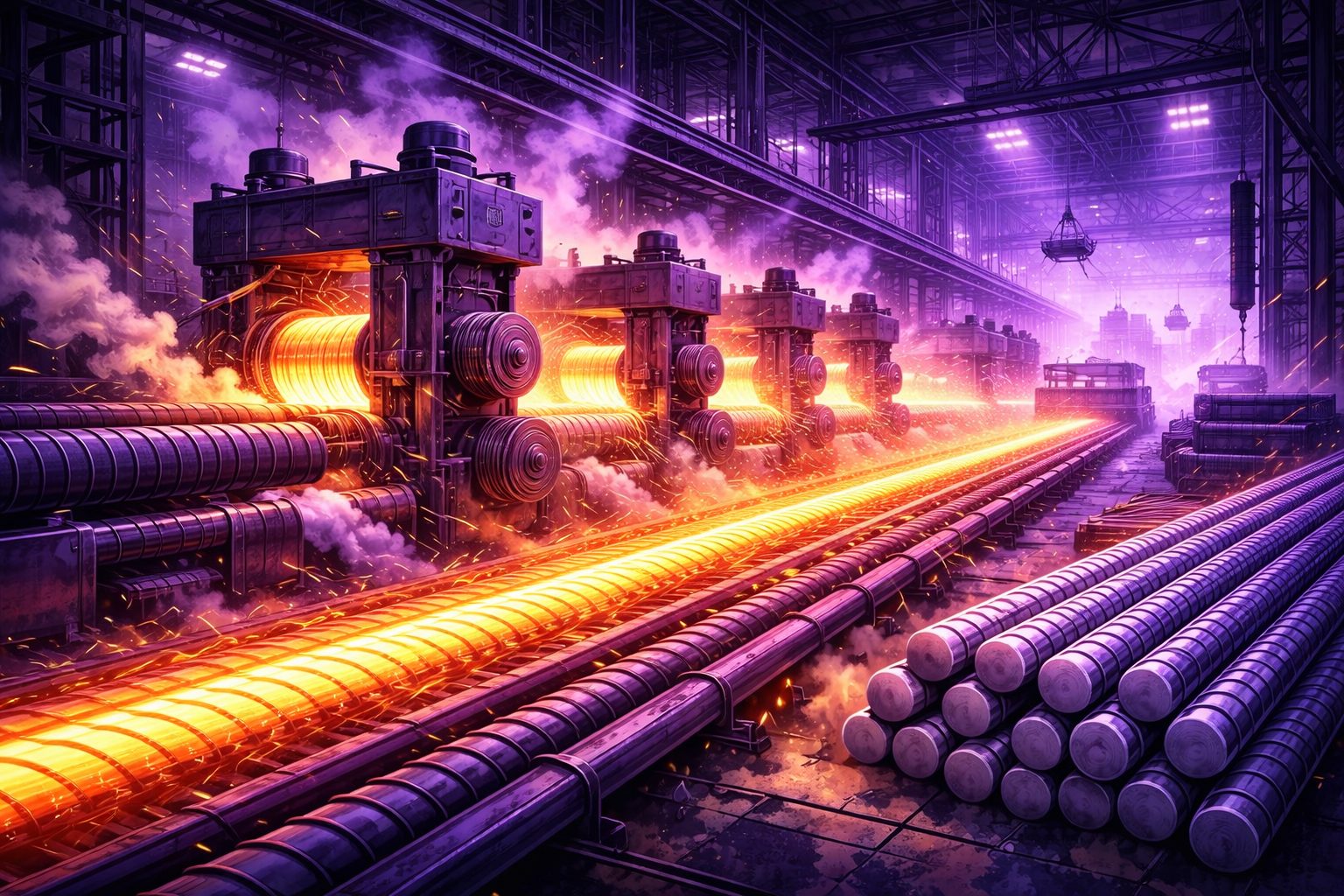
The TOR steel manufacturing process involves heat treatment followed by mechanical twisting. This method is also known as CTD bar production. Below is a clear step-by-step explanation relevant to the Indian steel industry.
Step 1: Mild steel billet production
The process begins with iron ore or scrap melting in a furnace. The molten steel is cast into billets. These billets are semi-finished steel sections used to produce reinforcement bars.
Step 2: Hot rolling
The billets are reheated and passed through rolling mills. This reduces their cross-section and shapes them into long steel bars of required diameters such as 8mm, 10mm, 12mm, up to 32mm.
Step 3: Heat treatment
After rolling, the bars undergo controlled steel heat treatment in India-based rolling mills. This prepares the steel structure for strength enhancement.
Step 4: Cold twisting process
The hot rolled bars are twisted mechanically at room temperature. This cold twisting process increases tensile strength by strain hardening the outer surface of the bar.
Step 5: Surface deformation
Twisting also creates ribs and deformations on the surface. These improve bonding between steel and concrete in RCC structures.
Impact on strength and durability
Cold twisting increases tensile strength. However, it also creates residual stress inside the bar. Over time, this can increase the risk of corrosion, especially in humid or coastal regions.
In contrast, TMT bars use thermo-mechanical treatment instead of cold twisting, which improves strength without inducing residual stress.
Key features & mechanical properties of TOR steel
CTD bars are known for their strength and bonding performance in RCC structures. Below are the key TOR bar properties relevant for contractors and steel buyers in India.
High tensile strength
One of the main advantages of TOR steel is its high tensile strength. The cold twisting process increases the outer layer hardness. This makes the bar stronger than plain mild steel reinforcement.
CTD steel elasticity
TOR bars offer good elasticity due to strain hardening during twisting. This helps the steel absorb stress under load. However, ductility is lower compared to modern TMT bars.
Ribbed surface & reinforcement bonding strength
The deformed surface improves reinforcement bonding strength with concrete. It reduces slippage and improves load transfer in beams, slabs, and columns.
Load bearing capacity
Due to higher tensile and yield strength, TOR bars can handle significant structural loads. Common grades include Fe 415 TOR and Fe 500 TOR. (Yield strength comparison with TMT bars is often referenced in standard technical tables.)
Structural stability
TOR steel provides stability in low to medium-rise buildings and general infrastructure projects.
Limitation: Residual stress & corrosion risk
The cold twisting process creates internal residual stress. Over time, this can lead to micro-cracks and corrosion. In coastal India, high-humidity zones, or areas with saline groundwater, this risk increases. Proper concrete cover and quality control become critical to prevent premature structural damage.
TOR steel vs. TMT bars
Choosing between CTD and TMT requires a clear reinforcement bar comparison in India. Below is a structured comparison covering manufacturing, performance, and price factors.
| Parameter | TOR steel (CTD Bars) | TMT bars |
| Manufacturing process | Heat treatment + cold twisting | Thermo-mechanical treatment (quenching & tempering) |
| Internal stress | Residual stress present | No residual twisting stress |
| Steel consumption | ~15–20% higher for same structural strength | Lower steel consumption |
| Tensile strength | High | High with better ductility |
| Corrosion resistance | Moderate | Higher, especially in coastal grades. |
| Seismic resistance | Lower | Better elongation & earthquake resistance |
| Lifecycle performance | Shorter in aggressive environments | Longer structural life |
| Price (early 2026) | ₹58–₹64/kg (indicative) | ₹60–₹70/kg depending on brand & grade |
| Cost efficiency | Lower upfront cost but higher quantity needed | Better long-term value |
Key differences explained
The main TOR vs TMT difference lies in the strengthening method. CTD vs TMT bars differ because TOR relies on mechanical twisting, while TMT bars use controlled quenching technology.
Although TOR steel may appear slightly cheaper per kg, it often requires higher steel quantity. This increases total project consumption. In 2026, TMT bars dominate Indian infrastructure projects due to better corrosion resistance, seismic performance, and longer lifecycle value. For high-rise buildings, metro projects, highways, and coastal construction, TMT is generally preferred.
Applications of TOR steel in construction
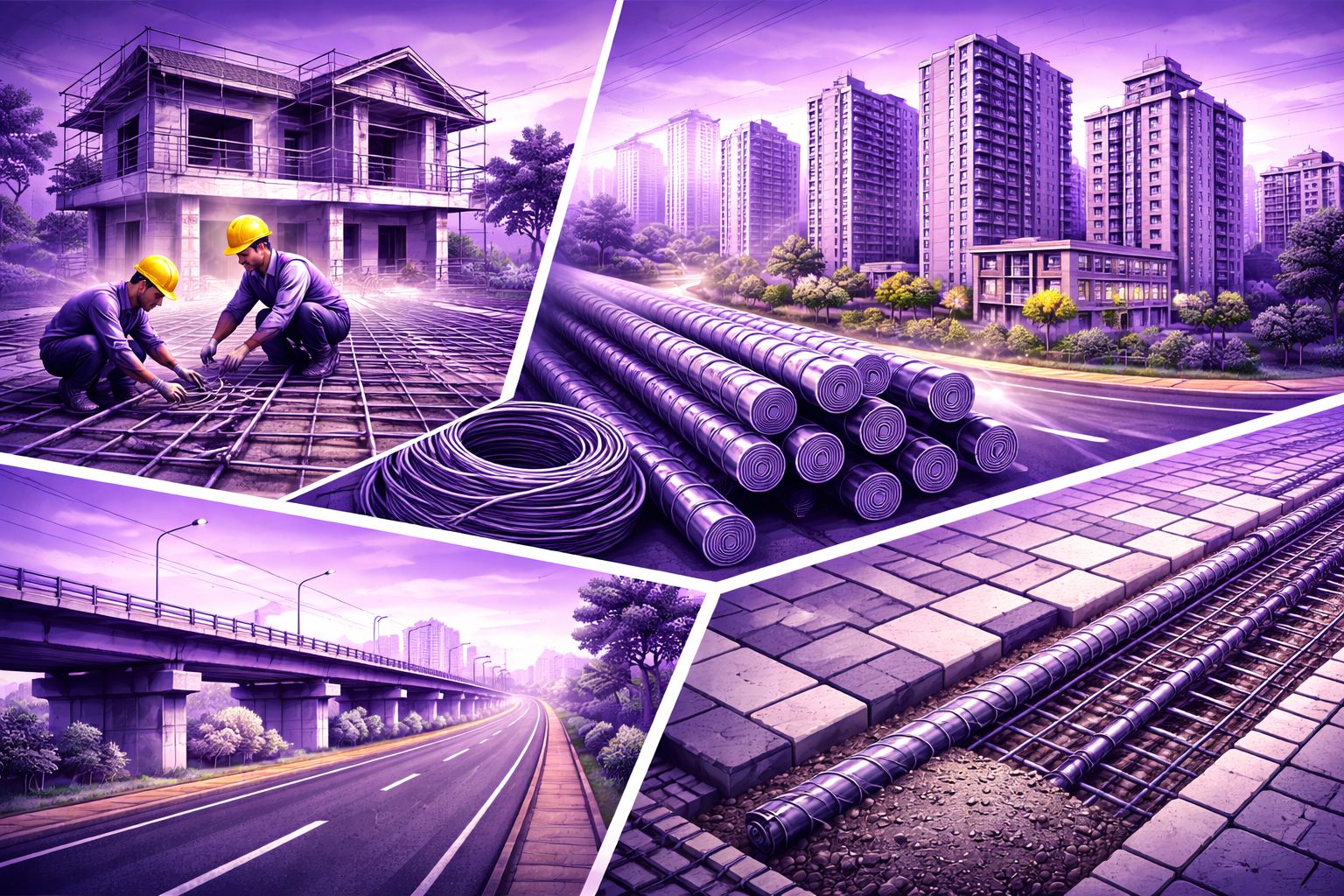
Although TOR bars are no longer the primary choice in large infrastructure projects, they are still used in select segments. Below are the common TOR steel uses in India.
Residential buildings
TOR bars in buildings India were widely used in low-rise housing projects. Even today, they may be used in small residential construction where budget is a key factor and load requirements are moderate.
Roads & pavements
In certain road works and small RCC pavement structures, CTD bars construction is still seen. These applications usually involve lower structural stress compared to high-rise buildings.
Small RCC structures
TOR bars are used in small Reinforced Cement Concrete (RCC) elements such as boundary walls, staircases, lintels, and small slabs. These structures typically do not require high seismic performance.
Low to medium load applications
For projects with limited load-bearing requirements, TOR steel can still be considered. However, its use has declined significantly in 2026 due to the dominance of TMT bars in modern infrastructure and high-performance construction.
TOR steel bar prices in India 2026
The TOR steel price in 2026 varies by grade, region, and order size. Prices fluctuate based on iron ore rates, scrap prices, freight costs, and construction demand cycles. Always confirm the CTD bar price per kg in India before bulk purchase.
Indicative price range
Fe 415 TOR: ₹58–₹62 per kg*
Fe 500 TOR: ₹60–₹65 per kg*
Bulk orders (25+ tonnes) may attract negotiated rates
*Prices are indicative ex-warehouse and may vary by dealer and GST applicability.
Major city-wise TOR steel rates (Indicative)
| City | Fe 415 (₹/kg) | Fe 500 (₹/kg) | Market trend |
| Mumbai | 60–63 | 62–65 | Stable to firm |
| Delhi NCR | 58–61 | 60–63 | Competitive |
| Chennai | 59–62 | 61–64 | Moderate demand |
| Ahmedabad | 58–60 | 60–62 | Price sensitive market |
*Prices are indicative ex-warehouse and may vary by dealer and GST applicability.
Fe 415 vs. Fe 500 price difference
Fe 500 typically costs ₹2–₹3 per kg more than Fe 415 due to higher yield strength.
Comparison with TMT bars
TMT Fe 500: ₹62–₹72 per kg (brand dependent)
TMT may cost slightly more per kg but requires lower steel consumption.
What drives reinforcement steel prices in 2026?
- Iron ore & coking coal prices
- Scrap imports
- Infrastructure demand
- Government capex spending
Procurement tip
Contractors and steel buyers should compare total project steel consumption, not just per kg price. Bulk negotiations and forward booking can reduce procurement risk in volatile markets.
Advantages and disadvantages of TOR Steel (CTD bars)
Structural strength & performance
| Factor | TOR steel performance | What it means for buyers |
| Tensile strength | High | Suitable for small to mid-scale RCC work |
| Concrete bonding | Strong ribbed surface | Better grip inside concrete |
| Ductility | Moderate | Lower flexibility than TMT bars |
| Seismic resistance | Limited | Not ideal for earthquake-prone areas |
Cost & consumption impact (Early 2026 context)
| Factor | TOR steel | Practical impact |
| Price per kg | ₹58–₹65/kg (indicative) | Slightly cheaper than branded TMT |
| Steel consumption | 15–20% higher | May increase total project steel cost |
| Lifecycle value | Moderate | Shorter life in aggressive environments |
Risk & durability concerns
| Risk area | Issue in TOR steel | Project implication |
| Residual stress | Caused by cold twisting | Internal stress remains in bar |
| Corrosion risk | Higher than TMT | Risk increases in coastal & humid zones |
| Long-term durability | Lower than TMT | More maintenance over time |
Should you choose TOR steel in 2026?
Many buyers still ask, is TOR steel still used in India in 2026? The answer depends on project type, budget, and durability requirements.
When TOR steel may still work
TOR bars can be considered for small residential projects, boundary walls, and low-rise RCC structures. They may suit budget-driven construction where load requirements are moderate and exposure to moisture is limited. In price-sensitive markets, the lower per kg rate can appear attractive.
When TMT bars are a better choice
For high-rise buildings, bridges, highways, and metro projects, TMT bars are preferred. In seismic zones and coastal areas, TMT offers better ductility and corrosion resistance. For long-term infrastructure, TMT provides stronger lifecycle performance.
Key decision factors for buyers
Compare total steel consumption, not just price per kg. Evaluate durability, BIS compliance, environmental exposure, and structural safety. In most modern projects, TOR steel vs. TMT 2026 comparisons clearly favour TMT as the best reinforcement bars in India.
Conclusion
TOR steel, or CTD bars, played an important role in India’s construction growth. Its manufacturing process (heat treatment followed by cold twisting) improves strength but creates residual stress.
In today’s CTD bars India market, TOR steel is still available at competitive prices. However, buyers must consider total steel consumption and durability, not just per kg rates.
TMT bars dominate modern infrastructure, but TOR remains part of India’s steel evolution. In a volatile steel market, smart procurement depends on lifecycle cost and long-term performance.
Looking to procure steel?
Tata nexarc helps manufacturers, builders and MSMEs source certified steel products, compare prices, and choose the right grade as per IS codes—with complete traceability and procurement confidence.
FAQs
What is TOR steel?
What is the full form of TOR steel?
Is TOR steel still used in India in 2026?
What is the difference between TOR and TMT bars?
What are the available grades of TOR steel?
What is the TOR steel price in February 2026?
Is TOR steel cheaper than TMT bars?
What are the disadvantages of CTD bars?
Is TOR steel suitable for earthquake-prone areas?
Which is better in 2026: TOR steel or TMT bars?
Swati is a passionate content writer with more than 10 years of experience crafting content for the business and manufacturing sectors, and helping MSMEs (Micro, Small and Medium Enterprises) navigate complexities in steel procurement, and business services. Her clear and informative writing empowers MSMEs to make informed decisions and thrive in the competitive landscape.