Check Price Now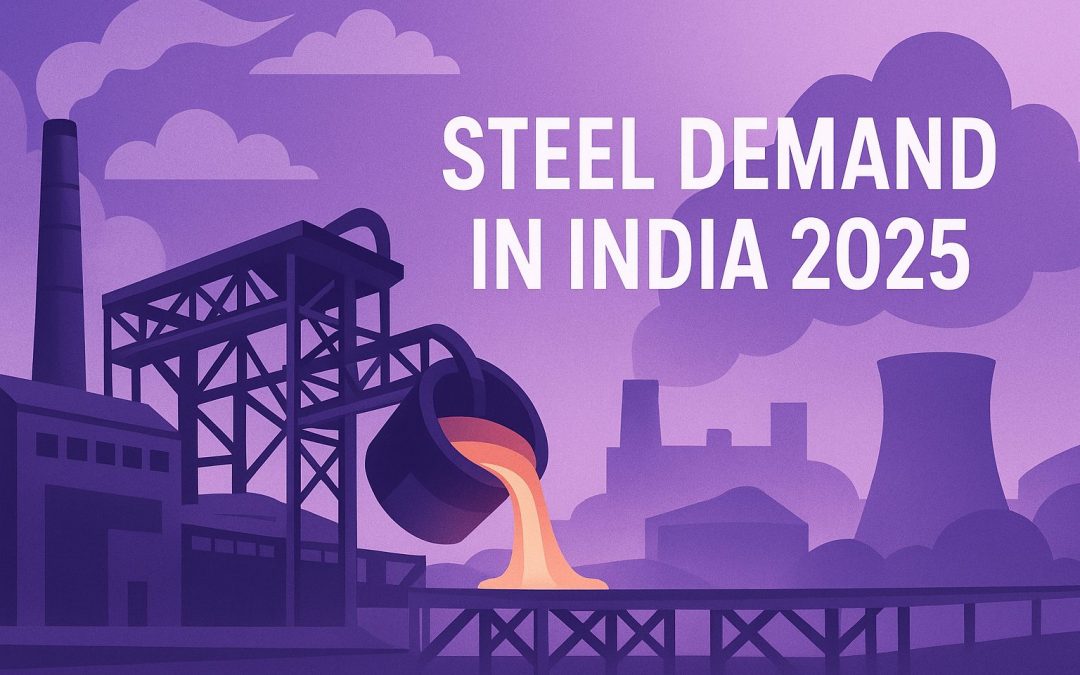
Table of Contents
Steel demand in India is rising quickly, making the country one of the strongest growth markets in the world. India is now the second-largest steel producer, with its steel consumption expanding as construction, infrastructure, and manufacturing accelerate.
In 2025, steel demand has grown by about nine per cent. This is notable in a global market affected by price shifts and weaker demand elsewhere. India’s growth is supported by steady government spending and a strong project pipeline. This creates an active, price-sensitive market for steel buyers and producers.
This article offers a clear view of India’s recent steel demand. It highlights key drivers, major sectors, supply conditions, and 2025 steel price behaviour. It also outlines import and export trends. The article ends with a practical outlook for 2026 to support planning and procurement decisions.
Summary of India’s steel demand in 2025
| Indicator | Details | Why it matters |
| Crude steel output | Strong year-on-year growth, supported by higher capacity use across major mills. | Shows India’s position as a fast-growing steel producer. |
| Finished steel output | Higher production of long products and flat products, driven by construction and manufacturing demand. | Indicates healthy domestic supply and strong end-use activity. |
| Apparent steel consumption | About 9% growth across 2025. | Confirms India as one of the world’s strongest steel-consuming markets. |
| Imports | Rise in flat steel imports, especially coated and HR products. | Reflects demand strength and selective domestic tightness. |
| Exports | Stable-to-soft but supported by regional demand in Asia and the Middle East. | Shows balanced domestic–export allocation by Indian mills. |
| Inventory levels | Stock levels stayed tight in many regions despite higher output. | Signals steady buying and quick market absorption. |
| Monthly/quarterly production trends | Most months in 2025 showed year-on-year gains in crude steel and finished steel. | Highlights consistent demand throughout the year. |
| Price behaviour | Long products remained firm; flat products saw mild swings but stayed stable overall. | Helps buyers plan bookings and manage cost exposure. |
| Mill utilisation rates | Large producers ran at higher utilisation due to strong orders. | Reinforces the strength of domestic consumption. |
| Government spending impact | Infrastructure and capital expenditure supported rebar and structural steel demand. | Key driver behind India’s continued high steel consumption. |
Main steel demand drivers by sector

Steel demand in India is rising across multiple sectors, and each sector contributes differently to the overall growth trend. Understanding these drivers helps steel buyers and producers plan production, pricing, and procurement. The following sub-sections break down the strongest demand sources in 2025. They show how government spending, private investment, and industrial expansion continue to support the domestic steel market. This structure also helps identify which product categories, longs, flats, coated steels, and structural sections, are the most in demand.
Infrastructure & construction
Infrastructure and construction remain the largest consumers of steel in India. Government capex, supported by Gati Shakti and major road, metro, and bridge projects, has created steady demand for long products. Rebar and structural steel orders stayed strong throughout 2025. Contractors, EPC firms, and project developers continued to absorb large volumes, helping maintain stable utilisation rates at mills.
Housing & real estate
Urban housing and affordable housing schemes boosted steel consumption during 2025. Tier-2 and Tier-3 cities also added new residential and commercial projects. This cycle supported consistent demand for rebars, TMT bars, and structural steel. Growth in organised real estate has helped create predictable demand patterns for long products.
Automotive & engineering goods
Automotive and engineering goods added solid momentum to flat steel demand. EV production, commercial vehicles, railways, and equipment manufacturing all expanded in 2025. These sectors relied on HR coils, CR coils, coated steel, and high-strength flat products. Strong domestic manufacturing also reduced reliance on imports in selected segments.
Renewable energy & power transmission
Solar and wind installations increased, driving higher consumption of galvanised steel and structural sections. Transmission projects used towers, beams, and fabricated components that require coated and corrosion-resistant steel. Renewable energy remained a strategic growth area for both flat and long products.
Oil & gas and heavy industry
Pipeline expansion, refinery upgrades, and large-scale industrial projects supported demand for plates, seamless pipes, and heavy structural steel. Machinery and equipment manufacturing also added volume, especially in process industry applications.
MSME manufacturing & capital goods
India’s MSME sector continued to absorb a wide range of steel products. Fabrication units, machinery makers, and component manufacturers drove steady demand for HR, CR, coated steel, and structural materials. Capital goods production, including industrial machinery and plant equipment, added further volume. This segment supports a broad and diverse base of steel consumption across the country.
Market structure and capacity trends
India’s steel supply landscape expanded steadily through 2025. Major producers increased capacity, while regional mills adjusted output to match strong domestic demand. Input costs, logistics constraints, and ESG pressures also shaped production decisions. The points below outline the key supply-side trends that influenced the Indian steel market in 2025.
Capacity additions by major producers
- Tata Steel, JSW Steel, SAIL, and AM/NS India added new capacity across flat and long products.
- These expansions increased domestic supply and reduced pressure on imports in key categories.
Mills ramping up production in 2025
- Producers increased utilisation rates in response to strong orders from infrastructure, construction, and automotive sectors.
- Higher output supported stable supply despite tight inventories in some regions.
Regional supply patterns
- East India remained strong in iron ore and raw material availability.
- Western India stayed dominant in flat steel production and coil supply.
- Southern India showed growth in long product output due to rising construction activity.
Input cost trends
- Iron ore prices stayed firm, influenced by domestic mining activity.
- Coking coal costs remained volatile due to global supply shifts.
- Power costs in several states affected furnace operations and production schedules.
Scrap availability and EAF/DRI trends
- Scrap supply improved slightly but remained uneven across regions.
- EAF and DRI units operated steadily, supported by local scrap markets and sponge iron availability.
Green steel and ESG pressures
- Producers accelerated investments in low-carbon technologies.
- Energy efficiency and emission reduction became priority areas for large mills.
Logistics and freight challenges
- Rail congestion and higher road freight costs affected delivery timelines.
- Ports faced pressure during peak export and import periods.
Price behaviour, imports/exports, and trade policy
Domestic steel prices (long vs. flat): Prices stayed range-bound in 2025, with long products firmer due to construction demand while flat steel remained more sensitive to global trends.
Import competitiveness (China, Vietnam, Korea): Lower-priced inflows from Asian suppliers kept flat steel markets competitive, influencing domestic mills’ pricing discipline.
Government duties, QCOs & anti-dumping: Policy interventions, especially QCO expansions and selective duties, helped curb low-grade imports and stabilise local prices.
Export opportunities & challenges: Strong Middle East demand offered openings, but high freight rates and volatile global prices limited India’s export momentum.
Inventory & stockyard behaviour: Service centres kept leaner inventories to avoid price risk, tightening spot availability in certain product categories.
Procurement cycles: Buyers spaced out bookings and relied more on short-term contracts to manage volatility and uncertain global cues.
Implications for steel buyers & producers

For steel buyers
- Smart sourcing strategies: Buyers need to diversify suppliers and benchmark prices more frequently as demand remains strong and regional spreads fluctuate.
- Long-term vs. short-term contracts: A mix of yearly contracts for stability and short-term spot purchases for flexibility helps manage volatility.
- Stock planning & grade substitution: Optimising inventory levels and using equivalent grades where feasible can reduce costs without affecting performance.
- Delivery scheduling: Coordinated logistics and early booking ensure timely deliveries during peak demand periods.
- Risk management & cost control: Hedging, structured procurement cycles, and disciplined budgeting help buyers navigate price uncertainty.
For steel producers
- Product mix optimisation: Mills can shift towards higher-demand categories, rebars, structural steel, and select flat products, to maximise utilisation.
- Capex timing: Expansion and debottlenecking plans should align with sustained FY26 demand visibility and rising utilisation rates.
- Domestic vs. export allocation: Stronger domestic margins in many segments encourage prioritising India-focused sales over volatile export markets.
- Value-added & green steel: Investing in coated steel, specialty grades, and low-carbon production enhances margins and improves long-term competitiveness.
2026 outlook: Forecast, demand scenario, and risks
| Category | Key insights for 2026 |
| Demand forecast | India’s steel consumption is projected to grow by around 9% in 2026, supported by strong domestic investment and steady utilisation at major mills. |
| Sectoral upside | Infrastructure, housing, renewables, and railways will drive most of the incremental demand. Flat steel consumption is expected to stabilise and gradually improve as automotive, appliances, and engineering sectors recover. |
| Opportunities | Government mega projects, supportive industrial policies, and a revival in private-sector capex will boost steel offtake. Rising demand for value-added, coated, and specialty grades strengthens margins for producers. |
| Risks | A global economic slowdown may reduce export opportunities. Raw material volatility, especially coking coal and iron ore, could raise costs. Geopolitical tensions and supply-chain disruptions remain key uncertainties for procurement and production planning. |
Strategic recommendations
For steel buyers
- Contract discipline: Use a balanced mix of long-term and spot contracts to manage volatility and secure stable supply.
- Diversify mills: Source from multiple producers to reduce dependency and gain better pricing leverage.
- Monitor quarterly price patterns: Track seasonal demand, import pressures, and inventory cycles to time purchases more efficiently.
For steel producers
- Maintain market agility: Adjust product mix quickly based on demand signals across longs, flats, and specialty segments.
- Invest in value-added capacity: Expand downstream processing, coated steel, and specialty grades to strengthen margins and reduce commodity-price exposure.
Conclusion
India ends 2025 with strong demand, firm government capex, and high mill utilisation. The outlook for 2026 remains positive, with steady growth across key sectors. Buyers who plan early and use balanced contracts can manage volatility. Producers that stay agile and invest in value-added capacity will strengthen margins. The message is clear: disciplined planning and smart allocation will define success in 2026.
Looking to procure steel?
Tata nexarc helps manufacturers, builders and MSMEs source certified steel products, compare prices, and choose the right grade as per IS codes—with complete traceability and procurement confidence.
FAQs
What is driving India’s strong steel demand in 2025?
Why is India’s steel demand growing faster than other regions?
Which steel products saw the highest demand in 2025?
Are steel prices stable in India?
Why did flat steel imports increase?
How are Indian mills responding to higher demand?
What should steel buyers prioritise in 2026?
What opportunities does 2026 offer for steel producers?
What risks could affect India’s steel market in 2026?
Will India’s steel demand continue to grow in 2026?
Swati is a passionate content writer with more than 10 years of experience crafting content for the business and manufacturing sectors, and helping MSMEs (Micro, Small and Medium Enterprises) navigate complexities in steel procurement, and business services. Her clear and informative writing empowers MSMEs to make informed decisions and thrive in the competitive landscape.