
 Check Price Now

Table of Contents
Deformed bars are commonly used in the construction industry. The name deformed steel bar (also known as a ribbed steel bar or rebar) is derived from the raised ribs and surface patterns on the bar. These steel bars come with different deformation patterns, which are critical for improving the bond between steel and concrete and reinforcing structural elements during construction.
What are deformed bars?
Deformed bars are steel bars distinguished by a ribbed, rough surface. These surface deformations help improve the bond between steel reinforcement and concrete, providing better grip and reducing the risk of slippage. Deformed bars are commonly called steel rebars or steel reinforcement bars.
According to the revised guidelines of the Central Public Works Department (CPWD) for the use of reinforcement steel in structures, “The reinforcement steel of any RCC (Reinforced Cement Concrete) structure shall conform to the provision of IS 1786:2008 Indian Standard Specification for high strength deformed steel bars and wires for concrete reinforcement.”
Types of deformed bars
There are different types of deformed bars used in construction, depending on their manufacturing process, mechanical properties, and application. The table below compares the commonly used types of deformed steel bars in India.
| Type of deformed bar | Manufacturing process | Key properties | Common applications | Considerations for procurement |
|---|---|---|---|---|
| Hot-rolled deformed bars | Produced by rolling heated steel billets through rolling mills to form bars with ribs or other surface deformations. Depending on the production process, bars may undergo additional heat treatment. | Good tensile strength, bond with concrete, and suitability for structural reinforcement. Mechanical properties vary by grade and processing method. | RCC foundations, columns, beams, slabs, bridges, and other reinforced concrete structures. | Check the steel grade, dimensional tolerances, mechanical properties, applicable BIS certification, and whether the bars have undergone additional treatment. |
| Thermo Mechanically Treated (TMT) bars | Manufactured through hot rolling, followed by rapid water quenching and self-tempering. The process produces a hardened outer layer and a relatively softer, ductile core. | High yield strength, ductility, bendability, weldability (subject to grade and carbon equivalent), and resistance to stresses encountered in reinforced concrete structures. | Residential and commercial buildings, infrastructure, bridges, industrial structures, foundations, columns, beams, and slabs. | Verify the grade (Fe 415, Fe 500, Fe 500D, Fe 550D, etc.), BIS certification under IS 1786, ductility requirements, dimensions, weight tolerance, and manufacturer test certificates. |
| Cold Twisted Deformed (CTD) bars/ TOR steel | Produced by subjecting hot-rolled steel bars to cold twisting, which increases their strength through strain hardening. TOR steel is a commonly used term for cold-worked deformed reinforcement. | Increased yield strength due to cold working, but generally lower ductility than modern TMT bars of comparable strength grades. Properties depend on manufacturing quality and specifications. | Older RCC construction, reinforcement applications, and projects where specified by design or existing construction practices. | Assess ductility, bend performance, weldability, corrosion protection requirements, and compliance with the applicable specification. TMT bars are generally preferred in modern construction where higher ductility is required. |
Most popular twisted bars in India are Cold Twisted Deformed bars (CTD). Also called TOR steel in India, they are manufactured by cold twisting hot-rolled steel bars to increase their yield strength through strain hardening. This process improves strength but can reduce ductility compared with modern TMT bars, making the choice of reinforcement dependent on structural design requirements.
Benefits of deformed bars
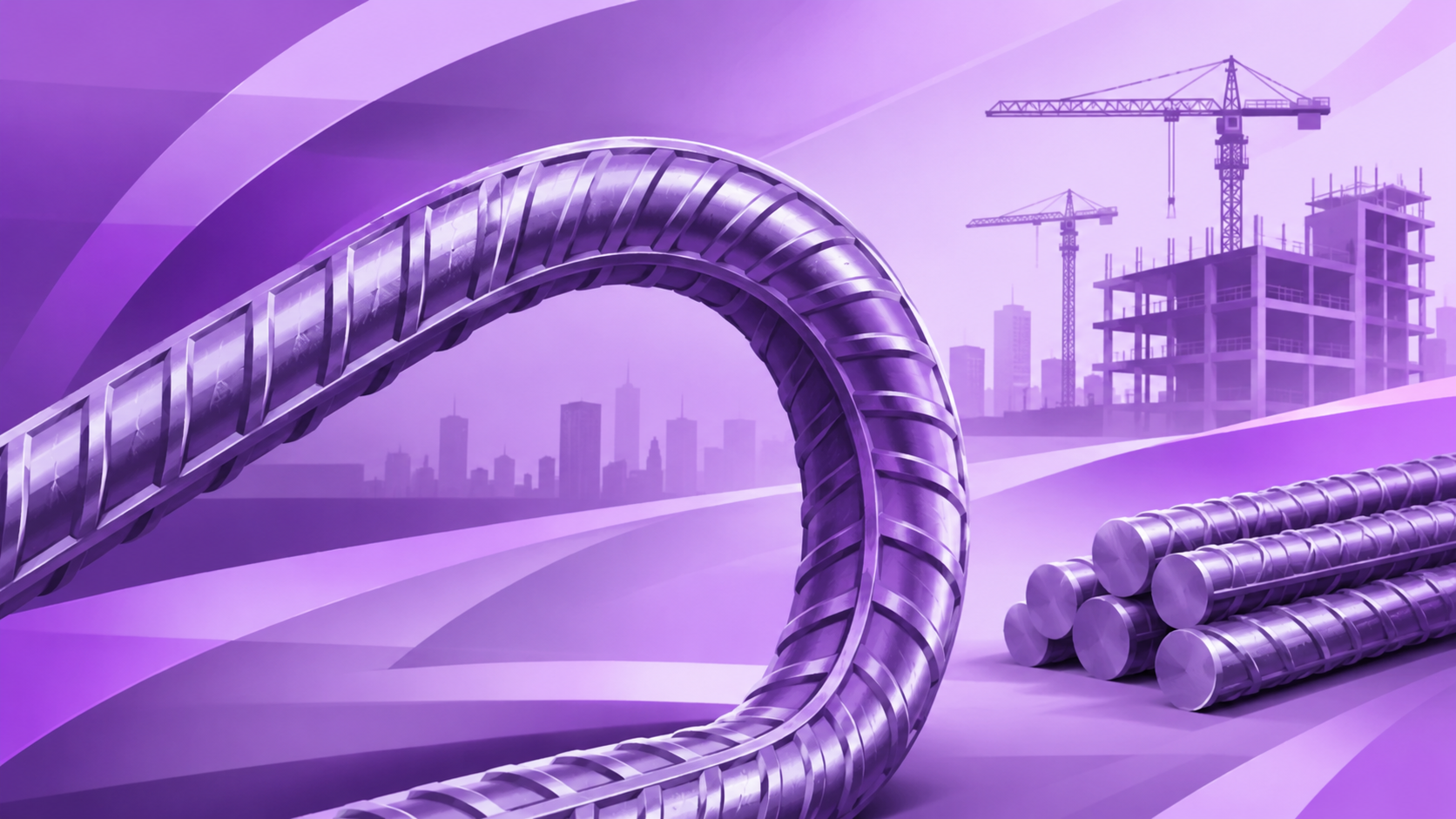
IS 1786 specifies the requirements for high-strength deformed steel bars and wires used in concrete reinforcement. Deformed bars are widely used in RCC structures because their surface ribs improve bonding with concrete, while their mechanical properties help structures withstand loads, stresses, and deformation. Deformed bars have several advantages in the construction industry:
-
Improved ductility: These bars contribute to the ductility of a structure, allowing it to withstand movement and deformation without sudden failure. This is particularly important in seismic regions, where buildings need to absorb and dissipate energy during earthquakes.
-
Crack control: Deformed bars help control cracks in concrete structures by distributing tensile stresses and holding cracked concrete together. This limits crack widening and helps maintain structural integrity.
-
Enhanced load distribution: These steel bars help distribute loads more effectively within concrete structures. They improve tensile resistance and help structural elements withstand loads without excessive deformation, provided they are appropriately designed.
-
Better bonding with concrete: The raised ribs on the surface of deformed steel bars create a mechanical interlock with concrete. This improves bond strength, reduces slippage, and enables steel and concrete to work together to resist tensile forces.
While deformed bars have many advantages, they also have some disadvantages. Their ribbed surfaces can make handling, cutting, and bending more challenging than smooth bars. Welding may also require additional care, depending on the steel grade, chemical composition, and welding procedure. Specialised tools and equipment may be required for cutting and bending these bars, particularly when working with larger diameters or high-strength grades.
Size of deformed bars
Deformed steel bar sizes produced by manufacturers in India includes 6mm, 8mm, 10mm, 12mm, 16mm, 20mm, 25mm, 32mm, 40mm, 45mm and 50mm. These are common sizes available with Indian steel manufacturers.
Grades of deformed bars
Deformed bars grade adheres to IS 1786:2008. given below are the grades of high strength deformed bars and wires that should be used for concrete reinforcement in construction:
Fe 415, Fe 415D, Fe 415S
Fe 500, Fe 500D, Fe 500S
Fe 550, Fe 550D
Fe 600
Deformed steel bar price (November 2026)
The price of deformed steel bars in India depends on the steel grade, diameter, manufacturer, order quantity, location, and prevailing market conditions. Thermo Mechanically Treated (TMT) bars are among the most widely used deformed bars in construction. As of November 2026, TMT bar prices vary across regions and suppliers, with branded bars generally commanding a higher price than locally manufactured or rerolled products.
The following table provides indicative deformed steel bar prices in India for November 2026.
| Deformed steel bar type/grade | Indicative price (₹/kg) | Indicative price (₹/tonne) |
|---|---|---|
| TMT bars – Fe 500 (rerolled) | ₹45–₹52 | ₹45,000–₹52,000 |
| TMT bars – Fe 550D (rerolled) | ₹48–₹53 | ₹48,000–₹53,000 |
| TMT bars – Fe 500D (primary) | ₹61–₹66 | ₹61,000–₹66,000 |
| TMT bars – Fe 550D (primary) | ₹61–₹64 | ₹61,000–₹64,000 |
| Branded TMT bars (Fe 500D/Fe 550D) | ₹65–₹90* | ₹65,000–₹90,000* |
*Indicative November 2026 price ranges. Branded retail rates can vary significantly by diameter, city, manufacturer, and dealer. Rates may include taxes, depending on the quotation.
Steel prices fluctuate based on iron ore, scrap, billets, energy costs, freight, and market demand. Buyers should compare quotations for the same grade, diameter, brand, and quantity, while checking whether GST, transportation, and unloading charges are included.
Uses and applications of deformed TMT bars
Deformed TMT bars are widely used in the construction industry to reinforce concrete structures and improve their tensile strength, structural stability, and resistance to cracking. Common applications of deformed bars include:
-
Reinforcing concrete columns
-
Reinforcing concrete beams
-
Reinforcing floor slabs, roof slabs, and other RCC slabs.
-
Constructing concrete foundations, footings, and pile foundations.
-
Reinforcing retaining walls
-
Constructing bridge superstructures and substructures
-
Reinforcing hydraulic structures, such as dams, water tanks, canals, and reservoirs.
-
Constructing residential, commercial, industrial, and high-rise buildings.
-
Reinforcing roads, flyovers, tunnels, and other infrastructure projects.
Deformed bars are widely used in the Indian construction industry. Their applications depend on structural design, load requirements, exposure conditions, and the specifications of the project. They contribute to the strength, stability, and durability of buildings and infrastructure, making them a fundamental raw material for the construction industry.
Also read: GST on steel bars: Tax on steel, iron and TMT steel bars in India
Conclusion
Deformed bars are essential to modern construction, providing reliable reinforcement for concrete structures across residential, commercial, and infrastructure projects. Choosing the right deformed steel bar grade, size, and quality is crucial for meeting structural requirements, ensuring safety, and managing construction costs. Whether you are a contractor, builder, or steel procurement professional, understanding deformed bars can help you make informed purchasing decisions, source quality reinforcement steel, and ensure compliance with applicable BIS standards.
Looking to procure steel?
Tata nexarc helps manufacturers, builders and MSMEs source certified steel products, compare prices, and choose the right grade as per IS codes—with complete traceability and procurement confidence.
FAQs
What is a deformed steel bar?
What are deformed bars used for?
What are the different types of deformed bars?
What is the difference between TMT bars and deformed bars?
What are the common grades of deformed bars in India?
What sizes of deformed steel bars are available in India?
Which IS standard applies to deformed steel bars?
Are deformed bars better than plain steel bars?
What is the price of deformed steel bars in India?
How do I choose the right deformed steel bars for construction?
Priyanka is a seasoned content marketing professional with more than 6 years of experience crafting various forms of business and technology sector content. Her insightful writing tackles critical issues faced by small-scale manufacturing businesses. Priyanka's clear and concise communication empowers businesses to make informed decisions and thrive in today's dynamic business environment.


We recently faced issues with subpar TMT bars from a new supplier. i want guidance on identifying counterfeit or low-quality products.
The list of manufacturers and their prices helps me to compare and choose budget friendly ones for my projects..nicely done
We usually work with Fe 500 for most projects, but knowing the different options helps when bidding on more specialized jobs. so thanks!
Great, That is the most preferable deformed bar grade among all.