Check Price Now
Table of Contents
Choosing between carbon steel vs. stainless steel is a key decision for buyers. Both materials play a major role in manufacturing, construction, engineering, and consumer goods. Each steel grade offers different levels of strength, durability, corrosion resistance, and fabrication ease. These differences can shape the final performance and long-term cost of projects.
A simple price comparison is not enough. Buyers must evaluate the composition of each steel grade, as well as its density, strength, machinability, and weldability. It is also important to consider corrosion resistance, lifecycle, and the conditions in which the steel will be used. The right choice can reduce maintenance costs, improve product quality, and support more efficient production. Understanding these factors helps Indian buyers make a smarter and more cost-effective steel selection.
Carbon steel vs. stainless steel: Key differences
| Factor | Carbon steel | Stainless steel |
| Basic composition | Made mainly from iron and carbon. Carbon levels vary by grade. IS2062 is the most common carbon steel grade used in India. | Made from iron, carbon, and alloying elements such as chromium, nickel, and manganese. India commonly uses 200, 300, and 400 series grades. |
| Role of alloying elements | Low alloy content keeps costs down. Higher carbon increases hardness but reduces ductility. | Chromium creates strong corrosion resistance. Nickel adds toughness and formability. Molybdenum improves resistance to chemicals and saltwater. These alloys increase material cost. |
| Corrosion resistance | Limited protection. Rusts quickly in moisture or chemical exposure. Needs regular painting or coating. | Chromium forms a passive oxide layer. This layer prevents rust and protects the surface in harsh environments. Ideal for coastal, chemical, and hygiene-focused sectors. |
| Impact on Indian manufacturing | Preferred for structural work, fabrication shops, automotive frames, and cost-sensitive applications. Easy to machine and weld. | Used in food processing, railways, kitchenware, pharma, and architectural projects. High demand in industries that need long-lasting, low-maintenance steel. |
Key mechanical and practical differences
Composition and alloying elements
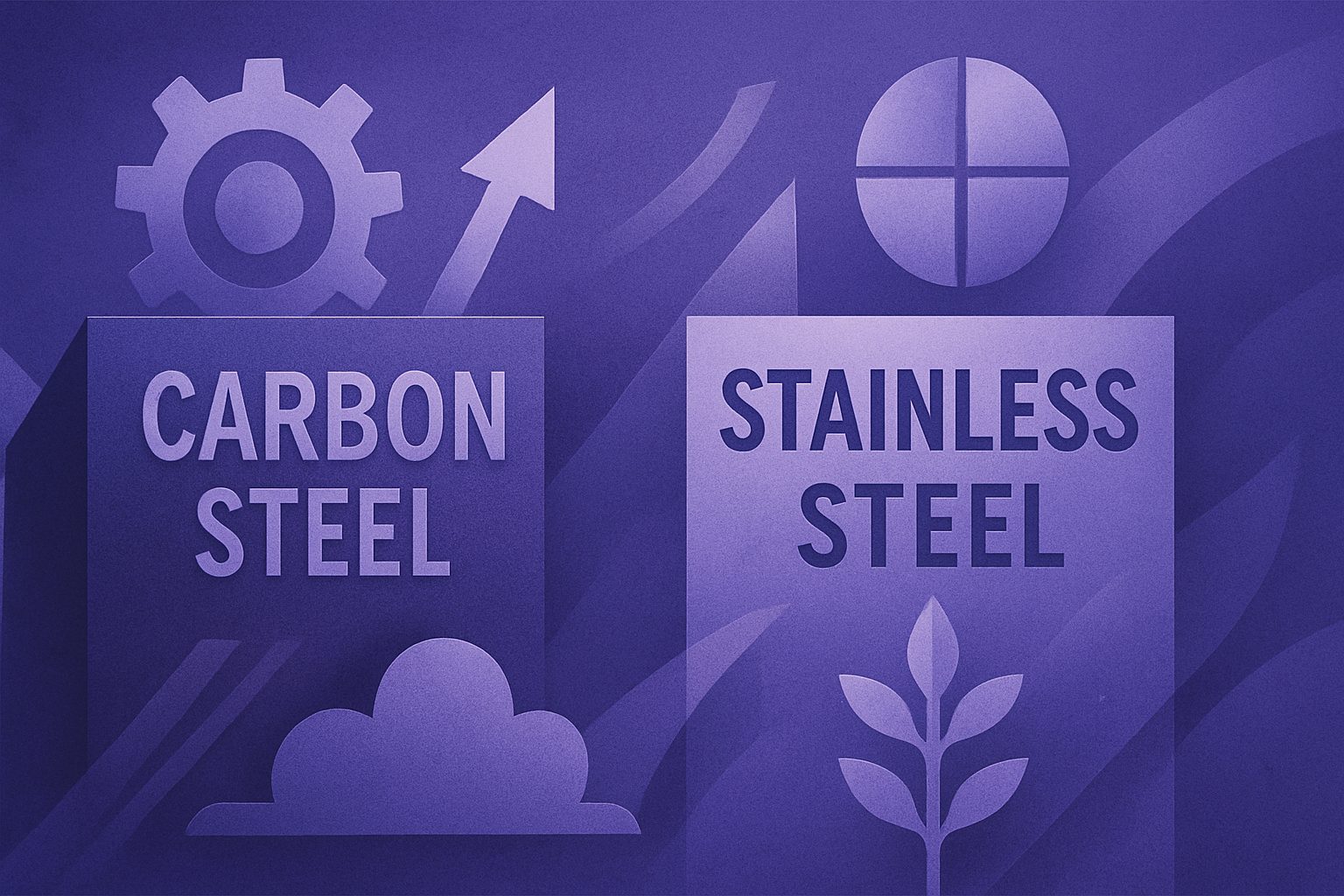
Carbon steel contains iron and carbon, with carbon levels ranging from mild (0.05%) to ultra-high (up to 3%). Higher carbon increases hardness but reduces flexibility. Stainless steel includes iron, carbon, and alloying elements such as chromium, nickel, and molybdenum. These elements create groups like austenitic, ferritic, martensitic, and duplex stainless steels. Chromium improves corrosion resistance. Nickel and molybdenum raise toughness and heat resistance. These extra elements also increase material cost, which is why stainless steel is priced higher than carbon steel.
Weight and density: Why it matters
Carbon steel has a density of about 7.84 g/cm³. Stainless steel is slightly heavier at around 8.03 g/cm³. This small difference means stainless steel is roughly 2–2.5% heavier. Weight affects transport charges, machine load capacity, and energy use. Heavier materials can increase handling costs and structural load. However, the higher tensile strength of many stainless steel grades can offset the weight penalty in demanding applications. This matters in sectors like heavy engineering, construction, and material handling.
Strength comparison (yield vs. tensile)
Carbon steel offers higher yield strength, which helps it resist bending under heavy loads. This is why it is a top choice for structural fabrication and construction. Stainless steel can deliver higher tensile strength, especially in grades such as 304, 316, 410, and 420. These grades perform well under stretching and pulling forces. This balance of yield and tensile strength influences selection in automotive parts, pressure vessels, tools, and precision components used across Indian manufacturing.
Temperature resistance
Stainless steel handles high temperatures better because chromium improves scaling and oxidation resistance. It retains strength for longer periods of heat exposure. Carbon steel can also tolerate heat but performs best in short cycles, such as machining, forging, and thermal shock conditions. In India, stainless steel is preferred for boilers, chemical plants, furnaces, and thermal power equipment where stable heat resistance is vital.
Machinability and fabrication
Carbon steel is easy to cut, drill, bend, and shape. This is why Indian fabrication shops and MSMEs prefer it. Stainless steel tends to work harden during machining, which makes cutting slower and tool wear higher. As a result, machining stainless steel often costs 20–40% more due to longer job times and skilled labour requirements. Buyers must factor this into overall project cost.
Weldability
Carbon steel welds easily with common consumables such as IS2062 plates and ER70S-6 wires. It does not require complex welding techniques. Stainless steel needs more skill because it can suffer from sensitisation or carbide precipitation during welding. Processes like SMAW, GMAW, and TIG are used widely, but require controlled heating and cooling to avoid defects.
Corrosion resistance
Carbon steel rusts quickly when exposed to moisture, salt, or chemicals. It needs coatings, painting, or galvanising to stay protected. Stainless steel forms a passive oxide layer due to chromium. This layer prevents rust and regenerates automatically if damaged. For Indian buyers in coastal, humid, or chemical-heavy regions, stainless steel offers far better long-term durability.
| Feature | Carbon steel | Stainless steel |
| Composition |
|
|
| Density |
|
|
| Strength |
|
|
| Weldability |
|
|
| Corrosion resistance |
|
|
| Cost |
|
|
| Common Indian grades |
|
|
| Typical life expectancy |
|
|
Applications of carbon steel in India
Automotive and transport
Where it is used:
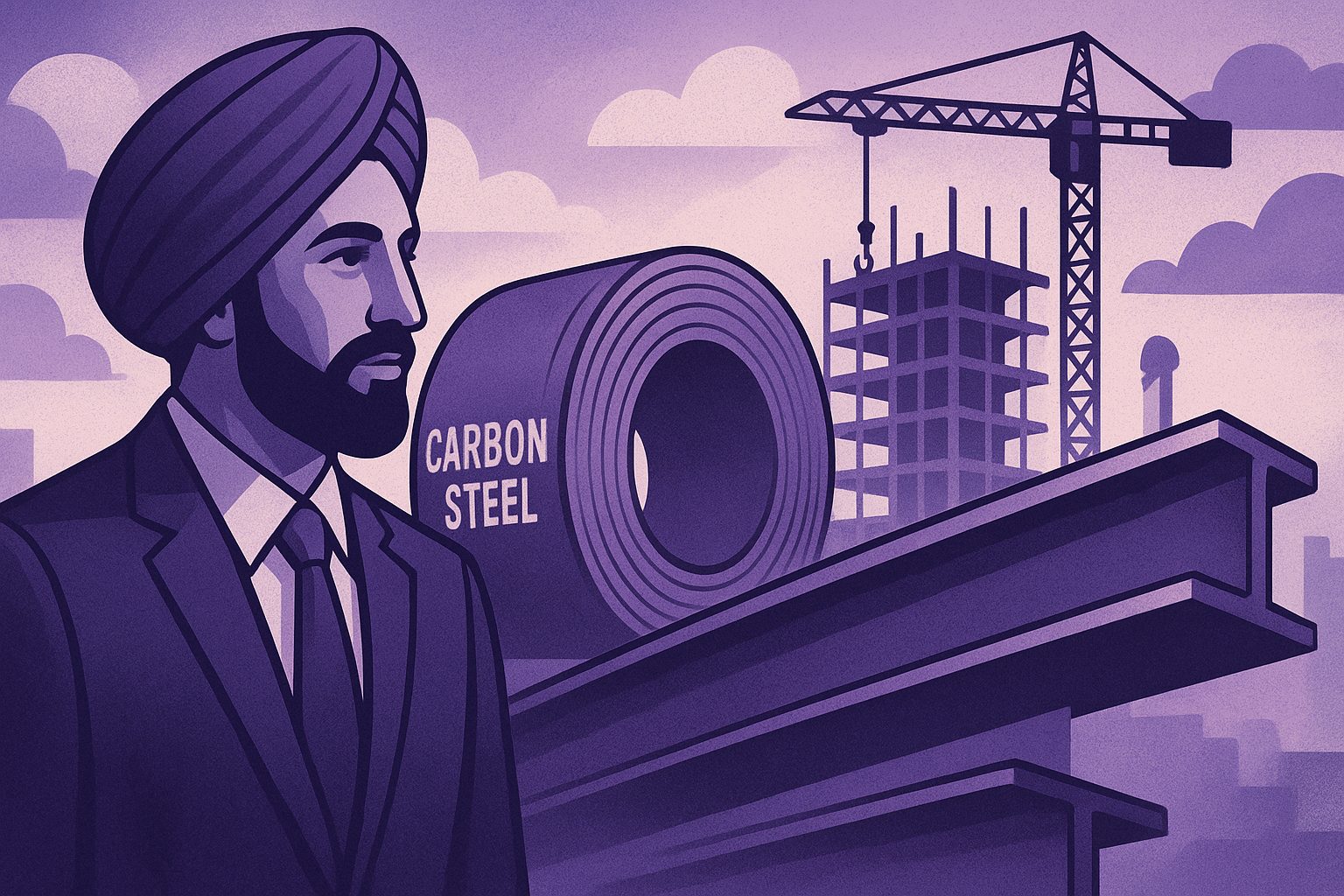
- Body panels and outer shells for passenger and commercial vehicles.
- Frames, chassis parts, and suspension components.
- Pressed parts made from IS2062 and CRCA sheets for high-volume automotive production.
Why it is chosen:
- Strong, formable, and cost-effective.
- Supports mass manufacturing with predictable performance.
Infrastructure and construction
Where it is used:
- Structural beams, angles, channels, and columns for buildings and industrial sheds.
- Rails, railway wheels, and axles used by Indian Railways.
- API-grade carbon steel pipes for water supply, oil transport, and gas distribution.
Why it is chosen:
- Excellent load-bearing strength.
- Easy to weld on-site, even in challenging project environments.
Manufacturing and engineering
Where it is used:
- Gears, shafts, axles, couplings, and precision machined parts.
- Fasteners, bolts, nuts, and industrial hand tools.
- General fabrication across MSME engineering units.
Why it is chosen:
- Reliable machinability and low tooling cost.
- Suitable for wear-resistant components that need high strength.
Cost-driven and high-volume applications
Where it is used:
- Fabricated components produced in bulk.
- Budget-sensitive manufacturing across construction, automotive, and machinery sectors.
Why it is chosen:
- Lower alloy content keeps material costs down.
- Delivers strong performance at the lowest cost per tonne.
Applications of stainless steel in India

Food processing and dairy
Where it is used:
- Processing tanks, pipelines, valves, and heat exchangers in dairy plants.
- Mixers, conveyors, storage vessels, and hygiene-critical equipment.
- Commercial kitchens and food-tech machinery often made from 304 or 316 stainless steel.
Why it is chosen:
- Mandatory in many applications because it prevents contamination.
- Smooth surfaces resist bacteria and are easy to clean.
- Strong corrosion resistance supports India’s rapidly growing food and dairy industries.
Automobiles and railways
Where it is used:
- Exhaust systems, trims, mufflers, and fuel tanks in cars and two-wheelers.
- Stainless steel coils and sheets for exterior and interior components.
- Rail coaches, metro systems, and Vande Bharat trainsets use stainless steel for long life.
Why it is chosen:
- Withstands heat, vibration, and road salts.
- Reduces maintenance needs for rail and transport systems in humid regions.
Healthcare, pharma, and chemical industry
Where it is used:
- Surgical tools, hospital furniture, and sterilisation equipment.
- Pharma-grade pipelines, reactors, and storage vessels.
- Chemical tanks and processing lines exposed to acids and caustic substances.
Why it is chosen:
- High sanitation levels and easy sterilisation.
- Resistant to harsh chemicals and extreme cleaning routines.
Architecture and consumer goods
Where it is used:
- Railing systems, façades, doors, and decorative architectural elements.
- Kitchenware, cookware, sinks, and household appliances.
- Modular furniture, storage systems, and interior hardware.
Why it is chosen:
- Modern appearance with long-lasting shine.
- High corrosion resistance makes it ideal for both indoor and outdoor use.
Cost & availability: Carbon steel vs. stainless steel in India
In India, carbon steel and stainless steel differ sharply in cost, availability and supply-chain behaviour. Carbon steel stays price-stable because it depends mainly on iron and controlled carbon levels. Stainless steel prices fluctuate more due to nickel and chromium costs and global LME volatility, especially for grades like 304 and 316.
Carbon steel is also easier to source. JSW Steel, Tata Steel and SAIL supply a wide range of coils, plates and structural shapes with consistent lead times. Stainless steel has a more specialised network led by Jindal Stainless and SAIL Salem. Common 200- and 300-series grades are readily available, but higher-alloy grades such as 316, 310 and duplex often need longer planning.
For buyers, carbon steel offers lower cost and reliable availability. Stainless steel requires tighter certification and close attention to alloy price swings, but it is essential for corrosion-prone and hygiene-sensitive environments. The best approach is to choose the material that meets both performance needs and supply-chain certainty.
Which steel should you choose?
| Scenario | Choose carbon steel when… | Choose stainless steel when… |
| Strength requirements | You need high yield strength for frames, beams or heavy-load structures. | You need strong tensile performance with resistance to deformation in harsh conditions. |
| Budget & cost control | You have tight budgets and need the most cost-efficient material. | You can invest more upfront for longer lifecycle and reduced maintenance. |
| Machining & welding | You require frequent cutting, drilling, bending or welding with low job-shop costs. | Fabrication is limited, or you have access to skilled stainless steel welders and processors. |
| Corrosion exposure | The environment is dry, controlled or low-risk for rusting. | The product will face moisture, chemicals, coastal air or sanitation requirements. |
| Application priority | Priority is structural load-bearing, impact resistance and robustness. | Priority is hygiene, appearance, durability and corrosion protection over time. |
| Industries best suited | Construction, automotive frames, engineering components, pipelines. | Food processing, pharma, architecture, consumer goods, marine and chemical handling. |
| Lifecycle outlook | Short- to medium-term use with easy replacements. | Long-term reliability with minimal corrosion-related failures. |
Conclusion
Choosing between carbon and stainless steel depends on application needs. Carbon steel is strong, cost-effective, and easy to fabricate. Stainless steel offers corrosion resistance, hygiene, and durability. Buyers should consider the environment, strength, budget, and fabrication needs. Match the steel type to the application, not just cost, for best performance and lifespan.
Looking to procure steel?
Tata nexarc helps manufacturers, builders and MSMEs source certified steel products, compare prices, and choose the right grade as per IS codes—with complete traceability and procurement confidence.
FAQs
What is the main difference between carbon steel and stainless steel?
Which steel is stronger for structural applications?
Which steel resists corrosion better?
Are both steels easy to weld and machine?
Which steel is heavier?
What are the common Indian grades of carbon steel?
What are the common Indian grades of stainless steel?
Which steel is more cost-effective?
Where is carbon steel mostly used in India?
Where is stainless steel mostly used in India?
A product manager with a writer's heart, Anirban leverages his 6 years of experience to empower MSMEs in the business and technology sectors. His time at Tata nexarc honed his skills in crafting informative content tailored to MSME needs. Whether wielding words for business or developing innovative products for both Tata Nexarc and MSMEs, his passion for clear communication and a deep understanding of their challenges shine through.