Check Price Now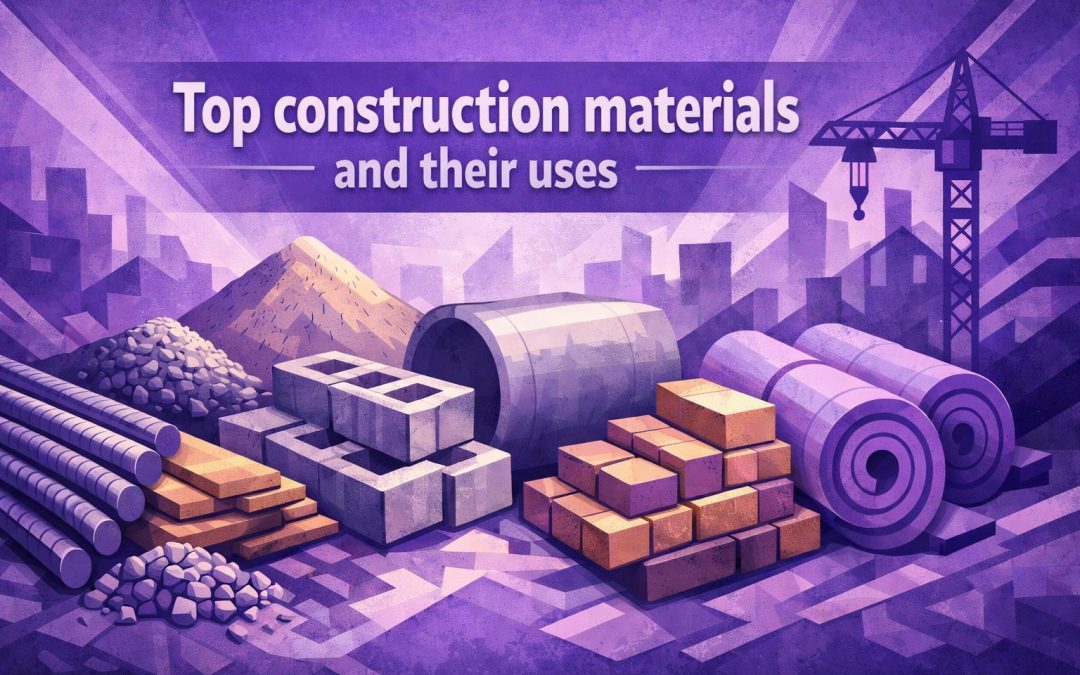
Table of contents
The construction industry in India relies on a wide range of building raw materials used in construction. These materials form the foundation of residential, commercial, and infrastructure projects. As of 2026, demand for construction materials in India continues to rise, driven by housing growth, metro rail projects, highways, and government-led capex under initiatives such as Gati Shakti.
Rising input costs, supply disruptions, and stricter quality norms have made material selection more complex. Choosing the right construction materials is no longer only about price. Builders must now balance strength, durability, compliance, and long-term performance. Understanding the types, uses, and sourcing of key building materials is critical for efficient and timely project execution.
Key building raw materials used in the construction sector
The construction industry depends on several types of construction materials to build safe and durable structures. While more than 50 building raw materials may be used across a project, only a few primary building materials form the structural backbone of residential, commercial, and infrastructure construction in India.
These core raw materials for residential and commercial construction determine the strength, stability, and lifespan of a building. Their selection also impacts project cost, timelines, and compliance with Indian standards.
Classification of key building raw materials
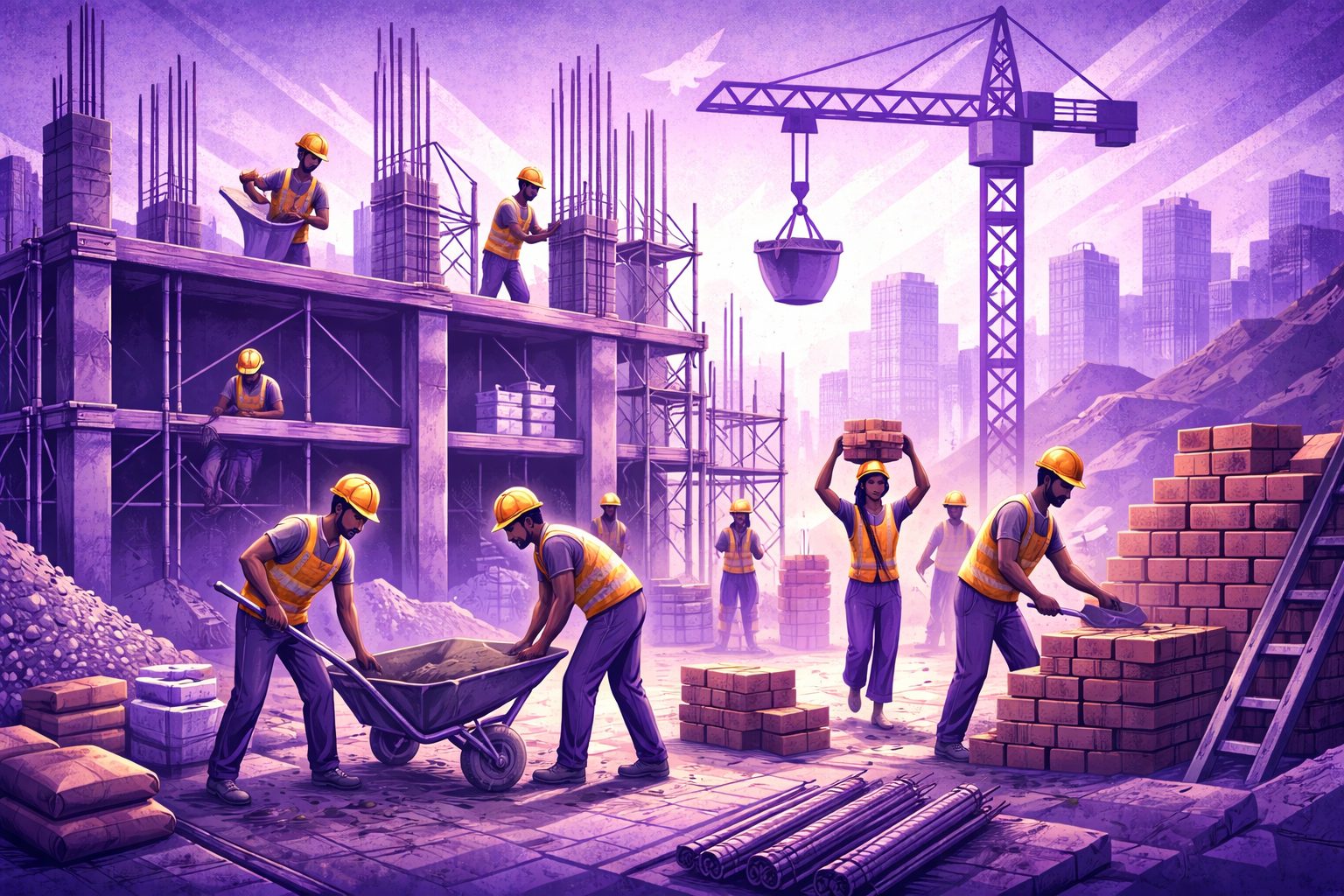
To understand their role clearly, construction materials can be grouped as follows:
Structural materials: Used to carry loads and provide overall strength. Examples include steel, concrete, and bricks.
Binding materials: Help bind other materials together and improve structural integrity. Cement and lime fall into this category.
Aggregates: Provide bulk, strength, and stability to concrete and mortar. These include sand, crushed stone, and gravel.
Reinforcement materials: Improve tensile strength and resistance to stress. TMT steel bars are the most widely used reinforcement material in India.
Sustainable alternatives: Reduce environmental impact while meeting performance needs. Examples include fly ash-based products and recycled steel.
Usage across construction types
Material usage varies by project type. Residential buildings focus on cost efficiency and durability. Infrastructure projects such as bridges, metros, and highways demand higher-grade steel, cement, and aggregates that meet strict quality and safety norms.
This classification sets the context for understanding the role of key materials such as sand, bricks, TMT steel bars, and cement in modern construction.
1. Sand
Sand is one of the most widely used building raw materials in construction. It provides bulk, strength, and workability to concrete and mortar. In India, sand availability and pricing have become major concerns due to environmental regulations and mining restrictions. Builders must now choose sand carefully to balance quality, compliance, and cost.
Types of sand used in construction
The most common types of sand used in construction are:
River sand
Naturally sourced from riverbeds. It has smooth, rounded particles and is widely used for plastering and masonry.
Coarse sand (pit sand)
Extracted from inland pits. It has sharp grains and is mainly used for concrete works.
Manufactured sand (M Sand)
Produced by crushing hard rock such as granite or basalt. It is a regulated alternative to river sand and widely used across India.
River sand vs. M sand
| Feature | River sand | M Sand |
| Source | Natural riverbeds | Crushed hard rock |
| Availability | Limited due to mining bans | Consistent supply |
| BIS compliance | Variable | IS 383 compliant |
| Cost | High and volatile | More price-stable |
| Environmental impact | High | Lower |
Why M Sand adoption is rising in India
As of 2026, many Indian states have imposed strict limits or bans on river sand mining. This has led to supply shortages and sharp price fluctuations. M Sand has emerged as a reliable substitute because it meets BIS standards under IS 383, offers consistent quality, and reduces environmental damage. For large-scale residential and infrastructure projects, M Sand also improves supply continuity and procurement planning.
2. Bricks
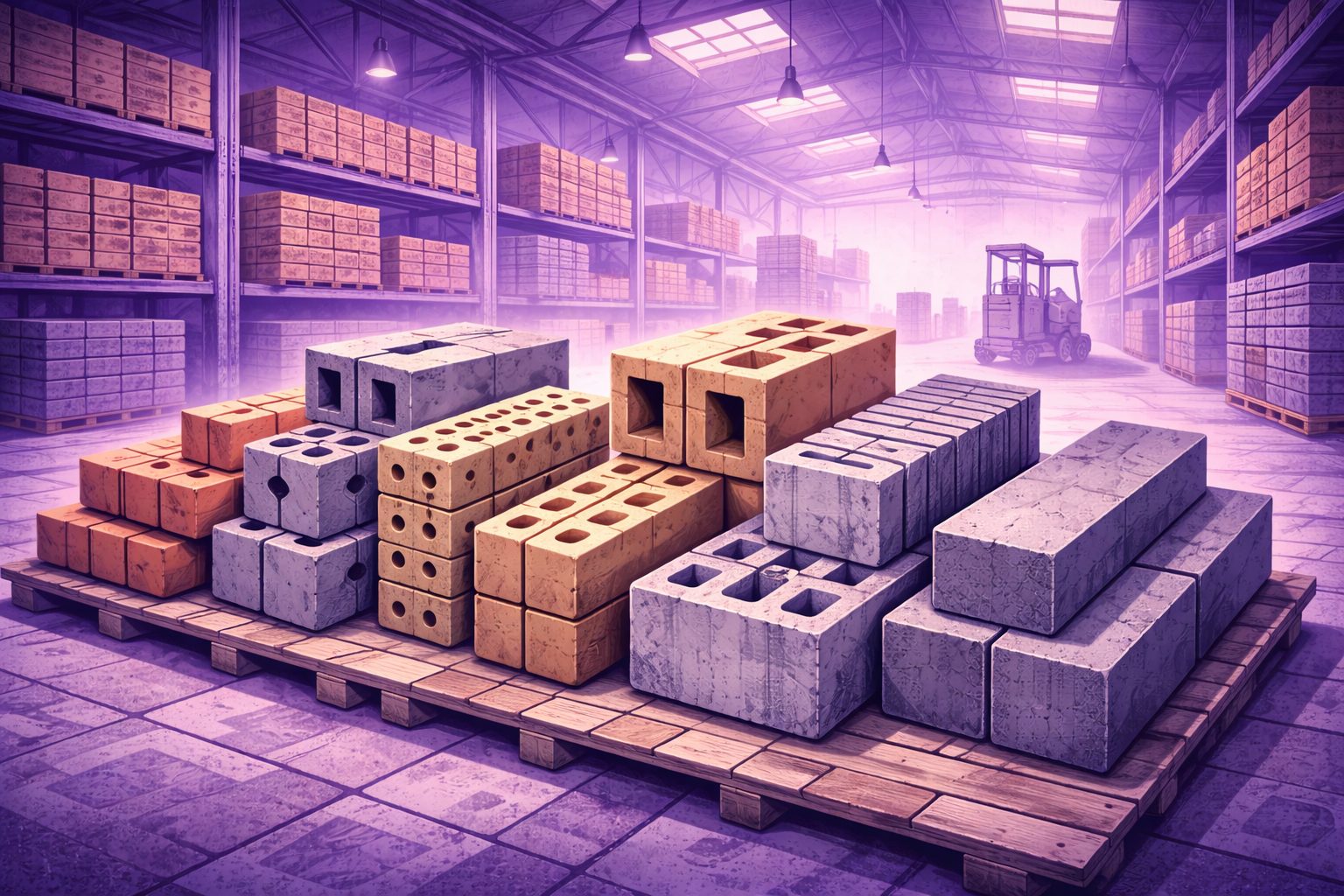
Bricks are among the oldest and most commonly used construction materials in India. They are valued for strength, durability, and ease of use. However, the types of bricks used in India have evolved to meet modern construction needs.
Types of bricks used in India
Sun-dried clay bricks
Used mainly for temporary or rural structures. They have low strength and limited durability.
Burnt clay bricks
Commonly used for walls, foundations, and columns. They offer good strength and fire resistance.
Fly ash bricks
Made using coal combustion residue. These bricks are uniform, strong, and environmentally friendly.
Concrete bricks
Manufactured using cement, sand, and aggregates. They offer flexibility in size and shape.
AAC blocks (Autoclaved Aerated Concrete)
AAC blocks are increasingly used in urban housing and commercial buildings. They are lightweight, thermally efficient, and faster to install than traditional bricks.
Comparison of brick types
| Feature | Clay bricks | Fly ash bricks | AAC blocks |
| Weight | Heavy | Medium | Lightweight |
| Thermal insulation | Low | Medium | High |
| Construction speed | Slow | Moderate | Fast |
| Labour requirement | High | Moderate | Low |
| Sustainability | Low | High | High |
The Indian government continues to promote fly ash utilisation to reduce industrial waste. As a result, fly ash bricks and AAC blocks are becoming preferred choices for modern construction.
3. TMT steel bars
TMT steel bars are critical reinforcement materials used in almost every concrete structure. They provide tensile strength, flexibility, and load-bearing capacity. As of 2026, quality steel selection is essential due to higher safety and compliance requirements.
Grades of TMT bars used in India
TMT bars are manufactured as per IS 1786 standards. Common grades include:
- Fe 415/Fe 415D
- Fe 500/Fe 500D
- Fe 550/Fe 550D
- Fe 600
Fe 500 vs. Fe 500D: Why ductility matters
The “D” grade indicates higher ductility. These bars perform better during earthquakes and sudden loads. They bend without breaking, reducing structural failure.
This makes Fe 500D and Fe 550D suitable for:
- Seismic zones
- High-rise buildings
- Bridges and infrastructure projects
Corrosion resistance and sourcing considerations
In coastal and humid regions, corrosion-resistant TMT bars offer longer service life. Buyers should also ensure:
- BIS certification
- Proper mill test certificates
- Consistent supply to manage price volatility
Reliable sourcing has become as important as price for MSMEs and large builders alike.
4. Cement
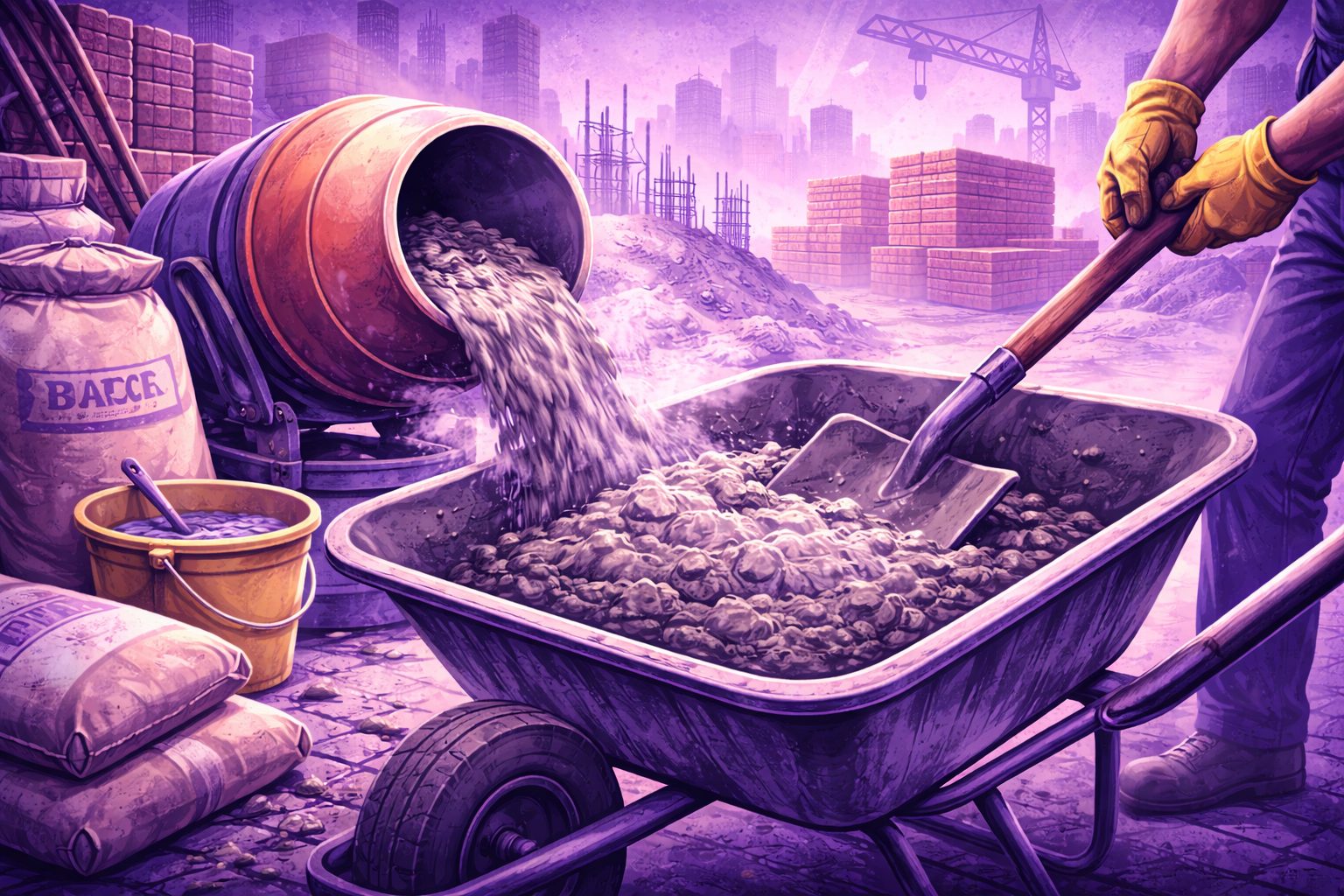
Cement is a key binding material used across all construction activities. It is essential for concrete, mortar, plaster, and precast elements. Selecting the right cement type impacts strength, durability, and crack resistance.
Types of cement used in India
Ordinary Portland Cement (OPC)
Available in 33, 43, and 53 grades. Used for general construction and structural works.
Portland Pozzolana Cement (PPC)
Contains fly ash. Offers better durability and lower heat of hydration.
Portland Slag Cement (PSC)
Made using blast furnace slag. Suitable for coastal and aggressive environments.
OPC vs. PPC vs. PSC
| Feature | OPC | PPC | PSC |
| Early strength | High | Moderate | Moderate |
| Heat of hydration | High | Low | Low |
| Crack resistance | Moderate | High | High |
| Sustainability | Low | High | High |
Choosing cement by application
Residential buildings: PPC for durability and reduced cracking
High-rise structures: OPC 53 for early strength
Coastal projects: PSC for corrosion resistance
Blended cements also support sustainable construction by lowering carbon emissions and improving long-term performance.
5. Aggregates and crushed stone
Aggregates are essential building materials used in almost every construction project. They form the bulk of concrete and directly affect strength, durability, and load-bearing capacity. In India, aggregates used in construction are closely regulated due to their impact on structural performance.
Types of aggregates used in construction
Aggregates are broadly classified based on particle size:
Fine aggregates
Include natural sand and manufactured sand. They fill voids and improve workability in concrete and mortar.
Coarse aggregates
Include crushed stone and gravel. Common sizes are 10 mm, 20 mm, and 40 mm.
Common aggregate sizes and usage
| Aggregate size | Typical application |
| 10 mm | Slabs, precast elements. |
| 20 mm aggregate for RCC | Columns, beams, foundations. |
| 40 mm | Mass concrete, road works. |
Crushed stone vs. gravel
| Feature | Crushed stone | Gravel |
| Shape | Angular | Rounded |
| Bonding strength | High | Moderate |
| Usage | RCC, foundations. | Drainage, landscaping. |
| Structural suitability | High | Limited |
Crushed stone is preferred for reinforced concrete structures because its angular shape improves bonding with cement.
Quality impact on concrete strength
Aggregate quality affects compressive strength, durability, and shrinkage. Poor-quality aggregates can lead to cracking and reduced load capacity. Builders should ensure:
- Clean and dust-free material
- Correct grading as per IS standards
- Consistent size distribution
Quality aggregates are critical for long-lasting RCC structures.
6. Aluminium, glass, and modern materials
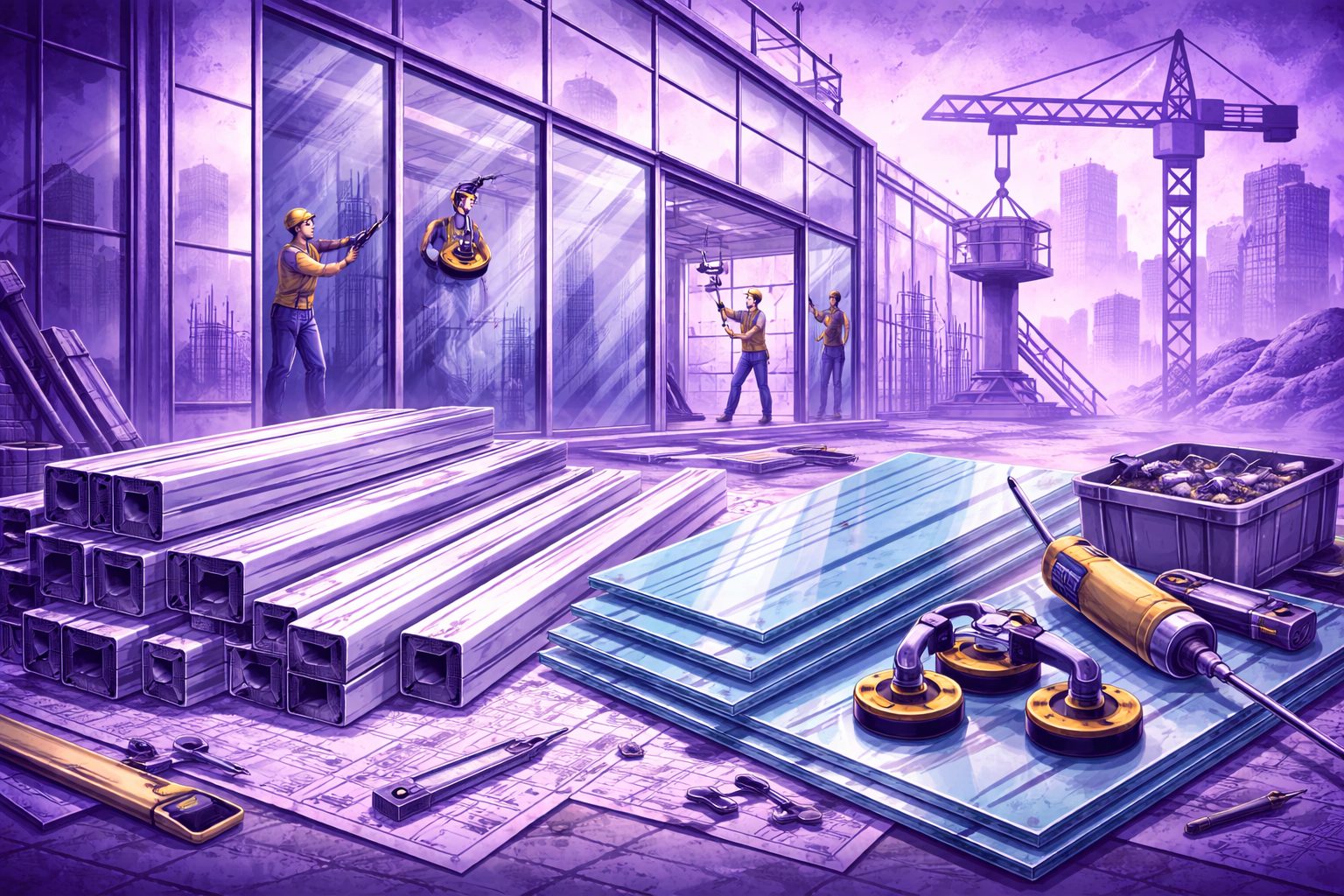
Modern construction increasingly relies on aluminium and glass for strength, aesthetics, and efficiency. These materials are widely used in commercial buildings, high-rise residences, and urban infrastructure projects across India.
Aluminium in construction
Aluminium is lightweight, corrosion-resistant, and easy to fabricate. It is commonly used for:
- Window and door frames
- Curtain wall systems
- Structural sections in façades
- Roofing and cladding
Aluminium sections reduce dead load and support faster installation.
Glass façade materials
Glass is a key modern building material used for natural light and visual appeal. Common types include:
- Toughened glass
- Laminated safety glass
- Double-glazed units
These materials are widely used in commercial and mixed-use developments.
Aluminium and glass applications
| Material | Key benefits | Common usage |
| Aluminium | Lightweight, corrosion resistant. | Frames, façades, cladding. |
| Toughened glass | High strength, safety. | Windows, façades. |
| Laminated glass | Impact resistance. | Skylights, railings. |
| Double-glazed glass | Energy efficiency. | Commercial buildings. |
Fire and energy efficiency considerations
Modern building materials must meet fire and thermal performance norms. Fire-rated aluminium systems and laminated glass improve safety. Double-glazed and low-E glass reduce heat gain and improve energy efficiency.
These materials support compliance with green building standards and reduce long-term energy costs.
Sustainable construction
| Aspect | Explanation |
| Meaning of sustainable construction | Sustainable construction focuses on reducing environmental impact while maintaining structural strength and safety. It supports low carbon construction by lowering resource use and emissions across the project lifecycle. |
| Sustainable building materials in India | Common green construction materials include fly ash bricks, AAC blocks, recycled steel, M Sand, PPC and PSC cement, and blended concrete products. These materials reduce dependence on virgin resources. |
| Key sustainability drivers in India | Government-led infrastructure growth, mandatory fly ash utilisation, ESG compliance, and rising energy costs are accelerating adoption. Urban housing and public projects are leading this shift. |
| Regulations and policy support | Indian regulations mandate fly ash use near thermal power plants. Green certifications such as GRIHA and IGBC promote sustainable material choices. These norms influence approvals and funding access. |
| Cost versus long-term benefits | While upfront costs may be higher, sustainable materials reduce maintenance, energy usage, and repair expenses. This improves lifecycle cost efficiency for buildings and infrastructure. |
| Adoption challenges for MSMEs | MSMEs often face higher initial costs, limited supplier options, and knowledge gaps. Price volatility and logistics also affect adoption decisions. |
| Practical adoption examples | Fly ash bricks and AAC blocks are replacing clay bricks in housing. Recycled and corrosion-resistant steel is used in infrastructure. PPC and PSC cement are preferred in coastal and humid regions. |
| Impact on long-term efficiency | Sustainable construction improves durability, compliance, and operational efficiency. It helps builders manage risks while meeting future-ready construction standards in India. |
Procurement, quality, and digital sourcing in India

Construction material procurement challenges
Construction material procurement in India is increasingly complex. Prices of steel, cement, and aggregates fluctuate due to input costs and demand cycles. Logistics delays and uneven regional availability further impact project timelines. For MSMEs, managing working capital while ensuring uninterrupted supply remains a key challenge.
Role of reliable building material suppliers
Choosing dependable building material suppliers in India is critical. Reliable suppliers offer consistent quality, timely delivery, and compliance with standards. This reduces rework, structural risks, and cost overruns, especially in bulk construction material sourcing.
BIS standards and compliance requirements
BIS standards for construction materials ensure safety and durability. Key IS codes include IS 383 for aggregates and sand, IS 1786 for steel, and IS 269, IS 1489, and IS 455 for cement. Compliance with these standards is essential for structural integrity and regulatory approval.
Importance of quality certifications
Certified materials perform predictably under load and environmental stress. Non-compliant materials increase the risk of cracks, corrosion, and failure. Quality assurance protects both the structure and long-term investment.
Digital procurement and online marketplaces
Online construction material procurement is gaining momentum in India. Digital sourcing platforms enable demand aggregation, transparent pricing, and integrated logistics. These platforms help MSMEs access verified suppliers and manage procurement more efficiently.
Conclusion
Building raw materials used in construction shape cost, quality, and durability. In India, material selection now demands compliance, supply reliability, and long-term performance, not just price. As of 2026, structured procurement and digital sourcing help builders stay efficient, resilient, and future-ready.
Looking to procure steel?
Tata nexarc helps manufacturers, builders and MSMEs source certified steel products, compare prices, and choose the right grade as per IS codes—with complete traceability and procurement confidence.
FAQs
What are the key building raw materials used in construction?
Why is M Sand preferred over river sand in India?
Which bricks are best for house construction?
What grade of TMT steel is commonly used in India?
Why does ductility matter in TMT steel bars?
Which cement is best for residential buildings?
What is the role of aggregates in concrete?
Where are aluminium and glass used in construction?
What are sustainable building materials in India?
How can builders improve construction material procurement?
Pradeep a SEO professional and passionate content writer who loves writing on various topics with 5 years of experience. At Tata nexarc, it has been 4 years since he is helping MSMEs to know the business challenges deeper and strategies to solve those. While not writing, he loves reading about digital marketing to hone his skills for business growth.