
 Check Price Now
Table of Contents
- History of Jamshedpur: Foundation of India’s Steel Industry
- Why Jamshedpur is Called the Steel City of India
- Tata Steel’s Strategic Role in Industrial Growth
- Steel Production, Economic Impact & MSME Ecosystem
- Infrastructure & Industrial Ecosystem
- Challenges: Cost Pressures, Imports & Sustainability
- Government Policies & Steel Sector Incentives
- Sustainability, Green Steel & Digital Transformation
- Jamshedpur’s Role in India’s Infrastructure Boom
- Procurement Trends & Future Outlook for Steel Buyers
- Conclusion
Jamshedpur, known as the Steel City of India, remains a key Indian steel production hub in 2026. The Jamshedpur steel industry, led by Tata Steel India, supplies flat and long steel to infrastructure, automotive, and engineering sectors.
Alongside Tata Steel’s integrated operations, downstream and allied companies such as Tata Metaliks Limited, The Tinplate Company of India Limited, and Indian Steel & Wire Products strengthen the city’s value chain. These firms support automotive castings, packaging steel, and wire products, expanding Jamshedpur’s industrial depth beyond primary steelmaking.
For steel buyers, it offers scale, supply stability, and proximity to raw materials. This article examines its production strength, MSME ecosystem, policy support, and procurement relevance – insights that matter for sourcing decisions and long-term supply planning.
History of Jamshedpur: Foundation of India’s steel industry
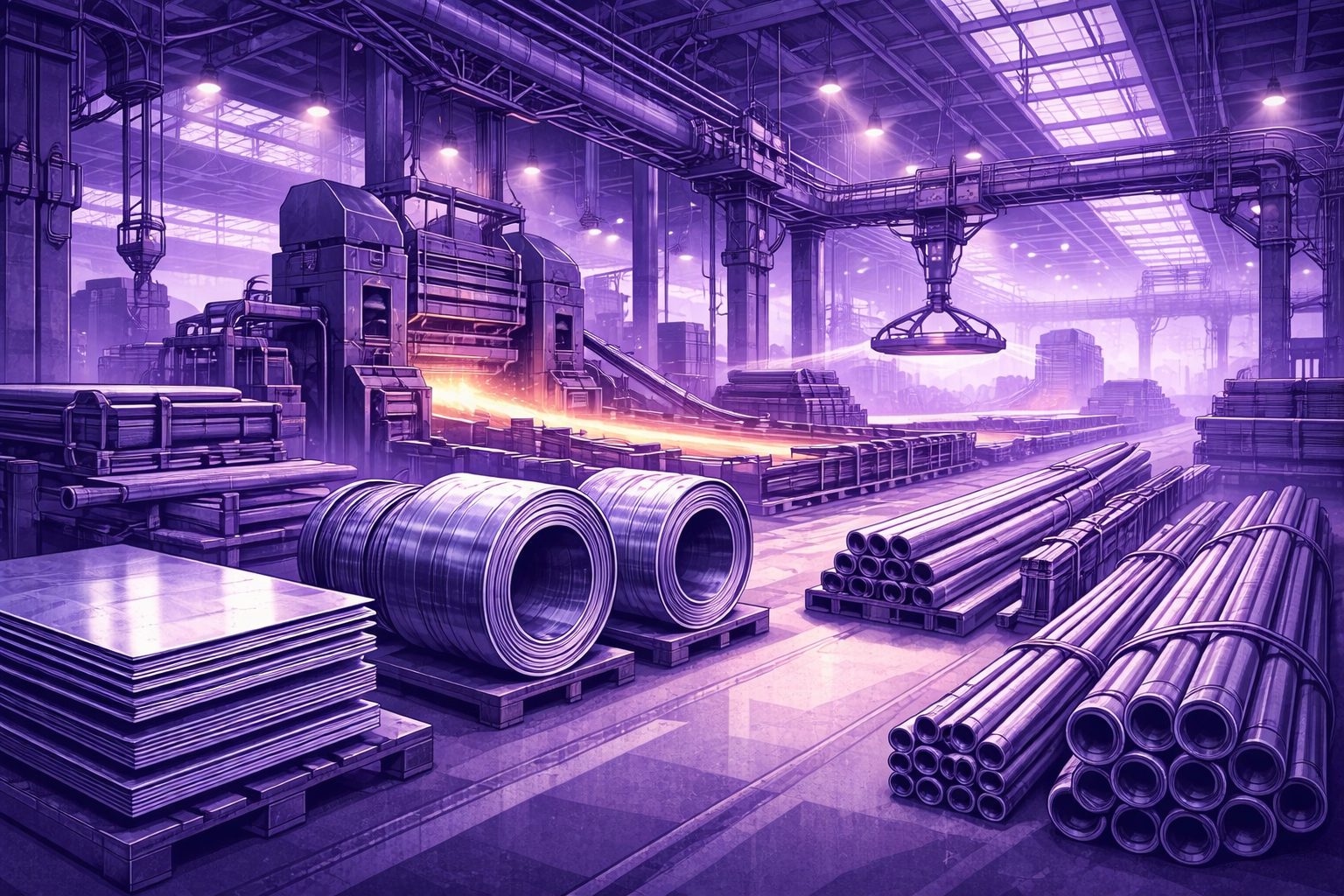
The story of Jamshedpur begins with Tata Steel, founded in 1907 as the Tata Iron and Steel Company (TISCO 1907). It marked the start of organised Indian steel manufacturing evolution.
From producing its first ingot in 1912, the plant steadily expanded into one of India’s most reliable integrated steel operations. What began as basic ingot production evolved into flat steel, long steel, automotive grade steel, and value-added products.
Key industrial milestones
| Year | Development | Industry relevance |
| 1907 | TISCO established | Birth of India’s private steel sector |
| 1912 | First steel ingot | Start of domestic steel substitution |
| Post 1991 | Capacity modernisation | Global competitiveness & export growth |
| 2010s-2020s | Product diversification | Auto, infra & defence steel supply. |
Industrial township model
Jamshedpur was planned as an industrial township. Housing, utilities, logistics, and social infrastructure were built around the plant. This reduced operational disruption and improved workforce stability – a factor that still supports supply reliability for B2B buyers.
Strategic relevance today
The legacy of Tata Steel history strengthens brand trust in bulk procurement. Its scale, backward integration into raw materials, and alignment with the Atmanirbhar Bharat manufacturing push make Jamshedpur central to India’s steel self-reliance strategy.
Why Jamshedpur is called the Steel City of India
Jamshedpur earns the title Steel City of India because of its scale, integration, and long-term contribution to steel production capacity in India. The city is anchored by Tata Steel, whose Jamshedpur works has an installed crude steel capacity of around 11 million tonnes per annum as of 2026.
Strategic location advantage
- Close to iron ore mines in Jharkhand and Odisha
- Access to coking coal supply chain via eastern ports
- Strong rail connectivity to Haldia and Paradip ports
- Direct links to automotive and infrastructure hubs
This proximity lowers inbound raw material costs and improves supply security.
Cluster-based industrial ecosystem
Jamshedpur is not a single-plant city. It hosts:
- Rolling mills and fabrication units
- Engineering MSMEs
- Logistics and maintenance providers
- Industrial utilities support
This dense vendor ecosystem improves turnaround time and reduces dependency on distant suppliers.
Why it matters for buyers
- Raw material security supports price stability
- Reduced freight volatility versus western corridor sourcing
- High vendor density enables competitive procurement
For steel buyers, Jamshedpur offers scale, integration, and predictable supply – key factors in managing steel price volatility in India.
Tata Steel’s strategic role in industrial growth
At the core of Jamshedpur’s industrial strength is Tata Steel. Its scale, diversification, and export presence make it central to India’s steel growth.
Strategic contribution overview
| Area | Details (2026 relevance) | Why it matters to buyers |
| Capacity | ~11 MTPA at Jamshedpur; phased capacity expansion across India | Reliable bulk supply |
| Product mix | Flat steel, long steel, automotive grade steel. | Multi-sector sourcing |
| Value-added steel | Advanced high-strength steel, coated steel, infra & defence grades. | Better performance & compliance |
| Steel exports India | Exports to Europe, Southeast Asia, Middle East. | Global quality benchmarking |
| ESG & certifications | Focus on decarbonisation, responsible mining, ISO & global standards. | ESG-aligned procurement |
Industrial impact
Its integrated operations, from iron ore to finished steel, reduce supply risk. Continuous modernisation supports cost efficiency and product consistency.
Buyer insights
- Strong quality benchmarking across grades
- Long-term supply contracts for price stability
- Vendor development programs supporting MSME integration
For procurement leaders, Tata Steel’s role strengthens supply continuity, compliance readiness, and strategic sourcing flexibility.
Steel production, economic impact & MSME ecosystem
Steel production scale and sector linkages
Jamshedpur remains a major contributor to India’s crude steel output in 2026. The integrated operations of Tata Steel feed key sectors such as construction, automotive, railways, and heavy engineering. Flat and long products from this industrial cluster Jharkhand move directly into infrastructure projects, OEM supply chains, and capital goods manufacturing.
Economic contribution, and employment
The city’s steel production drives a strong multiplier effect. Direct plant employment is supported by thousands of indirect jobs across transport, fabrication, and services. The contribution to regional GDP is significant, with downstream industries expanding around the main plant. Stable steel output also strengthens domestic manufacturing and reduces import dependence.
MSME steel suppliers and ancillary network
A dense ecosystem of MSME steel suppliers operates around the plant. These include machining units, casting foundries, steel fabrication India workshops, maintenance contractors, and logistics providers. Many work as approved vendors, ensuring steady order flow and technical alignment with large producers.
Financing and government access
Vendor financing schemes and supply chain credit programs help MSMEs manage working capital. Many units also participate in public procurement through the Government e-Marketplace (GeM), expanding opportunities beyond the core steel plant.
For buyers, this ecosystem means faster turnaround, competitive pricing, and diversified sourcing within one cluster.
Infrastructure & industrial ecosystem
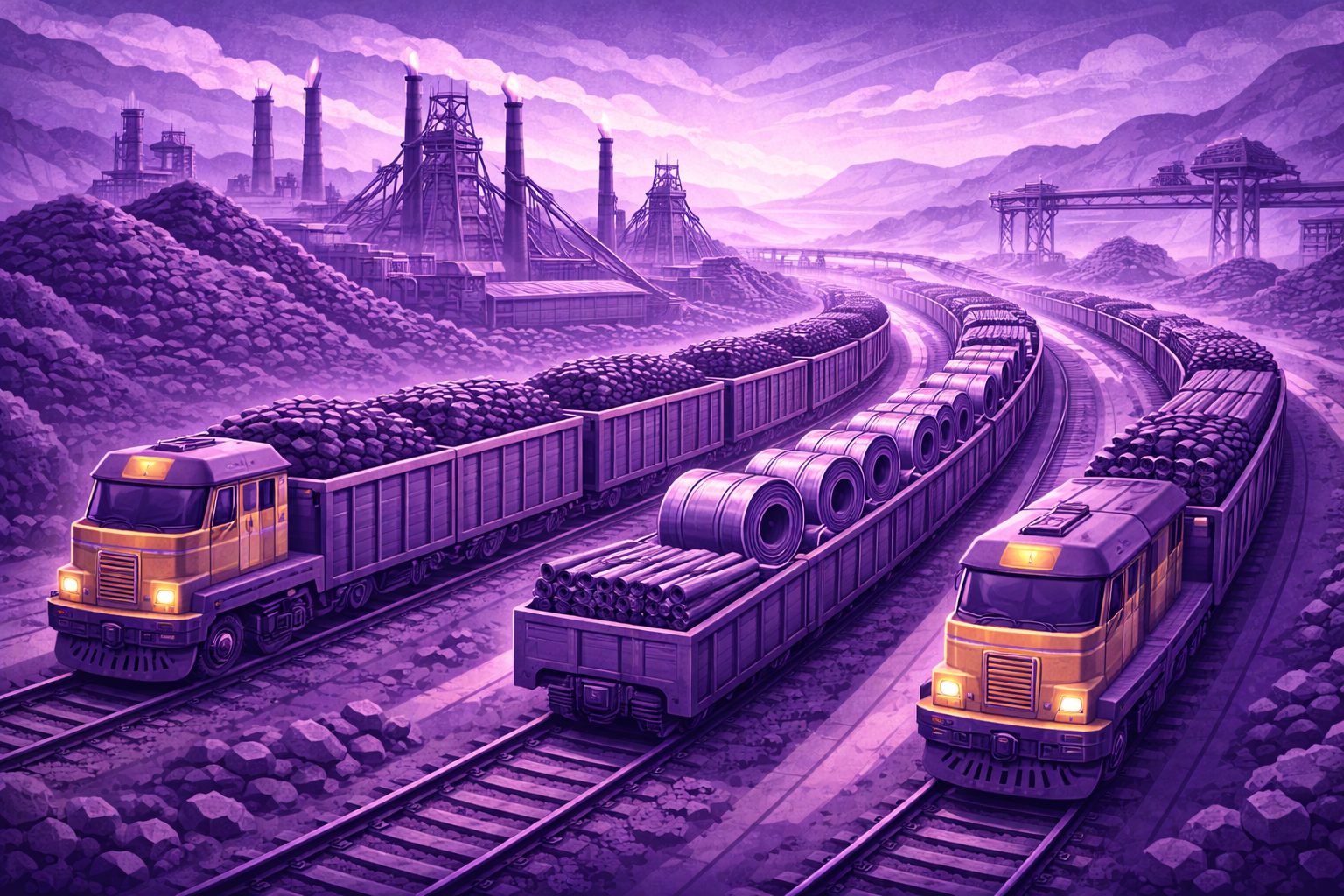
Strategic location within the mining belt
Jamshedpur sits close to iron ore reserves in Jharkhand and Odisha. This proximity reduces raw material haulage distance and improves supply security. For steel producers, shorter inbound routes mean lower logistics risk and better cost control.
Steel logistics and connectivity
The city is well connected through rail networks linking eastern ports and major consumption centres. This strengthens steel logistics India operations and supports faster dispatch to infrastructure and automotive hubs. Efficient rail movement helps reduce freight volatility.
Power reliability and utilities
Stable power supply and captive generation support uninterrupted production. Water sourcing and recycling systems are integrated into plant operations, improving utilities management. Reliable infrastructure reduces downtime and protects delivery schedules.
Industrial cluster and SEZ advantage
The broader industrial corridor Jharkhand includes engineering units, fabrication clusters, and supporting industries. While Jamshedpur itself is not a traditional SEZ steel manufacturing zone, it benefits from nearby industrial parks and policy-driven manufacturing incentives.
What this means for procurement
- Procurement cost optimisation through lower inbound freight
- Lead time reduction due to cluster-based supply
- Better support for just-in-time manufacturing
For steel buyers, infrastructure strength directly translates into predictable delivery and tighter inventory planning.
Challenges: Cost pressures, imports & sustainability
Jamshedpur’s steel ecosystem remains strong, but 2026 presents structural pressures. Rising input costs, global competition, and carbon regulations are reshaping sourcing strategies.
Key challenges and market impact
| Challenge | 2026 context | Impact on buyers |
| Steel price volatility India | Fluctuations in iron ore and imported coking coal prices | Budget uncertainty and margin pressure |
| Raw material price fluctuations | Dependence on global coal benchmarks | Short-term cost spikes |
| Energy cost sensitivity | High power and fuel costs affect conversion margins | Higher finished steel prices |
| Chinese steel imports | Periodic dumping risk in flat products | Downward pressure on domestic prices |
| Carbon emissions steel | Stricter ESG reporting and compliance norms | Supplier evaluation based on sustainability |
| CBAM impact | EU Carbon Border Adjustment Mechanism affecting exports | Compliance cost passed through supply chains |
Decarbonisation pressure
Producers face growing pressure to reduce emissions through green steel investments, energy efficiency, and scrap usage. Transition costs are significant.
What this means for buyers in 2026
- Hedging strategies for raw material-linked contracts
- Long-term procurement contracts to lock pricing bands
- Supplier diversification across regions
- ESG-compliant sourcing to meet global buyer standards
For procurement leaders, managing volatility now requires both cost discipline and sustainability alignment.
Government policies & steel sector incentives
The National Steel Policy 2030 sets a target of 300 MTPA capacity, reinforcing India’s push to become a global steel hub. In line with this, the Make in India steel framework prioritises domestic sourcing, especially for public infrastructure projects. The PLI scheme for specialty steel further supports value-added manufacturing and reduces reliance on imports. At the same time, strong infrastructure pipeline demand — across highways, railways, defence, and housing — provides steady consumption visibility. Quality Control Orders (QCO) complement this by restricting substandard imports and raising compliance benchmarks.
Why it matters for buyers
Together, these policies shift the focus toward compliance-driven sourcing and stronger domestic supply chains. Reduced import dependence lowers supply risk, while MSME credit support improves vendor stability. For procurement teams, this means better traceability, predictable availability, and greater confidence in long-term contracts.
Sustainability, green steel & digital transformation
India’s steel sector is moving steadily toward lower-carbon production. In Jamshedpur, Tata Steel and other producers are aligning with the broader steel decarbonisation roadmap through technology upgrades and efficiency improvements.
| Area | What is changing in 2026 | Why it matters |
| Green steel India | Gradual reduction in emission intensity | Supports ESG reporting |
| EAF steel India | Scrap-based EAF expansion gaining policy support | Lower carbon footprint |
| Renewable energy | Increased solar and captive renewable integration | Reduced energy risk |
| Waste heat recovery | Recovery systems improving energy efficiency | Cost and emission control |
| Industry 4.0 adoption | Automation, AI-based monitoring, digital twins. | Better quality and traceability |
Scrap-based EAF expansion is expected to grow as India increases scrap availability and circular steel use. Renewable energy integration and waste heat recovery help reduce dependence on fossil fuels while improving margins.
Buyer perspective
- ESG-compliant sourcing becoming mandatory
- Focus on Scope 3 emission reduction
- Alignment with sustainable procurement mandates
For buyers, sustainability is no longer optional. Supplier carbon intensity now directly influences vendor selection and long-term contracts.
Jamshedpur’s role in India’s infrastructure boom
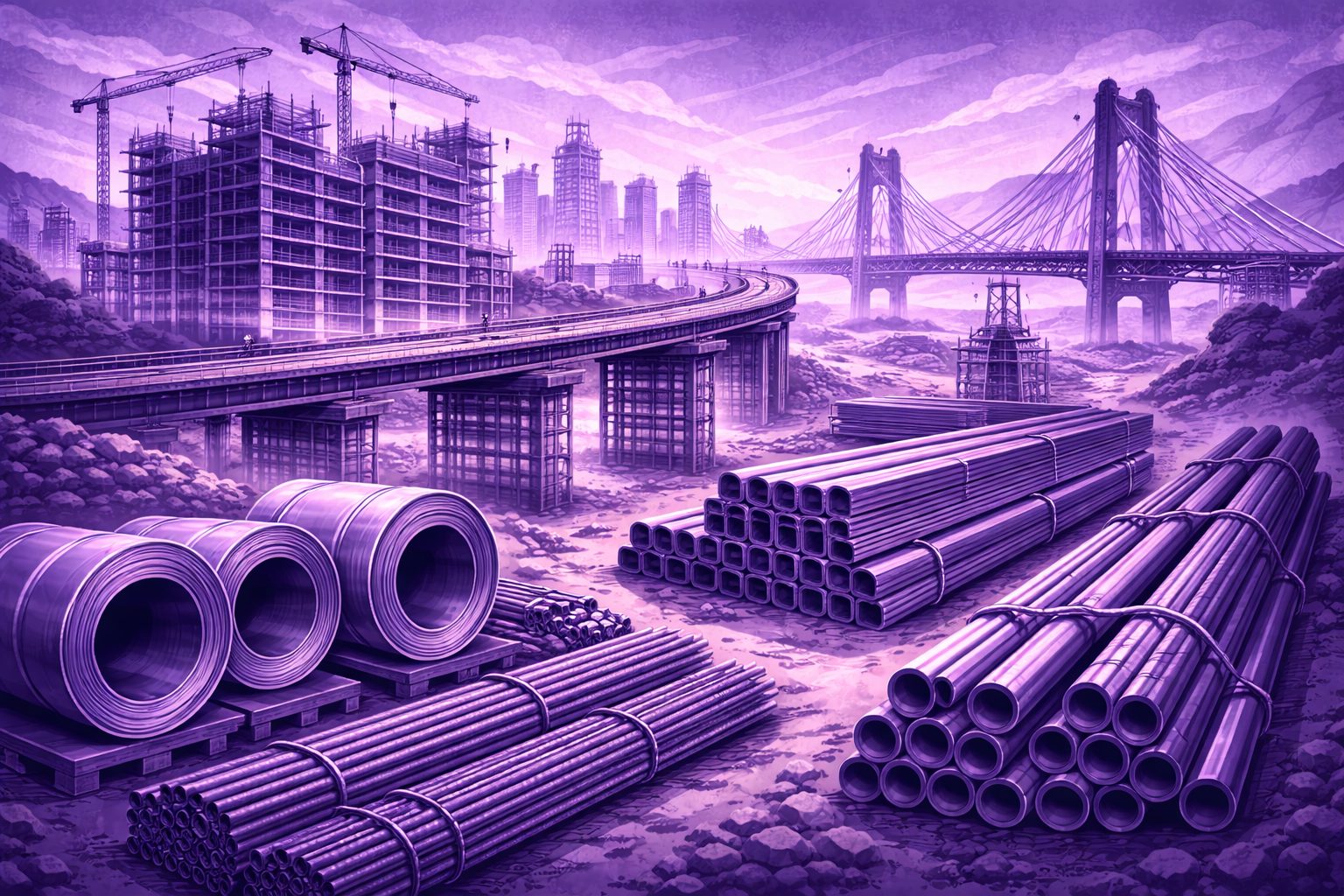
India’s multi-lakh crore public capex program continues to drive infrastructure steel demand in India. Increased spending on railways, highways, defence production, and urban infrastructure is sustaining steel consumption into 2026.
Railway upgrades and freight corridors require structural steel and long products. Highway expansion supports TMT and plate demand. Defence and heavy engineering call for specialised grades. At the same time, real estate and industrial corridor projects maintain steady flat steel offtake.
This capex growth steel sector momentum reinforces Jamshedpur’s role as a dependable bulk supply centre. Large integrated producers can execute high-volume, time-bound orders linked to public projects.
Why this matters for buyers:
- Better visibility in steel pricing cycles
- Stronger positioning for bulk buying strategies
- Improved contract planning aligned with project schedules
For procurement teams, infrastructure-led demand creates clearer sourcing windows and more predictable volume planning.
Procurement trends & future outlook for steel buyers
Shift toward structured procurement
Steel procurement strategy India is moving from spot buying to structured planning. Buyers are reducing exposure to short-term price swings by locking part volumes under long-term steel contracts. This improves cost visibility and supply security.
Rise of digital sourcing
Digital sourcing steel platforms and e-auctions are increasing price transparency. Many manufacturers now compare multiple mills, track price trends, and manage tenders online. This shortens negotiation cycles and improves documentation control.
Forward contracts and price planning
Forward contracts linked to raw material benchmarks are becoming common. Buyers fix pricing bands or formula-based rates to manage steel price volatility. This reduces budget shocks during demand spikes.
Inventory optimisation
Instead of overstocking, companies are aligning procurement with project timelines. Better demand forecasting supports lean inventory and just-in-time delivery models.
Supplier consolidation and global positioning
Supplier consolidation is growing. Buyers prefer fewer, reliable mills with compliance track records. Rising FDI and export competitiveness also push manufacturers to meet global quality and ESG standards.
Conclusion
Jamshedpur remains India’s most stable integrated steel cluster, backed by scale, raw material access, and a strong industrial ecosystem. For buyers, this means supply reliability and better long-term contract planning. For producers, competitiveness now depends on efficiency and lower-carbon steel.
Understanding Jamshedpur’s role helps both sides manage price cycles, align with infrastructure demand, and secure growth in India’s evolving steel market.
Looking to procure steel?
Tata nexarc helps manufacturers, builders and MSMEs source certified steel products, compare prices, and choose the right grade as per IS codes—with complete traceability and procurement confidence.
FAQs
Why is Jamshedpur called the Steel City of India?
What is the steel production capacity in Jamshedpur?
What types of steel are produced in Jamshedpur?
Which industries depend on Jamshedpur steel?
Are there other steel companies in Jamshedpur?
Why is Jamshedpur important for steel buyers?
How does location benefit steel production?
How do government policies support the steel industry here?
Is Jamshedpur moving toward green steel?
How should steel buyers plan sourcing from Jamshedpur?
A product manager with a writer's heart, Anirban leverages his 6 years of experience to empower MSMEs in the business and technology sectors. His time at Tata nexarc honed his skills in crafting informative content tailored to MSME needs. Whether wielding words for business or developing innovative products for both Tata Nexarc and MSMEs, his passion for clear communication and a deep understanding of their challenges shine through.

I heard, Bokaro is also known as steel city of India? what is true?
Hi Arun, Bokaro is established as steel city by Govt of India, but Jamshedpur is known as steel city because of TATA’s Tisco venture. It was under TATA’s administration a long time back but later Govt of India took the administration charge. And steel first industry was setup by TATA here, which makes it Steel city of India by birth. It is also known as Tatanagar also.
Because of TATA, this city exist. Proud of being Indian and having such a great mindset of TATA’s family.