
 Check Price Now
Table of Contents
- What Are Integrated Steel Plants?
- What Are Mini Steel Plants?
- Integrated vs. Mini Steel Plants: Key Differences
- Why Steel Plants Are Set Up in Certain Regions
- Problems Faced by Integrated and Mini Steel Plants
- Advantages and Disadvantages
- Sustainability and Green Steel Transition
- The Future of Integrated and Mini Steel Plants in India
- Conclusion
- FAQs
India is the world’s second-largest crude steel producer, with annual output crossing 125 million tonnes in recent years. Under the National Steel Policy 2017, the country aims to reach 300 million tonnes of capacity by 2030. In this context, understanding integrated vs. mini steel plants in India is essential. Integrated plants handle the entire process from iron ore to finished steel, while mini plants melt scrap or sponge iron to produce steel products. Both support construction, infrastructure, automobiles, and manufacturing.
What are integrated steel plants?
An integrated steel plant is a large, end-to-end steel manufacturing unit that follows the Blast Furnace–Basic Oxygen Furnace (BF–BOF) route. It is the traditional model of blast furnace steel production and represents the backbone of primary steel production in India.
These plants are called “integrated” because the entire integrated steel manufacturing process happens at one site – from raw material handling to finished steel products.
Core raw materials
Integrated plants depend heavily on:
- Iron ore
- Coking coal (mostly imported in India)
- Limestone and fluxes
Full value chain in an integrated steel plant
- Mining and raw material preparation
- Sintering or pelletisation
- Coke oven operations
- Blast furnace (hot metal production)
- Basic oxygen furnace (steelmaking)
- Continuous casting
- Rolling mills (long and flat products)
This vertical integration allows better control over quality, scale, and cost efficiency.
Typical capacity
Modern integrated steel plants in India operate at large scale:
| Parameter | Integrated steel plant |
| Capacity range | 3–20 million tonnes per annum (MTPA) |
| Production route | BF–BOF |
| Industry role | Primary steel producer India |
Major examples include:
These companies operate multi-million tonne facilities across eastern and southern India.
Why integrated plants dominate flat steel production in India
Flat steel products such as hot rolled coils, cold rolled sheets, and plates require consistent chemistry and large rolling mills. Integrated plants are better suited for this because:
- They control raw material quality.
- They produce steel at high volumes.
- They can support automotive-grade and export-quality steel.
For this reason, most flat steel used in automobiles, appliances, shipbuilding, and infrastructure in India comes from integrated steel plants.
What are mini steel plants?
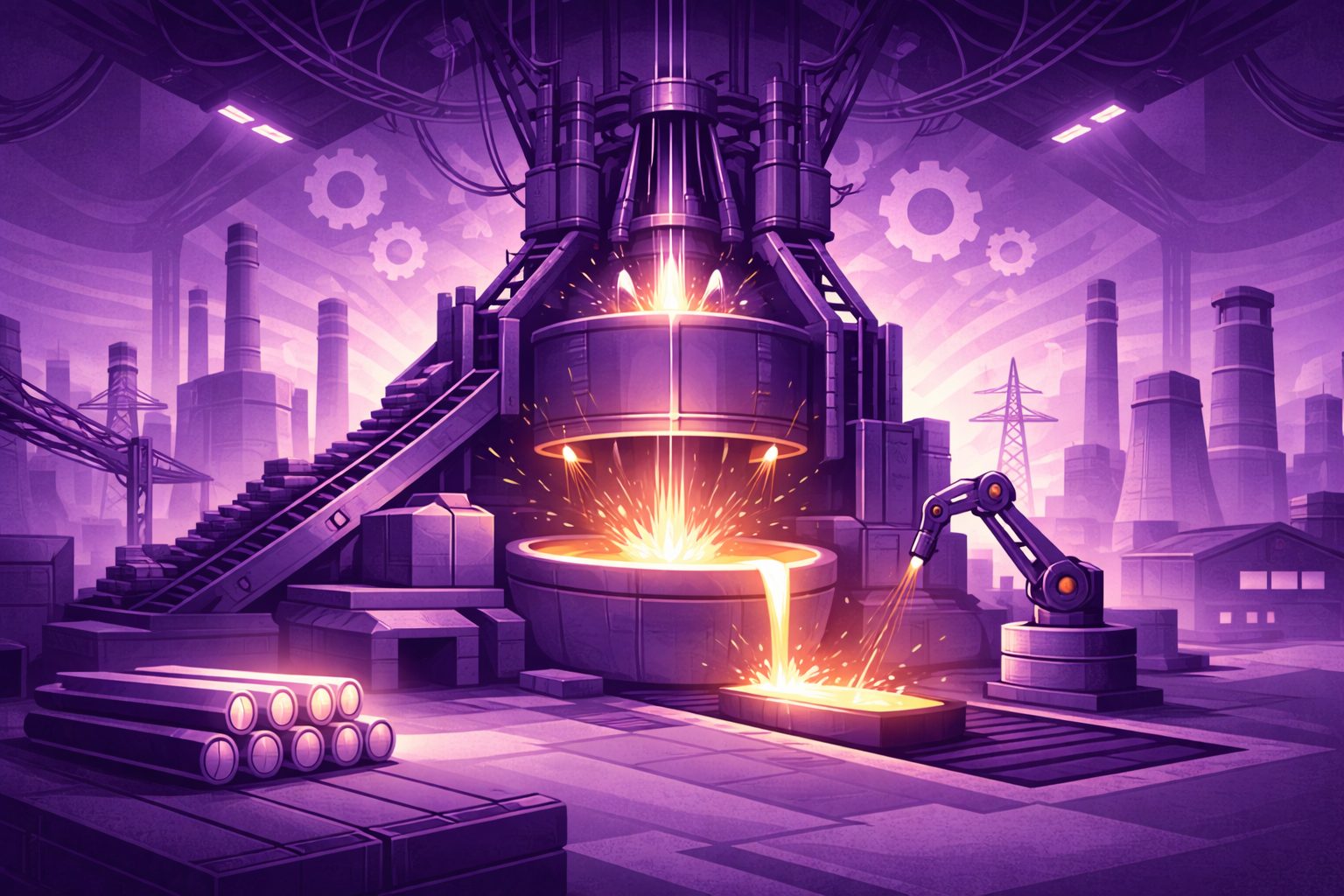
Mini steel plants are smaller steel manufacturing units that operate mainly through the Electric Arc Furnace (EAF) or Induction Furnace (IF) route. Unlike integrated plants, they do not process iron ore into hot metal. Instead, they melt scrap steel or sponge iron to produce finished or semi-finished products.
In India, mini mills form the backbone of secondary steel producers India. There are over 1,000 secondary producers, including numerous EAF steel plants India and induction furnace steel units, spread across industrial clusters.
Raw materials used
Mini steel plants typically use:
- Steel scrap
- Sponge iron (Direct Reduced Iron or DRI)
- Pig iron
India is one of the largest producers of sponge iron in the world. DRI plays a critical role in feeding mini mills, especially where scrap availability is limited.
How mini steel plants operate
- Scrap or DRI melting in EAF or IF
- Refining and alloy adjustment
- Continuous casting (billets or blooms)
- Rolling into long products
These plants usually focus on long steel products such as TMT bars, angles, and structurals.
| Parameter | Mini Steel Plant |
| Production route | EAF or IF |
| Capacity range | 0.1–1.5 MTPA (typical) |
| Industry role | Secondary steel producer |
Key clusters in India
Major mini steel clusters are located in:
- Raipur (Chhattisgarh)
- Mandi Gobindgarh (Punjab)
- Jalna (Maharashtra)
These locations are closer to consumption centres, following a regional demand-driven model.
Role of mini steel plants in the MSME ecosystem
Mini steel plants:
- Generate large-scale local employment
- Support MSME-led construction supply chains
- Offer faster turnaround for regional infrastructure demand
Their flexibility and lower capital requirement make them vital to India’s decentralised steel growth.
Integrated vs. mini steel plants: Key differences
Understanding integrated vs. mini steel plants requires comparing their structure, scale, cost, and sustainability profile.
| Parameter | Integrated steel plant | Mini steel plant |
| Production route | Blast Furnace–Basic Oxygen Furnace (BF–BOF) | Electric Arc Furnace (EAF) or Induction Furnace (IF) |
| Capacity | 3–20 MTPA | 0.1–1.5 MTPA (typical) |
| Raw material | Iron ore + coking coal | Scrap, sponge iron (DRI), pig iron |
| Capital investment | Very high | Moderate to low |
| Energy source | Coal-based | Electricity-based |
| Carbon emissions | Higher (coal intensive) | Lower, especially scrap-based EAF |
| Energy consumption | High thermal energy use | High electrical energy use |
| Product focus | Flat + long products | Mainly long products |
| Export orientation | Strong export presence | Mostly domestic and regional |
| Flexibility | Lower due to scale | Higher, can adjust output quickly |
| Working capital cycle | Longer | Shorter |
| Raw material risk | Dependent on imported coking coal | Dependent on scrap and power cost |
| ESG compliance pressure | Increasing regulatory scrutiny | Lower emissions but power-dependent |
What these differences mean in practice
Integrated plants benefit from economies of scale. They produce large volumes at competitive per-tonne cost once capacity stabilises. They also support automotive-grade flat steel and exports. However, their dependence on imported coking coal increases raw material risk and carbon intensity.
Mini steel plants are more flexible. They can respond faster to local demand shifts. Their scrap-based model reduces emissions compared to coal-heavy blast furnace operations. That said, electricity tariffs and scrap price volatility affect margins.
In India’s steel sector, both models coexist because they serve different market segments, cost structures, and sustainability pathways.
Why steel plants are set up in certain regions
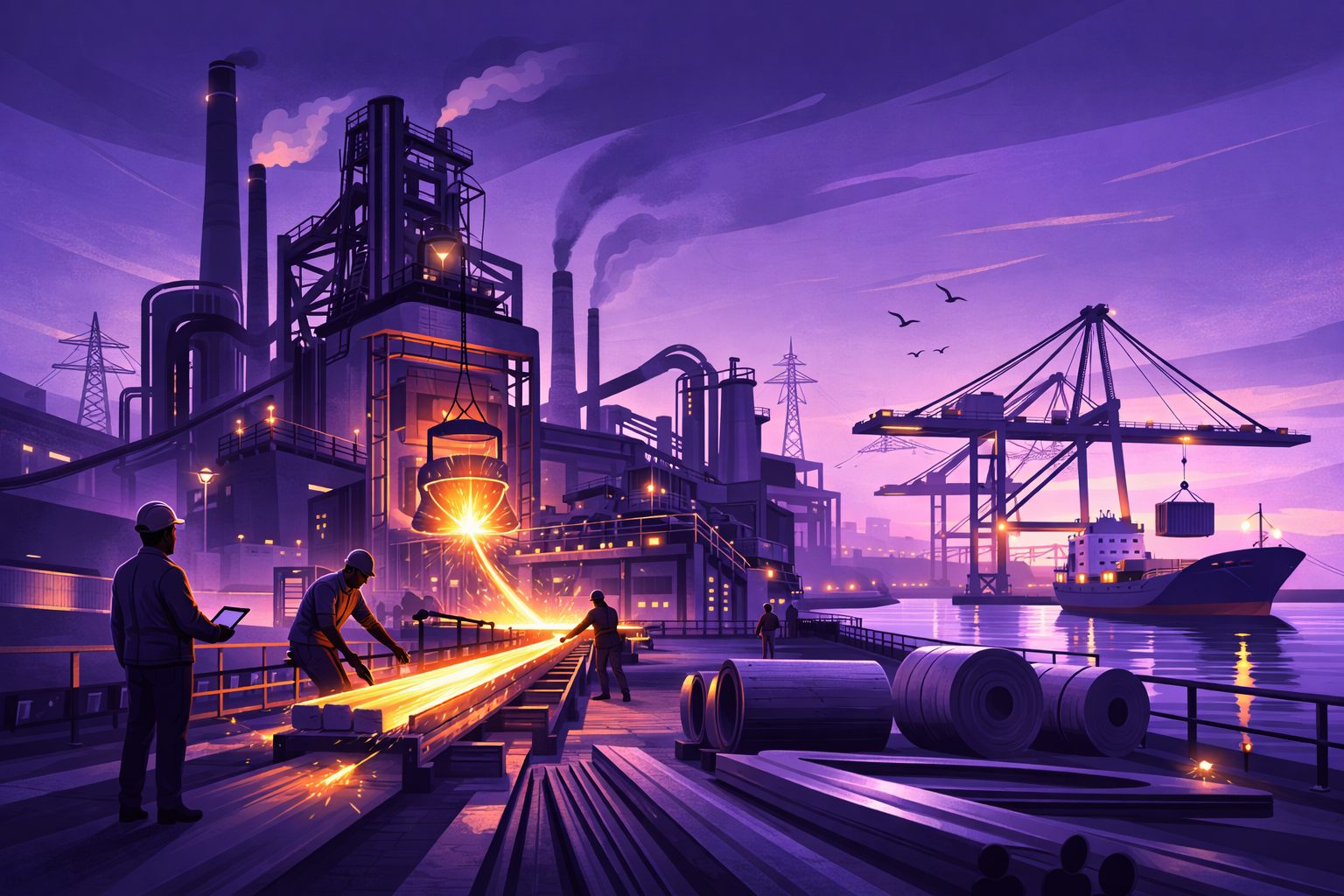
Steel plants in India are set up based on raw materials, transport access, and market demand. These location factors explain why different types of plants operate in different regions.
Why large steel plants are in Eastern India
Integrated steel plants require huge quantities of iron ore and coal. Eastern India has strong reserves of both. Locating plants near mines reduces transport costs and ensures steady supply. States such as Jharkhand, Odisha, and Chhattisgarh therefore host several major integrated plants.
Importance of the Chota Nagpur Plateau
The Chota Nagpur Plateau is rich in iron ore, coal, and limestone. This made it the natural base for many of India’s early public sector steel plants. Rail connectivity from this region further supports movement of raw materials and finished steel. The plateau continues to be central to India’s steel production.
Why some steel plants are near ports
India imports most of its coking coal. Coastal steel plants reduce the cost of importing coal and improve export access. Port-based integrated plants are therefore increasing.
Why mini steel plants are near cities
Mini steel plants are usually closer to consumption centres. They serve construction markets and regional industries. Since they use scrap and electricity, proximity to customers is more important than proximity to mines.
Problems faced by integrated vs. mini steel plants in India
India’s steel sector continues to grow, but several structural issues remain. These steel industry challenges India must address affect both integrated and mini steel plants.
Dependence on imported coking coal
Integrated plants rely heavily on coking coal for blast furnace steel production. India imports a large share of its coking coal, mainly from Australia. This exposes producers to global price swings and currency risk. High coking coal imports India increases production costs and margin pressure.
Scrap availability and price volatility
Mini steel plants depend on scrap and sponge iron. Domestic scrap supply is limited and fragmented. When scrap prices rise, smaller producers face cost stress. Importing scrap adds further uncertainty.
High power tariffs
Electric Arc Furnace and induction furnace units consume large amounts of electricity. The power cost impact on steel production is significant, especially for mini mills. In several states, industrial tariffs remain high, affecting competitiveness.
Logistics and rail freight costs
Steel production requires movement of bulk raw materials and finished goods. Rail freight charges and port congestion add to overall costs. Logistics inefficiencies reduce price competitiveness in export markets.
Carbon regulations and ESG pressure
Global climate policies are tightening. The European Union’s Carbon Border Adjustment Mechanism (CBAM) may affect Indian steel exports. Both integrated and mini plants face pressure to reduce emissions and invest in cleaner technologies.
Financial constraints and global overcapacity
Secondary steel producers often struggle with access to affordable finance. Smaller units face working capital stress during demand slowdowns. At the same time, global steel overcapacity and Chinese dumping concerns create price pressure in domestic markets.
Advantages and disadvantages of integrated vs. mini steel plants
Both models play a critical role in India’s steel ecosystem. Their strengths and weaknesses differ based on scale, cost structure, and technology route.
| Factor | Integrated steel plants (BF–BOF) | Mini steel plants (EAF/IF) |
| Scale | Large economies of scale | Smaller, decentralised units. |
| Typical capacity | 3–20 MTPA | 0.1–1.5 MTPA |
| Capital investment | Very high | Moderate to low |
| Cost per tonne | Lower at full capacity due to scale | Higher sensitivity to input costs |
| Product quality | High-quality flat and specialised steel | Primarily long products, variable quality |
| Export competitiveness | Strong export orientation | Mostly domestic market focused |
| Flexibility | Slower to adjust output | Can scale up or down quickly |
| Return on investment | Longer gestation | Faster ROI |
| Emission intensity | Higher (coal-based BF–BOF route) | Lower, especially scrap-based EAF. |
| Raw material risk | Dependent on imported coking coal | Dependent on scrap and power prices |
Key takeaways
Integrated plants gain from scale and produce high-quality flat steel for exports. But they need heavy investment, carry higher debt, and have greater emissions due to coal use.
Mini steel plants need lower capital and start faster. Their scrap-based route emits less, and they adjust quickly to local demand. However, margins depend on scrap prices and power tariffs. In India, both models complement each other.
Sustainability and green steel transition
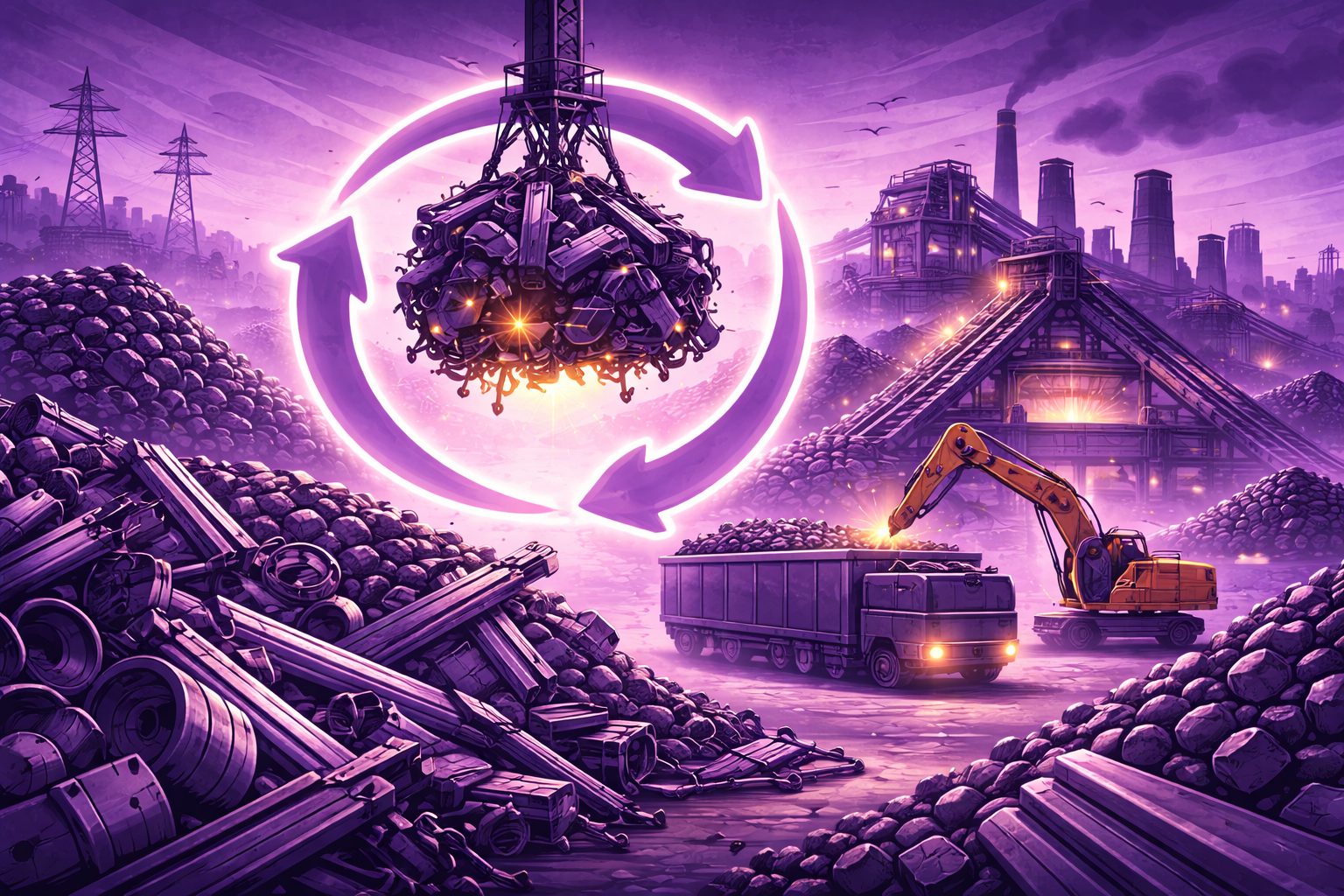
The future of the steel sector will depend on how quickly it reduces emissions. As India expands capacity towards the 300 MT target under the National Steel Policy, the focus is shifting to green steel India and cleaner production methods.
Push for low carbon steel production
Traditional blast furnace operations are carbon intensive. Reducing emissions from coal-based steelmaking is now a priority. Companies are investing in energy efficiency, waste heat recovery, and better process control to lower their carbon footprint. Low carbon steel production is now becoming central to export competitiveness.
Hydrogen-based steelmaking
Hydrogen steel India is gaining attention as a long-term solution. Hydrogen can replace coking coal in iron reduction, significantly cutting emissions. While still at pilot stage in India, research and early investments are underway. Large integrated producers are studying hydrogen-based direct reduction as part of their decarbonisation roadmap.
Scrap recycling and circular economy
India is increasing its focus on scrap recycling. Greater scrap availability supports Electric Arc Furnace production, which emits less carbon than the BF–BOF route. A stronger domestic scrap ecosystem will reduce import dependence and support greener steelmaking.
Renewable energy in EAF units
Mini steel plants are exploring renewable power sources such as solar and wind. Using green electricity reduces the overall emissions intensity of EAF operations.
Policy support and incentives
Government policy is gradually aligning with sustainability goals. Incentives for energy efficiency, carbon reporting norms, and green financing are shaping the sector’s transition. Sustainability is no longer optional. It will define the competitiveness of India’s steel industry in the coming decade.
The future of integrated and mini steel plants in India
India’s steel sector is moving towards expansion, modernisation, and cleaner production. The future will not be about one model replacing the other. Instead, a co-existence model is likely to strengthen.
Co-existence of both models
Integrated plants will continue to dominate flat steel production and exports. They are better suited for automotive-grade steel, large infrastructure projects, and global markets. Mini steel plants will focus on long steel products such as TMT bars and structurals. Their regional presence makes them ideal for serving local construction and infrastructure demand. Both models serve different but complementary market segments.
Demand growth and infrastructure push
India’s steel demand is expected to grow steadily over the next decade, supported by railways expansion, housing, roads, renewable energy projects, and manufacturing growth. Policy support, including production-linked incentive schemes for speciality steel, is encouraging capacity addition and technology upgrades. A steady demand CAGR in the mid-single digits is widely projected, driven by infrastructure and urbanisation.
Technology and digital transformation
Digitalisation is reshaping steel manufacturing. Industry 4.0 tools such as automation, predictive maintenance, and data analytics are improving efficiency. AI-based quality monitoring is helping producers maintain consistent product standards. Smart procurement ecosystems and digital marketplaces are also improving raw material sourcing and working capital management.
Strategic outlook
Integrated plants will expand scale and move towards low-carbon technologies. Mini mills will focus on flexibility, regional strength, and efficiency. Together, they will support India’s ambition to become a global steel leader while meeting domestic growth needs.
Conclusion
Integrated and mini steel plants will continue to grow side by side in India. Large integrated units will drive flat steel production and exports, while mini mills will support regional construction demand. With steady demand growth expected from infrastructure and manufacturing, capacity expansion will remain strong. At the same time, sustainability and low-carbon transition will shape future competitiveness. The real advantage will lie in balancing scale, flexibility, and cleaner technology.
Looking to procure steel?
Tata nexarc helps manufacturers, builders and MSMEs source certified steel products, compare prices, and choose the right grade as per IS codes—with complete traceability and procurement confidence.
FAQs
What is the main difference between integrated and mini steel plants?
Why is India focusing on expanding steel capacity?
Which type of plant produces flat steel in India?
What raw materials do mini steel plants use?
Why are many integrated steel plants located in eastern India?
Are mini steel plants more environmentally friendly
What challenges do integrated steel plants face?
What challenges do mini steel plants face?
How does sustainability affect the steel industry in India?
Will integrated and mini steel plants compete in the future?
Sohini is a seasoned content writer with 12 years’ experience in developing marketing and business content across multiple formats. At Tata nexarc, she leverages her skills in crafting curated content on the Indian MSME sector, steel procurement, and logistics. In her personal time, she enjoys reading fiction and being up-to-date on trends in digital marketing and the Indian business ecosystem.


The fact that India is the second largest steel producer in the world is impressive! It’s great to see how the industry is growing. Bravo
I run a small construction firm. It’s good to know that mini mills can cater to regional demand, potentially offering better prices..
The rise of mini-mills has been a boon for our business. We supply them with a steady stream of scrap metal, thereby contributing to a circular economy…based in Surat, Gujarat.
For top-quality alloy Steel and stainless steel, visit Superb Materials. Great selection and competitive prices from leading suppliers.