
 Check Price Now
Table of Contents
Choosing the right stainless steel grade is essential for performance, durability, and cost control. Each grade offers a different balance of corrosion resistance, strength, and ease of fabrication. A poor selection can lead to early corrosion, higher maintenance costs, or compliance risks.
The stainless steel grades chart below provides a clear, side-by-side comparison of key properties, chemical composition, and applications.
| Grade | Family | Corrosion resistance | Strength | Typical uses |
| 304 | Austenitic | Good | Medium | Food equipment, tanks, cladding. |
| 304L | Austenitic | Good | Medium | Welded piping, vessels. |
| 316 | Austenitic | Excellent | Medium | Marine, chemical, coastal. |
| 316L | Austenitic | Excellent | Medium | Pharma, welded systems. |
| 430 | Ferritic | Moderate | Medium | Appliances, auto trims. |
| 410 | Martensitic | Moderate | Medium | Valves, shafts. |
| 420 | Martensitic | Moderate | High* | Cutlery, blades. |
| Duplex 2205 | Duplex | High | High | Oil & gas, desalination. |
| Super Duplex 2507 | Super Duplex | Very High | Very High | Offshore platforms. |
| 17-4 PH | PH | Good | Very High | Aerospace, defence. |
* Heat treated
Why stainless steel grades matter
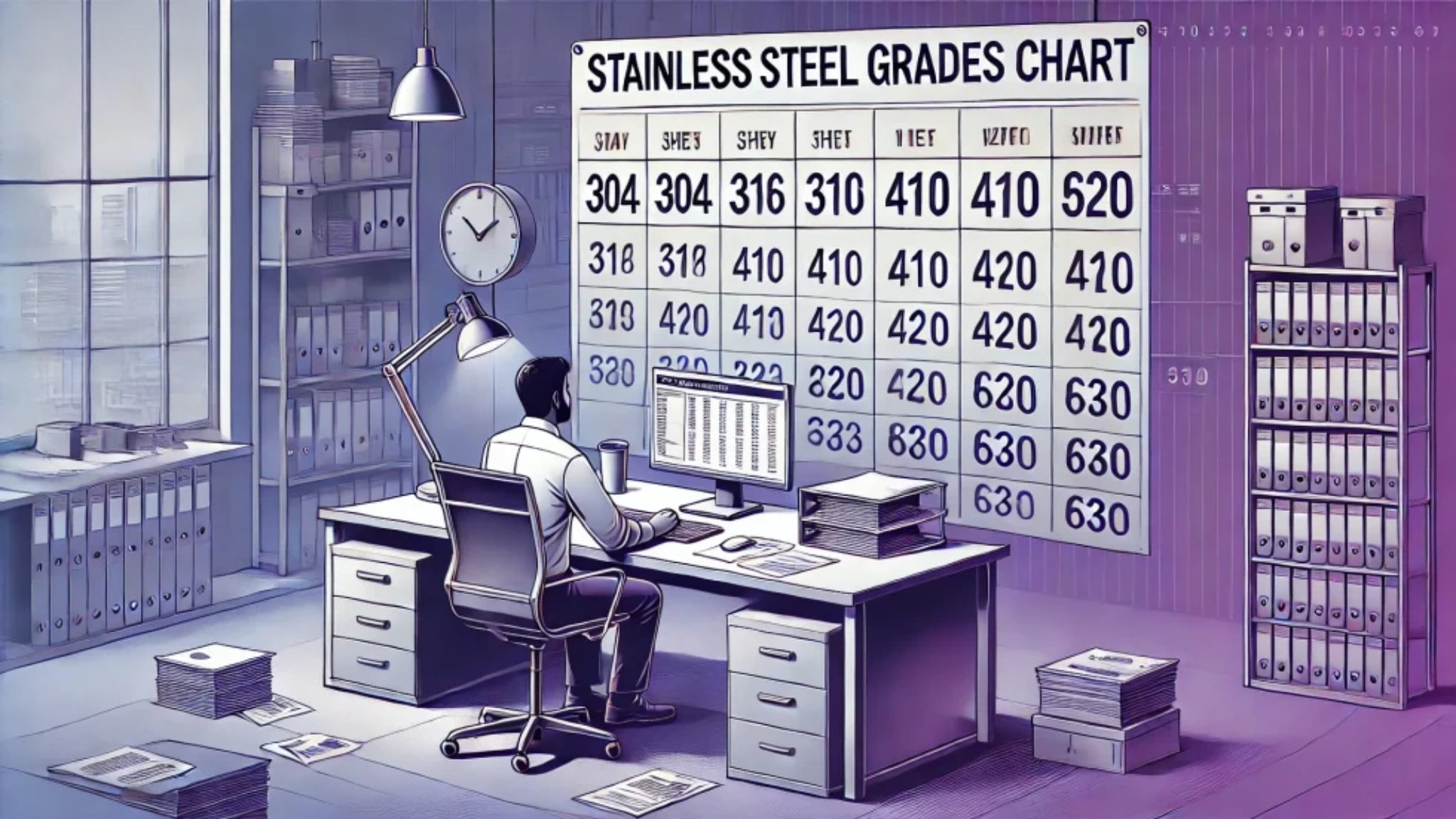
Stainless steel grades differ in corrosion resistance, strength, and durability due to variations in alloy content. Higher levels of chromium, nickel, or molybdenum improve performance but increase cost.
Choosing the wrong grade can cause corrosion, cracking, or early failure. It can also lead to higher maintenance costs and downtime. In regulated sectors, poor selection may result in hygiene or safety non-compliance.
In construction, the right grade ensures structural strength and weather resistance. In food and chemical environments, resistance to cleaning agents, acids, and chlorides is essential. Understanding these differences helps buyers balance performance, availability, and long-term cost.
Stainless steel grades classification (families)
Austenitic stainless steels (300 series)
Austenitic grades, including 304, 304L, 316, and 316L, are popular for their excellent corrosion resistance and weldability. Grades 304 and 304L are ideal for general-purpose use, with 304L offering better performance in welded structures. 316 and 316L add molybdenum, improving resistance to chlorides and harsh chemicals, which makes them suitable for marine and chemical environments. These steels also maintain strength across a wide temperature range and remain tough even in low-temperature conditions, ensuring reliable performance for critical applications.
Ferritic stainless steels (400 series)
Ferritic steels are nickel-free or low-nickel, making them cost-effective and more stable when alloy prices fluctuate. Their high chromium content gives moderate corrosion resistance, and they are naturally magnetic, which can be an advantage in certain applications. Grades like 430 are commonly used in domestic appliances, automotive trims, and indoor structures, where moderate corrosion resistance is sufficient. Overall, ferritic steels offer a practical balance of durability and affordability for mildly corrosive environments.
Martensitic stainless steels
Martensitic steels are valued for their high carbon content, which provides excellent strength and hardness. They can be heat treated to achieve specific mechanical properties, but higher hardness generally reduces corrosion resistance. Grades 410 and 420 are used in cutlery, tools, fasteners, and shafts. This combination of strength and wear resistance makes martensitic steels ideal for applications where durability is more critical than corrosion resistance.
Duplex & super duplex stainless steels
Duplex stainless steels combine austenitic and ferritic structures, resulting in higher strength than standard austenitic grades. They also offer excellent resistance to stress corrosion cracking, especially in chloride-rich environments. Super duplex grades further enhance strength and corrosion resistance, making them ideal for demanding conditions. These steels are widely used in offshore, oil & gas, desalination, and chemical processing, where both mechanical performance and durability are crucial.
Precipitation-hardening (PH) stainless steels
PH steels, such as 17-4 PH (Grade 630), provide very high strength while maintaining good corrosion resistance. Their properties are achieved through an ageing heat treatment, which forms fine precipitates that strengthen the material. These steels are commonly used in aerospace, defence, and high-load industrial components, where reliability and precision under stress are essential.
Comparison of popular stainless steel grades
| Comparison | Key differences | Corrosion resistance | Cost impact | Typical applications | Best uses |
| 304 vs. 316 | 316 contains molybdenum; 304 is more economical | 304: Good; 316: Excellent (chlorides & chemicals). | 304: lower, 316: higher. | Food processing, architecture, marine, chemical tanks. | 304: General indoor use; 316: Coastal/marine & chemical exposure. |
| 410 vs. 420 | 420 has higher carbon → harder. | 410: Moderate; 420: Moderate. | 410: slightly lower; 420:higher due to heat-treatment potential. | Cutlery, tools, surgical instruments, shafts. | 410: General tools & shafts; 420: Blades & high-wear applications. |
| Duplex 2205 vs. Super duplex 2507 | Super Duplex has higher Cr, Ni, Mo → higher strength & corrosion resistance. | Duplex: High; Super duplex: Very high. | Duplex: moderate; Super duplex: premium. | Offshore structures, oil & gas, desalination, chemical plants. | Duplex: Standard offshore & chemical; Super Duplex: Harsh offshore/chloride environments. |
Applications of stainless steel by grade

Stainless steel is used across industries due to its corrosion resistance, strength, and versatility. The choice of grade directly affects durability, fabrication, and cost efficiency. Selecting the right grade optimises cost, longevity, and performance for your specific sector.
Food & pharma
- Grades 304 and 316 dominate this sector.
- They withstand acids, cleaning chemicals, and high hygiene standards.
- Procurement tip: Choose 304L or 316L for welded tanks and piping to reduce carbide precipitation.
Marine & chemical
- 316, 316L, Duplex, and Super Duplex are preferred.
- These grades resist chlorides, stress corrosion, and harsh chemicals.
- Fabrication tip: Account for higher alloy costs but lower maintenance in coastal or chemical plant installations.
Automotive & appliances
- 430 and 410 are common for trims, exhausts, fasteners, and appliance panels.
- Cost-effective and magnetic, suitable for high-volume production.
- Consider: Ease of machining and forming reduces fabrication time.
Construction, oil & gas, aerospace
- Duplex, Super Duplex, and 17-4 PH offer high strength and reliability.
- Ideal for offshore platforms, structural components, and high-load applications.
Stainless steel maintenance and lifecycle costs

Choosing the right stainless steel grade is only part of the procurement equation. Maintenance practices and lifecycle considerations significantly impact total cost of ownership for Indian industries, from MSMEs to large corporates. Understanding how grades behave over time helps buyers plan budgets, reduce downtime, and extend material life.
Key maintenance considerations
- Cleaning frequency: Austenitic grades (304, 316) resist corrosion and are easy to clean; ferritic and martensitic grades may require more attention in harsh environments.
- Environmental exposure: Coastal, chemical, and high-humidity areas accelerate corrosion, increasing maintenance needs.
- Fabrication practices: Proper welding, passivation, and surface finishing reduce long-term maintenance.
- Inspection and repair: Regular checks for pitting, cracks, and surface damage can prevent premature replacement.
Lifecycle comparison by grade
| Grade | Expected service life in Indian conditions | Maintenance notes |
| 304/304L | 15–20 years | Simple cleaning; low corrosion in moderate environments. |
| 316/316L | 20–25 years | Resistant to chlorides; ideal for coastal/chemical use. |
| Duplex/super duplex | 25+ years | Minimal maintenance; high strength reduces replacement costs. |
| 410/420 | 10–15 years | Heat-treated grades may require inspection for wear and corrosion. |
Tip: Factoring in maintenance schedules and lifecycle costs alongside upfront price ensures more cost-effective, durable procurement, especially for large-scale projects in Indian industries.
Stainless steel procurement

Choosing the right stainless steel grade is crucial for performance, durability, and cost-efficiency. Across industries, from food processing and pharma to offshore oil & gas, selecting a grade that matches corrosion environment, mechanical needs, and budget ensures long-term success.
Procurement checklist
- Corrosion environment: Match grade to exposure – 304/304L for moderate, 316/316L or Duplex for harsh/chloride-rich environments.
- Mechanical requirements: Martensitic (410/420) for hardness; Duplex/Super Duplex for high-strength applications.
- Cost vs. availability: MSMEs may prioritise 304/430 for affordability, large corporates may invest in premium grades to reduce maintenance.
- Weldability & fabrication: Low-carbon grades (304L, 316L) minimise welding issues; high-strength grades may require specialised handling.
Grade selection at a glance
| Application | Recommended grades | Key benefits |
| Food & pharma | 304, 304L, 316, 316L. | Hygiene, corrosion resistance, weldability. |
| Marine & chemical | 316, 316L, duplex, super duplex. | Chloride & chemical resistance, long service life. |
| Automotive & appliances | 410, 420, 430. | Cost-effective, machinable, moderate corrosion. |
| Oil & gas/construction | Duplex, super duplex, 17-4 PH. | High strength, stress corrosion resistance, structural reliability. |
Takeaways:
- Always balance performance and cost.
- Check supplier reliability and stock availability to avoid delays.
- Consider long-term maintenance and downtime costs when selecting premium grades.
- Use this guide to make informed, India-specific procurement decisions that optimise both material and operational efficiency.
Stainless steel pricing in India
In India, alloy composition drives price, especially nickel, molybdenum, and duplex/super duplex content. Prices fluctuate based on global metal markets, so buyers should monitor trends before committing to large orders.
Cost tiers by grade
| Grade category | Relative cost | Notes for buyers/producers |
| 304/430 | Low | Widely available, budget-friendly for MSMEs or high-volume production. |
| 316/316L | Medium | Higher upfront cost but reduces maintenance in coastal, chemical, or high-humidity environments. |
| Duplex/super duplex/PH | High | Premium grades; expensive but save on downtime, replacement, and long-term maintenance. |
Strategic procurement tips:
- Use grade combinations to balance cost and performance for different parts of the same project.
- Factor in supplier reliability, lead times, and local availability, which impact total project cost.
- Consider total cost of ownership, not just purchase price, especially for offshore, chemical, or high-load applications.
Conclusion
Selecting the right stainless steel grade is essential for performance, cost-efficiency, and long-term reliability. The stainless steel grades chart provides a quick reference for chemical composition, mechanical properties, and application suitability, helping buyers and producers make informed procurement decisions. Key takeaways include matching grades to the corrosion environment, balancing mechanical needs with cost, and considering weldability and supplier reliability.
Looking ahead, advances in sustainable production, recycled alloys, and high-performance stainless steels will offer more options for Indian industries, from food processing and automotive to offshore and aerospace. Using the chart and insights ensures efficient procurement, optimal application fit, and reduced maintenance costs across sectors.
Looking to procure steel?
Tata nexarc helps manufacturers, builders and MSMEs source certified steel products, compare prices, and choose the right grade as per IS codes—with complete traceability and procurement confidence.
FAQs
What is the best stainless steel for high-temperature environments?
Which stainless steel grade is most versatile for Indian industries?
When should I choose 316 over 304?
Are Duplex and Super Duplex steels worth the higher cost?
How does stainless steel grade affect fabrication?
What is the typical service life of stainless steel in India?
How can I optimise total cost of ownership?
What affects stainless steel prices in India?
Can lower-cost grades like 430 be used offshore?
Which grades are suitable for food and pharma sectors?
A product manager with a writer's heart, Anirban leverages his 6 years of experience to empower MSMEs in the business and technology sectors. His time at Tata nexarc honed his skills in crafting informative content tailored to MSME needs. Whether wielding words for business or developing innovative products for both Tata Nexarc and MSMEs, his passion for clear communication and a deep understanding of their challenges shine through.




Can you provide more specific examples of how different grades are used in construction projects? as I’m a fresher builders so this information will really help me.