Check Price Now
Table of Contents
- What is an ERW Pipe?
- ERW Pipe Manufacturing Process
- Key Benefits of ERW Pipes
- Uses and Applications of ERW Pipes
- ERW Pipe Sizes, Grades, Specifications, Price
- ERW Pipes vs. Seamless Pipes
- Quality Testing and Inspection of ERW Pipes
- ERW Pipes in India’s Infrastructure and Steel Industry
- Future Trends in ERW Pipe Manufacturing
- Conclusion
- FAQs
Steel pipes play a critical role in modern infrastructure, from water distribution and construction to oil and gas transportation. One of the most widely used types is the ERW pipe, short for Electric Resistance Welded pipe. ERW steel pipes are produced by welding steel coils into cylindrical pipes using an electric resistance welding process.
Due to their strength, uniform shape, and cost efficiency, ERW pipes are widely used in construction, energy pipelines, and industrial manufacturing. In this article, we explain what an ERW pipe is, how ERW pipe manufacturing works, its benefits, common applications, and how it compares with seamless steel pipes.
What is an ERW pipe?
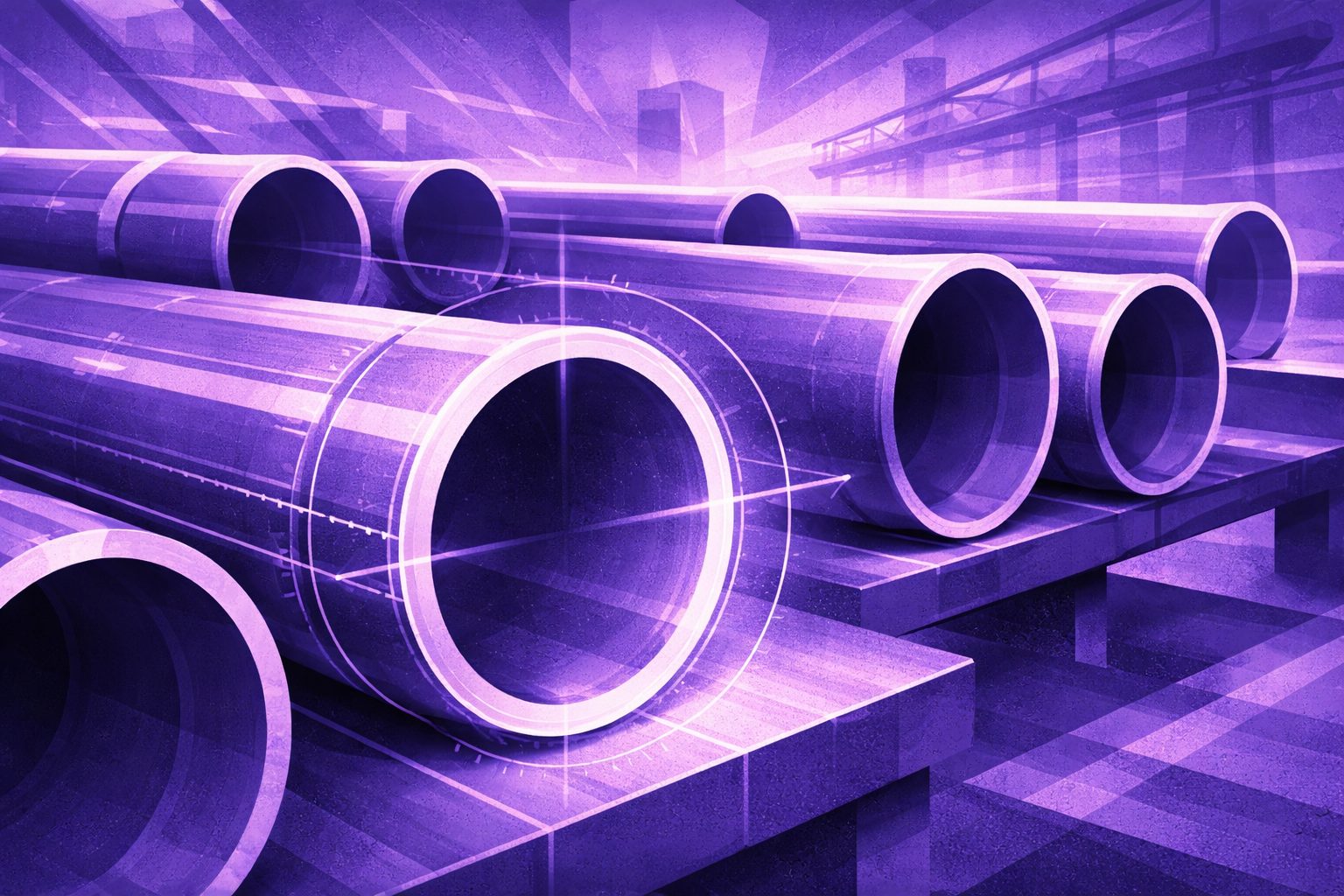
An ERW pipe is a steel pipe made by welding a steel strip or coil along its length using the electric resistance welding (ERW) process. These pipes are widely used in construction, infrastructure, oil and gas pipelines, and water distribution systems.
In welded steel pipe manufacturing, a flat steel coil is formed into a cylindrical shape. Electric current heats the edges of the steel strip, and pressure joins them together to create a longitudinal weld seam.
Unlike traditional welding, the electric resistance welded pipe process does not use filler material. Heat and pressure alone bond the edges, producing a clean weld and uniform pipe structure.
Process overview
The ERW pipe formation can be understood in three basic stages:
- Steel coil forming – A flat steel strip is rolled into a round tube shape.
- Edge heating – Electric current heats the edges of the strip.
- Pressure welding – The heated edges are squeezed together to form a weld seam.
Key characteristics of ERW steel pipes
- Made from hot-rolled or cold-rolled steel coils
- Welded using high-frequency electric resistance welding
- Smooth internal and external surface
- Uniform wall thickness and accurate dimensions
- Suitable for medium and high-pressure applications
Common standards and certifications
ERW steel pipes are manufactured according to several national and international standards, including:
| Standard | Region | Typical use |
| IS 1239 | India | Water, gas, and structural pipes. |
| IS 3589 | India | High-pressure water pipelines. |
| ASTM A53 | International | Structural and mechanical piping. |
| API 5L | Global oil & gas | Pipeline transportation. |
Because of their consistent quality, cost efficiency, and scalability, ERW pipes are widely used in infrastructure and industrial projects across the world.
ERW pipe manufacturing process
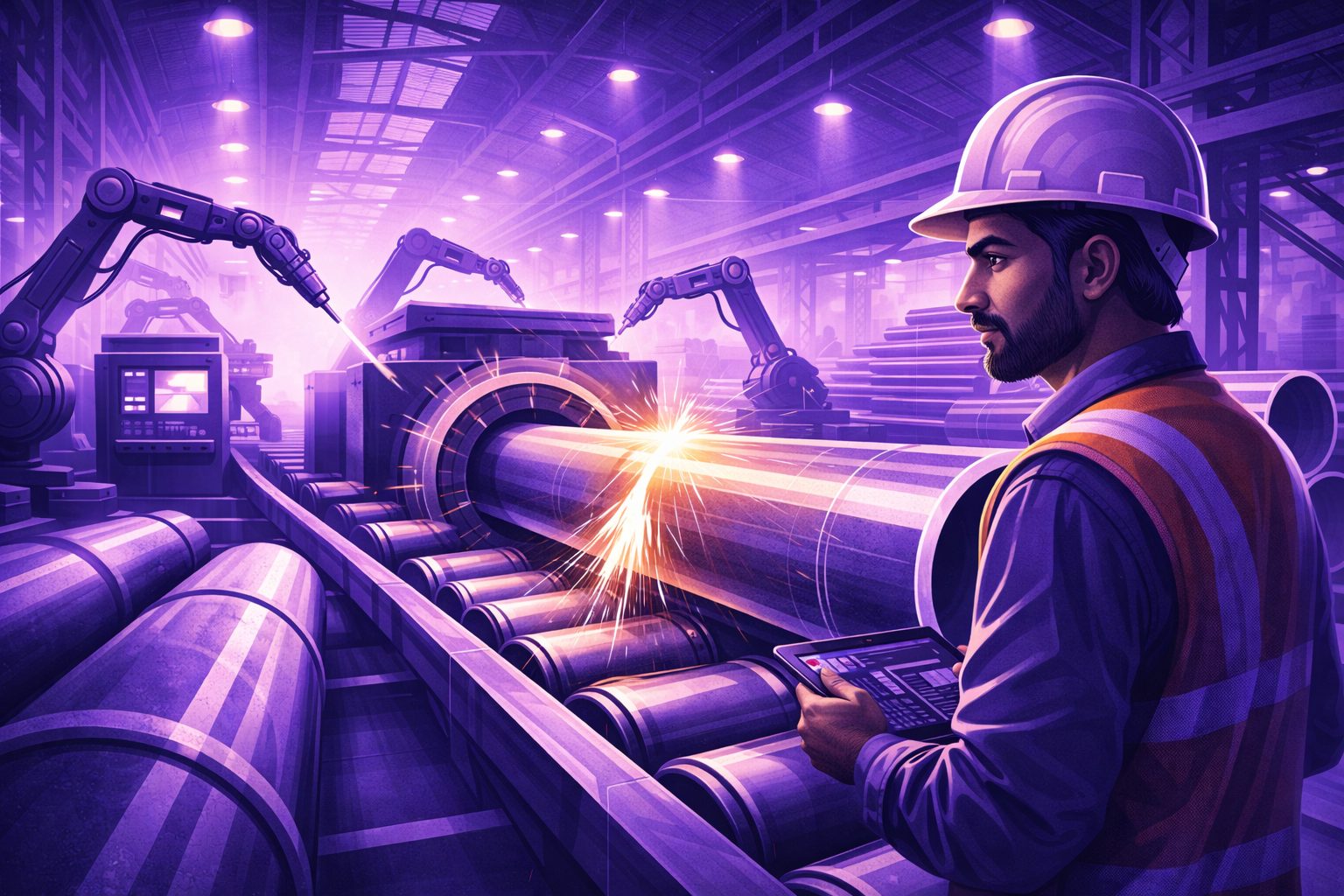
The ERW pipe manufacturing process converts flat steel coils into strong, uniform steel pipes using a continuous automated production line. Modern ERW pipe production lines are designed for high efficiency, precision forming, and consistent weld quality. The process involves several controlled stages that shape, weld, size, and test the pipe before it reaches the market.
Uncoiling and strip preparation
The process begins with large steel coils placed on an uncoiler. The steel strip is straightened and fed into the forming section of the mill.
Edge milling
The edges of the steel strip are trimmed or milled to ensure smooth and uniform welding. Proper edge preparation improves weld strength and consistency.
Pipe forming
A series of forming rollers gradually bend the steel strip into a cylindrical shape. At this stage, the edges of the strip come close together to form an open seam.
High-frequency welding (HFIW)
The open seam is welded using high-frequency electric current, also known as High Frequency Induction Welding (HFIW). The current heats the edges rapidly, and pressure rollers forge them together to create a strong weld seam.
Weld seam heat treatment
The welded area is heat treated to remove residual stresses and improve the mechanical properties of the pipe.
Sizing and shaping
The pipe passes through sizing rollers that ensure the correct diameter, roundness, and wall thickness. This stage also allows the pipe to be formed into square or rectangular sections if required.
Cutting and finishing
The continuous pipe is cut into standard lengths using automated cutting systems.
Quality inspection and testing
Modern mills perform online inspection and Non-destructive Testing (NDT) such as ultrasonic or eddy current testing to detect weld defects and ensure pipe quality.
Key benefits of ERW pipes
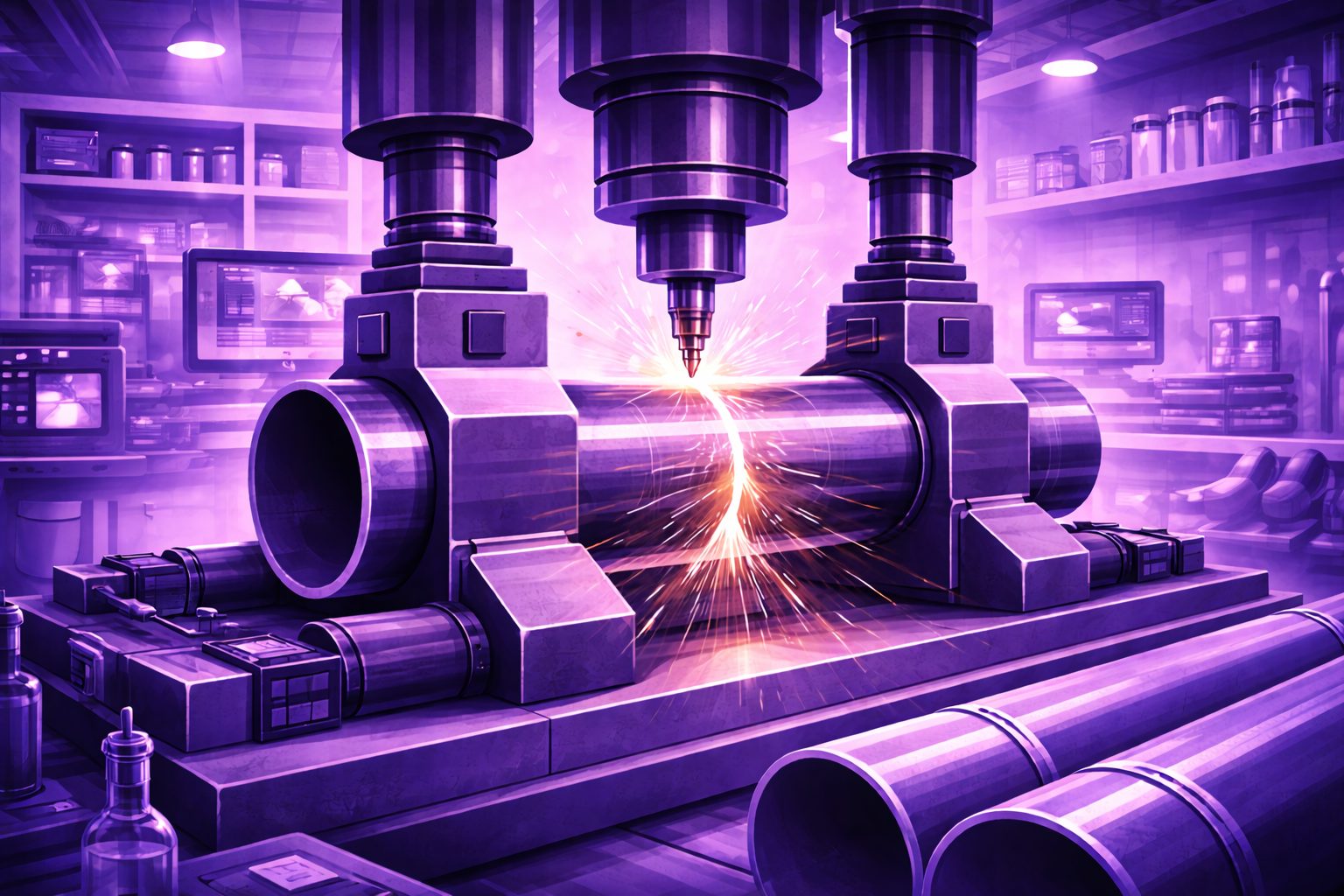
ERW pipes are widely used across industries because they offer a strong balance of performance, cost efficiency, and manufacturing consistency. Below are some of the key advantages of ERW pipes compared to many conventional welded pipes.
High dimensional accuracy
One of the main advantages of ERW steel pipes is their precise dimensions. Modern ERW mills use automated roll forming and sizing systems that maintain consistent diameter, roundness, and wall thickness. This makes ERW pipes easier to install and ideal for structural and pipeline applications.
Uniform wall thickness
During the ERW pipe manufacturing process, steel coils are formed and welded under controlled conditions. This results in pipes with uniform wall thickness, which improves strength and pressure handling compared to some traditional welded pipes.
Smooth internal surface
ERW pipes typically have a smooth internal finish because they are formed from flat steel coils. The smooth surface helps reduce friction during fluid transportation, making them suitable for water pipelines, oil and gas transport, and industrial flow systems.
Cost-effective production
Another important benefit is the lower production cost. ERW pipes are manufactured using continuous automated processes, allowing large volumes to be produced quickly. This makes them more economical than seamless pipes for many infrastructure and construction projects.
Strong and durable weld seam
Modern high-frequency electric resistance welding creates a strong longitudinal weld. With proper heat treatment and testing, ERW pipes offer excellent durability and reliability for structural, mechanical, and pipeline uses.
Uses and applications of ERW pipes
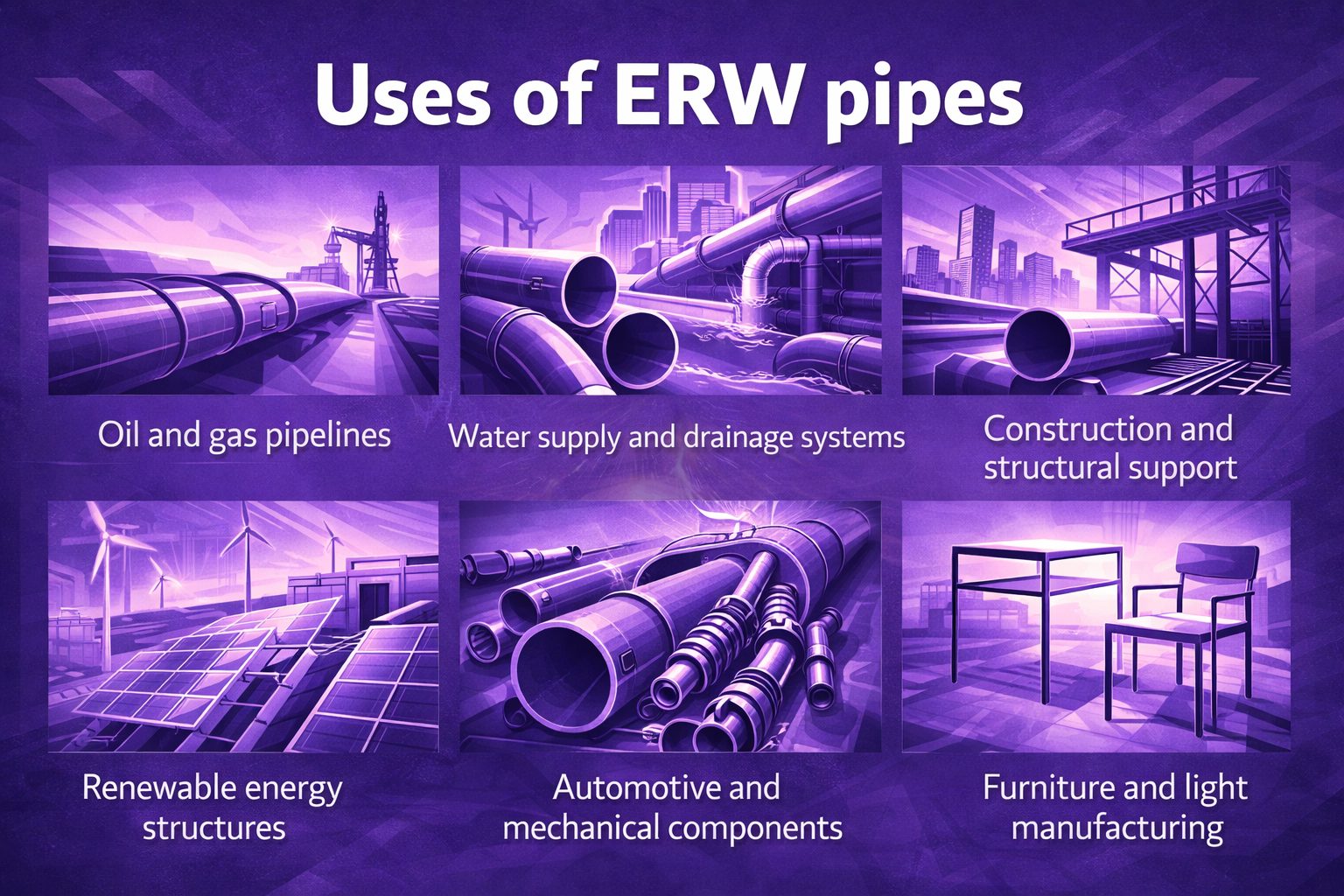
ERW pipes are used across multiple industries due to their strength, consistent quality, and cost efficiency. These pipes are suitable for transporting fluids, supporting structures, and manufacturing industrial components. As a result, ERW pipe applications continue to expand in infrastructure, energy, and manufacturing sectors.
Oil and gas pipelines
One of the most common ERW pipe applications is in the oil and gas industry. ERW pipes are used to transport crude oil, natural gas, and petroleum products over long distances. Their uniform wall thickness and strong weld seam make them suitable for medium and high-pressure pipeline systems.
Water supply and drainage systems
ERW pipes are widely used in municipal water distribution and drainage networks. Cities and infrastructure projects rely on these pipes for transporting drinking water, wastewater, and irrigation water due to their durability and corrosion resistance when coated or galvanised.
Construction and structural support
ERW pipes in construction are commonly used for structural frameworks, columns, scaffolding, and building supports. Their dimensional accuracy and strength make them suitable for infrastructure projects such as bridges, commercial buildings, and industrial facilities.
Renewable energy structures
With the growth of renewable energy projects, ERW pipes are increasingly used in solar panel mounting structures, wind energy installations, and support frames. Their strength and cost efficiency make them suitable for large-scale installations.
Automotive and mechanical components
ERW steel pipes are also used in automobile manufacturing, including exhaust systems, suspension components, and mechanical tubing.
Furniture and light manufacturing
In the manufacturing sector, ERW pipes are used to produce steel furniture, storage racks, gates, and railings. Their smooth surface and uniform shape make them ideal for fabrication and finishing.
ERW pipe sizes, grades, specifications, & price
ERW pipes are available in a wide range of diameters, wall thicknesses, and material grades to meet different industrial requirements. Manufacturers follow standard specifications to ensure consistent quality and compatibility across industries. Understanding ERW pipe sizes and specifications helps buyers select the right pipe for construction, pipelines, or mechanical applications.
Common ERW pipe size range
ERW pipes are typically produced in the following dimensions:
| Specification | Typical range |
| Outside diameter | ½ inch – 24 inch (15 mm – 610 mm) |
| Wall thickness | 1.6 mm – 20 mm |
| Standard length | 3 m – 12 m |
| Pipe shape | Round, square, rectangular. |
| End type | Plain end, threaded, beveled. |
The diameter determines the flow capacity of the pipe, while wall thickness affects pressure handling and structural strength.
Pipe wall thickness classification
Pipes are also classified by schedule numbers, which indicate wall thickness and pressure capacity.
| Schedule | Typical use |
| SCH 10 | Low-pressure systems |
| SCH 40 | General industrial pipelines |
| SCH 80 | High-pressure pipelines |
| SCH 160 | Heavy-duty industrial use |
Higher schedule numbers mean thicker walls and higher-pressure tolerance.
ERW pipe standards used in India and globally
ERW pipes are manufactured according to several recognised standards.
| Standard | Region | Typical application |
| IS 1239 | India | Water supply, structural pipes. |
| IS 3589 | India | High-pressure water pipelines. |
| ASTM A53 | International | Mechanical and structural piping. |
| API 5L | Global | Oil and gas pipeline transportation. |
These ERW pipe standards in India ensure quality, safety, and compatibility across infrastructure and industrial projects.
Average ERW pipe price in 2026
Prices vary based on diameter, thickness, grade, and coating.
| Type | Approx. price (India, 2026) |
| Mild steel ERW pipes | ₹55 – ₹72 per kg |
| Galvanised ERW pipes | ₹70 – ₹85 per kg |
| Industrial carbon steel ERW pipes | ₹88 – ₹115 per kg |
Prices fluctuate depending on raw material costs, order volume, and supplier location.
ERW pipes vs. seamless pipes
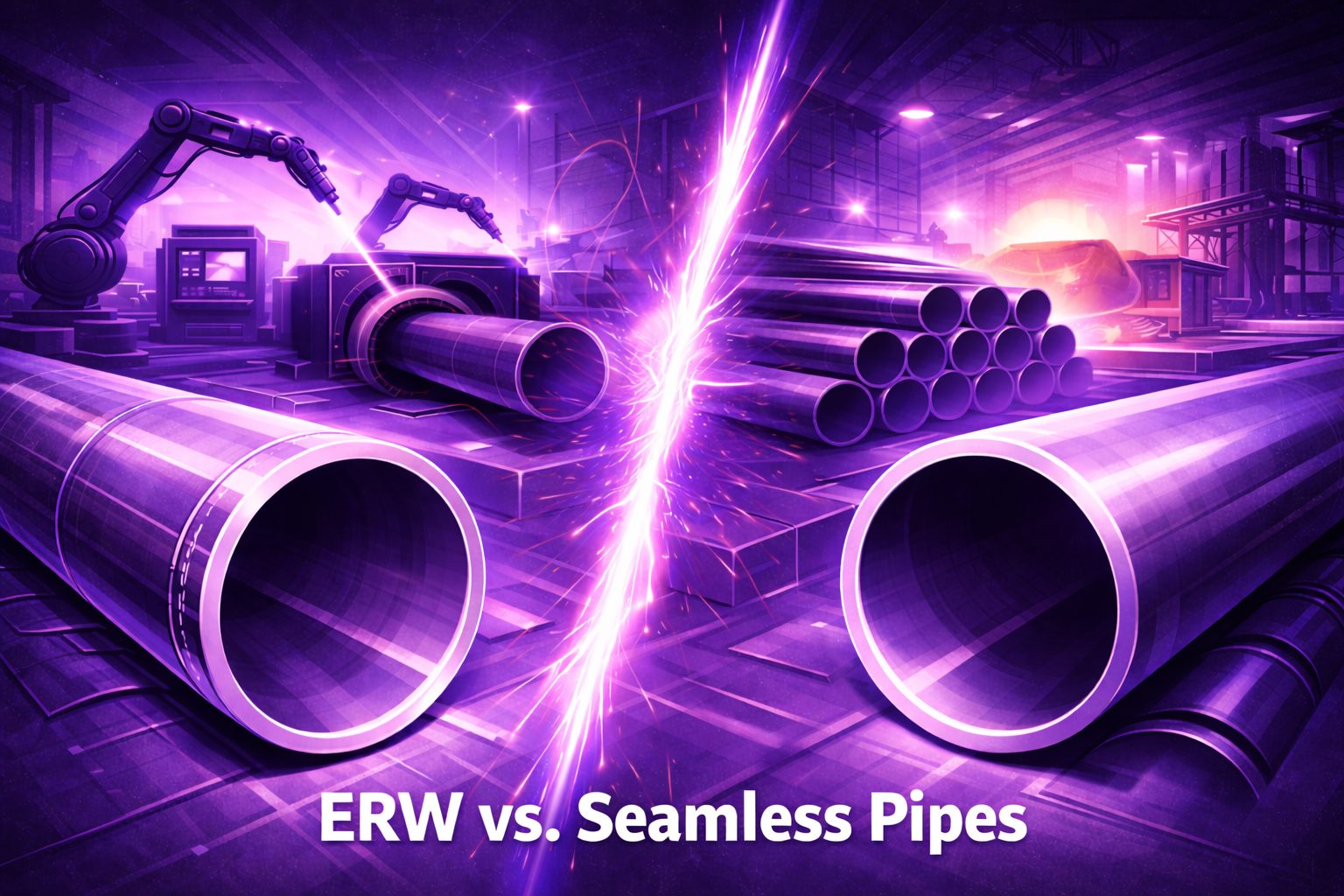
When selecting pipes for industrial or infrastructure projects, buyers often compare ERW vs. seamless pipes. Both are widely used in construction, pipelines, and manufacturing but differ in production method, cost, and performance.
The main difference between ERW and seamless pipes is how they are manufactured. ERW pipes are made by forming steel coils and welding them along the length, while seamless pipes are produced from solid steel billets without a weld seam.
Key differences between ERW and seamless pipes
| Feature | ERW pipes | Seamless pipes |
| Manufacturing process | Steel coil is formed and welded using electric resistance welding | Solid steel billet is heated and pierced to form a hollow pipe |
| Weld seam | Longitudinal weld seam present | No weld seam |
| Dimensional accuracy | High consistency due to automated rolling and sizing | Slightly less uniform depending on manufacturing process |
| Pressure capacity | Suitable for low to medium-high pressure applications | Better suited for very high-pressure environments |
| Cost | More economical for large-scale projects | Generally more expensive due to complex production |
| Production speed | Faster mass production | Slower and more energy-intensive |
Typical applications
ERW pipes are commonly used for:
- Water pipelines and drainage systems
- Structural frameworks and scaffolding
- Oil and gas transportation lines
- Mechanical and automotive components
Seamless pipes are preferred for:
- High-pressure oil and gas pipelines
- Boilers and heat exchangers
- Power plants and chemical processing systems
In practice, the choice between welded pipe vs. seamless pipe depends on the application, pressure requirements, and project budget. ERW pipes are widely used for infrastructure and structural applications, while seamless pipes are preferred for highly demanding industrial environments.
Quality testing and inspection of ERW pipes
Quality testing is an important part of the ERW pipe manufacturing process. Pipes used in infrastructure, pipelines, and industrial systems must meet strict safety and performance standards. Manufacturers therefore carry out several inspection procedures to ensure reliability. Proper ERW pipe testing helps detect defects, confirm weld strength, and maintain consistent product quality.
Weld seam inspection
The weld seam is the most critical area of an ERW pipe. Manufacturers inspect the seam during and after welding to ensure proper bonding of the steel edges. Automated systems monitor the welding process to detect irregularities, incomplete fusion, or surface defects.
Ultrasonic testing
Ultrasonic testing is widely used in NDT testing of steel pipes. High-frequency sound waves are passed through the pipe to detect internal defects, cracks, or discontinuities. This method allows manufacturers to inspect pipes without damaging them.
Eddy current inspection
Eddy current testing is another non-destructive testing method used for surface inspection. An electromagnetic field is applied to the pipe surface to detect small cracks, flaws, or variations in the weld area. It is commonly used for high-speed inspection on ERW pipe production lines.
Hydrostatic pressure testing
In hydrostatic testing, the pipe is filled with water and pressurised to verify its strength and leak resistance. This test ensures the pipe can withstand the required operating pressure in real-world applications.
Quality control standards
Modern mills also follow strict ERW pipe quality control procedures based on industry standards such as IS 1239, ASTM A53, and API 5L. These inspections help ensure the pipes meet safety requirements for construction, water supply, and oil and gas transportation.
ERW pipes in India’s infrastructure and steel industry
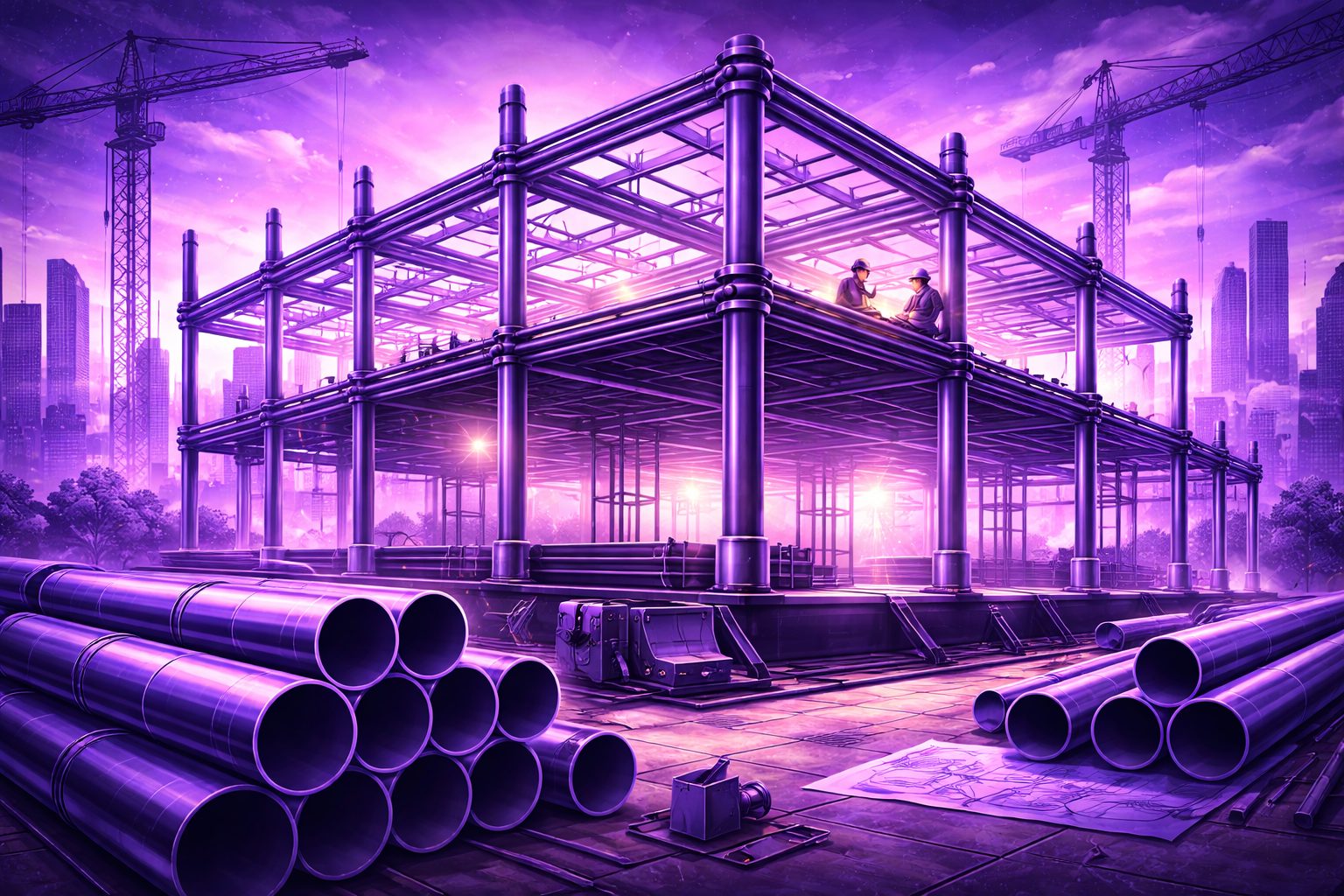
ERW pipes play an important role in India’s fast-growing infrastructure and industrial sectors. The steel pipe industry in India relies heavily on ERW technology due to its cost efficiency, large-scale production capability, and suitability for multiple applications. With rapid urbanisation, industrial expansion, and government infrastructure programs, demand for ERW pipes continues to grow across several sectors.
Water infrastructure projects: ERW pipes are widely used in municipal water supply networks, irrigation systems, and drainage pipelines across cities and rural infrastructure projects.
Oil and gas pipeline expansion: India’s growing energy demand has increased the need for pipeline infrastructure, where ERW pipes are used for transporting crude oil, natural gas, and refined petroleum products.
Construction sector demand: The construction industry uses ERW pipes for structural frameworks, scaffolding, columns, and building support systems in commercial and residential projects.
Renewable energy structures: ERW pipes are increasingly used in solar mounting structures, wind turbine supports, and other renewable energy installations.
Manufacturing and industrial use: ERW pipes are also used in machinery, automotive components, fabrication units, and industrial equipment manufacturing.
Many ERW pipe manufacturers in India supply pipes for large infrastructure projects, making them a key part of the country’s steel supply chain. As infrastructure investment increases, ERW pipes for infrastructure projects are expected to remain in strong demand.
Future trends in ERW pipe manufacturing
The steel industry continues to evolve with new technologies and production methods. As infrastructure demand grows, manufacturers are adopting innovations that improve efficiency, quality, and sustainability. These developments are shaping the future of ERW pipes and influencing key steel pipe manufacturing trends worldwide.
Automated ERW pipe mills
Modern ERW mills are becoming more automated. Advanced roll forming systems and digital controls help maintain precise dimensions, consistent weld quality, and faster production speeds.
High-frequency welding improvements
Advances in high-frequency welding technology allow better heat control and stronger weld seams. This improves the durability and reliability of ERW pipes used in pipelines and structural applications.
AI-based defect detection
Many manufacturers now use AI-based inspection systems to detect weld or surface defects in real time. Cameras and sensors help improve quality control and reduce production waste.
Sustainable steel manufacturing
Sustainability is becoming a key focus in steel production. Energy-efficient mills, recycled steel, and improved process control are helping reduce emissions and make ERW pipe manufacturing more environmentally responsible.
Conclusion
ERW pipes are widely used in infrastructure, construction, and pipeline systems due to their strength, accuracy, and cost efficiency. The ERW pipe manufacturing process enables large-scale production with consistent quality. As demand for reliable piping solutions grows, ERW steel pipe applications will continue expanding across industries such as construction, water supply, and energy.
Looking to procure steel?
Tata nexarc helps manufacturers, builders and MSMEs source certified steel products, compare prices, and choose the right grade as per IS codes—with complete traceability and procurement confidence.
FAQs
What does ERW stand for in ERW pipes?
What is an ERW pipe used for?
How are ERW pipes manufactured?
What materials are used to make ERW pipes?
What are the advantages of ERW pipes?
What sizes are ERW pipes available in?
Are ERW pipes suitable for high-pressure applications?
What standards are used for ERW pipes in India?
What is the difference between ERW and seamless pipes?
What is the average price of ERW pipes in 2026?
Priyanka is a seasoned content marketing professional with more than 6 years of experience crafting various forms of business and technology sector content. Her insightful writing tackles critical issues faced by small-scale manufacturing businesses. Priyanka's clear and concise communication empowers businesses to make informed decisions and thrive in today's dynamic business environment.