Check Price Now
Table of Contents
- About Bharat Steel 2026 Summit
- India’s Steel Sector in 2026: Current Landscape
- Key Themes Likely to Dominate Bharat Steel 2026
- Policy Signals to Watch at Bharat Steel 2026
- What Bharat Steel 2026 Means for Steel Producers
- What the Summit Means for Steel Buyers and Traders
- Investor and Capital Market Implications
- Risks and Challenges That May Surface
- Strategic Takeaways to Anticipate
- Conclusion
- FAQs
India is the world’s second-largest steel producer, and demand continues to rise across infrastructure, manufacturing, and construction. As the industry expands, policy direction and investment signals are becoming more important than ever. The upcoming Bharat Steel 2026 Summit, scheduled for April 16-17, 2026 in New Delhi, is expected to bring together policymakers, steel producers, investors, and technology leaders. Discussions are likely to focus on green steel, capacity expansion, trade policy, and domestic demand. The outcomes could influence how India’s steel sector evolves over the next decade.
About Bharat Steel 2026 Summit
The Bharat Steel 2026 summit is an upcoming industry event expected to bring together key stakeholders from across the steel ecosystem. As India’s steel sector continues expanding, forums like this provide a platform for industry leaders and policymakers to discuss policy direction, investment trends, and technology adoption.
The summit will focus on issues shaping the Indian steel sector, including sustainability, domestic demand growth, trade policy, and supply chain transformation.
Event overview
| Detail | Information |
| Event | Bharat Steel Summit 2026 |
| Dates | April 16-17, 2026. |
| Location | New Delhi, India. |
| Focus | Policy dialogue, industry strategy, and technology trends. |
Key participants expected
The steel industry conference in India is expected to attract a wide range of participants from both domestic and global markets.
Industry stakeholders likely to attend include:
- Steel manufacturers and integrated steel producers
- Government officials and policymakers
- Global investors and financial institutions
- Raw material suppliers such as iron ore and coking coal companies
- Technology providers and equipment manufacturers
Global and policy discussions
The Indian steel sector summit is also expected to include international participation. Global experts may discuss trade regulations, carbon border policies, and emerging technologies in steelmaking. Events like the Bharat Steel Summit 2026 often help shape industry conversations. They can influence policy signals, investment decisions, and the long-term outlook for India’s steel industry.
India’s steel sector in 2026: Current landscape
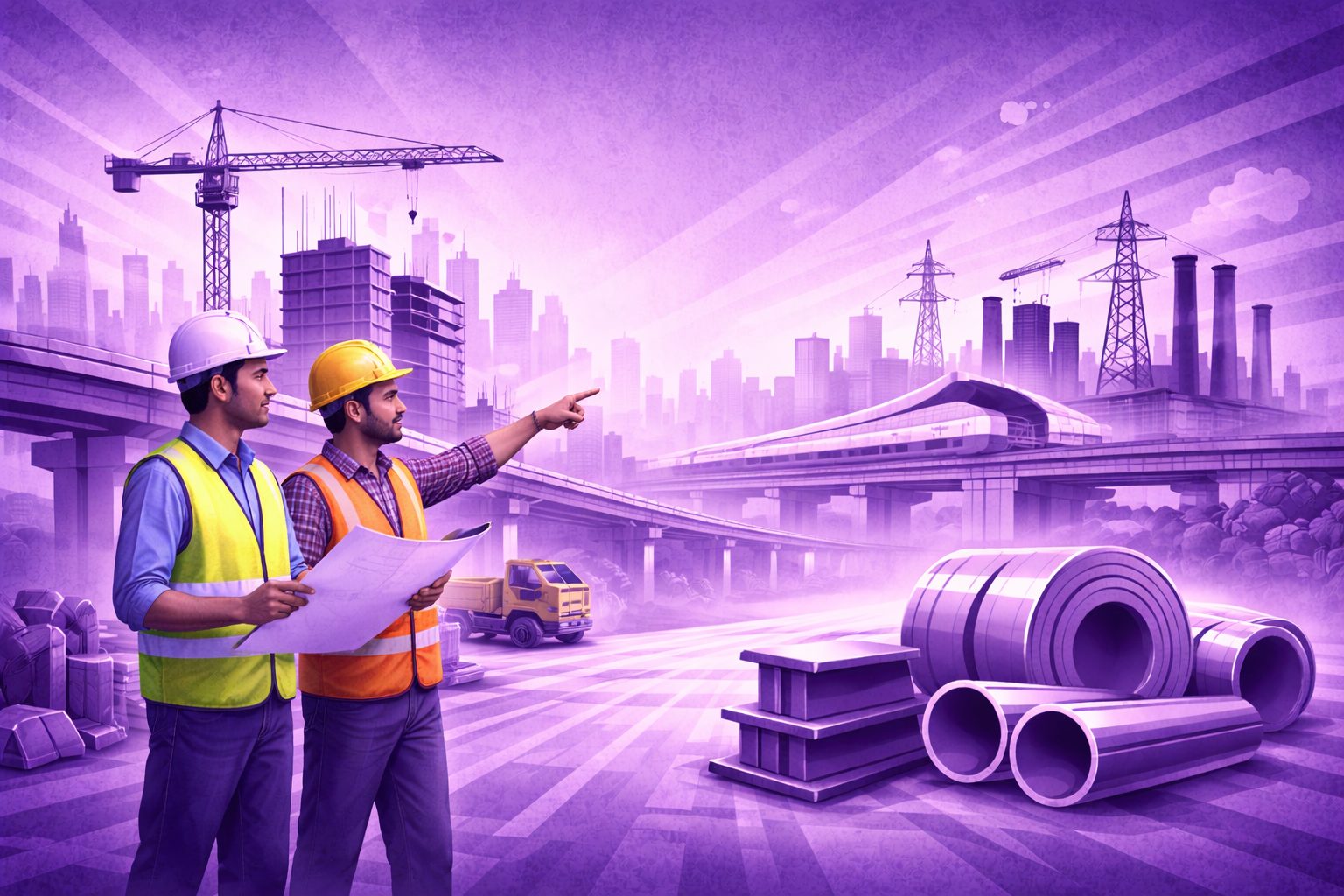
The Indian steel industry outlook for 2026 reflects strong growth driven by infrastructure investment, industrial expansion, and rising domestic consumption. India has remained the world’s second-largest steel producer, and demand is expected to continue increasing as large development projects move forward.
Key demand drivers include:
- Large infrastructure projects such as highways, railways, and metro systems.
- Housing and urbanisation across major cities and tier-2 markets.
- Growth in manufacturing, engineering, and capital goods industries.
Steel demand drivers in India
| Sector | Impact on steel consumption |
| Infrastructure | High demand for structural steel and long products |
| Construction & housing | Rising use of TMT bars and reinforcement steel |
| Manufacturing | Increased requirement for flat steel and specialty steel |
Capacity expansion and industry investments
Major steel companies are also expanding production capacity to meet future demand. Several firms have announced plant upgrades, brownfield expansions, and new greenfield projects.
This steel capacity expansion in India is expected to increase production over the next few years. At the same time, investment activity has picked up across the sector.
Recent industry trends include:
- Capacity expansion plans by leading steel producers
- Technology upgrades and efficiency improvements at existing plants
- Rising investor interest and IPO activity in steel-related companies
Steel prices and trade dynamics are also shaping the market environment. Changes in global demand, import competition, and raw material costs continue to influence producer margins.
With strong demand, new investments, and evolving global trade conditions, 2026 is emerging as a pivotal year for the Indian steel industry. This makes the discussions expected at the upcoming Bharat Steel 2026 Summit particularly relevant.
Key themes likely to dominate Bharat Steel 2026
The upcoming Bharat Steel 2026 Summit is expected to focus on several major issues shaping the future of the steel industry. These discussions will likely cover sustainability, demand growth, trade policies, investment trends, and technological transformation. Together, these themes reflect the priorities of India’s expanding steel sector.
Green steel and decarbonisation
Sustainability is expected to be one of the most important topics at the summit. India’s steel industry is under growing pressure to reduce emissions while maintaining production growth. Discussions may focus on the country’s low-carbon steel roadmap and the role of new technologies.
Hydrogen-based direct reduced iron (DRI) processes and greater adoption of Electric Arc Furnace (EAF) steelmaking could be key areas of interest. Participants may also discuss how international climate policies, including carbon border regulations, could affect steel exports.
Infrastructure and domestic steel demand
Domestic demand remains a strong driver of India’s steel consumption. Government infrastructure spending is expected to continue supporting growth in the sector. Large projects in railways, highways, ports, and metro systems are likely to increase demand for structural steel and reinforcement products. Construction activity and urban development may also remain key demand sources for long steel products such as TMT bars.
Trade policy and global steel competition
Trade policy will likely be another major discussion area. Industry stakeholders may examine safeguard duties, anti-dumping measures, and other tools used to protect domestic producers. There may also be conversations about export competitiveness and how new global rules, such as the European Union’s Carbon Border Adjustment Mechanism (CBAM), could affect Indian steel shipments.
Capacity expansion and capital investment
India’s steel companies are continuing to expand production capacity to meet future demand. Summit discussions may look at both greenfield projects and brownfield expansions at existing plants. Private investment, strategic partnerships, and supply chain integration are also expected to be key topics as companies prepare for the next phase of industry growth.
Technology, automation, and industry 4.0
Technology adoption is becoming increasingly important for steel producers. Many companies are investing in smart manufacturing systems to improve efficiency and reduce costs. Topics at the summit may include AI-driven production optimisation, automation in steel plants, and digital tools that improve supply chain visibility and planning. These technologies are expected to play a growing role in the industry’s future.
Policy signals to watch at Bharat Steel 2026
Government policy is expected to be an important part of discussions at the upcoming Bharat Steel 2026 Summit. Policymakers and industry leaders may use the platform to outline priorities for the sector and discuss regulatory developments. These policy signals can influence investment decisions, expansion plans, and long-term strategy across the industry.
Green steel policies
India is gradually moving toward lower-emission steel production. At the summit, discussions may focus on incentives that support low-carbon steel technologies and cleaner production methods. Possible policy conversations could include financial incentives for green steel projects and the development of green procurement frameworks. These policies could encourage industries and infrastructure projects to source environmentally responsible steel.
Raw material security
Reliable access to raw materials remains a key concern for steel producers. Policymakers may discuss ways to ensure steady iron ore supply for domestic steelmakers. Other potential topics include partnerships to secure coking coal imports and efforts to strengthen India’s scrap ecosystem. Expanding scrap availability is especially important as electric arc furnace steelmaking grows.
Export and trade strategy
India is also working to strengthen its position in global steel markets. Discussions may cover export promotion policies and measures to protect domestic producers from unfair imports, including anti-dumping safeguards and trade partnerships.
Policy signals around steel policy in India and emerging green steel initiatives could shape the sector’s direction in the coming years. For companies and investors, such discussions often provide early clues about future regulations and market opportunities.
What Bharat Steel 2026 means for steel producers
The upcoming Bharat Steel 2026 Summit could provide important signals for steel manufacturers across India. Discussions around policy, technology, and market trends may influence how producers plan expansion, manage costs, and position themselves in the market over the next few years.
Steel companies are already preparing for rising domestic demand and global competition. Insights from the summit may help firms adjust their long-term strategies.
Potential implications for steel producers
| Strategic area | What it could mean for producers |
| Expansion planning | Companies may refine capacity expansion plans based on demand outlook and policy signals. |
| Cost optimisation | Greater adoption of automation, digital tools, and efficient production methods could help control operating costs. |
| ESG compliance | Producers may face increasing pressure to reduce emissions and align with emerging green steel policies. |
| Competitive positioning | Major steelmakers may strengthen supply chains and improve efficiency to stay competitive in domestic and export markets. |
| High-value steel | Companies may focus more on specialised and value-added steel products for sectors like automotive, infrastructure, and engineering. |
What the summit means for steel buyers and traders

The upcoming Bharat Steel 2026 Summit could also offer useful insights for steel buyers, distributors, and traders. Discussions around demand trends, capacity expansion, and trade policy may provide early signals about supply conditions and pricing in the domestic market.
Companies in construction, infrastructure, engineering, and manufacturing often track such events to understand how the steel market may evolve.
Possible market signals for buyers and traders
| Market factor | What it could mean |
| Supply outlook | Capacity expansions by steel producers could improve the availability of long and flat steel products in the coming years. |
| Price trends | Discussions around demand, raw material costs, and trade policy may offer clues about the steel price outlook in India. |
| Supplier competition | Increasing production capacity may intensify competition among domestic steel suppliers. |
| Specialised steel | Greater focus on high-value and specialty steel could improve access for sectors like automotive, engineering, and infrastructure. |
Buyers and traders often monitor major industry events for insights into steel supply trends in India. While the summit itself will not set prices, the themes discussed and policy signals shared can help market participants anticipate future supply conditions and pricing movements.
Investor and capital market implications
The upcoming Bharat Steel 2026 Summit may also draw attention from investors and financial markets. Industry outlook discussions, policy signals, and expansion plans can influence how investors view the future of the steel sector. In recent years, the sector has seen growing interest from institutional investors as demand for steel rises across infrastructure and manufacturing.
Key signals investors may watch
| Investment factor | What it could mean |
| Steel IPO momentum | Continued interest in steel IPOs in India could signal confidence in the sector’s growth potential. |
| Institutional investor interest | Large investors may increase exposure to steel companies if demand and policy outlook remain strong. |
| Capital expenditure cycle | Expansion plans by major producers could indicate the start of a new investment cycle in the industry. |
| Valuation outlook | Positive demand forecasts and policy support may influence how steel companies are valued in the market. |
Announcements or industry signals emerging from the summit could shape steel sector investment in India. Investors often track such events to understand future demand trends, regulatory changes, and expansion strategies that may affect company performance and valuations.
Risks and challenges that may surface
While growth opportunities remain strong, the steel industry also faces several challenges. These issues are likely to feature in discussions at the upcoming Bharat Steel 2026 Summit, as producers, policymakers, and investors evaluate how to manage risks while supporting long-term expansion.
Risk: Oversupply from rapid capacity expansion
Potential solution: Careful planning of new projects and aligning production capacity with realistic demand forecasts can help prevent market oversupply.
Risk: Global economic slowdown affecting exports
Potential solution: Diversifying export markets and strengthening domestic demand can reduce dependence on a few international buyers.
Risk: Volatility in raw material prices
Iron ore and coking coal prices can fluctuate due to global supply disruptions and geopolitical factors.
Potential solution: Long-term supply contracts, improved logistics, and stronger raw material partnerships may help stabilise input costs.
Risk: Environmental compliance and carbon reduction costs
Stricter emissions standards and sustainability expectations may increase operational costs for steel producers.
Potential solution: Investing in cleaner technologies, energy efficiency, and low-carbon steel production methods could help companies meet future regulatory requirements.
These challenges highlight why industry events like Bharat Steel 2026 often include discussions around risk management, sustainability, and long-term competitiveness in the steel sector.
Strategic takeaways to anticipate
The upcoming Bharat Steel 2026 Summit may provide early signals about where India’s steel industry is heading next. Stakeholders across the value chain will likely watch the discussions closely for insights into policy direction, demand trends, and investment activity. These signals could shape decisions across the sector over the next few years.
Key takeaways to watch for
Green steel transition: Greater focus on low-carbon steel technologies and sustainability goals.
Demand outlook: Continued growth driven by infrastructure, construction, and manufacturing.
Capacity expansion trends: New plant projects and upgrades aimed at meeting future demand.
Trade policy direction: Possible changes in export strategy and import safeguards.
Technology adoption: Increasing use of automation, digital tools, and smart manufacturing.
Strategic priorities for industry stakeholders
Steel producers: Align expansion plans with demand growth and sustainability targets.
Traders and buyers: Track supply trends and potential price shifts in domestic markets.
Investors: Watch for investment signals and sector growth opportunities.
Policymakers: Balance industry growth with environmental and trade considerations.
Conclusion
India’s steel industry is expanding rapidly, and the country is becoming an increasingly important player in global steel markets. The upcoming Bharat Steel 2026 Summit will provide a platform for discussions on policy direction, technology adoption, and investment opportunities. Insights from these conversations may help shape decisions across the sector. For producers, buyers, investors, and policymakers, the outcomes of the summit could offer valuable signals as India’s steel industry moves toward its long-term growth targets for 2030.
Looking to procure steel?
Tata nexarc helps manufacturers, builders and MSMEs source certified steel products, compare prices, and choose the right grade as per IS codes—with complete traceability and procurement confidence.
FAQs
What is the Bharat Steel 2026 Summit?
When and where will Bharat Steel 2026 take place?
Why is Bharat Steel 2026 important for the industry?
Who is expected to attend the summit?
What topics will likely be discussed at the summit?
How is India’s steel demand growing?
Why is green steel becoming important in India?
How could the summit affect steel producers?
Why do steel buyers and traders follow such events?
How could Bharat Steel 2026 influence the industry long term?
A product manager with a writer's heart, Anirban leverages his 6 years of experience to empower MSMEs in the business and technology sectors. His time at Tata nexarc honed his skills in crafting informative content tailored to MSME needs. Whether wielding words for business or developing innovative products for both Tata Nexarc and MSMEs, his passion for clear communication and a deep understanding of their challenges shine through.