Check Price Now
Table of Contents
- What is structural steel fabrication?
- Role of structural steel fabrication
- Raw materials used in structural steel fabrication
- Steps of structural steel fabrication
- Types of structural steel fabrication
- Design, engineering, and quality control
- Finishing, applications, and emerging trends
- Challenges faced by the Indian steel fabrication industry
- Conclusion
- FAQs
Metal fabrication is the process of cutting, shaping, and moulding metal into finished products. Steel is one of the most widely used materials due to its strength and versatility. Structural steel fabrication plays a key role in India’s infrastructure and industrial growth. Fabricated steel products such as bar joists, gratings, ladders, pipe racks, and skids are widely used across sectors.
Demand is rising due to large construction projects, metro rail networks, renewable energy installations, and industrial corridors. Government initiatives like Gati Shakti and Smart Cities are further driving growth. In 2025, both organised and unorganised players shape India’s structural steel industry.
What is structural steel fabrication?
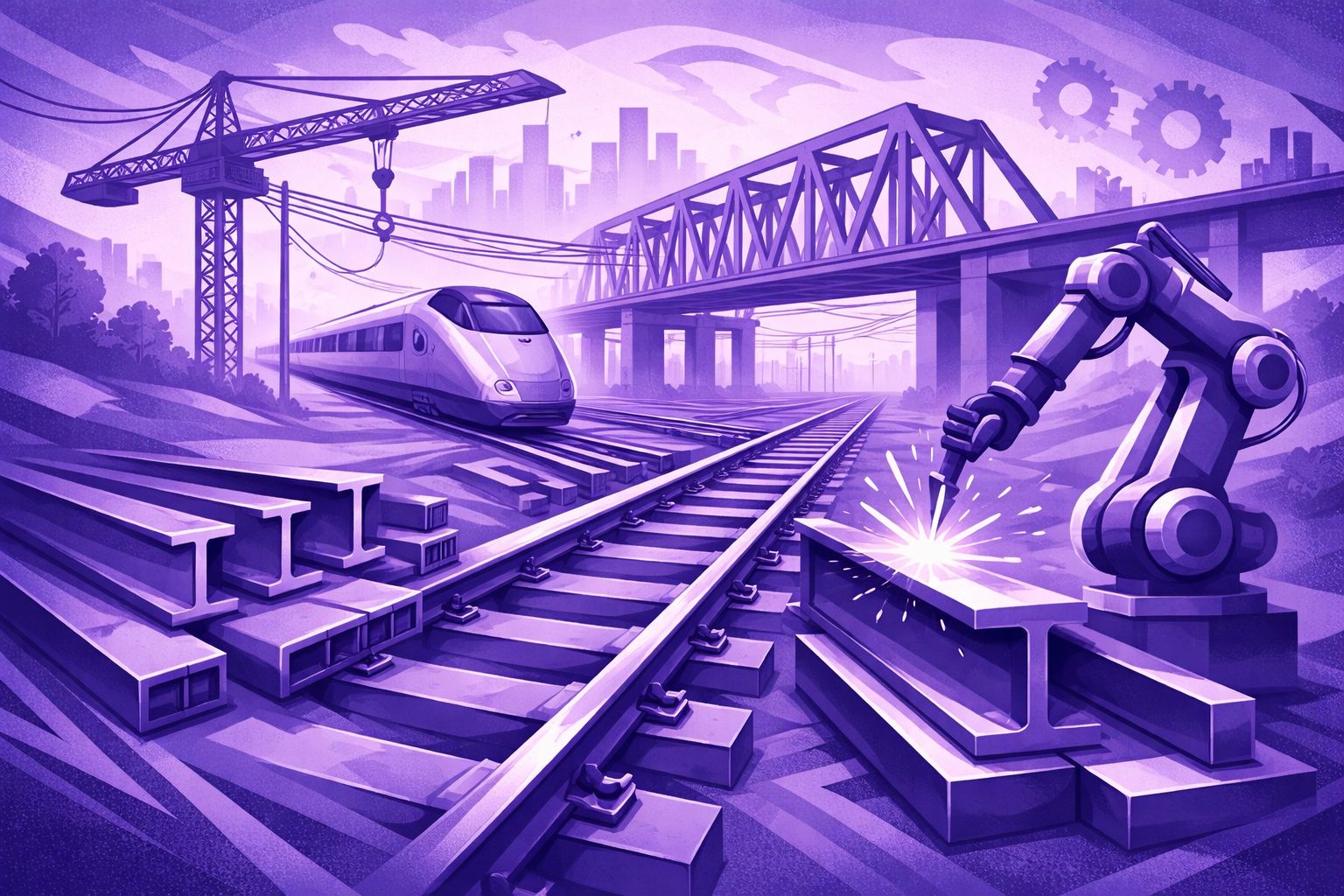
Structural steel fabrication is the process of converting raw or semi-finished steel into load-bearing components used in buildings and infrastructure. It focuses on strength, precision, and compliance with design standards. Unlike general metal fabrication, which covers a wide range of consumer and industrial products, structural steel fabrication is mainly used where safety and structural stability are critical.
Steel fabrication involves shaping steel through cutting, drilling, bending, and welding to create usable components. In structural applications, these components are designed to carry heavy loads and withstand stress over long periods.
In a structural steel fabrication workshop, skilled professionals use specialised tools and machinery such as:
- Drills, lathes, and milling machines
- Cutting and bending equipment
- Welding and brazing tools
The work floor typically includes welders, cutters, brazers, solderers, and first-line supervisors. Each role supports a specific stage of the fabrication process, from shaping to final assembly and inspection.
Structural steel fabrication is commonly used in India for:
- Metro rail stations and elevated corridors
- Industrial sheds and factories
- Warehouses and logistics parks
- Power plants and renewable energy projects
Structural steel fabrication vs. general metal fabrication (at a glance):
- Structural fabrication: load-bearing, standards-driven, used in infrastructure
- General fabrication: non-load-bearing, product-focused, used in equipment and consumer goods
With rapid urbanisation and infrastructure expansion, structural steel fabrication has become a core part of India’s construction and industrial ecosystem.
Role of structural steel fabrication in India’s steel value chain
| Stage in steel value chain | Key activities | Indian context & examples |
| Upstream: Steel production | Manufacturing crude steel, finished sections, plates, and coils. | Large integrated producers such as SAIL, Tata Steel, JSW Steel, and AMNS India supply structural sections, plates, and beams to the market. |
| Midstream: Structural steel fabrication | Cutting, drilling, bending, welding, and assembling steel into structural components. | Fabrication sits between steel mills and end users. This segment is largely MSME-driven and forms the backbone of the steel downstream industry in India. |
| Fabrication outputs | Beams, columns, trusses, frames, and customised assemblies. | Products are tailored to project-specific drawings for buildings, factories, metros, warehouses, and power plants. |
| Regional fabrication clusters | Concentration of workshops and fabrication units. | Major hubs include Maharashtra, Gujarat, Tamil Nadu, Karnataka, and NCR, supported by proximity to ports, steel plants, and industrial corridors. |
| Downstream: End users | Use of fabricated steel in construction and infrastructure. | Construction companies, EPC players, metro rail authorities, renewable energy developers, and industrial manufacturers. |
| Link to infrastructure growth | Enables faster and modular construction. | Supports national programmes such as Gati Shakti, Smart Cities, industrial corridors, and logistics parks. |
Raw materials used in structural steel fabrication
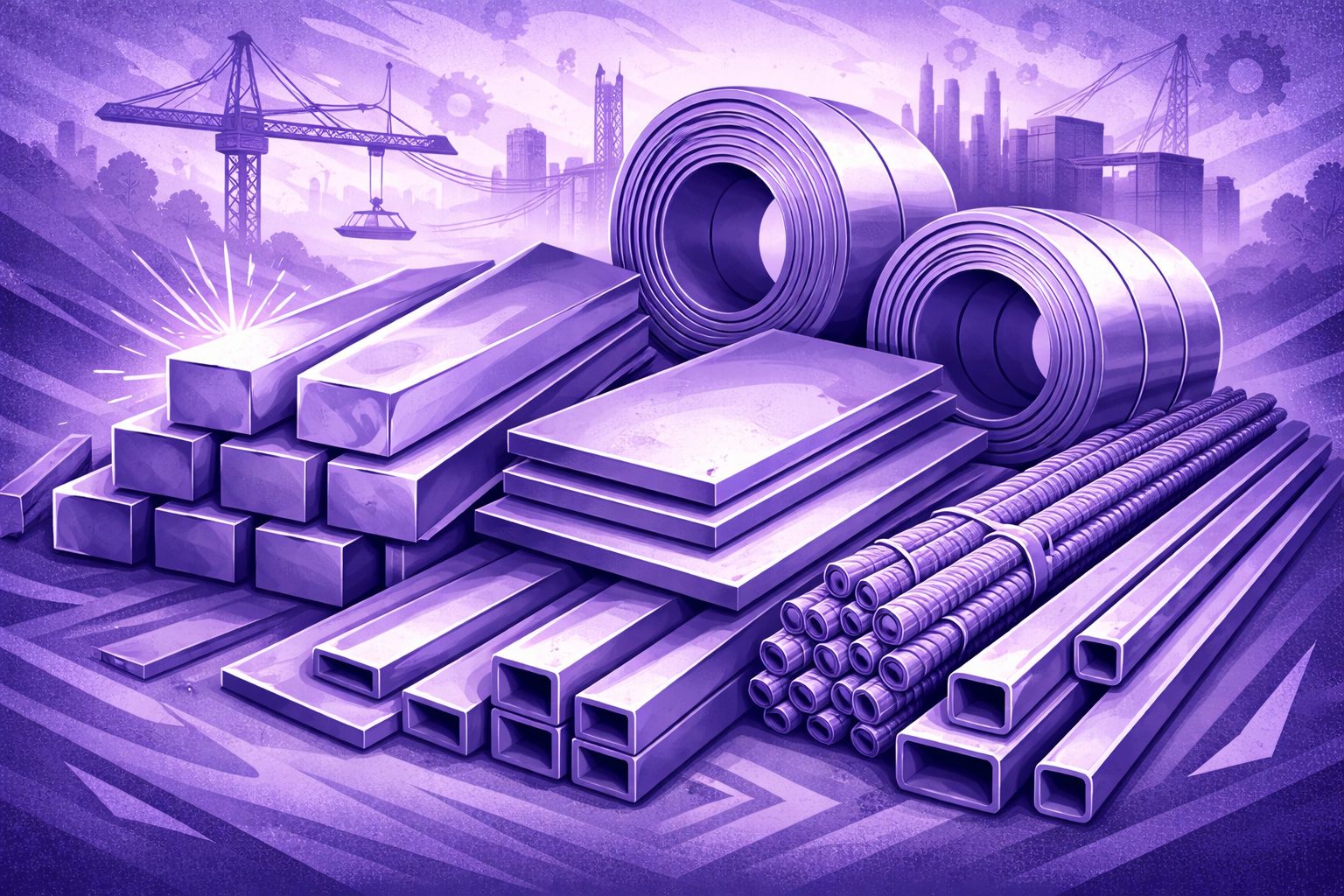
Structural steel fabrication uses different forms of raw steel. The choice depends on design, load needs, and end use. These materials are supplied by steel mills and processed by fabricators into structural components.
Common steel raw materials for fabrication include:
Slabs: Slabs are flat, thick steel sections. They are produced by rolling steel ingots in a mill. Slabs are mainly used to make plates, sheets, and strips.
Billets: Billets have a square or rectangular cross-section. They are made through rolling, forging, or extrusion. Billets are used to produce bars and smaller structural sections.
Plates, sheets, and strips: These are made by rolling slabs. Plates are thick and used for load-bearing parts. Sheets and strips are thinner. Sheets have a wider surface than strips. These forms are common in beams, columns, and base plates.
Bars: Bars are long and solid steel products. They come in round, square, or rectangular shapes. Bars are produced by rolling billets into smaller sections. They are used in frames, supports, and bracing systems.
Indian standards and grades
In India, structural steel commonly follows IS 2062 and IS 808 standards. Widely used grades include E250 and E350. These grades offer good strength and weldability. They are suitable for buildings, industrial sheds, and infrastructure projects.
What are the steps of steel fabrication?
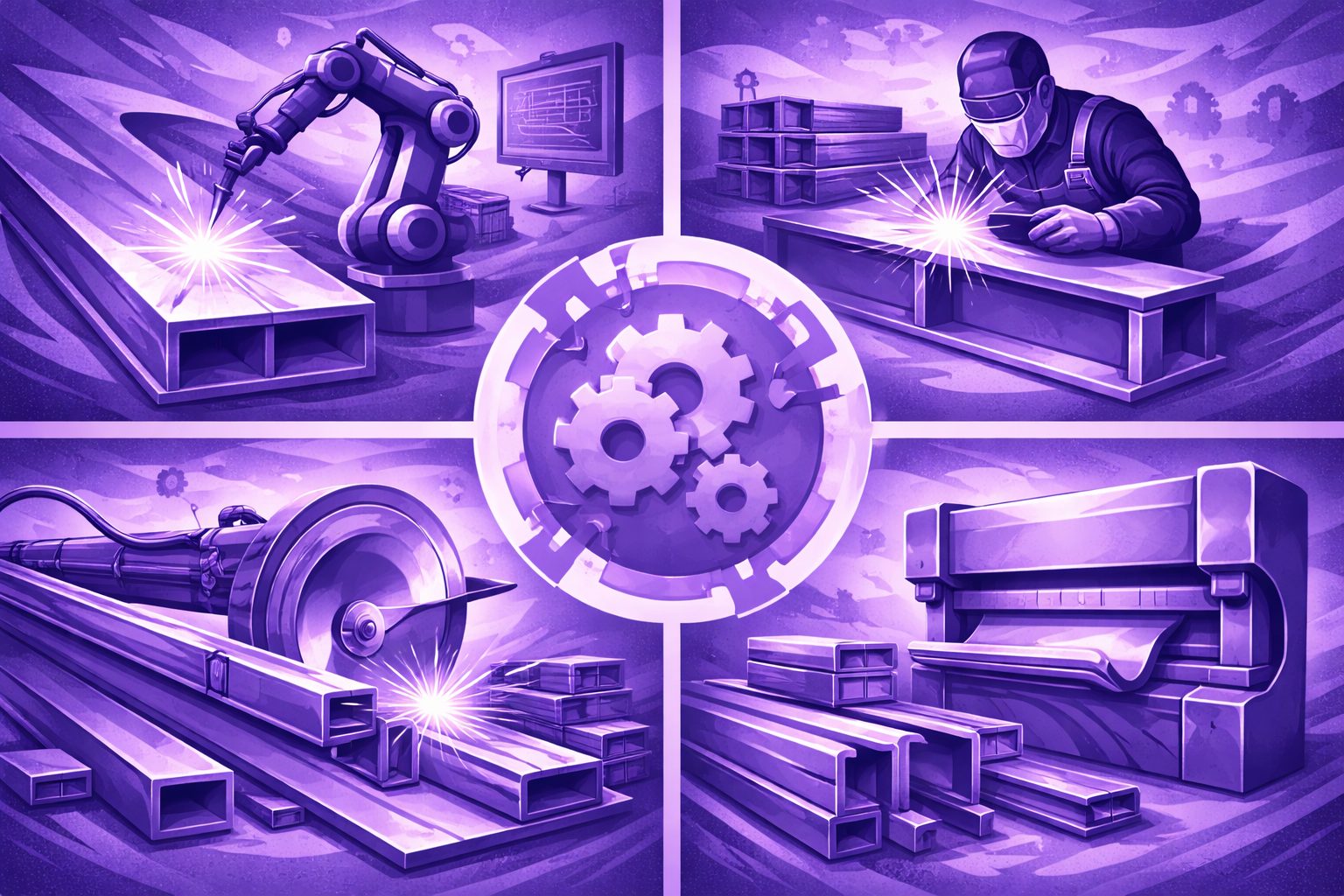
Before beginning the structural steel fabrication process, the fabricator conceptualises and plans the design and features of the final product. Here are steps involved in structural steel fabrication process:
1. Preparing the design
The drawings and specifications of the end product are prepared by the designers. Once the design is complete a list of raw materials required is listed down and operational bills are prepared needed for purchase and production.
2. Acquiring raw materials
All materials required are procured as per the list of raw materials prepared. The primary raw material required is steel. To make quality fabrications you need steel suppliers that can guarantee premium steel.
3. Cutting and drilling
The steel acquired is cut and drilled using a CNC machine. The steel is first cut according to the measurements of the design and then drilled to create the holes needed for the project. Steel cutting is usually performed by circular saw machines, laser cutting machines, waterjet machines, or plasma cutting machines. There are multiple methods to cut steel including shear cutting, wedge-action cutting, abrasion, and other non-traditional methods.
4. Bending and welding
Once the steel is cut and drilled, it needs to be bent to form the right shape. There are various bending methods including section bending, roll bending, plate bending, and tube bending to create the desired shape. The steel is then welded together using MMA welding or MAG welding.
5. Quality check
A quality check is done after welding the steel into its desired shape to ensure that the steel meets all the required specifications. The check includes visual inspections, dimensional inspections, and mechanical tests. Non-destructive testing (NBT) is also done to check for hidden defects and cracks in the welded parts.
6. Finishing
Once the quality check is complete, the steel is then sandblasted and painted. This usually involves coating the steel to protect it from corrosion.
Types of structural steel fabrication
Structural steel fabrication uses controlled processes to shape steel into load-bearing components. In India, methods are chosen based on strength, safety standards, and end use.
Key types of steel fabrication include:
Cutting
Cutting is the most widely used fabrication method. Steel is cut into required sizes and shapes using manual tools or computerised machines. Common methods include sawing, plasma cutting, laser cutting, and waterjet cutting. Cutting is widely used in construction, automotive manufacturing, and energy projects.
Punching and drilling
Punching creates holes in steel using specialised machines. These holes are used for bolting and fastening. This method is common in building structures, industrial sheds, and power plants.
Folding (bending)
Folding involves bending steel to achieve the desired shape. Press brakes, rollers, and section bending machines are used for this process. Manual hammering is not used in modern fabrication. Folding is essential in warehouses, bridges, and automotive frames.
Bonding (limited use)
Bonding joins two metal parts using industrial adhesives. In structural steel fabrication, its use is limited. It is mainly applied in automotive or light engineering applications rather than load-bearing construction.
Extrusion (manufacturing process)
Extrusion is used to form pipes and hollow sections using dies. This process is carried out at steel plants, not fabrication workshops. Fabricators use extruded sections in energy, infrastructure, and industrial projects.
Together, these metal fabrication methods support India’s growing demand across construction, automotive, and energy sectors.
Design, engineering, and quality control

Design and engineering are essential in structural steel fabrication. The process begins with structural and shop drawings that define sizes, connections, and tolerances. CAD and BIM tools are widely used to improve accuracy and coordination. BIM in steel construction helps detect clashes and reduce material waste. Load calculations ensure safety. Designs must comply with IS 800, IS 875, and IS 1893, especially in seismic zones. BIM adoption is growing in metro, airport, and large infrastructure projects.
Quality control ensures fabricated steel meets design and regulatory requirements. Checks are carried out from raw material inspection to final dispatch. Steel fabrication quality control includes visual checks, dimensional inspection, and mechanical testing. NDT testing of steel, such as ultrasonic and radiography tests, is used to identify hidden defects. Compliance with BIS standards is mandatory. Third-party inspection agencies are often required for government and EPC projects. Strong quality practices improve safety, durability, and project acceptance.
Finishing, applications, and emerging trends
| Area | Key aspects | India-specific context |
| Finishing & coating | Painting, galvanising, epoxy and anti-corrosion coatings. | Essential for steel corrosion protection in coastal, humid, and industrial regions. |
| Galvanised structural steel | Zinc coating improves corrosion resistance and durability | Widely used in ports, bridges, power plants, and coastal infrastructure. |
| Climate relevance | Protection against moisture, salinity, and pollution. | Critical in coastal states, refineries, and chemical zones. |
| Lifecycle cost view | Reduces maintenance and repair costs over time. | Supports long-term infrastructure longevity and asset value. |
| Infrastructure & construction | Buildings, bridges, metro stations, airports. | Drives the largest share of structural steel uses in India. |
| Automotive & railways | Platforms, sheds, workshops, and depots. | Supports Make in India and rail network expansion. |
| Energy sector | Thermal plants, solar mounting structures, wind towers. | High demand for steel fabrication applications. |
| Warehousing & logistics | Industrial sheds, cold storage, logistics parks. | Growth linked to e-commerce and industrial corridors. |
| Automation & prefabrication | CNC machines, robotic welding, off-site fabrication. | Enables faster construction and consistent quality. |
| Prefabricated steel structures | Factory-made components assembled on site. | Gaining adoption in prefabricated steel structures India. |
| Green steel & sustainability | Use of low-carbon steel and efficient designs. | Aligns with sustainability mandates and ESG goals. |
| Digital QA & inspection | Digital tracking, automated testing, smart inspection tools. | Improves traceability and quality control. |
Challenges faced by the Indian steel fabrication industry
Challenge: Raw material price volatility
Solution: Use long-term supply contracts and better price forecasting to control cost fluctuations.
Challenge: Skill shortages
Solution: Expand skill development programmes and industry-led training for welders and fabricators.
Challenge: Fragmented MSME sector
Solution: Promote cluster-based development and shared fabrication facilities.
Challenge: Rising compliance and quality costs
Solution: Plan early for BIS compliance and adopt standardised processes.
Challenge: Limited access to technology
Solution: Encourage automation through government incentives and easier financing.
Challenge:Working capital constraints
Solution: Improve payment timelines and access to institutional credit.
Challenge: Inconsistent quality levels
Solution: Strengthen quality control systems and third-party inspections.
Addressing these steel fabrication challenges in India will help improve efficiency, quality, and long-term competitiveness.
Conclusion
Structural steel fabrication is crucial for India’s infrastructure and industrial growth. It supports buildings, metros, bridges, and energy projects while strengthening the domestic steel value chain. With growing use of prefabrication, automation, and BIM, the sector is set to expand further. As India pushes for modern and sustainable infrastructure, structural steel fabrication will play a key role in driving efficiency, quality, and long-term development.
Looking to procure steel?
Tata nexarc helps manufacturers, builders and MSMEs source certified steel products, compare prices, and choose the right grade as per IS codes—with complete traceability and procurement confidence.
FAQs
What is structural steel fabrication?
Why is structural steel fabrication important in India?
What raw materials are used in structural steel fabrication?
What are the main steps in steel fabrication?
What types of steel fabrication are used?
How are design and engineering handled?
How is quality controlled?
What finishing methods are applied?
Which industries use structural steel fabrication?
What are the current trends in India?
Priyanka is a seasoned content marketing professional with more than 6 years of experience crafting various forms of business and technology sector content. Her insightful writing tackles critical issues faced by small-scale manufacturing businesses. Priyanka's clear and concise communication empowers businesses to make informed decisions and thrive in today's dynamic business environment.