Check Price Now
Table of Contents
- Introduction: What MSMEs Should Expect from a PEB Manufacturer
- MSME Expectations from a PEB Manufacturer
- A Practical Method to Shortlist PEB Manufacturers
- Critical Documentation That Decides Project Outcomes
- Understanding Commercials and Contract Terms
- Comparing PEB Deliverability Across India
- Key Price Drivers Explained
- A Buyer’s Checklist for Selecting the Right PEB Manufacturer
- Conclusion: Making a Confident PEB Manufacturer Choice
- FAQs
Introduction
Finding the right PEB manufacturers in India looks simple on Google. It rarely feels simple on site. A pre engineered building can move fast, but only when drawings, civil work, and supply timelines stay in sync. Many MSMEs start with a price per sq ft estimate, then lose weeks on avoidable gaps, unclear BOQ for PEB shed, missing approvals, or last-minute scope changes.
Most pages list a “top 10” and stop there. MSME buyers need a usable method to shortlist a peb shed manufacturer, validate engineering inputs, and lock execution responsibilities. The real risk does not sit in steel weight alone. It sits in assumptions like wind load design, crane beam runway needs, coating and paint system, cladding choices, and how early the GA drawing gets frozen. Once fabrication starts, late changes burn money and time.
This guide focuses on practical checks that prevent delays, tender friction, and site disputes. It covers documentation like the design basis report, anchor bolt plan, shop drawings, and clear scope of work, so procurement teams can compare vendors with confidence.

What MSMEs should expect from a PEB manufacturer
A PEB project runs smoothly when scope, drawings, and responsibilities stay clear from day one. The manufacturer should engineer the building system and support execution, not only share a rate sheet.
Role clarity, before the quote looks final
A peb shed manufacturer typically covers engineering, fabrication, and supply. Civil work and erection may sit inside or outside the same contract. Many MSMEs face delays when this split stays unclear.
Common delivery models
- Supply-only: Fabricated steel, roof sheeting, wall cladding, erection managed separately
- Supply + erection: Fabrication and erection contractor bundled, faster coordination when scope stays fixed
- Turnkey PEB solutions: Design and build shed delivery, tighter control on handovers and timelines
The engineering pack that prevents rework
Ask for the full document set early, before any fabrication starts. It reduces site confusion and avoids late changes.
Minimum documents to demand
- Design basis report with load assumptions, wind load design, and seismic design for steel buildings
- GA drawing showing bay spacing, grid, and clear span steel building layout
- Anchor bolt plan aligned to the civil foundation drawings
- Base plate and connection details for erection fit-up
- Bill of materials BOM matching the commercial quote
- Coating and paint system or hot dip galvanizing notes for corrosion protection
The timeline truth most buyers miss
Fabrication should start only after drawing freeze. Civil work must match the approved anchor bolt plan. Dispatch should follow an erection-friendly sequence. This approach protects the project timeline and reduces disputes on scope of work PEB.

A practical shortlisting method, not another “top 10 list”
Shortlisting PEB manufacturers in India works best when the process starts from project risk, not from brand recall. A list of names helps, but it does not protect timelines, approvals, or cash flow. A simple screening method does.
Start with inputs that decide the design
Most buyer confusion begins because the inquiry stays vague. Tighten the inputs before sending an RFQ.
Fix these basics in the RFQ for PEB
- Building use, warehouse, factory shed, cold storage, workshop
- Clear span requirement, length, width, eave height
- Bay spacing preference if already planned
- Crane needs, especially EOT crane shed design and crane beam runway loads
- Location and wind zone exposure, coastal or industrial corrosion risk
- Roof and wall cladding preference, roof sheeting, wall cladding, sandwich panels, insulation for PEB
- Expected approvals and handover date
This step improves BOQ for PEB shed quality and reduces rework later.
Filter vendors by capability fit, not marketing claims
Many suppliers sound identical on brochures. Practical filters expose the real fit.
Shortlisting filters that work for MSMEs
- Similar project references, same span, same height, similar loads
- Document discipline, speed of GA drawing, anchor bolt plan, shop drawings
- Fabrication capacity and delivery credibility for the required project timeline
- Clarity on coating and paint system, or hot dip galvanising, based on site conditions
- Erection readiness, whether the vendor provides a peb erection contractor or expects a third party
Validate before placing the order
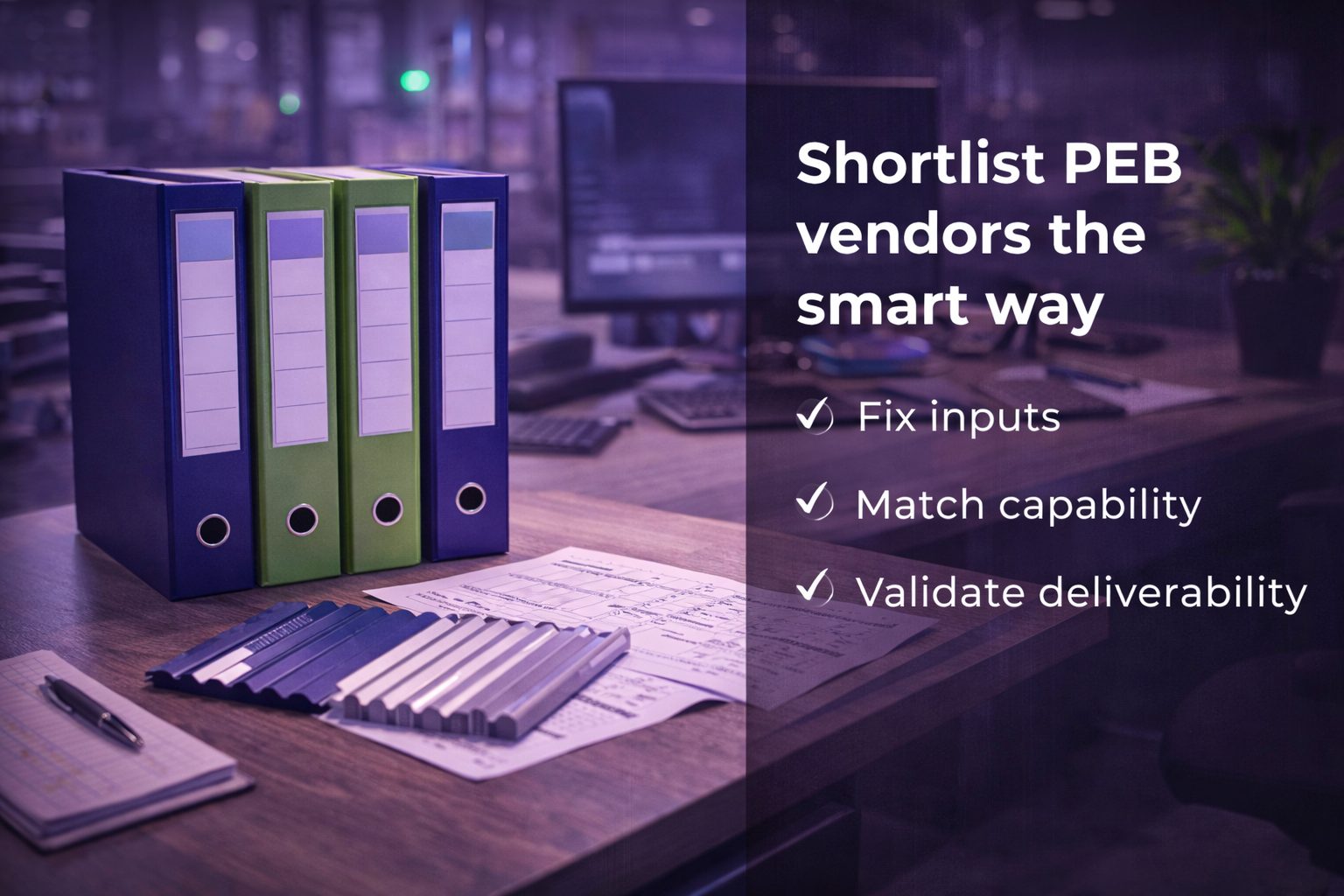
A buyer can run a quick validation loop in one week.
- Day 1–2: Send the RFQ, demand a clear scope of work PEB and exclusions
- Day 3–4: Review design basis report and load assumptions, not only the price
- Day 5–7: Compare BOM alignment, warranty and after sales support, and delivery plan
Often missed in tender planning, many MSMEs accept a low quote, then discover the cost moves to accessories, fasteners, or erection scope. A disciplined vendor shortlisting process avoids that trap and keeps procurement clean.
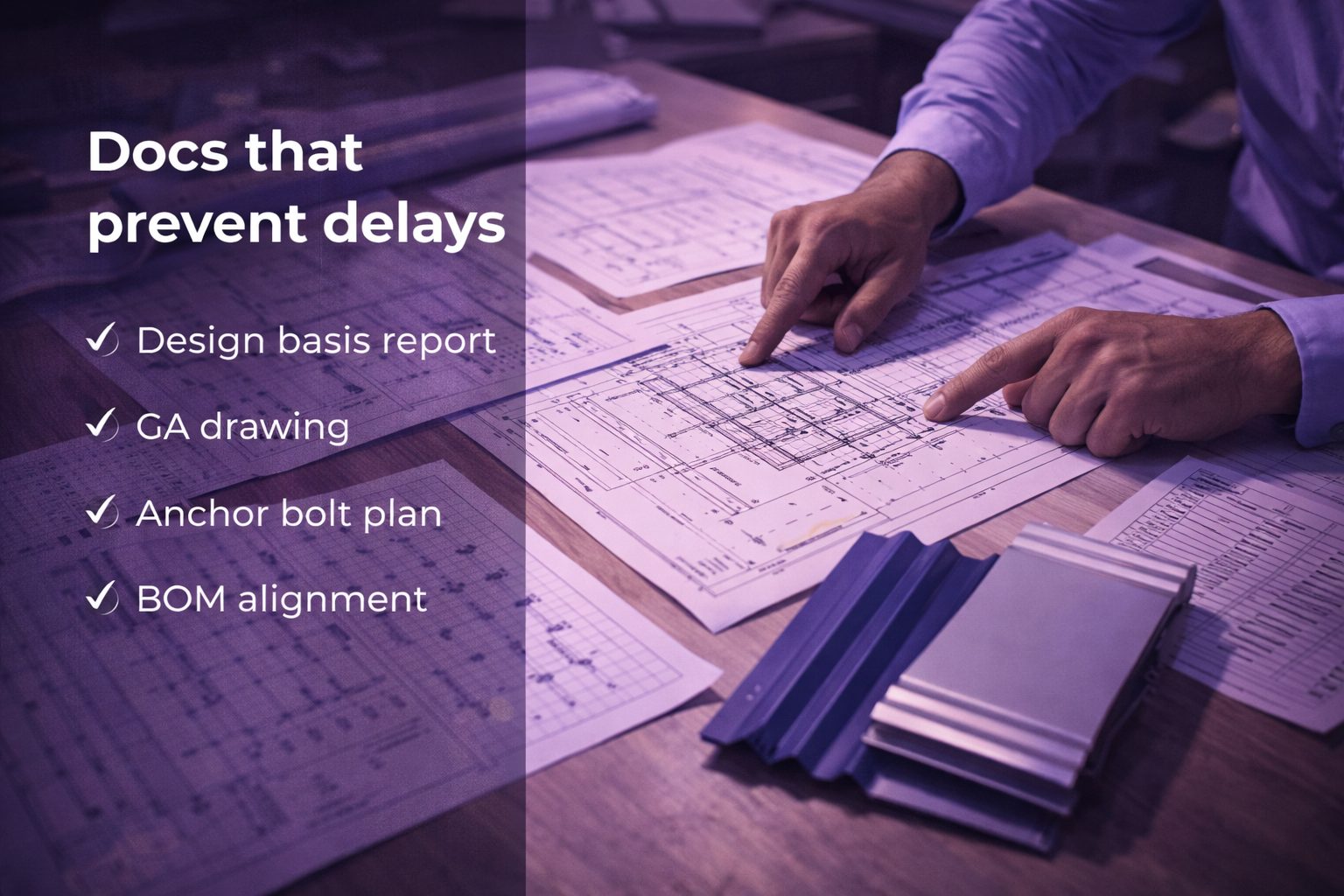
Documentation that decides cost, approvals, and delays
Documentation decides whether a PEB project finishes on time or turns into repeated rework. Many MSMEs compare PEB manufacturers in India only on rates, then lose control because the paperwork stays weak. A strong document set makes pricing transparent, keeps civil work aligned, and reduces approval friction.
Start with the Design Basis Report, not the brochure
A design basis report acts like a rulebook for the building. It captures the assumptions that drive steel weight, member sizes, and connection detailing.
What the Design Basis Report must clearly state
- Wind load design and exposure assumptions for the site
- Seismic design basis for steel buildings, if applicable
- Live loads, collateral loads, and future provisions
- Crane beam runway loads if the shed needs EOT cranes
- Deflection limits and serviceability expectations
Many disputes start when these assumptions change after approval.
Drawings that control civil work and erection
Most delays come from a mismatch between foundation work and the fabricated structure. Drawings prevent guesswork.
Minimum drawings to lock before fabrication
- GA drawing with grids, bay spacing, and clear span layout
- Anchor bolt plan aligned to the latest civil foundation drawings
- Base plate and connection details for erection fit-up clarity
- Shop drawings for critical joints and built-up sections
A simple workflow helps MSMEs. Get the GA drawing approved first. Freeze the anchor bolt plan next. Start fabrication only after civil sign-off confirms the bolt positions and levels.
BOQ and BOM alignment, where cost leaks happen
A quote can look low and still become expensive later. The leak usually sits in missing items.
- Check the bill of materials BOM against the BOQ for PEB shed
- Verify roof sheeting, wall cladding, flashings, ridge, gutters, and fasteners
- Confirm insulation for PEB and accessory scope for skylights, ventilators, louvers
- Lock coating and paint system or hot dip galvanizing based on corrosion risk
This step keeps comparisons fair across PEB manufacturers in India.
Tender and compliance pack, often missed until the last week
This approach helps with government procurement bottlenecks and reduces bid rejection risk.
- ISO and QA/QC process notes, inspection plan, mill test certificates
- Structural stability certificate format readiness, as required
- Fire safety compliance expectations and material specifications
- Technical submittals list with timelines and revision control
Many MSMEs overlook document expiry when uploading certificates. Simple date checks save days during tender submission and approval reviews.
Commercials and contract terms MSMEs should lock early
Strong commercials keep a PEB project predictable. Weak terms invite scope fights, delayed dispatch, and surprise additions that break the budget. MSMEs comparing PEB manufacturers in India should treat the contract like a control tool, not a formality.
Quote structure, lock what is included and excluded
A quote should not hide costs inside vague lines like “accessories as required”. Clear scope makes vendor comparisons fair.
Must-clarify items in the quote
- Ex-works supply, transport, unloading, and stacking responsibility
- Fabrication and erection split, including safety and supervision
- Roof sheeting, wall cladding, flashings, gutters, fasteners, and sealants
- Insulation, sandwich panels, skylights, ventilators, and louvers
- Coating and paint system, or hot dip galvanizing, based on corrosion risk
- Testing, inspection, and technical submittals needed for approvals
Payment milestones that match real work stages
Many MSMEs pay early, then chase drawings and dispatch dates. Tie payments to deliverables, not to calendar dates.
A practical milestone template
- Advance on order, small and controlled
- Payment on GA drawing approval and design basis report sign-off
- Payment on fabrication start, backed by an inspection plan
- Payment on dispatch, linked to bill of materials BOM and packing list
- Payment on erection completion and punch list closure
- Retention or holdback until final handover, if required
Change control, the biggest hidden cost
Changes after drawing freeze increase steel weight, delay fabrication, and create site rework. Put change rules in writing.
- Define what counts as a change, span, bay spacing, crane loads, cladding spec
- Set a rate and approval workflow for revisions
- Freeze the anchor bolt plan before civil casting
- Add a time impact rule for each revision cycle
Warranty, serviceability, and escalation
Warranty and after sales support matter when leakage, corrosion, or panel issues appear after monsoon.
- Lock warranty coverage for structure, cladding, fasteners, and paint
- Specify response timelines and escalation contacts
- Add liquidated damages terms for agreed milestones, where feasible
For MSMEs running tight cash cycles, this contract discipline reduces delays and avoids repeated renegotiation with the peb shed manufacturer.
How to compare manufacturers across India on real deliverability
Deliverability is where many shortlists fail. A vendor may look strong on paper, but timelines slip when dispatch, erection capacity, or local support is weak. For MSMEs evaluating PEB manufacturers in India, the goal is simple, confirm who can deliver to the site, on schedule, with fewer surprises.
Plant location matters, but so does the dispatch plan
Pan India delivery claims sound reassuring. The real test is whether dispatch sequencing matches erection needs.
Checks that protect the project timeline
- Plant to site distance, route constraints, and typical permit needs
- Vehicle type planning for long members, safe loading and unloading
- Packing and marking discipline so components are easy to sort on site
- Dispatch sequencing, primary framing first, then secondary members, then cladding
- Poor sequencing creates idle erection teams and material damage.
Erection readiness, the most under-checked factor
Many projects stall because the erection plan stays vague. A peb erection contractor needs manpower, tools, safety systems, and supervision.
Questions MSMEs should ask early
- Who owns erection safety, supervision, and daily reporting
- Expected erection duration with clear assumptions on cranes and access
- Bolt tightening and alignment process, plus measurement checks
- Punch list process and handover format
If a third-party erector is involved, confirm coordination responsibility in the scope of work PEB.
Reference checks that actually work
References help only when they match the project profile.
- Ask for references with similar clear span steel building size and height
- Match load type, crane loads, mezzanine, corrosion zone, or insulation scope
- Ask what went wrong, and how the vendor handled it
- Verify warranty handling, especially for roof sheeting and wall cladding issues
Serviceability after handover
Serviceability rarely appears in comparisons, but it matters after monsoon and during routine maintenance.
- Availability of replacement sheets, fasteners, sealants, and trims
- Response time for leakage or corrosion complaints
- Clarity on coating and paint system maintenance cycles
This approach keeps vendor shortlisting practical, and it prevents overpaying for marketing while underbuying execution strength.

Price drivers explained in MSME language
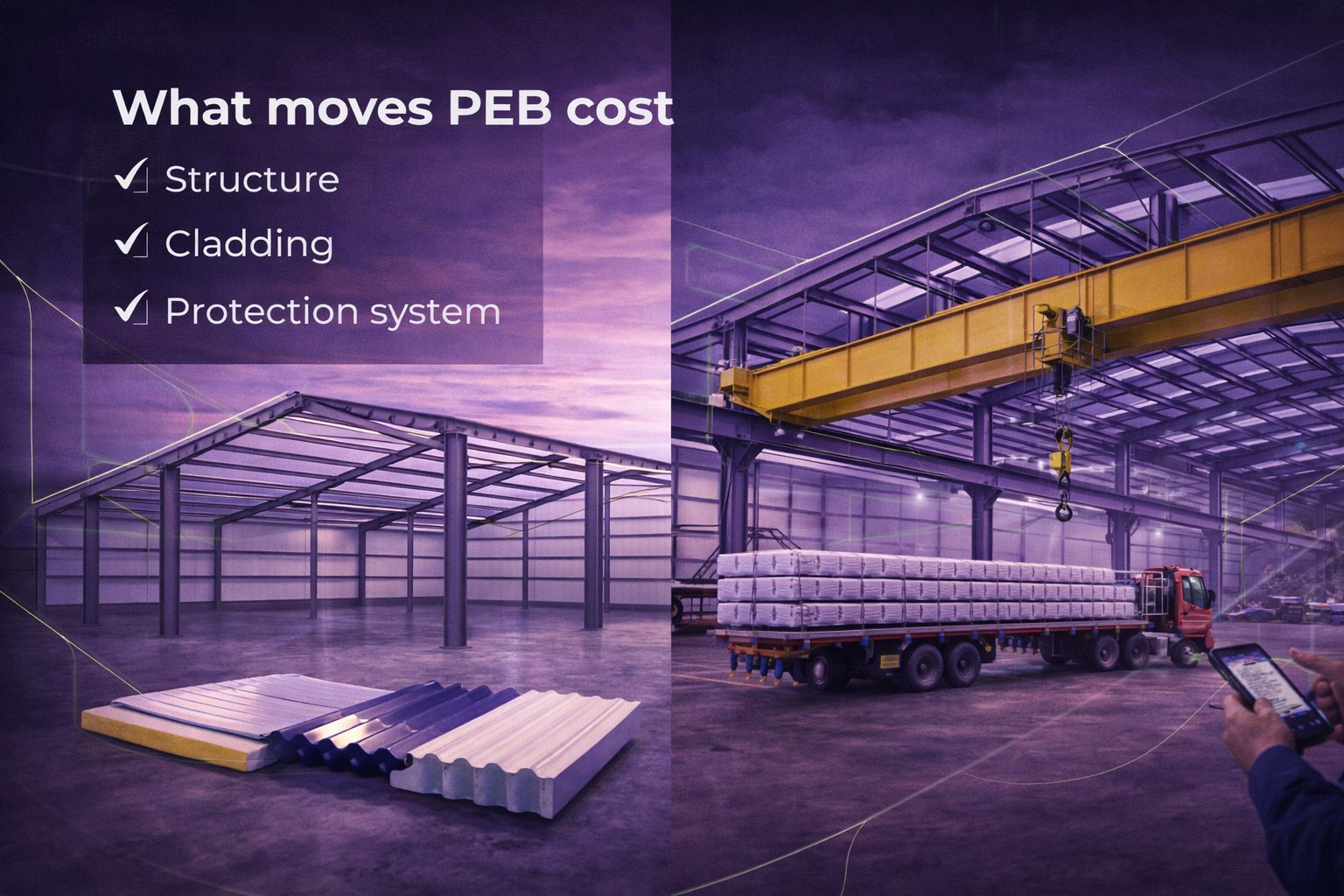
PEB building cost in India moves because the design changes, not because the vendor “changed the rate”. A clean understanding of cost drivers helps MSMEs compare PEB manufacturers in India without getting trapped in low headline quotes.
Structural levers that shift steel weight
Steel weight is often the biggest cost block in a pre engineered building, but it is not fixed.
- Clear span steel building size and eave height
- Bay spacing and bracing pattern
- Wind load design and exposure category
- Live loads, collateral loads, and future provisions
- EOT crane shed design, crane beam runway load, and deflection limits
- Mezzanine floor in PEB and staircase platforms
Small changes here can shift steel weight and fabrication effort.
Envelope and accessories, where costs quietly add up
Cladding and accessories can change the total by a large margin, especially when specs remain vague.
- Roof sheeting profile and thickness
- Wall cladding profile, sheet thickness, and fastener type
- Sandwich panels and insulation for PEB, including density and thickness
- Gutters, downpipes, ridge, flashings, trims, sealants
- Skylights, ventilators, louvers, doors, and canopies
Protection systems, tied to site conditions
Coating choices depend on corrosion risk, not on preference.
- Coating and paint system grade, number of coats, DFT targets
- Hot dip galvanizing for specific components
- Corrosion protection needs for coastal, chemical, or heavy industrial zones
A practical rule holds true. Freeze the design basis report early, then lock the BOQ for PEB shed. This prevents price swings and keeps procurement clean.
Buyer checklist and questions to ask before issuing a PO
A purchase order (PO) should go out only when the project is ready to execute. Many MSMEs place the order based on a quote, then scramble because drawings, civil readiness, and dispatch planning stay incomplete. This short checklist keeps vendor shortlisting grounded and reduces disputes with PEB manufacturers in India.
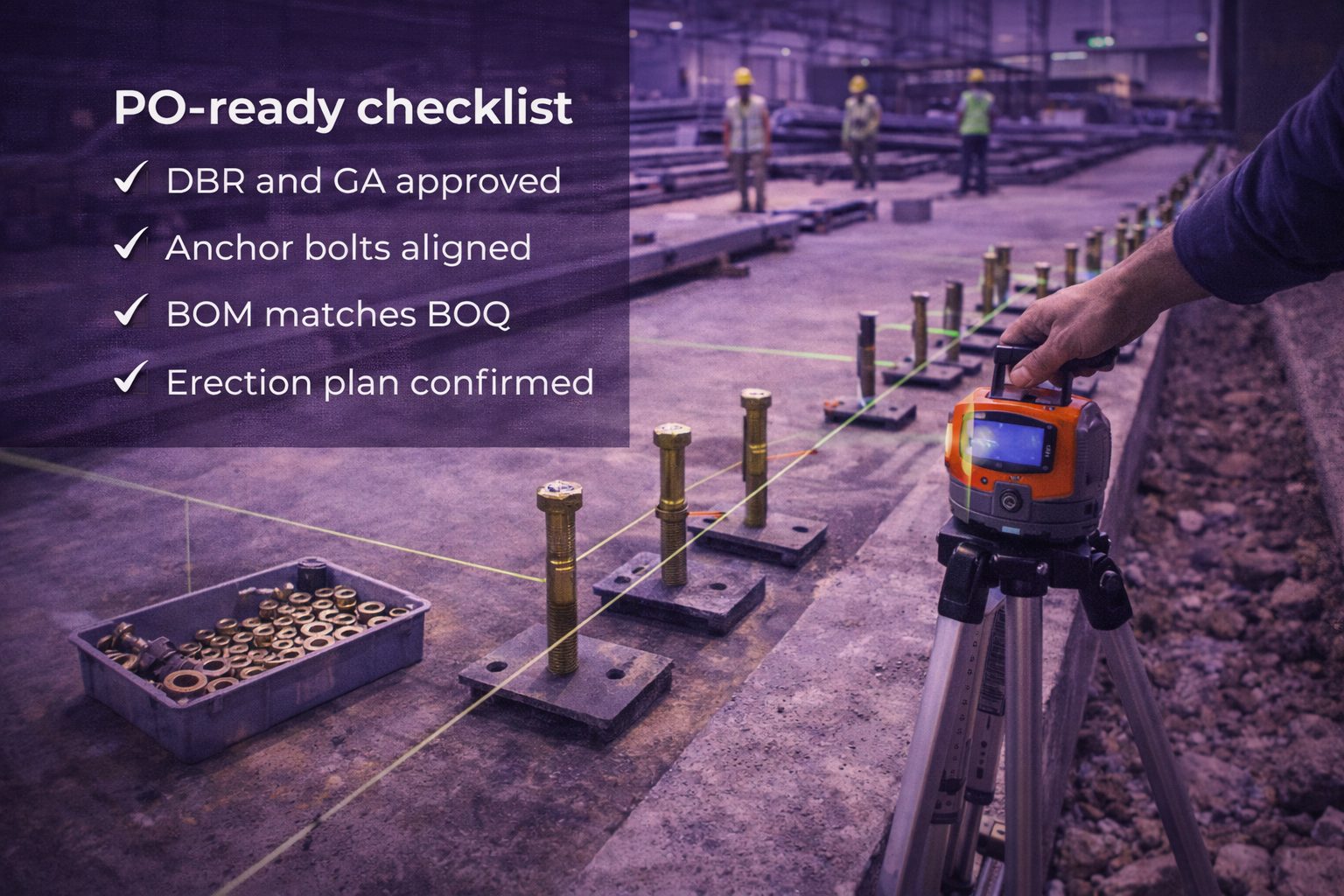
PO-ready checklist for MSMEs
Use this as a final gate before confirming the order.
- Design basis report signed off, with wind load design and key assumptions locked
- GA drawing approved, including bay spacing, clear span layout, and elevations
- Anchor bolt plan matched to the latest foundation drawing, levels confirmed
- Base plate and connection details reviewed for erection practicality
- Bill of materials BOM aligned to BOQ for PEB shed, no missing accessories
- Coating and paint system or hot dip galvanizing scope written clearly
- Scope of work PEB finalized, supply-only, supply + erection, or turnkey
- Dispatch sequence and packing list format confirmed
- Erection plan shared, safety ownership and supervision clarified
- Warranty and after sales support terms captured, escalation contacts listed
Questions that expose gaps fast
These questions reduce “later clarifications” that usually become delays.
Engineering and design
- What assumptions were used in the design basis report, and what triggers a revision
- Which loads are included, including crane beam runway loads and future provisions
- What is the drawing freeze date, and what is the change control process
Execution and deliverability
- What is the planned dispatch sequence, and how will parts be marked
- Who owns erection safety, daily reporting, and punch list closure
- What timeline is committed from drawing freeze to dispatch to erection completion
A disciplined PO process may feel slow for two days. It usually saves two to four weeks later, especially when working across locations with multiple vendors and tight cash cycles.
Conclusion
Choosing the right PEB manufacturers in India becomes easier when the process stays structured. Start with clear RFQ inputs, then shortlist by capability fit and document discipline. Lock the design basis report, GA drawing, and anchor bolt plan before fabrication starts. Keep the BOQ and BOM aligned, and write contract terms that protect scope, timelines, and warranty. Finally, test real deliverability, not only brand claims. This approach reduces delays, controls cost, and keeps the pre engineered building project predictable for MSMEs.

Looking to procure steel?
Tata nexarc helps manufacturers, builders and MSMEs source certified steel products, compare prices, and choose the right grade as per IS codes—with complete traceability and procurement confidence.
FAQs
Who should generate the e-way bill for PEB dispatch, buyer or vendor?
Should the contract treat PEB supply as “goods” or “works contract”?
How can a business avoid invoice disputes at the last stage?
What commercial security works best for large PEB orders?
How should a business handle transit damage claims for long members and panels?
What is a clean way to avoid scope disputes on mezzanine and staircase items?
Can a buyer ask for steel grade traceability and heat numbers for critical members?
What is the fastest way to compare quotes when vendors use different measurement bases?
What should a buyer ask about packing standards to reduce on-site losses?
Can a buyer keep ownership of drawings and restrict vendor reuse?
Charul is a content marketing professional and seasoned content writer who loves writing on various topics with 3 years of experience. At Tata nexarc, it has been 2 years since she is helping business to understand jargon better and deeper to make strategical decisions. While not writing, she loves listing pop music.