Check Price Now
Table of Contents
- Introduction
- Anti-dumping duty on steel imports meaning
- DGTR anti-dumping investigation
- Anti-dumping duty changes landed cost for MSMEs
- Why India uses anti-dumping duty on steel imports
- Impact of anti-dumping duty on different MSME segments
- Sourcing & procurement shifts MSMEs should consider
- Risk watchlist for MSMEs over the next 3–6 months
- Conclusion – The informed MSME steel buying approach
- FAQs
Introduction – why anti-dumping duty in India matters now
Anti-dumping duty in India is now part of everyday price discussion for many MSMEs. Each new duty on steel imports changes landed cost, resets the range for supplier negotiations and eats into already thin margins. A fixed amount per tonne looks small on paper, yet it can turn a previously attractive import into a costlier choice than a local mill or trader.
Imported hot rolled coils, plates and other flat products helped buyers manage swings in domestic prices. Lower quotes, flexible lot sizes and reliable shipments from countries like Vietnam or China acted as a safety valve when local mills were full or quoting higher rates. Once customs anti dumping duty India applies on such flows, that safety valve tightens because the landed cost of imported steel rises overnight.
Latest update (as of November 14, 2025):
In November 2025, India imposed a five year anti-dumping duty on certain hot rolled flat steel imports from Vietnam at a fixed rate per tonne, which set a clear benchmark for future measures on steel imports.

What this article will help MSMEs understand
This article focuses on practical questions that MSMEs and steel buyers face, such as:
- What anti-dumping duty on steel imports is, and how it differs from other import duties
- How DGTR investigations work and how a duty figure is decided
- How anti-dumping duty on imported steel feeds into landed cost for hot rolled coils and plates
- What the change means for steel fabrication jobs, EPC contracts, export orders and trader stock planning
- How MSMEs can adjust sourcing strategy, credit use and timing of orders in this new environment
By the end, MSME owners, purchase managers and traders will have a clearer view of how to live with anti-dumping duty India, instead of treating it as a one-time policy shock.
Also read: What is SIMS for Steel Imports? A Practical Guide for MSMEs in 2025
What anti-dumping duty on steel imports actually is
Anti-dumping duty exists to deal with imports that come in at unfairly low prices. When a foreign mill sells steel to India at a rate that does not reflect normal value in its home market, it can injure local producers. Anti-dumping duty in India works as an extra charge on such imports, product by product and country by country.
For MSMEs, the idea is simple. If imported hot rolled coils or plates are priced so low that Indian mills cannot compete, the government can add a fixed anti-dumping duty on steel imports. This raises the landed cost to a fairer level and slows the damage to domestic industry. The duty does not stop trade, it tries to remove the unfair advantage.
Where anti-dumping duty sits in your landed cost
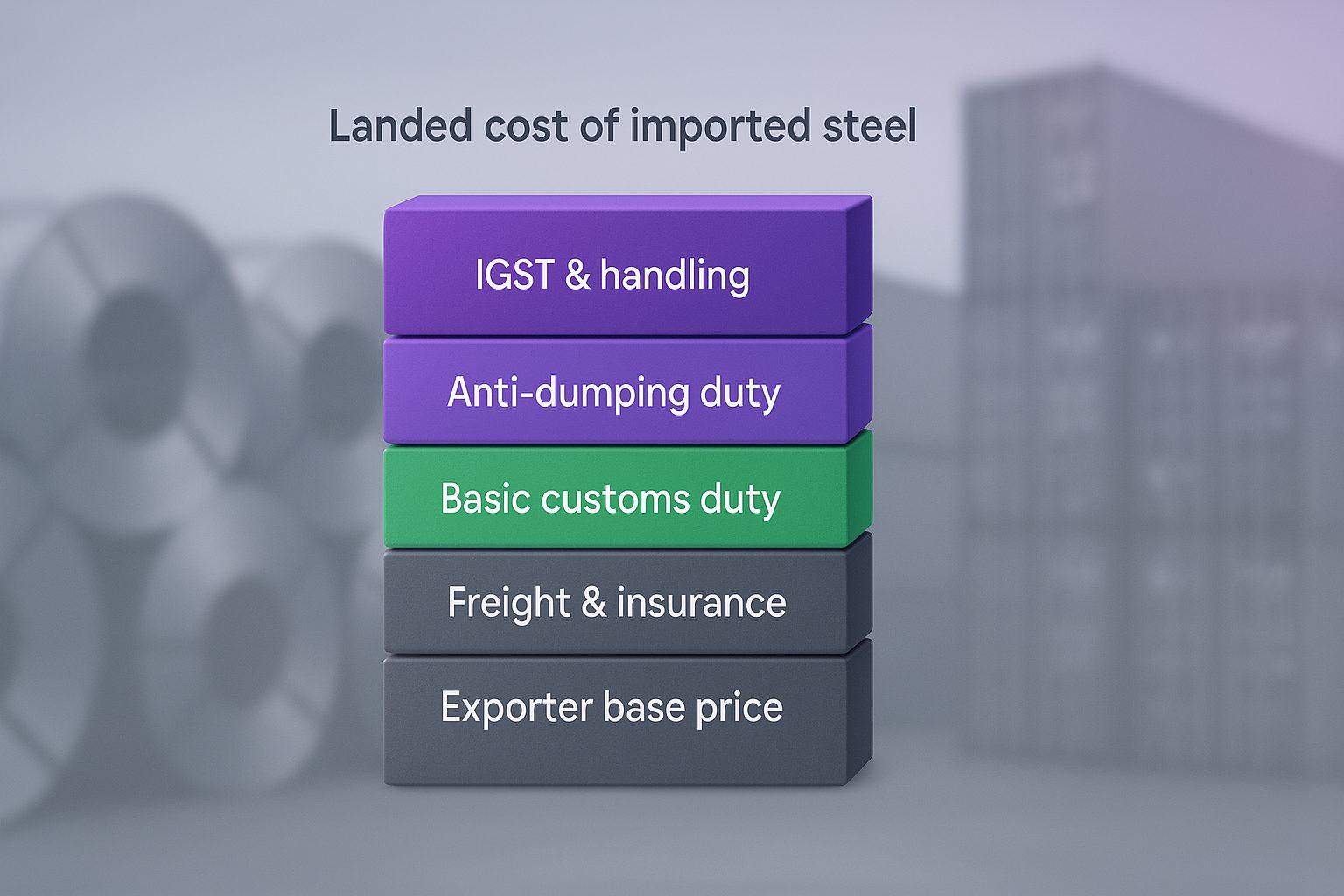
On paper, anti-dumping duty looks like one more line item. In practice, it can change every negotiation. A typical landed cost for imported steel will include:
- Base price quoted by the exporter
- Ocean freight and insurance
- Basic customs duty and social welfare surcharge
- Anti-dumping duty on imported steel, as a fixed amount per tonne
- IGST and handling charges at the port
Once customs anti-dumping duty India applies, the calculation for landed cost of imported steel shifts. A duty such as a USD amount per tonne may look modest at first glance. When a buyer converts it to rupees and applies it on large volumes, the impact on HR coil price per tonne becomes very real.
How DGTR anti-dumping investigation works in practice
Directorate General of Trade Remedies in India starts an anti-dumping investigation when domestic producers file a detailed petition. They need to show that imported steel is coming in at unfairly low prices and hurting local mills. The case often covers specific products such as hot rolled flat steel, from one or more countries, over a clear time period.
In real procurement cycles, MSMEs see early signs before any official move. Import offers stay far below domestic rates for many months, mills talk about “unviable levels”, and trade bodies start raising concerns. Once DGTR admits a petition, importers, exporters and domestic producers all receive questionnaires. Data from these responses forms the base for any decision on anti-dumping duty India.
Key stages MSMEs should quietly track
For buyers, the full legal process can feel distant, yet its stages affect sourcing decisions. A simple view helps:
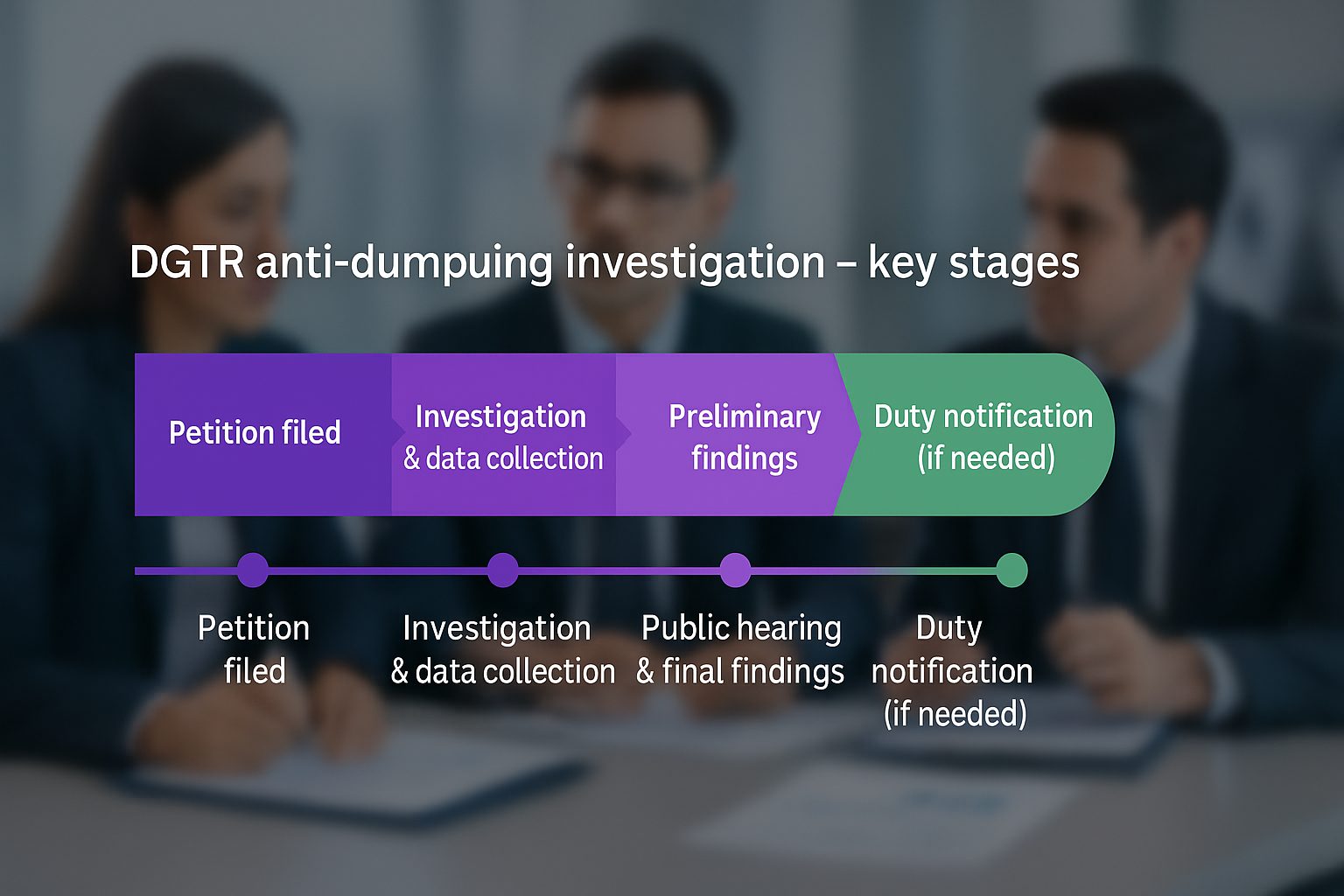
- Petition accepted, DGTR announces initiation and scope
- Data collection on prices, volumes and injury to domestic industry
- Disclosure of preliminary findings and, in some cases, provisional duty
- Public hearing and final findings on dumping and injury
- Government notification on anti-dumping duty on steel imports, if justified
Anti-dumping duty in India does not appear overnight. There is usually enough time for attentive MSMEs to recheck contract terms, review exposure to a particular origin and plan alternatives. Those who follow DGTR updates, industry circulars and major government notifications on anti-dumping duty gain a few vital weeks to reset purchase plans.
How anti-dumping duty changes landed cost for MSME steel buyers
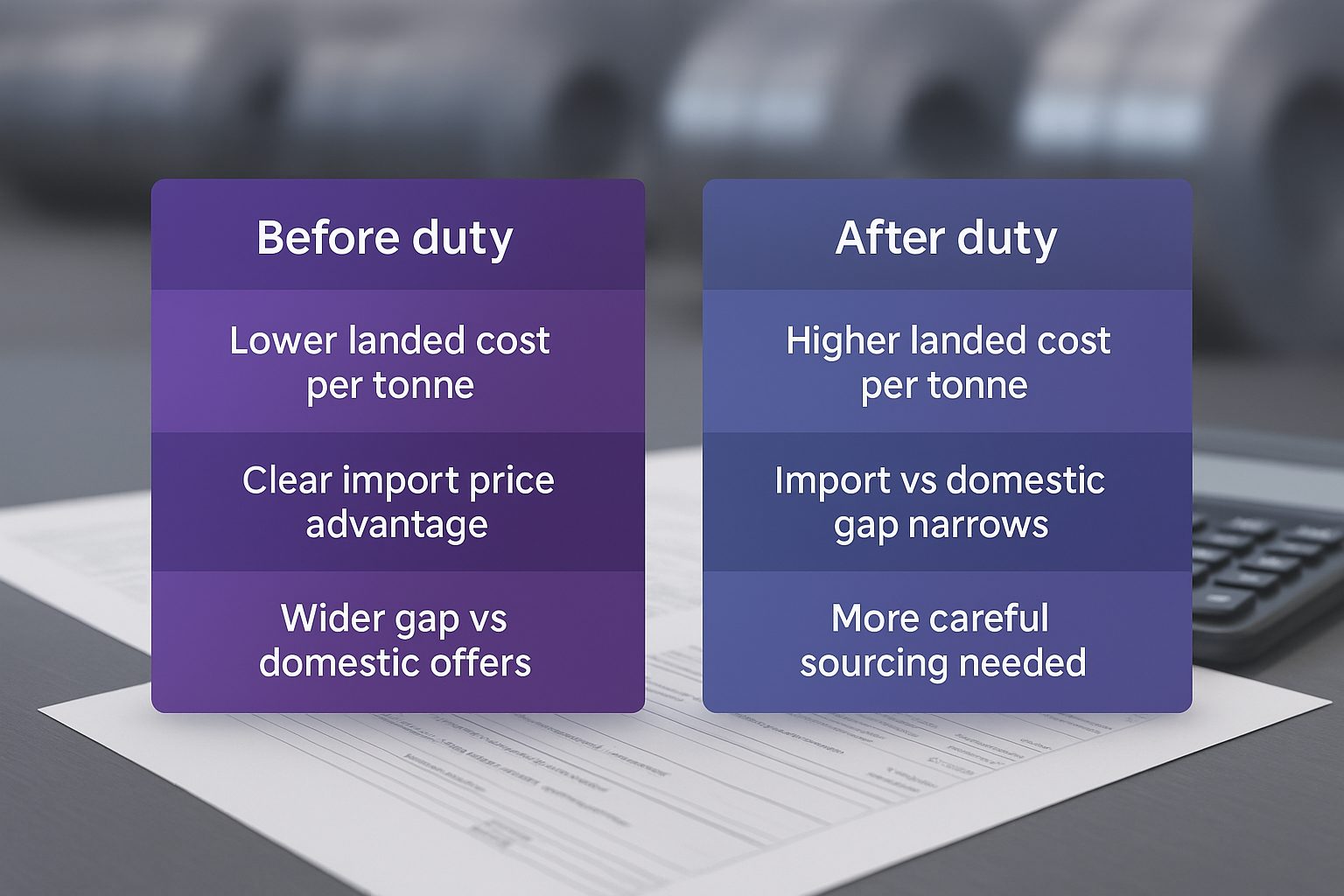
In many MSME offices, price comparison still starts with the exporter’s quote per tonne. That figure is only the first layer. Once anti-dumping duty in India applies, the gap between quoted price and landed cost of imported steel widens. A buyer who looks only at the base offer risks underestimating the true cost by a meaningful margin.
In real procurement cycles, the buyer needs to stack every component in order. For a typical hot rolled coil, the ladder looks like this:
- Exporter’s base price in USD or another currency
- Ocean freight, local charges and marine insurance
- Basic customs duty and social welfare surcharge
- Anti-dumping duty on steel imports, such as the USD 121.55 per tonne duty notified in Notification 32/2025 Customs ADD for hot rolled flat products of steel from Vietnam
- IGST on the total customs value and handling charges at the port
The moment customs anti-dumping duty India sits in the middle of this ladder, negotiations change. A “small” duty per tonne, when converted at current exchange rates and multiplied by order volume, can erase the price edge that imported HR coils once enjoyed over domestic offers.
A simple HR coil price example
Consider a mid-sized MSME that wants 200 tonnes of hot rolled flat products of steel. An exporter offers a base price that is still lower than the domestic HR coil price in India. Without anti dumping duty, landed cost might stay comfortably below the local rate, even after freight and customs. Once a fixed anti dumping duty on imported steel is added on every tonne, the total bill moves up by several lakh rupees.
In such a case, the difference between import and domestic options becomes much thinner. For some buyers, domestic mills or trusted traders become safer choices, even if the posted price per tonne is slightly higher. The risk of currency movement, port delay or sudden policy change now sits on top of the anti dumping duty calculation. MSMEs that run fixed price contracts or low-margin orders feel this HR coil price impact India more sharply than large integrated players.
Why India uses anti-dumping duty on steel imports
Anti-dumping duty in India is used when import prices stay unrealistically low for a long time. If foreign mills keep selling steel at levels that local producers cannot match, Indian mills start cutting output, losing jobs and shelving investments.
The government then uses anti-dumping duty on steel imports to close this gap. The duty lifts the import price to a fairer band, so imported and domestic steel compete on a closer footing, instead of one side playing with a big price advantage.
Key policy aims are simple:
- Stop long periods of loss-making prices for Indian mills
- Keep capacity running and people employed
- Allow fair competition within trade rules, not a subsidy race
What typically triggers a duty in steel
In steel, most cases start with products like hot rolled coils, plates and other flat products. Officials watch a few practical signals:
- Import prices stay lower than normal value in the exporting country
- Volumes from a country jump sharply in a short span
- Domestic mills report falling sales, weaker margins and idle capacity
When these signs hold up in data, an investigation can lead to a targeted anti-dumping duty on hot rolled steel or another defined product range.
How this choice affects MSMEs
Many MSMEs feel this tool is meant only for big integrated mills. In reality, the same decision shapes the buying environment for small units too.
If unfair imports continue unchecked, some local mills and re rollers will scale down or close. That leaves fewer nearby options for MSMEs, longer freight routes and more price swings in tight periods.
Once a government notification on anti-dumping duty applies, the picture changes. Domestic mills get a bit more room to plan production and pricing. At the same time, the landed cost of imported steel rises for MSMEs that rely on low cost origins. Buyers then need to adjust MSME steel procurement strategy, mix domestic and import options more carefully and avoid depending only on one “cheap” source.
Impact of anti-dumping duty on different MSME segments
Let’s have a detailed discussion on what is the impact of anti-dumping duty on different crucial segments of business:
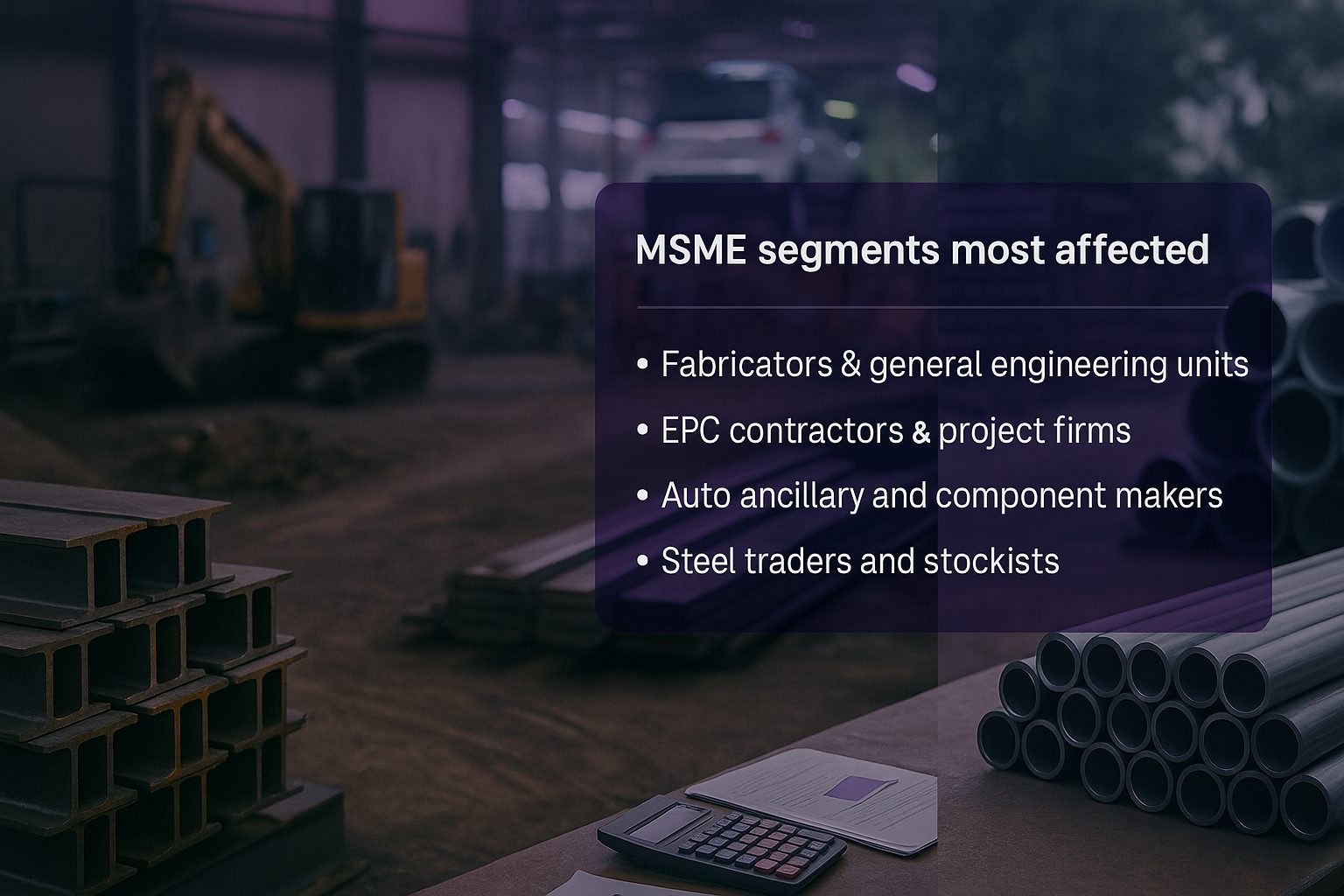
Fabricators and general engineering units
Fabricators and general engineering units feel the impact of anti-dumping duty in India very quickly. Many of them work on fixed price jobs for structures, tanks, frames or machinery housings. When the landed cost of imported steel rises mid-way through a project, there is very little room to pass the extra spend to the end customer.
Common pressure points for this group:
- Old quotations based on pre duty prices, with no scope for revision
- Thin margins on HR plates and coils used for cutting and bending
- Delays in changing rate cards for regular institutional customers
For these MSMEs, it helps to rework standard costing sheets, even for small jobs, and mark which items carry higher risk from anti dumping duty on steel imports.
EPC contractors and project firms
Smaller EPC and project firms usually buy a wide mix of HR coils, plates and sections for industrial plants or infrastructure work. Anti dumping duty impact on MSMEs in this group shows up in long duration contracts. A project may run for 12–18 months, while the duty and HR coil price impact India appear in a single notification.
These firms benefit from:
- Clear variation clauses that cover changes in import duty and anti dumping duty
- Split sourcing between domestic mills and imports, instead of relying only on one route
- Regular review of steel cost assumptions in tender teams and purchase teams
Where the contract does not allow price revision, careful timing of orders and stricter control on wastage become even more important.
Auto ancillary and component makers
Auto ancillary units use hot rolled steel for brackets, supports, chassis parts and many small components. Volumes are often steady but margins per piece are low. Anti-dumping duty on imported steel raises input cost in a way that is not easy to pass on during the middle of a model year.
Practical responses in this segment include:
- Discussing price resets or cost sharing with OEMs during formal review windows
- Moving some volumes to domestic service centres that can cut and slit as per drawing
- Tightening yield control on every coil to squeeze more usable parts from the same tonnage
Even small savings in scrap and rework help offset a part of the new duty load.
Steel traders and stockists
Traders who carried imported HR coils from low cost origins are directly exposed to anti-dumping duty India. Stock bought before a notification may look very attractive, or very risky, depending on how buyers react. New cargo booked after the duty comes into force must reflect the higher landed cost from day one.
Key actions for this group:
- Revalue existing stock and mark which lots came in under old conditions
- Share clear landed cost breakups with MSME customers so that higher prices are easier to explain
- Diversify sources between domestic mills, service centres and safer import corridors
When traders handle the change with transparency, MSME buyers can plan better and are more likely to maintain long term relationships instead of shifting abruptly.
Sourcing and procurement shifts MSMEs should consider
After any major anti-dumping move, old buying habits stop working. MSMEs need a few clear shifts in how they source and plan steel, rather than short term panic moves.
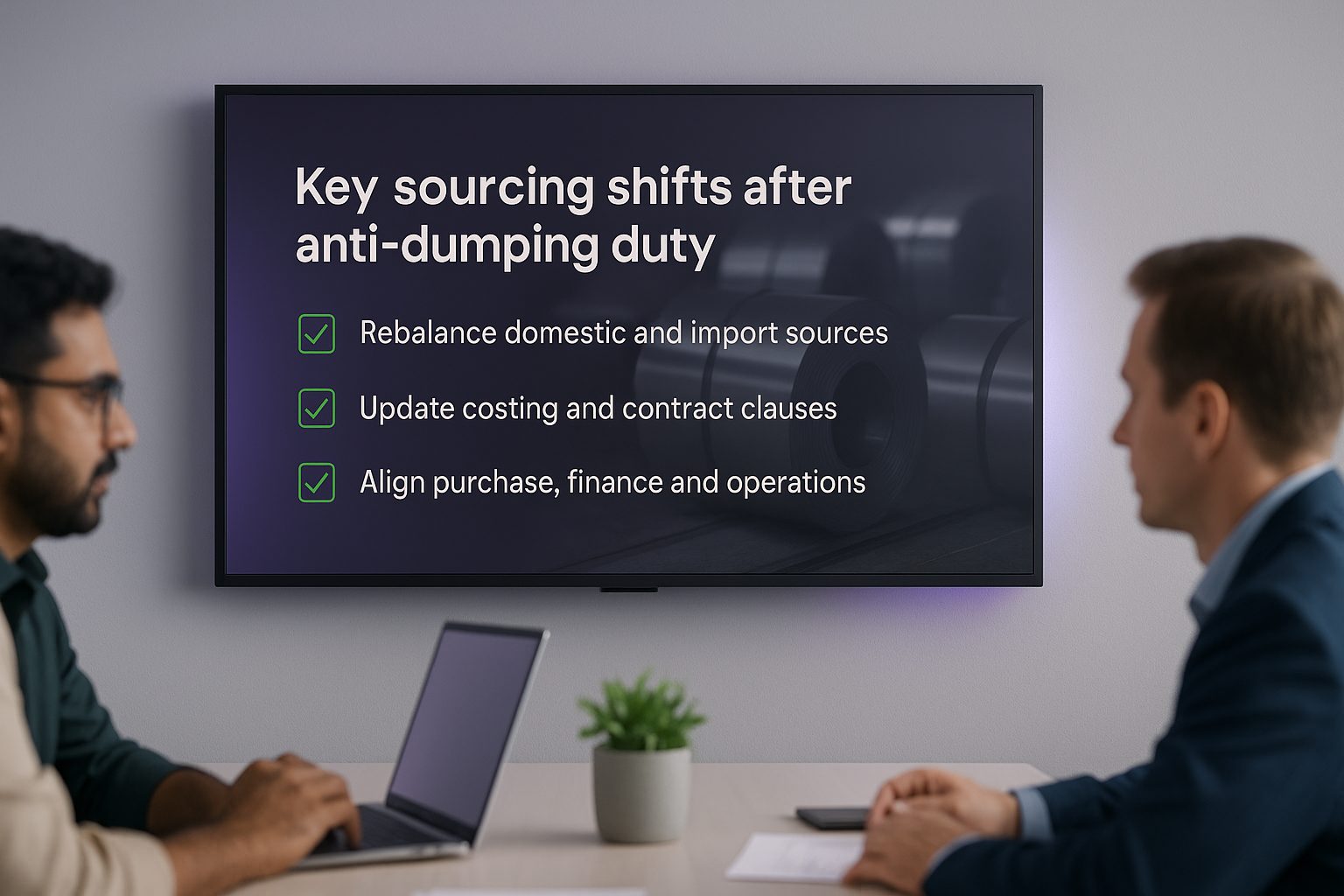
Rebalancing sources, not reacting in panic
Anti-dumping duty in India often triggers a rush back to domestic mills. A sharp swing rarely helps. MSMEs are better off rebalancing sourcing, not dropping imports overnight.
Practical steps:
- Map current mix between domestic mills, local traders and imports
- Mark which contracts carry fixed prices, and which allow revision
- Identify critical sizes where only one origin or mill can supply reliably
This gives a clearer view of where anti dumping duty on steel imports truly hurts, and where imports still make sense after duty.
Cleaning up costing, contracts and order timing
Costing templates in many MSMEs still carry old duty structures. Once customs anti-dumping duty India changes, those sheets must change too. Otherwise, quotations to customers rest on outdated landed cost of imported steel.
Useful actions:
- Update standard landed cost models with current duty and tax lines
- Insert clear clauses on duty changes in new contracts and large project orders
- Fix simple internal rules on when to place import orders and when to stay with local stock
In real procurement cycles, such discipline often matters more than chasing the last fifty rupees per tonne.
Getting purchase, finance and shop floor on the same page
Anti-dumping duty impact on MSMEs does not stop at the purchase desk. Higher HR coil price affects cash flow, credit limits and even production planning. If teams work in silos, the business absorbs the hit without any coordinated response.
Good practice is to:
- Share revised landed cost and duty changes with finance and plant heads
- Review credit lines and LC usage against new import cost
- Align production runs with more realistic purchase plans
When everyone understands why anti-dumping duty on imported steel has changed the numbers, decisions on stock, pricing and payment terms become far more grounded.
Risk watchlist for MSMEs over the next 3–6 months
Anti-dumping duty does not finish with the customs notification. The real impact shows up slowly, in prices, paperwork and behaviour in the market. A short risk list on the notice board can save many last-minute calls.
Price and booking signals
Prices may look stable for a few weeks, then move in a burst. It helps to keep an eye on a few simple points:
- HR coil and plate offer from regular domestic mills
- Import quotes after adding full landed cost, including duty
- Mill booking windows, especially for small lots
A basic sheet with monthly prices and lead times is often enough. Patterns become clear when they are written down, not just held in memory.
Paperwork and origin checks
After a new duty, officers at ports and yards tend to look closer at documents. Even clean cargo can get delayed if details are sloppy. Buyers need to check:
- Origin certificates and invoices for each shipment
- HS code and description on import documents
- Any new circular linked to the government notification on anti-dumping duty
Sharing a one page checklist with the broker and internal team reduces back and forth at the last minute.
Supplier behaviour and “too good to be true” offers
Some suppliers adjust quietly. Others start pushing routes that look clever on paper. Offers that stay far below the rest of the market, even after duty, deserve a second look.
Sticking to known sellers, checking at least one reference for a new trader, and avoiding unclear routing for large orders are simple habits. They reduce the chance of getting caught in a dispute, seizure or long delay at the worst possible time.

Conclusion, the informed MSME steel buying approach
Anti-dumping duty India is not a one time shock. It is now part of the environment in which MSMEs buy, stock and sell steel. Each change in duty on steel imports affects landed cost, tender pricing and even working capital. Firms that treat it as a regular input, not a rare event, cope far better.
Key ideas to keep in view
- Anti-dumping duty on imported steel can remove the price edge that some origins enjoyed for years
- Domestic and import options both matters, the balance between them will keep shifting
- Landed cost, contract clauses and credit use need regular updates, not just yearly review
In real procurement work, these points matter more than memorising every rule.
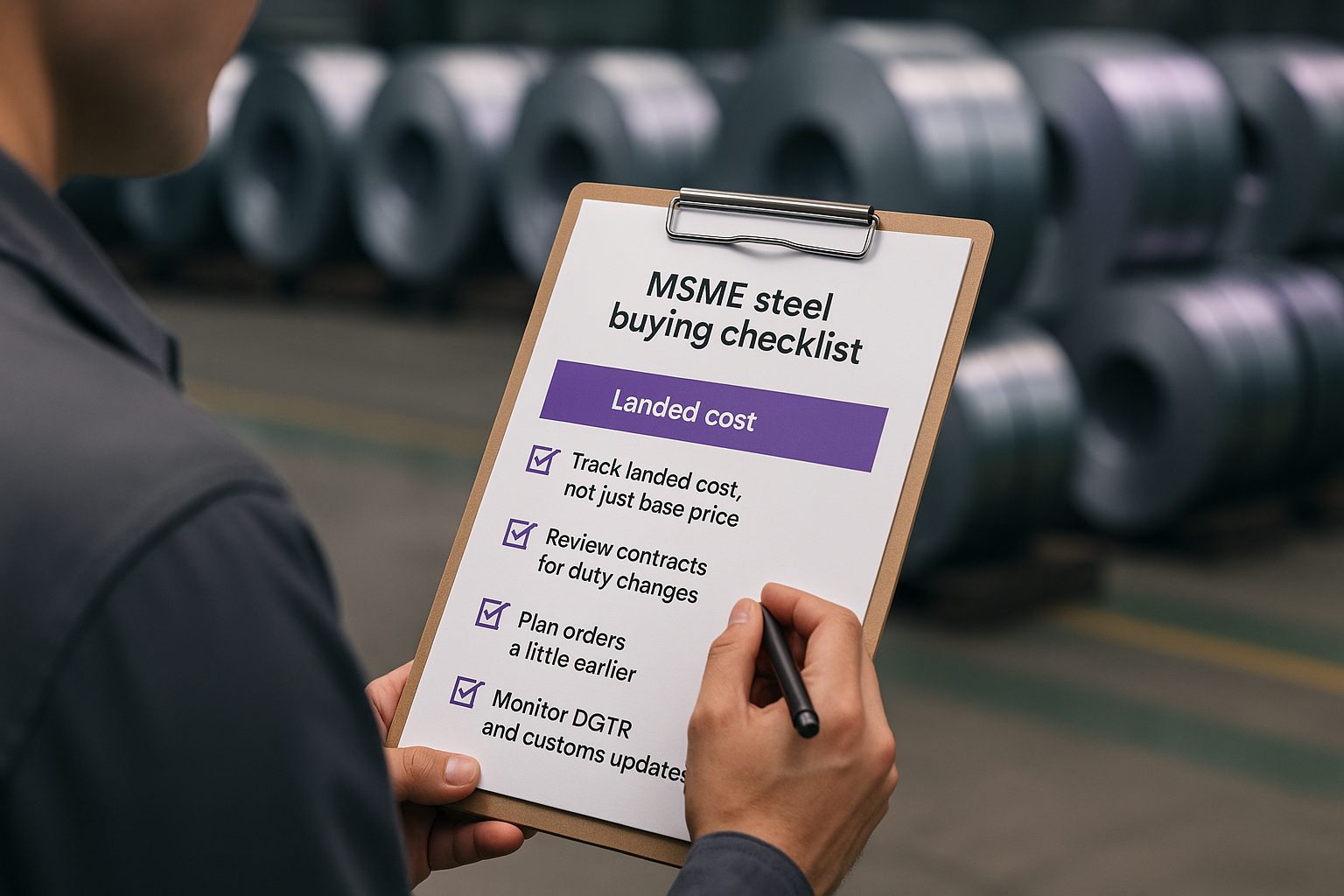
A simple action checklist for MSME buyers
- Keep a live landed cost sheet for main origins and key HR sizes
- Review major contracts and tenders for duty and tax change clauses
- Plan steel needs a little earlier, especially before peak seasons
- Watch DGTR and customs notifications in a simple, monthly rhythm
With this habit, anti-dumping duty on steel imports becomes a factor to manage, not a sudden blow. MSME owners, purchase managers and traders who build these checks into their routine stay ahead of price moves and protect margins more consistently.
Looking to procure steel?
Tata nexarc helps manufacturers, builders and MSMEs source certified steel products, compare prices, and choose the right grade as per IS codes—with complete traceability and procurement confidence.
FAQs
Does anti dumping duty apply on steel scrap imports into India?
Can anti dumping duty affect GeM tender quotes for steel-based items?
Is countervailing duty the same as anti dumping duty in India?
Do Indian steel exporters benefit directly when anti dumping duty is imposed on imports?
Can an MSME ask its bank to increase working capital limits after new duty hits steel cost?
Should anti dumping duty be shown separately in internal costing sheets?
Does anti dumping duty in India change the customs valuation method for steel imports?
Can a long term purchase contract fix a price that ignores future anti dumping duty?
Does anti dumping duty apply on samples and test coils sent free of charge?
Can an MSME dispute the duty amount charged on its bill of entry?
Does anti dumping duty change the way steel is insured during transit?
Is there any speed benefit in clearing steel through a particular Indian port after anti dumping duty?
Can MSMEs lock in prices with domestic service centres to reduce anti dumping exposure?
Is there any benefit in splitting a big steel order into multiple smaller imports after duty?
Does anti dumping duty show up when MSMEs buy steel from local traders?
Should MSMEs capture anti dumping duty as a separate risk in project feasibility studies?
Charul is a content marketing professional and seasoned content writer who loves writing on various topics with 3 years of experience. At Tata nexarc, it has been 2 years since she is helping business to understand jargon better and deeper to make strategical decisions. While not writing, she loves listing pop music.