Table of Contents
- What are Small Scale Industries?
- Examples of a Small Industry
- Characteristics of Small-Scale Industries
- Objectives of Small-Scale Industries
- How to Start a Small-Scale Business in India (Step-by-Step Checklist)
- Small-Scale Business Ideas in India
- Role of Small-Scale Businesses in Rural India
- How Many Small-Scale Industries Are There in India?
- Advantages and Challenges of Small-Scale Industries in India
- Why Get Your Business Registered as a Small-Scale Industry?
- Government Schemes and Support for Small Scale Industries
- Conclusion
- FAQs
Small scale industries play a pivotal role in shaping the socio-economic conditions of most countries, especially developing countries. As per updated MSME classification in India (2026), small scale industries continue to play a critical role in economic growth, employment generation, and rural development. In India, the MSME sector’s contribution to the GDP, employment generation, exports, and overall rural development is enormous making it a priority sector for the government.

If you’re planning to start a small business or understand MSME eligibility, this guide covers everything you need to know about small scale industries in India.
Let us take a look at the meaning of small industries, their key characteristics, small scale industries examples, the small scale industries list, and the role of small businesses in rural India.
What are small scale industries?
Small scale industries (SSIs) are businesses classified under MSMEs based on investment and turnover limits defined by the Government of India.
Industry definition: An industry can be defined as a group or cluster of companies engaged in the manufacturing of the same product or providing the same services which is their primary business activity.
Small scale industry meaning: Small-scale industry is an industry where the manufacturing and production of goods and rendering of services are done on a small/low scale, typically defined by investment and turnover limits under MSME classification.
Small scale businesses work with lesser manpower and investments, use manual or semi-automatic machines and equipment (at times advanced machines), and have small production capacity.
Some small scale industries in the rural sector also use indigenous technologies which enables local development and utilisation of resources. They also have a smaller customer base and market presence and usually cater to regional and domestic markets. In certain cases, they also cater to international customers but on a smaller scale.
As per the revised MSME classification effective from April 2025 (applicable in 2026), a small business is one where:
- Annual turnover does not exceed ₹100 crores.
- Investment in plant and machinery and equipment does not exceed ₹25 crores.
This classification aims to promote economic wellbeing and growth and generates employment opportunities especially in the rural sectors.
Latest MSME classification (2026)
| Category | Investment limit | Turnover limit |
| Micro | Up to ₹2.5 crore | Up to ₹10 crore |
| Small | Up to ₹25 crore | Up to ₹100 crore |
| Medium | Up to ₹125 crore | Up to ₹500 crore |
Examples of a small industry
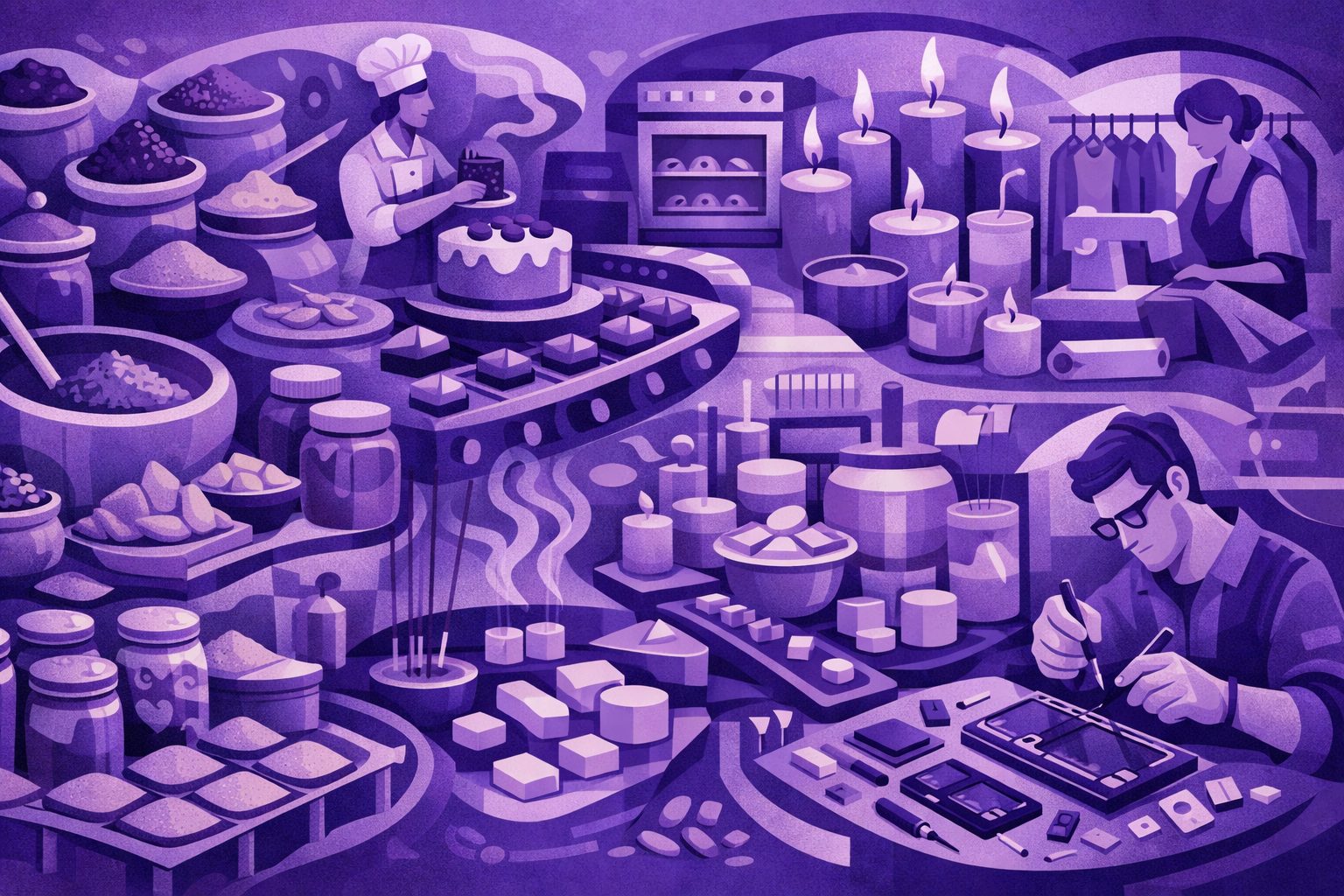
Now that we understand the meaning of small-scale industries, let’s take a look at some small-scale industry examples.
Few examples of small-scale industries in India:
- Spices manufacturing
- Pickles and papad making
- Bakery and chocolate making
- Incense stick and camphor manufacturing
- Candle and wax product making
- Food processing units
- Garment manufacturing
- Mobile repair services
These examples include both traditional and modern small scale industries that operate with limited investment and cater to local, regional, or niche markets in India.
Link to blog – List of Small Scale Industries with Photos and Examples

Characteristics of small-scale industries
Small-scale industries in India have some unique characteristics and traits that highlight not only their operational models but also their importance in the Indian economy.
Proprietary ownership: Small-scale businesses are usually entrepreneurships, sole-proprietor or family-run businesses, with business decisions being taken by the owner or decision-making member in the family, enabling faster decision-making and localised control.
Low capital investment: Small-scale industries don’t make heavy investments in plant, machinery, technology or infrastructure. While the cap is set by the government (i.e., MSME classification), the sector-wise investment level varies. For instance, investing in manufacturing ceramic will be more than opening a stationery shop. Low investment levels also reduce entry barriers, encouraging more entrepreneurs in India to start businesses with limited funding.
Labor intensive: In many cases, small-scale industries are labour intensive. That is, though the manpower count might be low, most of the work is done manually using traditional methods. Moreover, human labour and skills are sourced locally, generating employment in rural and semi-urban India and supporting local livelihoods.
Limited production capacity: These businesses have smaller production capacity. They do not work on mass production but focus on building niche products for local and domestic consumption. For instance, a toy manufacturer might be making toys for regional markets only, allowing them to cater to specific customer needs.
Better utilisation of resources: They optimise by utilising local skills and resources. This includes both human resources and raw materials procured locally, promoting regional economic development and reducing transportation and operational costs.
Flexibility: Small-scale businesses are highly flexible and can adapt to changing markets and customer needs. For instance, a logistics company providing PTL services can extend its service scope to FTL and LTL services based on customer demand. A handloom garments manufacturer can add men’s clothing to its product range easily as per customer and market requirements, helping them stay competitive in dynamic markets.
Understanding these characteristics of small scale industries helps in appreciating their role in rural and urban development, employment generation, and sustainable regional growth in India.

Objectives of small-scale industries
Small-scale businesses are the backbone of rural and semi-urban India and facilitate nation-building across several socio-economic objectives. Some of the key objectives of small-scale industries in India are:
- Employment generation at the local and regional level, by hiring local talent and reducing urban migration
- Utilisation of local resources, including raw material procurement from local sellers, adding value to the local ecosystem
- Bringing regional balance by promoting industry development regionally, in turn reducing income disparity and facilitating infrastructure development
- Fostering innovation by encouraging local entrepreneurs to start a business with minimum capital investment
- Crafting products unique to rural India for foreign exchange generation through international trade and exports
- Promoting self-reliance by supporting local manufacturing and reducing dependency on imports
- Encouraging entrepreneurship development by enabling individuals and small businesses to participate in the MSME ecosystem
- Supporting digitalisation and formalisation, as small businesses adopt digital tools, e-commerce platforms, and formal registration systems like Udyam
Also read: How to start an export and import business
How to start a small-scale business in India (step-by-step checklist)
Choose a business idea
Identify a viable small-scale business based on your skills, budget, and market demand.
Register your business (Udyam Registration)
Register on the Udyam portal to get MSME recognition and access government benefits.
Arrange finance
Secure funding through personal savings, bank loans, or schemes like MUDRA or CGTMSE.
Obtain required licenses and compliance
Ensure necessary registrations such as GST, FSSAI (if applicable), and other local permits.
Start operations and scale gradually
Begin production or services, focus on quality and local demand, and scale as the business grows.
Small-scale business ideas in India
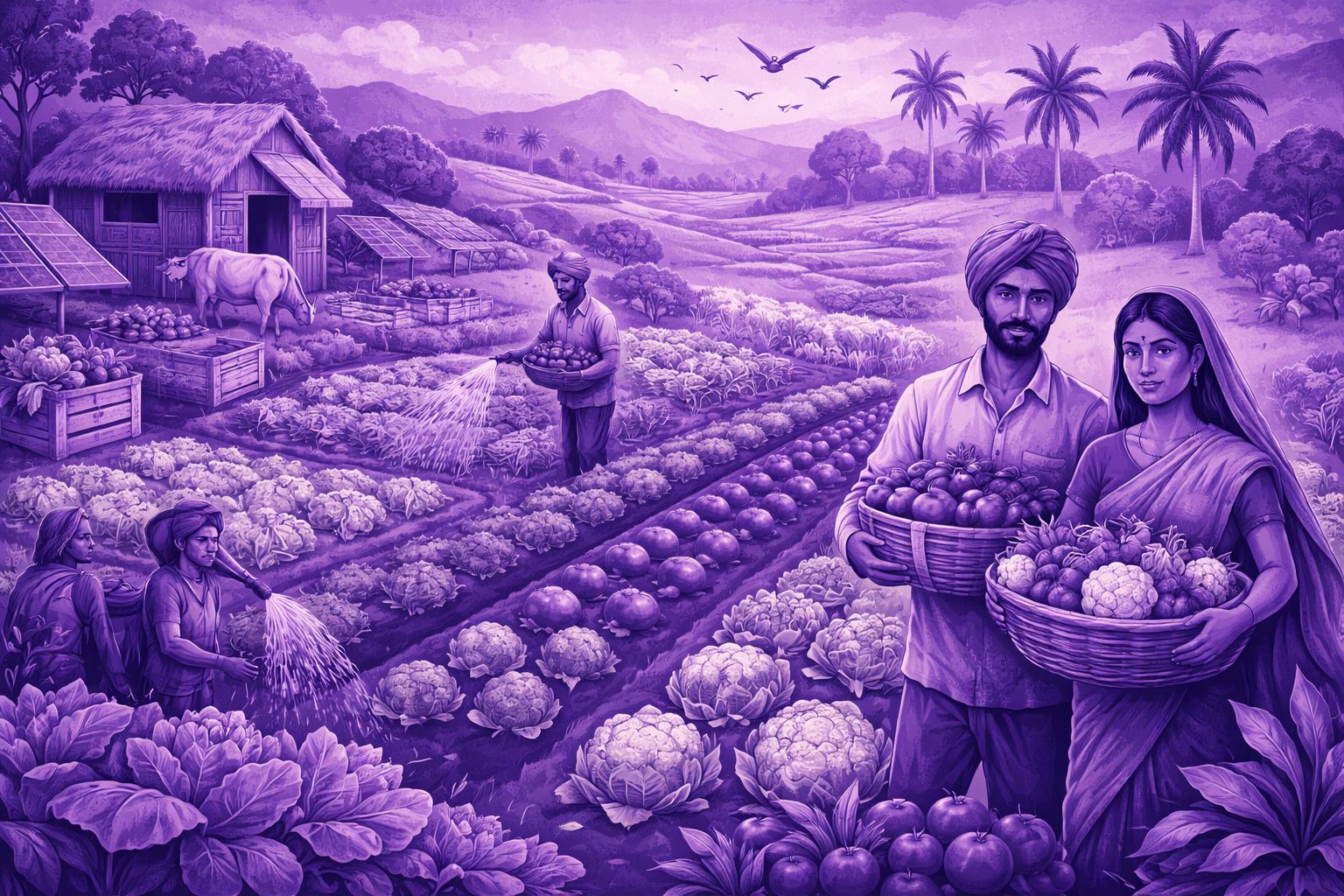
Business ideas for small and large-scale industries can overlap. What matters is the scale, investment, production capacity and other components. However, there are some small-scale business ideas that can be started with minimum investments and efforts.
Organic vegetable farming: Requires basic farming tools and organic seeds and initial investments of around ₹50,000 to get started
Custom jewellery designing and making: Basic investment of ₹30,000 – ₹50,000 on tools and materials and can earn high-profits based on creative designing and local sales
Handmade craft store: Can be done online or offline (by renting a store) and making investments in materials, local artisans, etc.
Shop for mobile repair and accessories: Set up cost on ₹50,000 for tools and infrastructure and training required
Event management services: Requires minimum investment for creating marketing collaterals, renting office space, internet, telephone and other infrastructure
Cloud kitchen or home-based food business: Requires basic kitchen setup, FSSAI registration, and initial investment of ₹50,000–₹1 lakh depending on scale and menu
Digital marketing services: Requires minimal investment in a laptop, internet, and basic skills in social media, SEO, or advertising, with strong demand among small businesses
E-commerce reselling or online store: Can be started with low inventory investment using platforms like marketplaces or social commerce, focusing on niche or trending products
Also read: Creative MSME business ideas with low investment
Role of small businesses in rural India
It goes without saying that small-scale businesses play a pivotal role in rural development and sustaining local communities. It helps in:
- Employment generation: Though job opportunities for skilled and unskilled work
- Skill development: By providing a platform to learn and enhance skills and for local craftsmen to preserve cultural techniques and knowledge
- Local resource utilisation: Using local resources such as agricultural products, raw materials, crafts, and more, in turn supporting the local economy and building self-reliance
- Self-reliant economy: By ensuring that money comes in from outside and circulates within the community, and hence bring economic stability
- Business idea generation and entrepreneurship: By providing a testing ground for individuals to innovate and cultivate new business ideas that can eventually be scaled
How many small-scale industries are there in India?
When it comes to micro, small and medium-scale industries, it’s recommended for businesses to register as MSMEs on the Udyam portal to reap specific benefits.
Currently, as of early 2026, as per Udyam portal data, there are over 3 crore microenterprises and around 8–9 lakh small enterprises registered on the portal (i.e., these businesses are MSME Udyam registered; there are many other small businesses that are not registered on the portal).
For more information, visit Udyam’s official website: //udyamregistration.gov.in/Government-India/Ministry-MSME-registration.htm

Advantages and challenges of small-scale industries in India
| Aspect | Details |
| Low capital requirement | Ideal for first-time entrepreneurs and MSMEs with limited funding access, making it easier to start a business in India. |
| Employment generation | Creates job opportunities at the local level, especially in rural and semi-urban areas. |
| Operational flexibility | Allows businesses to quickly adapt to changing customer demand and market conditions. |
| Local market focus | Enables businesses to cater to niche, regional, or customised demand efficiently. |
| Entrepreneurship development | Encourages individuals to start small businesses and scale over time within the MSME ecosystem. |
| Limited access to formal credit | Many MSMEs in India face challenges in securing loans due to lack of collateral or credit history. |
| Delayed payments | Payment delays from buyers and larger companies impact cash flow and working capital. |
| Compliance burden | Managing GST, registrations, and regulatory requirements can be complex for small businesses. |
| Technology gaps | Limited access to advanced tools and digital infrastructure affects productivity and competitiveness. |
| Market competition | Faces strong competition from large enterprises and low-cost imports. |
Why get your business registered as a small-scale industry?
If your business comes under any of the classifications set down by the Ministry of MSME, then it is eligible to be registered as an MSME on the Udyam portal. Small-scale industry registration in India, also known as MSME (Udyam) registration, can be obtained by signing up on the Udyam portal and completing the registration process online. Once you have Udyam registration, you can enjoy the following benefits:
- MSMEs are eligible for priority sector lending from banks and NBFCs
- They can access MSME-specific schemes and incentives introduced by the Ministry of MSME from time to time
- MSMEs can participate in government e-tenders and benefit from public procurement policies that mandate a share of procurement from MSMEs
- Udyam-registered businesses may receive tariff, tax, and capital subsidies depending on applicable central and state government schemes
- Small businesses have access to collateral-free loans under schemes like CGTMSE, often at relatively lower interest rates
Small-scale manufacturing entities and other small businesses in India benefit from several government initiatives focused on ease of doing business, digitalisation, and market access. Getting MSME registration can open many doors, including government tenders, easier access to credit, and participation in domestic and international trade opportunities.
Government schemes and support for small scale industries

Udyam Registration
Udyam registration is the official MSME registration provided by the Government of India through an online portal. It enables businesses to be recognised as micro, small, or medium enterprises and access benefits such as priority sector lending, government schemes, and participation in public procurement.
Credit Guarantee Fund Trust for Micro and Small Enterprises (CGTMSE)
CGTMSE provides collateral-free credit to MSMEs by offering credit guarantees to lenders. This helps small businesses secure loans without needing to pledge assets, improving access to formal finance and supporting business expansion.
Prime Minister’s Employment Generation Programme (PMEGP)
PMEGP is a credit-linked subsidy scheme that supports new micro-enterprises in manufacturing and service sectors. It provides financial assistance for setting up businesses, especially in rural and semi-urban areas, promoting self-employment and entrepreneurship.
Conclusion
Understanding small scale industries is essential for entrepreneurs looking to enter the MSME sector in India. With clear classification criteria, practical examples, and government support available, these businesses offer strong potential for growth and sustainability. Whether you are starting small or planning to scale, informed decisions are key. Use the classification, characteristics, and examples above to identify the right business opportunity and take the first step towards building a successful small-scale enterprise in India.
Empowering MSMEs to grow smarter
Tata nexarc delivers powerful solutions for MSMEs—discover tenders, logistics solutions, and streamline procurement. Everything your business needs, all in one place.
FAQs
What is SSI vs MSME?
Is SSI still valid in India?
What are examples of small-scale industries?
What is the investment limit for small scale industries?
How do I register as a small-scale industry?
What are the benefits of MSME registration?
Can a service business be a small scale industry?
Do small scale industries need GST registration?
What are the main challenges faced by small scale industries?
Which small-scale business is most profitable?
Priyanka is a seasoned content marketing professional with more than 6 years of experience crafting various forms of business and technology sector content. Her insightful writing tackles critical issues faced by small-scale manufacturing businesses. Priyanka's clear and concise communication empowers businesses to make informed decisions and thrive in today's dynamic business environment.