Check Price Now
Table of Contents
- How steelmaking generates greenhouse gases
- Importance of decarbonising steel in India
- Practical pathways to reduce steel emissions
- Hydrogen-based ironmaking
- Carbon capture: A practical option for existing steel plants
- Using biomass to cut emissions in steel production
- Using scrap to lower steel emissions
- Incentives and market expectations
- 2026 outlook for low-carbon steel
- Conclusion
The steel industry is one of the largest sources of carbon dioxide emissions globally, and India’s steel sector is no exception. As the world’s second-largest steel producer, India faces growing pressure to reduce emissions while meeting rising demand. The country has committed to achieving net-zero emissions by 2070 and to cutting emissions intensity by 45% by 2030.
Global climate policies are also reshaping trade. Measures such as the European Union’s Carbon Border Adjustment Mechanism (CBAM) will directly affect Indian steel exports. As a result, reducing the carbon footprint of steel production has become essential for competitiveness, compliance, and long-term sustainability.
How steelmaking generates greenhouse gases
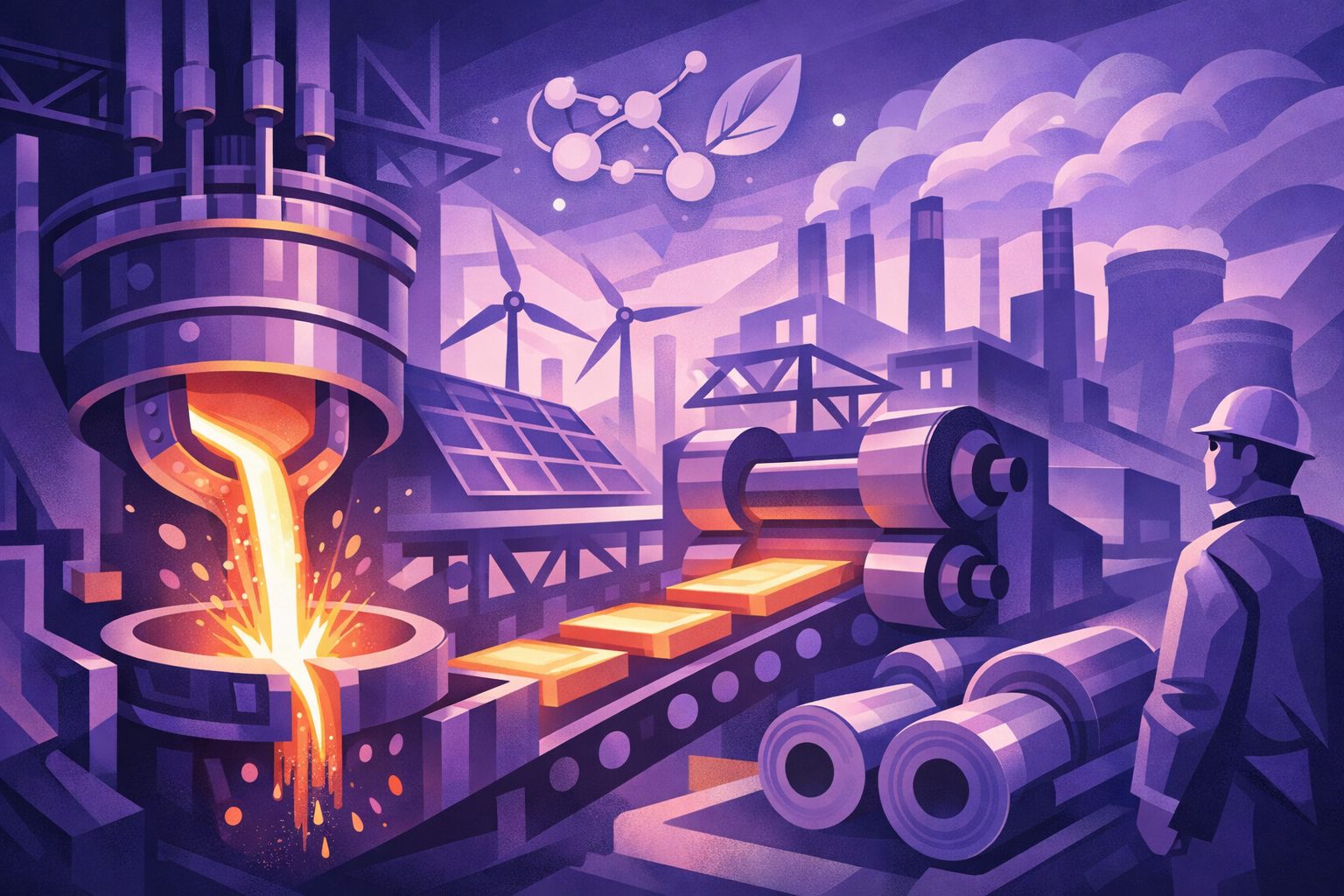
Steel production is an energy-intensive process. Most greenhouse gas emissions from steelmaking come from the way iron ore is converted into iron and steel, and from the energy used during production. In India, most steel is still produced using coal-based technologies, which increases emissions.
Process emissions from ironmaking
- Iron ore must be chemically reduced to produce iron.
- In blast furnace operations, carbon from coke reacts with oxygen in the ore.
- This reaction releases carbon dioxide as a direct process emission.
- These emissions occur regardless of energy efficiency improvements.
Fuel-related emissions in blast furnaces
- Coke and coal are used as both fuel and reducing agents.
- Additional coal is often injected to maintain high furnace temperatures.
- Burning these fossil fuels generates large volumes of carbon dioxide.
- Blast Furnace–Basic Oxygen Furnace (BF–BOF) routes dominate Indian steel production and account for most sector emissions.
Electricity-related emissions in electric arc furnaces
- Electric Arc Furnaces (EAFs) rely heavily on electricity.
- When power comes from coal-based grids, indirect emissions remain high.
- In India, electricity generation is still largely dependent on thermal power.
- Emissions vary based on the share of renewable energy in the power mix.
Understanding these emission sources is essential for identifying effective decarbonisation strategies across the steel value chain.
Importance of decarbonising steel in India
| Strategic driver | Why it matters for India’s steel sector |
| National climate commitments | India has committed to achieving net-zero emissions by 2070 and reducing emissions intensity by 45% by 2030. As one of the largest industrial emitters, the steel sector plays a critical role in meeting these national targets. |
| Perform, Achieve and Trade (PAT) scheme | The PAT scheme promotes energy efficiency in energy-intensive industries, including steel. Plants that improve efficiency can reduce compliance costs and improve operational performance over time. |
| National Green Hydrogen Mission | India’s hydrogen mission aims to scale domestic green hydrogen production. This creates long-term opportunities for hydrogen-based steelmaking, especially for direct reduced iron processes. |
| Infrastructure-led steel demand | Government-led infrastructure projects are driving strong demand for steel. As public procurement increasingly aligns with sustainability goals, low-carbon steel is expected to gain preference. |
| Global trade and export competitiveness | International climate policies, including carbon-linked trade measures, are reshaping export markets. Indian steel producers must reduce emissions to remain competitive in key global markets. |
| Investor and lender expectations | Financial institutions are increasingly linking funding to environmental performance. Lower carbon intensity improves access to capital and reduces long-term financial risk. |
Decarbonising steel production is therefore both a regulatory necessity and a strategic business decision for India’s steel industry.
Practical pathways to reduce steel emissions

Reducing emissions at the ironmaking stage
Most emissions in steel production are generated during ironmaking. Replacing coal-based reduction with cleaner alternatives can significantly lower carbon output. This is why new ironmaking technologies are central to steel decarbonisation efforts in India.
Lowering fossil fuel use in existing plants
India has a large base of operational blast furnaces. Improving fuel efficiency and reducing coal consumption in these plants is essential to cut emissions in the near term.
Shifting to cleaner energy sources
Electricity-related emissions depend on the power mix. Increasing the use of renewable energy in steel operations can reduce indirect emissions, especially in electric arc furnaces.
Capturing and managing unavoidable emissions
Some emissions cannot be eliminated immediately. Technologies that capture or store carbon dioxide offer a pathway to reduce the climate impact of existing steelmaking processes.
Hydrogen-based ironmaking (DRI/EAF and HYBRIT)
Hydrogen-based ironmaking replaces coal with hydrogen to reduce iron ore into iron. This process is commonly paired with Direct Reduced Iron (DRI) and Electric Arc Furnaces (EAF). When powered by clean electricity, it can significantly reduce carbon dioxide emissions compared to blast furnace routes.
| Aspect | Explanation |
| Grey hydrogen | Grey hydrogen is produced using natural gas without capturing emissions. While it can reduce coal use, it still results in high carbon emissions and offers limited climate benefits for steelmaking. |
| Blue hydrogen | Blue hydrogen is produced from natural gas with carbon capture and storage. Emissions are lower than grey hydrogen, but effectiveness depends on capture rates and storage availability. It is often seen as a transitional option. |
| Green hydrogen | Green hydrogen is produced using renewable electricity through electrolysis. It offers the greatest emissions reduction potential and is the preferred option for long-term decarbonisation of steel production. |
| India’s renewable power constraints | Green hydrogen requires large volumes of low-cost renewable electricity. In India, challenges include intermittent renewable supply, grid stability, land availability, and high upfront costs for electrolysers and storage infrastructure. |
| Cost considerations in India | Green hydrogen remains more expensive than coal-based alternatives. However, costs are expected to fall as renewable capacity expands and domestic manufacturing under the National Green Hydrogen Mission increases. |
| Global project examples | HYBRIT in Sweden has successfully produced fossil-free steel at pilot scale. H2 Green Steel is building a large hydrogen-based steel plant in Europe. In the Middle East, hydrogen DRI projects are being developed using low-cost renewable energy. These projects demonstrate technical feasibility at scale. |
| Relevance for Indian steelmakers | Hydrogen-based ironmaking is likely to be adopted in phases. Early pilots, blending hydrogen with natural gas, and long-term green hydrogen integration are expected pathways for India. |
Carbon capture: A practical option for existing steel plants
Most steel capacity in India is based on blast furnace technology. Replacing these assets overnight is not practical. Carbon Capture, Utilisation and Storage (CCUS) offers a way to reduce emissions from existing plants while maintaining production volumes. For producers, this helps extend asset life. For buyers, it supports lower-emission supply without major disruption.
How CCUS works in blast furnace operations
In blast furnace steelmaking, carbon dioxide is released through exhaust gases. CCUS systems capture carbon dioxide before it enters the atmosphere. The captured gas is then processed for either storage or reuse. This approach targets emissions at source and can be integrated with operating plants.
Storage versus utilisation of captured carbon
- Carbon storage involves injecting carbon dioxide into deep geological formations, such as depleted oil and gas reservoirs. This provides long-term emissions reduction but requires suitable storage sites.
- Carbon utilisation uses captured carbon dioxide in products such as chemicals, fuels, or building materials. While utilisation volumes are smaller, it can improve project economics.
Economics and readiness in India
CCUS remains capital-intensive and increases operating costs. In India, challenges include limited storage infrastructure, regulatory clarity, and high capture costs. However, CCUS is increasingly viewed as a transitional solution for high-emission plants, especially where hydrogen or electrification is not yet viable.
For Indian steel producers and buyers, CCUS represents a near-term pathway to lower emissions while long-term decarbonisation technologies continue to scale.
Using biomass to cut emissions in steel production
Biomass offers a practical way to reduce fossil fuel use in steel production. India generates large volumes of agricultural residue from crops such as sugarcane, rice, and groundnuts. This makes biomass a locally available and potentially cost-effective option for lowering emissions in existing steel plants.
How biomass and biochar are used in steelmaking
Biomass can be converted into biochar through a process called pyrolysis. Biochar can partially replace coke or coal used in blast furnaces. By reducing the use of fossil fuels, steel producers can lower carbon dioxide emissions from energy and fuel consumption.
Industry example: Tata Steel’s biochar initiative
Tata Steel has introduced biomass-based charcoal as a partial replacement for fossil fuels in its blast furnace operations. This initiative has helped reduce approximately 50,000 tonnes of carbon dioxide emissions per year. The project demonstrates how biochar can be integrated into existing steelmaking processes without major changes to plant design.
What biomass can and cannot do
It is important to note that biomass use reduces emissions linked to fuel and energy sources. It does not change the carbon content or mechanical properties of the steel product. Biomass should therefore be viewed as an emissions reduction measure, not a change in steel grade or composition.
Limits and challenges
Scaling biomass use requires reliable supply chains, sustainability certification, and competition management with other biomass users such as power and fertiliser producers.
Improving efficiency and using scrap to lower steel emissions
Waste heat recovery: This is important because steel plants generate large amounts of unused heat. Capturing this heat reduces fuel consumption and lowers overall emissions.
Energy-efficient equipment: This matters because modern furnaces and machinery use less power. Upgrading equipment cuts emissions while improving operating efficiency.
Digital optimisation: This is important because digital tools improve process control. Better monitoring reduces energy losses and avoids unnecessary fuel use.
Scrap-based steelmaking: This is critical because scrap does not require iron ore reduction. Electric Arc Furnaces melt scrap using electricity, resulting in much lower emissions than coal-based routes.
Procurement relevance: These measures help steel producers reduce emissions quickly and at lower cost. For buyers, they support circular economy goals and lower supply chain emissions without changing steel specifications.
Incentives and market expectations for low-carbon steel
| Area | What it means for steel producers and buyers in India |
| Government climate policy | India’s commitment to net-zero by 2070 and lower emissions intensity is driving policy support for industrial decarbonisation. Steel is a priority sector due to its high emissions and economic importance. |
| Incentives for green steel | Incentives may include tax benefits, concessional finance, and support under clean energy and hydrogen programmes. While a formal carbon price is still evolving, future carbon costs are expected to influence production decisions. |
| Carbon markets and pricing signals | Voluntary carbon markets and proposed compliance mechanisms are creating early price signals. Over time, these are likely to reward lower-emission steel production. |
| Procurement standards | Buyers are increasingly asking for emissions transparency. Standards such as ISO 14067 help measure product carbon footprints across the value chain. |
| Environmental Product Declarations (EPDs) | EPDs provide verified emissions data for steel products. They are becoming important in infrastructure, automotive, and export-oriented procurement. |
| Global market signals | Trade measures linked to carbon emissions are reshaping global steel markets. Indian producers supplying international customers must align with emerging sustainability requirements. |
| Implications for Indian steelmakers | Early adoption of decarbonisation improves access to finance, strengthens export competitiveness, and positions producers ahead of future regulations. |
| Implications for steel buyers | Buyers gain better emissions visibility, reduced supply chain risk, and improved alignment with corporate sustainability goals. |
2026 outlook for low-carbon steel
Hydrogen-based DRI moves towards commercial scale
From 2026 onwards, pilot hydrogen DRI projects are expected to transition into early commercial operations globally. In India, adoption is likely to begin with hydrogen blending and natural gas-based DRI, followed by gradual integration of green hydrogen as costs fall and renewable power capacity expands.
Falling costs of green hydrogen over time
The cost of green hydrogen is projected to decline due to increased renewable energy capacity, domestic electrolyser manufacturing, and government support. This will improve the long-term viability of hydrogen-based steelmaking in India.
CCUS cost curves improve with deployment
Carbon capture costs are expected to decrease as technology matures and more projects are deployed. By the late 2020s, CCUS may become a more viable option for high-emission blast furnace plants that cannot switch technologies quickly.
Carbon pricing and Scope 3 pressure increases
Carbon pricing mechanisms and buyer-led emissions reporting will increase focus on Scope 3 emissions. Steel buyers will increasingly factor emissions into sourcing decisions, affecting supplier selection.
Impact on India’s export competitiveness
Markets such as the European Union are linking carbon emissions to trade costs. Indian steel producers that invest early in low-carbon technologies will be better positioned to protect exports and avoid carbon-related penalties.
Shift from compliance to value creation
Low-carbon steel is expected to evolve from a compliance requirement into a value differentiator, supporting long-term growth and resilience for Indian steel companies.
Conclusion
Reducing the carbon footprint of steel is becoming a business necessity for India’s steel sector. Decarbonisation technologies help producers cut emissions while maintaining competitiveness in domestic and export markets. Policy support and buyer expectations are accelerating the shift towards low-carbon steel. Early action will position Indian steelmakers and buyers ahead of future regulations and market changes.
Looking to procure steel?
Tata nexarc helps manufacturers, builders and MSMEs source certified steel products, compare prices, and choose the right grade as per IS codes—with complete traceability and procurement confidence.
FAQs
Why is decarbonising steel important in India?
What are the main sources of emissions in steelmaking?
How can hydrogen reduce emissions in steel production?
What is CCUS and how is it used?
How can biomass help lower emissions?
What operational improvements reduce emissions?
What incentives support low-carbon steel in India?
What standards ensure low-carbon steel transparency?
How do carbon pricing and Scope 3 reporting affect steel producers?
What is the outlook for Indian steel in 2026 and beyond?
Priyanka is a seasoned content marketing professional with more than 6 years of experience crafting various forms of business and technology sector content. Her insightful writing tackles critical issues faced by small-scale manufacturing businesses. Priyanka's clear and concise communication empowers businesses to make informed decisions and thrive in today's dynamic business environment.