Check Price Now
Table of Contents
Iron and steel are important industrial commodities. They are used in construction, cookware, utensils, machinery, and equipment. India remains among the world’s largest steel producers. Let us understand iron vs. steel differences so it is easier to choose the ideal option for your projects.
What is iron?

Iron is a basic metal element. It is widely used in industry because it is strong, cheap, and easily available. Iron is also the starting point for almost all steel products. For Indian buyers, understanding iron meaning in industry helps in smarter purchasing.
Iron sits at the core of the metal value chain. It is first mined as iron ore. It is then processed into pig iron or sponge iron. After that, it is converted into steel. Without iron, modern manufacturing would stop.
India has large natural reserves of iron ore. The main ore belts are located in:
- Odisha
- Jharkhand
- Chhattisgarh
- Karnataka
- Goa
Key facts about iron metal
Buyers and producers rely on iron for several reasons:
| Aspect | Practical meaning |
| Abundance | Easy to source across India |
| Cost | Lower price than most metals |
| Recyclability | Can be reused many times |
| Strength | Good for casting and forging |
Pricing sensitivity
For steel producers, iron is the largest cost component. Prices change with ore quality, transport, energy, and global demand. When BIS standards tighten, higher-grade iron becomes more valuable. Buyers must balance price with performance.
How is iron made?
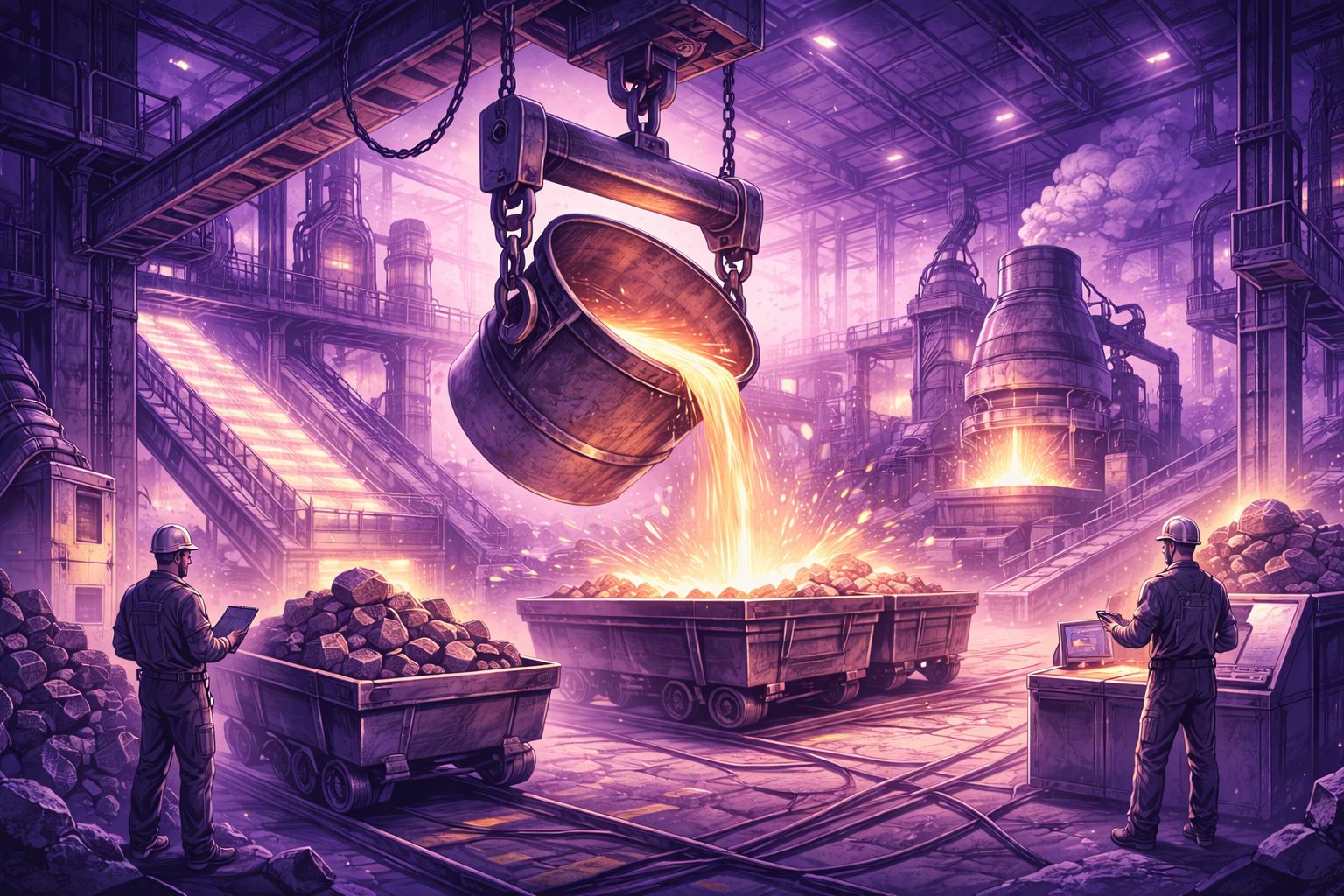
The iron making process in India begins with iron ore mining. Ore is extracted mainly through open-pit methods. Large machines mine the raw material from deposits. The mined ore is crushed, sorted, and partially refined. It is then converted into pellets or sinter for efficient blast furnace iron making. Inside the furnace, the prepared ore is mixed with coke and limestone at very high temperatures. This produces liquid pig iron.
Modern steel producers also rely on Direct Reduced Iron (DRI). This material is known as sponge iron. It is made by reducing iron ore with gas or coal, without melting it. EAF-grade DRI iron popular in India is now a key input for scrap-based electric arc furnaces.
Main production routes
- Blast furnace → pig iron → steel
- Sponge iron production through DRI plants
- Scrap and DRI used together in EAF units
| Product Form | Buyer Use |
| Pellets | Long-distance transport |
| Sinter | Lower-cost plant feed |
| DRI/Sponge Iron | EAF steelmaking |
2026 outlook for producers
India is shifting toward scrap-based iron inputs and energy-efficient iron making. Many plants are testing low-emission fuels. Carbon-footprint reduction in iron production is becoming essential for future competitiveness.
Types, properties, and applications of iron
| Type of iron | Commercial availability in India | Key mechanical properties | Main applications in India | Buyer use case |
| Pig iron | Easily available from integrated steel plants and foundries. Price depends on carbon and impurity levels. | High carbon content, brittle, low ductility, good for remelting. | Steel making, alloy making, automotive castings, heavy industrial cast parts. | Best when buyers need casting or further steel conversion. |
| Cast iron | Sold in finished shapes and components. Lower-cost than fabricated steel parts. | Strong in compression, poor in tension, not weldable, corrosion prone. | Stoves, radiators, railings, pipes, machine bases. | Suitable for static parts with limited tensile load. |
| Wrought iron | Limited modern supply. Mostly niche or custom production. | Very low carbon, malleable, machinable, rusts in open environments. | Nails, rods, chains, agricultural tools. | Chosen for heritage work or simple hardware needs. |
What is steel?
Steel is a metal alloy. It is made by combining iron with small amounts of carbon. This answers the basic question, what is steel alloy. The alloy may also contain other elements to improve performance. These additions change strength, hardness, and corrosion resistance.
India is expected to remain the world’s second largest steel producer in 2026 projections, with growing cities and new factories are driving demand.
Core components of steel
- Iron as the base element
- Carbon to add hardness
- Optional additives for special properties
Steel grades vary widely. Each grade has a specific chemical mix. Steel composition types are designed for different environments and loads. Indian producers supply steel in many forms, such as coils, plates, bars, and pipes.
| Steel category | Typical composition focus | End-use sectors in India |
| Carbon steel | Iron and carbon only. | Construction, automotive, general engineering. |
| Alloy steel | Iron, carbon, and added metals. | Power plants, heavy machinery, railways |
| Tool steel | Hardening elements like tungsten and chromium. | Manufacturing tools and dies. |
| Stainless steel | Chromium-rich alloys. | Appliances, food processing, medical equipment. |
Why grades matter
Steel grades India buyers choose depend on purpose. Low-carbon grades are easy to weld. High-carbon grades are harder and wear resistant. Corrosion-resistant grades suit coastal and chemical industries. Selecting the right grade improves safety and lifecycle costs.
Buyer and producer focus
Steel is central to modern infrastructure and manufacturing. Producers compete on quality, consistency, and delivery speed. Buyers compare prices, certifications, and technical suitability. Understanding the link between grades and applications leads to accurate procurement.
How is steel made?
Steel is produced mainly from pig iron, or from scrap steel. Producers refine the raw material and reduce the carbon content. The two dominant methods used in India are Electric Arc Furnace, or EAF, and Basic Oxygen Steelmaking, or BOS.
Primary steel routes
- EAF steel making India: Scrap steel is melted using high-power electric arcs. Temperatures reach about 1,650°C. Oxygen and lime are added to purify the liquid metal.
- BOS process India: Molten iron is combined with recycled scrap. Oxygen is blown through the mix to reduce carbon and create uniform oxidisation.
Modern Indian structure
India has many scrap-based mini mills. These units rely on steel recycling India as a core strategy. They supply the secondary steel route to construction and engineering buyers. Energy costs strongly influence this sector. Power efficiency is therefore critical for producers.
| Route | Main input | Typical output |
| Integrated BOS | Iron ore-based pig iron | Large volumes of flat and long steel. |
| EAF | Scrap and DRI | Flexible batches of high-grade steel. |
| DRI + EAF | Iron pellets reduced to sponge iron | Rebar, billets, special steels. |
2026 trends
Producers are testing green hydrogen trials to lower emissions. BIS standards are evolving, and buyers demand tighter quality controls. Digital systems now track scrap quality and furnace efficiency. Low-emission steelmaking is becoming a competitive advantage.
Types, properties, and applications of steel
| Steel type | Grades and availability in India | Key properties | Main applications in India | Buyer guidance |
| Carbon steel | Very widely available in rebar, plates, coils, and pipes. | Strong, ductile, and weldable in low-carbon grades. Harder as carbon rises. | Construction, bridges, vehicles, structural sections. | Choose low-carbon grades for lower cost and easy fabrication. Use high-carbon grades for wear resistance and durability. |
| Alloy steel | Good supply from major Indian producers. | Higher yield strength and heat resistance. | Railways, heavy machinery, power equipment. | Best for severe loads and demanding environments. |
| Tool steel | Limited, and mainly sold to industrial clusters. | Very hard and wear resistant. | Dies and machining tools. | Suitable for manufacturers, not for general use. |
| Stainless steel | Common grades 304, 316, and 430 easily sourced. | Excellent corrosion resistance and long life. | Appliances, food processing, medical, renewable energy. | Ideal in wet, coastal, or chemical conditions. |
Iron vs. steel: Which is better?
Iron is a pure metal, while steel is an alloy of iron with carbon and other elements. These differences in strength, hardness, durability, and cost help Indian buyers choose the right material for construction, machinery, or consumer products.
| Feature | Iron | Steel |
| Composition | Pure iron | Alloy with carbon, and sometimes chromium, nickel, or molybdenum. |
| Strength | Strong but brittle | Higher tensile and yield strength, tougher. |
| Hardness | Moderate | Harder; varies by grade. |
| Corrosion | Rusts easily | More resistant, especially stainless grades. |
| Cost | Lower per kg | Higher per kg; depends on grade. |
| Use cases | Simple castings, farm tools, basic construction. | Automotive, infrastructure, appliances, heavy machinery. |
Buyer Checklist
- Cost: Iron is cheaper, steel offers longer life.
- Environment: Coastal or humid areas favour stainless steel.
- Lifecycle: Steel requires less maintenance and lasts longer.
- Maintenance: Iron needs protective coatings; steel is more durable.
Factors that influence iron vs. steel pricing
Iron and steel prices in India in 2026 are shaped by ore quality, scrap availability, and regional supply. Iron price per kg India and pig iron rate India fluctuate with transport costs and blast furnace output, while scrap-based steel cost affects mini-mill pricing. Import duties and rupee volatility also influence decisions. Buyers must balance cost, quality, and delivery, using market tracking and digital procurement tools for smarter purchases.
Conclusion
Iron and steel remain foundational metals for India’s industrial and infrastructure growth. Buyers must weigh cost, durability, and maintenance when choosing between them. Steel offers higher strength, better corrosion resistance, and longer lifecycle, while iron can be cost-effective for simple castings. With green steel production rising, low-emission alloys are increasingly replacing traditional iron, supporting sustainability and smarter procurement decisions in 2026.
Looking to procure steel?
Tata nexarc helps manufacturers, builders and MSMEs source certified steel products, compare prices, and choose the right grade as per IS codes—with complete traceability and procurement confidence.
FAQs
What is iron?
What is steel?
How is steel made in India?
What is DRI or sponge iron?
Which is stronger, iron or steel?
When is iron still preferred?
What are the main types of steel?
How do prices compare?
What is green steel?
How to choose between iron and steel?
Priyanka is a seasoned content marketing professional with more than 6 years of experience crafting various forms of business and technology sector content. Her insightful writing tackles critical issues faced by small-scale manufacturing businesses. Priyanka's clear and concise communication empowers businesses to make informed decisions and thrive in today's dynamic business environment.