Check Price Now
Table of Contents
- Introduction: Why Steel Procurement Planning Matters
- Setting Clear Steel Procurement Priorities for Your MSME
- Matching Steel Procurement to Plant, Process, and Quality Needs
- Making Steel Procurement Policy-Aware and Contract-Safe
- Planning Purchases Around Price Cycles, Logistics, and Cash Flow
- Digitising Steel Procurement in a Practical, Cost-Effective Way
- Conclusion: Building a Smarter Procurement Strategy
- FAQs
Introduction
Steel sits at the centre of most Indian MSME operations. Fabricators, auto ancillaries, project contractors and job work units all depend on predictable steel sourcing to keep lines running. Yet many businesses still treat steel procurement strategy as a string of urgent calls, scattered WhatsApp quotes and last-minute confirmations.
In real procurement cycles, timing matters more than headline cost. A reactive steel procurement strategy often leads to stock outs, premium freight, quality disputes and tense calls with finance. The pattern feels familiar, but it quietly eats margin and blocks growth.

What a “smart” steel procurement strategy really means
A smart approach links steel sourcing strategy with production, cash flow and vendor behaviour. The focus shifts from chasing the cheapest ton on a single day to building a simple, repeatable way of buying.
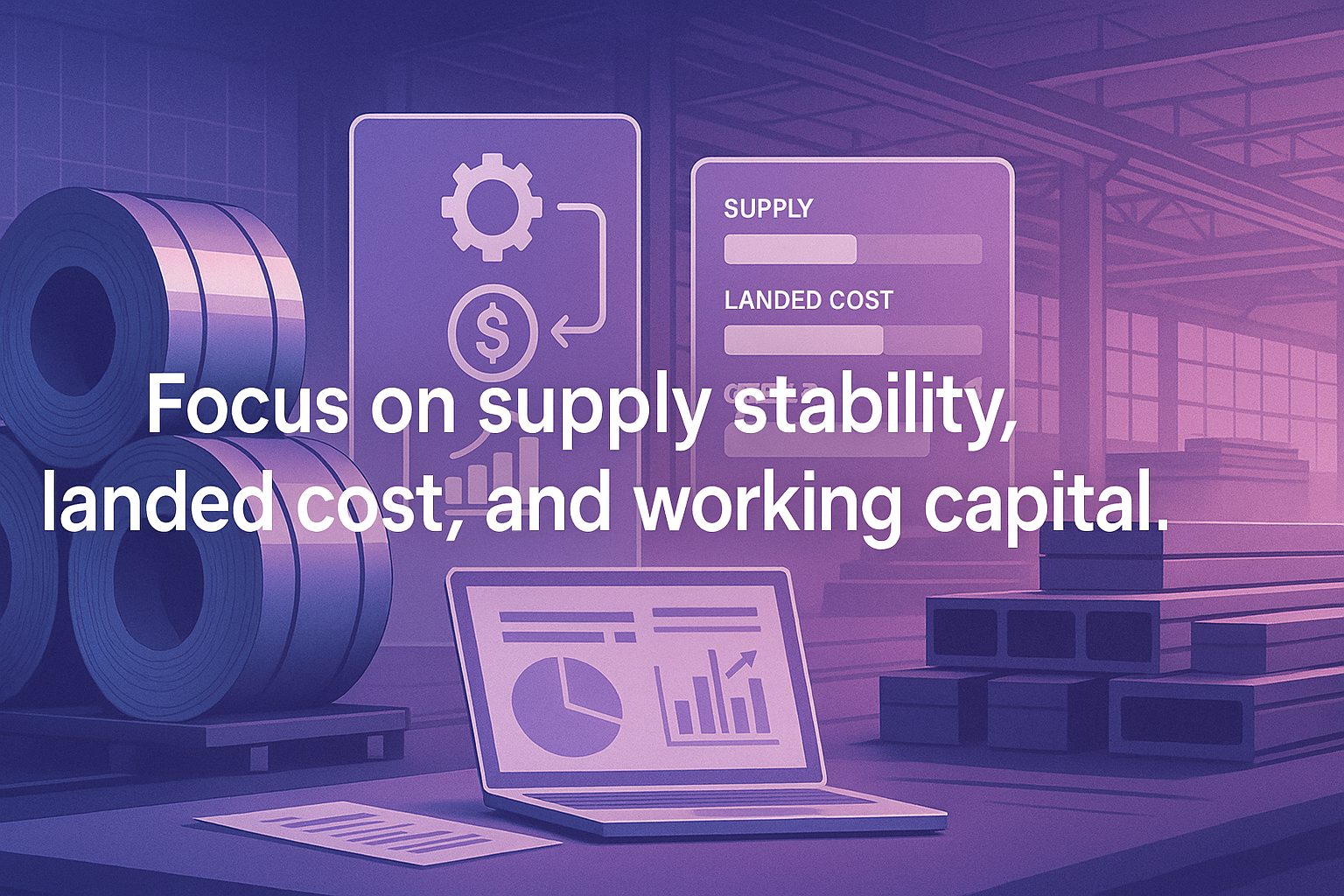
For MSMEs evaluating vendors and platforms, a smart steel buying strategy usually aims to:
- Keep plants supplied without frequent emergencies
- Control total landed cost, not just base price per ton
- Protect working capital and credit limits
- Reduce rejections and quality disputes through better documentation
- Use digital tools where they genuinely simplify the B2B steel buying process
The promise for Indian MSMEs
A clear steel procurement strategy does not need complex software or large teams. It needs a few written rules, basic discipline on documentation and a realistic view of how steel procurement in India actually works for smaller firms. The sections that follow break this into practical steps that support day to day operations, tenders and long term contracts.
Set clear steel procurement priorities for your business
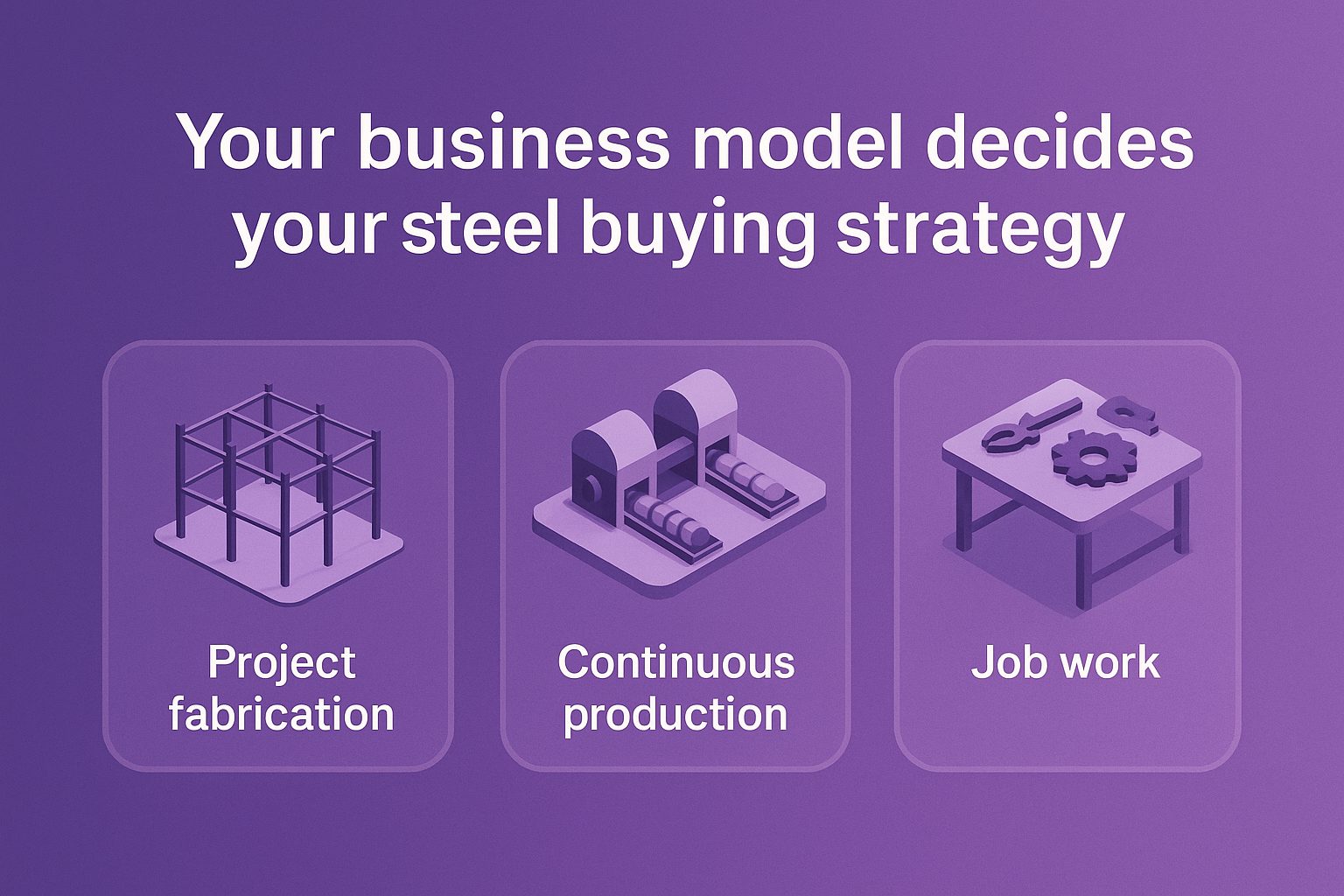
To set clear strategy for your next steel procurement lifecycle you should start with a simple question: how your business actually uses steel? Or, where does steel sit in your business model? An MSME that fabricates structures for projects works very differently from an auto ancillary with steady schedules or a trader feeding local job shops.
For most MSMEs, steel usage falls into a few patterns:
- Project based
Fabrication for PEBs, warehouses, plants and EPC work, with lumpy demand and strict timelines. - Continuous production
Press shops, tube mills or component units that run standard parts daily, with strong pressure on uptime. - Job work and custom work
Small workshops that cut, bend or machine to order, with unpredictable mix and frequent specification changes. - Trading and stocking
Firms that buy and sell HR coils, plates or structurals, where inventory risk and credit terms dominate decisions.
Each pattern changes the steel sourcing strategy. Project units feel delay risk more than small price differences. Continuous producers worry about line stoppage and quality stability. Traders live with inventory price risk and customer credit.
Turn business model into written procurement priorities
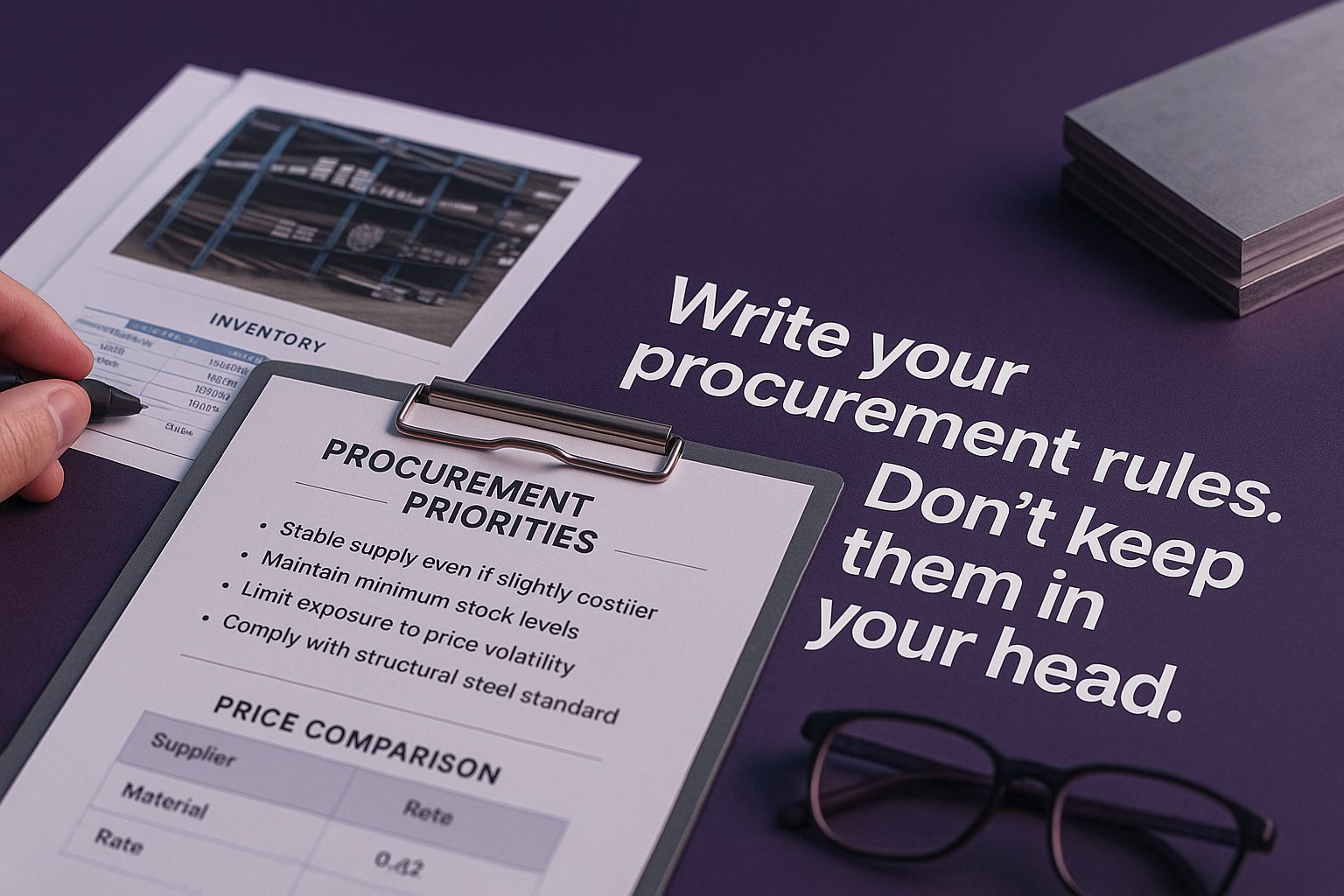
Once the usage pattern is clear, priorities need to be written down. Many MSMEs keep these ideas in the owner’s head. That creates confusion for purchase, stores and accounts.
Key priority questions:
- Is lowest cost per ton really the main target, or is stable supply more important
- How much stock can the plant and warehouse safely hold
- What exposure to price swings is acceptable on HR coil and plate procurement
- How critical are brand, mill source and structural steel procurement standards for customer audits
A short one-page note can fix this. For example, an MSME may decide that “no stock outs on key thicknesses, even at slightly higher landed cost” ranks above “always chase the lowest quote.” This single decision changes vendor talks, credit use and order sizes.
Align purchase, plant and finance on the same rules
A smart steel procurement strategy only works when purchase, production and finance follow the same script. Purchase teams then understand why a slightly costlier supplier wins the order. Finance teams see why credit terms or MT minimums matter. Plant teams know why some grades or sizes stay on the approved list.
Simple steps help:
- Share the written priorities in a short internal meeting
- Translate them into 3–5 rules for daily steel purchase planning
- Review exceptions once a month, not in every individual order
Over time this alignment reduces internal conflict, supports better steel supplier evaluation and creates a base for long term steel contracts that match how the MSME actually operates.
Match steel procurement to plant, process and quality needs
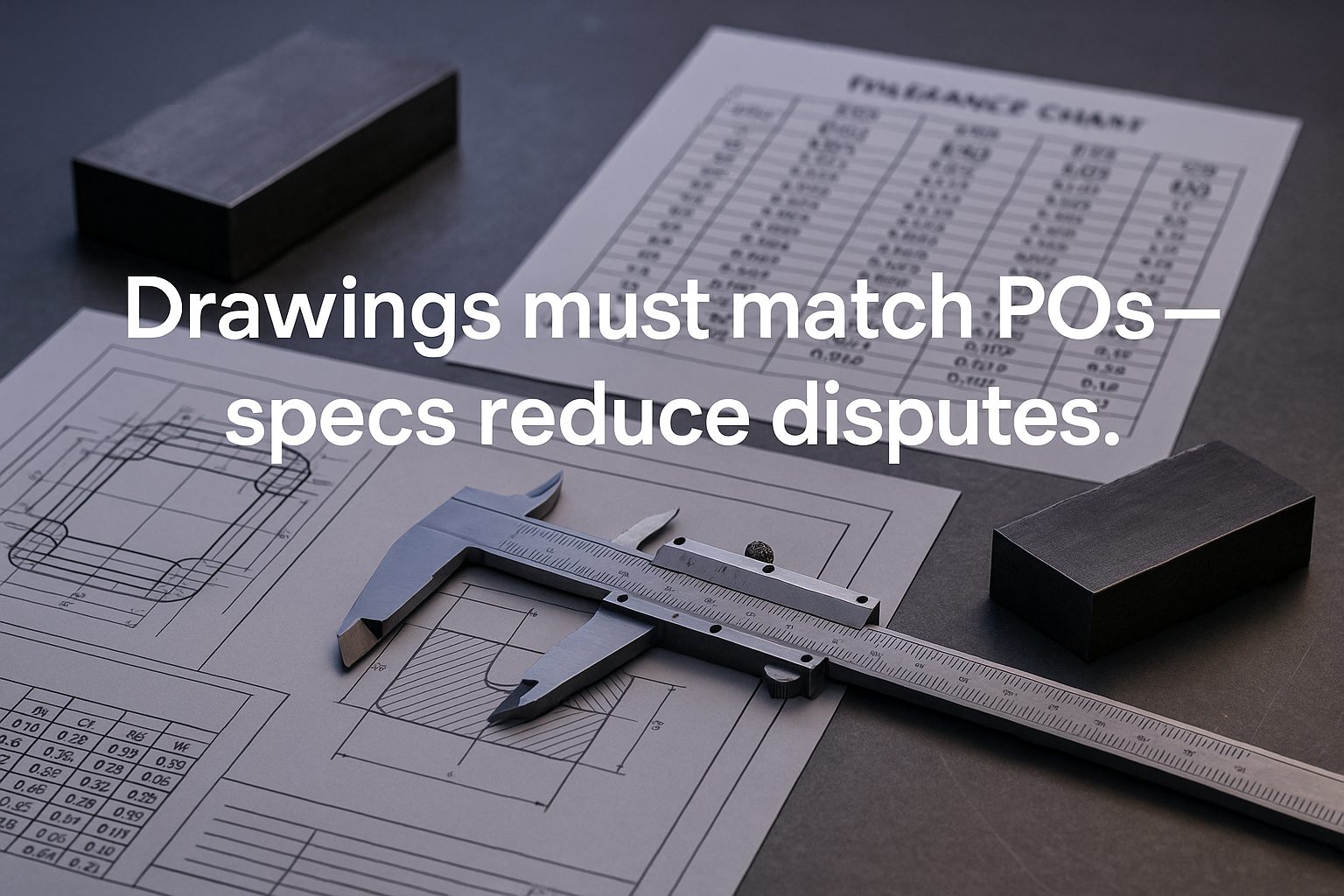
A steel procurement strategy only works when drawings and purchase orders speak the same language. Many MSMEs still raise POs that say “HR sheet 3 mm best rate” while the drawing carries tight tolerances and finish requirements. That gap causes rework, scrap and disputes.
Treat every drawing as input to the steel sourcing strategy. Convert it into a simple bill of materials that lists grade, thickness range, width or flange size, length, tolerance, surface finish and any special coating. For structural steel procurement, specify exact sections and standards, not just “channels” or “angles.” For HR coil and plate procurement, record preferred coil width and acceptable cutting loss, so purchase teams can compare offers properly.
Simple reference tables help. One table can map common parts to preferred sizes and grades for raw material procurement for MSMEs. Another table can mark “allowed substitutes” with clear limits. Purchase teams then avoid guesswork when speaking to suppliers.
Reduce scrap, rework and tool wear through better specs
In real production cycles, scrap hurts more than a small price difference. A loose tolerance on thickness or flatness can push rejection rates up even though the steel looked cheap at negotiation time.
Use the steel procurement strategy to tackle this head on:
- Identify top three products where scrap or rework hurts margin
- Trace back whether wrong grade, poor flatness or oversize plates caused the issue
- Tighten specification language in future POs for those products
- Ask suppliers to confirm tolerance and test certificate scope before dispatch
A press shop that buys “near enough” coils may change dies more often. A fabrication unit that accepts warped plates spends more on gas cutting and straightening. When MSMEs make these links visible, quality control in steel procurement stops feeling like theory and starts saving real money.

Choose between mills, service centres and local stockists
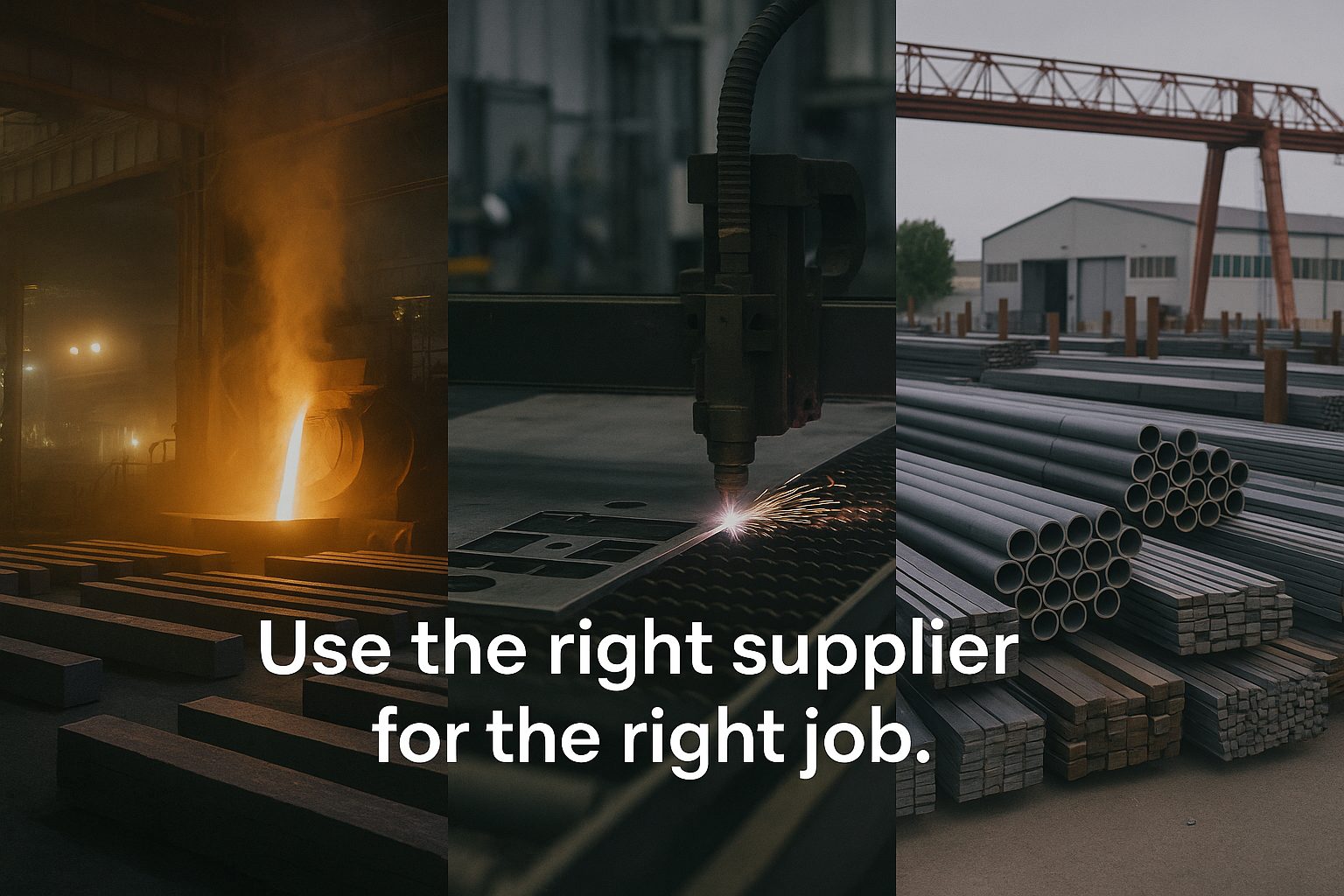
No single supplier type fits every MSME or every order. A balanced steel buying strategy for MSMEs uses a mix of mills, service centres and local yards. The right mix depends on volume, cash flow and urgency.
- Mills
Best for larger, planned volumes, consistent grade and brand sensitive customers. Longer lead times and stricter quantity norms demand strong steel purchase planning and working capital for steel purchase. - Service centres
Useful where cutting, slitting and just in time supply matter more than base price. They support HR coil and plate procurement in custom sizes and reduce warehouse and storage planning headaches. - Local stockists and traders
Essential for on demand steel sourcing, emergencies and small lots. Prices may look higher, yet they prevent line stoppage and help with last minute changes.
A smart steel procurement strategy always sets clear rules. For instance, project lots move through mills or service centres under long term steel contracts, while breakdown or prototype jobs use nearby stockists. And, this mix respects price risk, credit terms, logistics realities, etc. in steel procurement in India.
Strengthen documentation and test certificate discipline
Many MSMEs focus on price negotiation and forget paperwork until a customer audit appears. Proper documentation supports steel supplier evaluation, reduces disputes and protects against hidden quality issues.
Bring a few basics into daily routine:
- Demand mill test certificates (MTCs) for critical grades and dimensions
- Verify heat numbers, chemistry and mechanical properties against PO specs
- Store scanned copies of MTC and test certificate checks in a simple folder or basic digital tool
- Link GRN entries with corresponding certificates so traceability stays intact
When purchase, stores and quality teams follow this routine, the steel procurement strategy gains credibility. Customers see stronger control. Suppliers recognise that the MSME checks details. Over time, this discipline supports better rates, priority allocation and more reliable b2b steel buying process outcomes.
Make steel procurement policy aware and contract safe
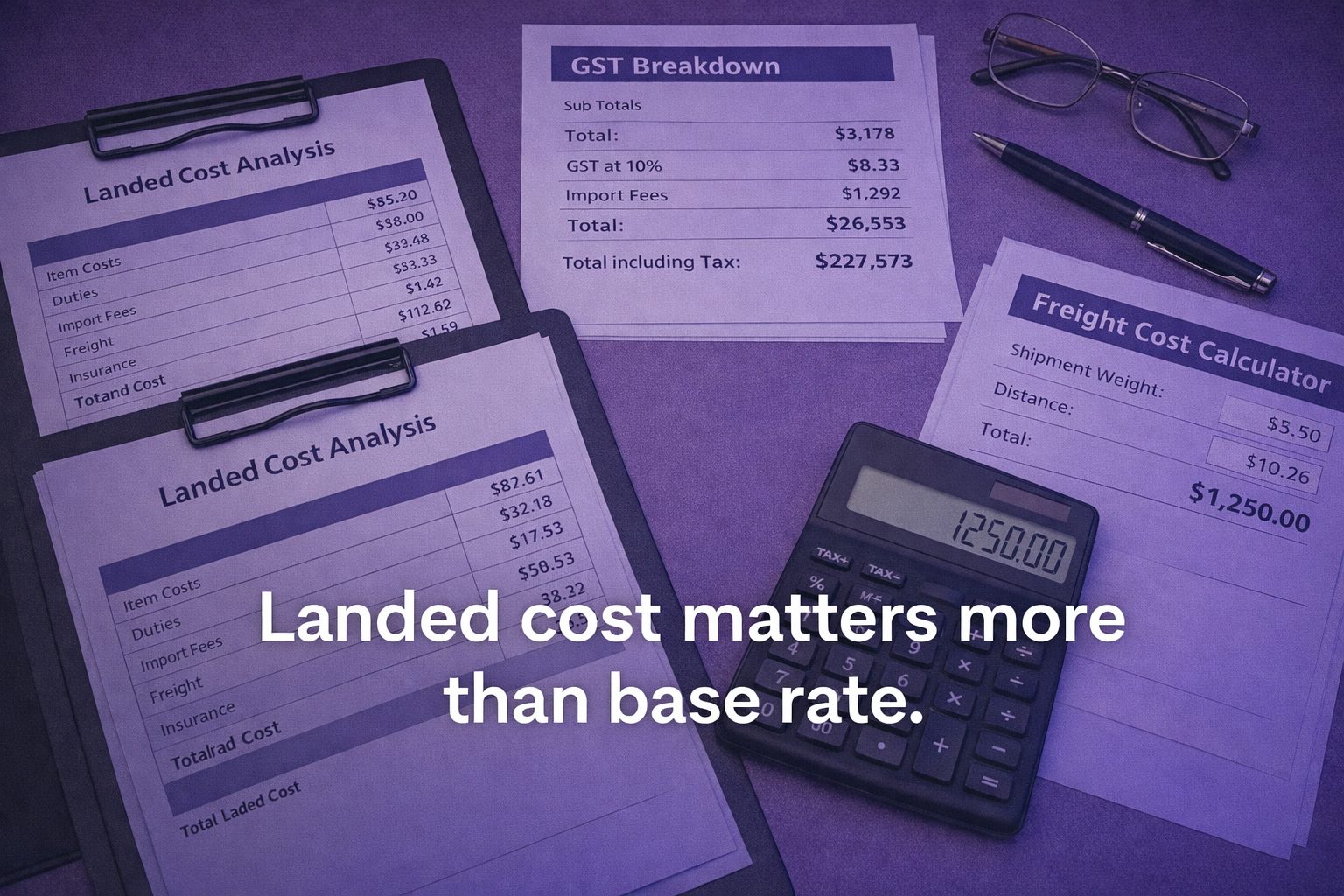
A steel procurement strategy loses meaning if landed cost stays vague. For MSMEs, the real number includes base price, loading and unloading, cutting charges, freight, insurance, GST and any duties. Many teams still compare only basic ex yard prices and ignore these layers.
Create a simple landed cost calculation sheet for each key product. Include fields for GST, local levies and typical logistics costs on main lanes. For HR coil and plate procurement, note cutting losses and service centre charges. For structural steel procurement, capture fabrication allowances and wastage norms. When purchase and finance use the same template, vendor comparisons become fair and repeatable.
Watch duties, GST and anti-dumping changes
Policy shifts now move faster than most rate sheets. Anti dumping duty, safeguard duty and changes in GST interpretation can change economics within weeks. In real procurement cycles, ignoring these changes can turn a “good” deal into a loss when dispatch day comes.
Build a light routine around policy. Once a month, review any notifications on GST and duties on steel, especially for imported grades or speciality coils. Note the anti dumping duty impact on steel buying where relevant. Record three points each time: what changed, which SKUs it touches, and from which date it applies to new orders. Even a basic summary helps both purchase and sales teams price tenders correctly.
Build smarter POs and long-term contracts
Contracts should reflect this policy awareness. Many MSMEs still raise POs that are silent on duty variation or index changes. That silence hurts when rates move sharply.
Strengthen documents with a few standard clauses:
- Link long term steel contracts to a clear index or published price source
- Define how duty changes affect pending deliveries
- Set clear rules for tolerance, rejections and replacement timelines
- Align payment terms, part deliveries and credit notes with actual project cash flow
This approach lowers disputes and gives suppliers comfort to commit capacity.
Special focus for MSMEs working on tenders
Tender based steel sourcing faces extra risk. Government and PSU clients expect strict compliance on quality and delivery but rarely share the pain of price spikes. Often missed in tender planning, a clear steel procurement strategy should earmark which lots need price protection and which can ride short term swings.
For each large tender, create a one-page sheet that records assumed base steel price, duties, GST and logistics. Attach it to the bid file. When rates move, the business can see whether to request variation, use an escalation clause or absorb the hit. Over time, this discipline reduces surprise losses and builds confidence in future bids.
Plan buying around price cycles, logistics and cash flow
Steel prices look random when only daily WhatsApp quotes are tracked. In reality, most products follow familiar cycles shaped by exports, construction activity, monsoon slowdown and budget spending. MSMEs that only react to today’s number rarely control steel price risk management in any real sense.
A better steel procurement strategy keeps a simple record of weekly prices for key HR coils, plates and structurals in core cities. Over a few months, that sheet starts to show when prices soften, when they spike and how long each phase lasts. This view supports a more deliberate steel price volatility strategy instead of guessing from scattered messages.

Latest update: Major business dailies reported domestic hot rolled coil prices around ₹47,000 per tonne, close to a five year low, even as analysts projected strong demand growth over the next two years. This kind of pattern, low prices in a demand backed market, is a signal for MSMEs to plan carefully rather than treat the dip as permanent.
Decide when to buy spot and when to book ahead
For MSMEs, bulk steel buying and on demand steel sourcing both have a place. Spot buying suits unpredictable orders and tight working capital. Forward booking or short contracts suit visible projects and repeat parts. The mistake lies in using only one style for every situation.
A practical rule is to book ahead only for quantities backed by confirmed orders or steady schedules. Use spot buying for variable demand, trial jobs and change prone customers. While planning, compare three figures for each option, expected landed cost, storage and handling cost, and interest or limit block for working capital for steel purchase. The lowest base rate loses value when warehousing and finance quietly eat the benefit.
Factor logistics, lanes and delivery risk into the decision
Logistics and freight in steel procurement often decide whether a buying plan works. Port based buyers enjoy more options but face congestion and longer hauls. Upcountry MSMEs depend on fewer routes and see sharper swings in freight when fuel or demand rises.
Bring lane wise norms into steel purchase planning. Note typical lead time, usual transport partners, packaging standards and risk points for each corridor. For long products and heavy plates, warehouse and storage planning matters just as much. Poor stacking, tight access roads or limited crane capacity can turn a well priced order into a real bottleneck on unloading day.
Link buying plans with credit and cash flow tools
A smart steel procurement strategy must stay in sync with cash. Many MSMEs still treat purchase, sales and finance as separate worlds. One large contract, booked without checking limits, can lock up working capital and choke day to day sourcing.
Plan buying windows along with customer payment cycles, invoice discounting, early payment schemes and supply chain finance lines. For MSMEs evaluating vendors, transporters and online steel procurement platforms, the best choice is often the one that aligns credit terms with the chosen buying pattern. This link keeps stock moving, protects margins and prevents last minute panic buying at any price.
Digitise steel procurement in a practical way
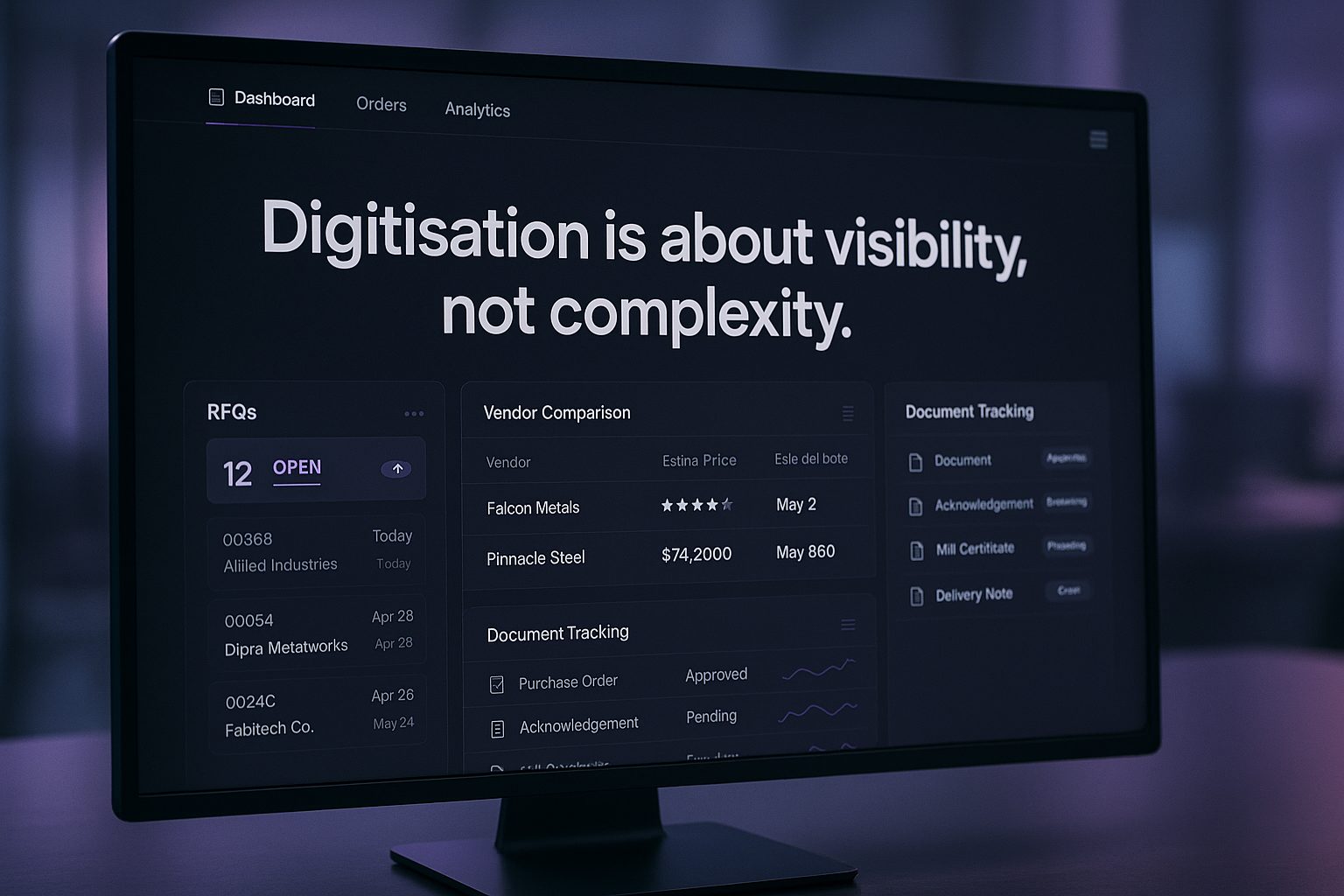
Most MSMEs still run steel procurement on a mix of phone calls, WhatsApp messages and spreadsheets. That setup feels flexible, but it hides gaps. Quotes get lost, approvals stay verbal and follow ups depend on memory. A steel procurement strategy should improve control without breaking trusted vendor relationships.
Begin by documenting the current flow. Capture how RFQs go out, who approves prices, how POs are raised and how GRNs are booked. This clarity alone improves the b2b steel buying process and highlights where delays or errors creep in.
Build a simple digital stack that supports buying decisions
Digital platforms for steel buying work best when kept light. The goal is not heavy ERP adoption. The goal is visibility.
A basic stack usually covers three layers:
- Market visibility
Price tracking by city and product helps teams decide when to buy or wait. - Vendor comparison
Simple digital RFQs and comparison sheets record rates, credit terms and delivery promises in one view. - Order and document tracking
A shared folder or tool links POs, MTCs, GRNs and invoices, reducing disputes and audit stress.
Many MSMEs now use online steel procurement platforms selectively, not as a replacement for relationships but as a reference for fair pricing and availability. This hybrid approach is gaining attention among MSME exporters and tender driven units.
Bring suppliers and internal teams on board
Digital adoption fails when only purchase teams use it. Suppliers and internal users must see value. Start small. Share clearer RFQs. Send clean POs. Ask for digital copies of dispatch documents. Over time, steel supplier evaluation improves because data replaces memory.
Internally, assign simple roles. Like one person maintains vendor data. And another may checks documents. Further, a third may reviews price trends monthly. Hence, this clarity supports steel procurement best practices in India without adding headcount.
Review data and refine the strategy
Digitisation makes review possible. Once a month, check price trends, delivery delays, rejections and payment cycles. Small signals surface early. This habit closes the loop between planning and execution. Over time, the steel procurement strategy stops being a document and starts behaving like a system that learns from every order.
Conclusion
A smart steel procurement strategy helps MSMEs move away from last minute, quote driven buying. It links steel sourcing strategy with production needs, duties, logistics and working capital.
- When drawings match POs, vendors know expectations.
- When landed cost is clear, negotiations focus on facts.
- When contracts reflect policy changes, margins face fewer surprises.
Thus, the strongest strategies stay simple and repeatable. MSMEs that document priorities, track a few key prices, check MTCs and review data monthly already sit ahead of the market. Technology then becomes a support, not a burden.

Where MSMEs can start
Practical first steps:
- Write three procurement priorities on a single sheet
- Clean up PO formats for two or three key steel products
- Start weekly price tracking for core SKUs and cities
These moves tighten control without heavy cost. Over time, they turn steel procurement in India from a stress point into a steady competitive edge for growing MSMEs.
Looking to procure steel?
Tata nexarc helps manufacturers, builders and MSMEs source certified steel products, compare prices, and choose the right grade as per IS codes—with complete traceability and procurement confidence.
FAQs
How can MSMEs reduce rate volatility in monthly procurement?
Does centralising procurement help small manufacturing units?
Why should MSMEs maintain a vendor performance log?
Do small lots always cost more to procure?
Should MSMEs standardise grades across product lines?
When does outsourced cutting add value for MSMEs?
How can MSMEs safeguard margin in long project cycles?
Why track freight separately from steel rates?
Why is mill–service centre–stockist mix important?
Does procurement automation replace vendor relationships?
Should MSMEs review supplier credit terms yearly?
Do warehouses impact steel procurement cost?
Why monitor rejection trends quarter by quarter?
Charul is a content marketing professional and seasoned content writer who loves writing on various topics with 3 years of experience. At Tata nexarc, it has been 2 years since she is helping business to understand jargon better and deeper to make strategical decisions. While not writing, she loves listing pop music.