Check Price Now
Table of Contents
- Introduction
- 2026 Steel Market Analytics for EPC Buyers
- Steel Exposure Modelling in EPC Contracts
- Procurement Timing Strategy Under Volatility
- Grade Rationalisation and Engineering Coordination
- Supplier Risk Analytics and Contract Control
- Data-Led Procurement Framework for EPC Contractors
- Conclusion
- FAQs
Introduction
Steel procurement in EPC projects is no longer just a routine buying activity. In steel-intensive packages, material cost can form a substantial share of total project value. Even modest price movement can influence margin, particularly in contracts where pass-through protection is limited.
The 2026 risk environment
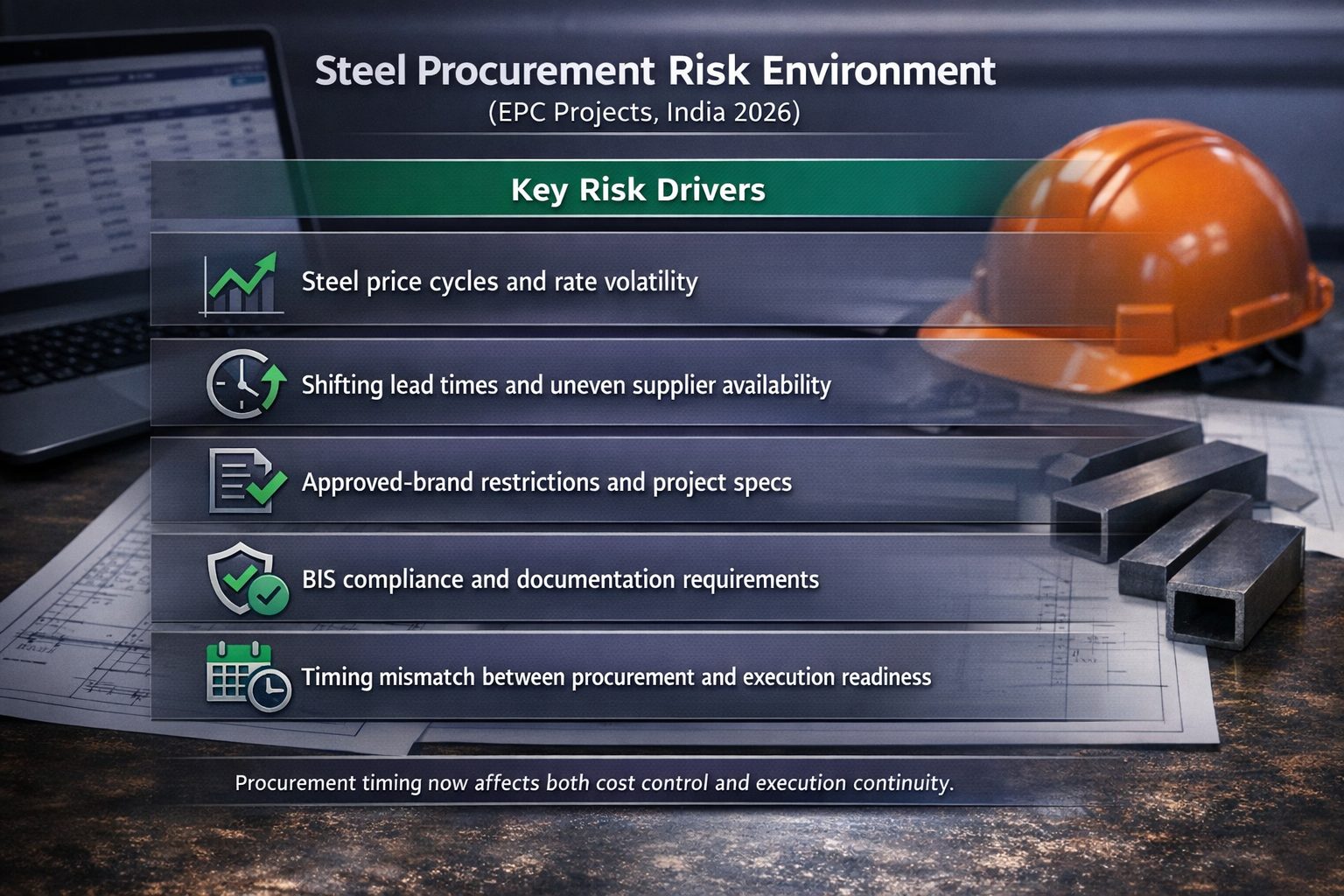
Steel prices continue to move in cycles. Procurement teams are managing rate changes, shifting lead times, and uneven supplier availability. At the same time, approved-brand conditions, project-specific technical specifications, and applicable BIS requirements influence which mills can be used and how quickly material can be cleared for dispatch and site use.
Procurement timing now affects both cost control and execution readiness.
Where margins erode
In real project execution, timing often matters more than headline discount. Pressure typically builds through:
- Inaccurate steel demand forecasting
- Gap between rate finalisation and actual lifting
- Working capital strain from early stocking or excess inventory
- Regional price differences and freight variation
These issues create margin pressure even when site execution remains disciplined.
What this guide covers
This guide examines steel procurement in EPC projects from financial and operational perspectives. It explores exposure modelling, grade rationalisation, price risk control, supplier risk assessment, and the logistics cost impact on procurement decisions under current market conditions.
2026 Steel Market Analytics for EPC buyers
Steel procurement decisions in EPC projects must respond to market movement, not just site demand. Procurement teams now track price cycles, mill capacity, and regional spreads before locking quantities.
Price movement and volatility patterns
- Steel prices in India have moved in visible cycles over recent years. Monthly variations in structural steel and TMT bar rates affect budgeting accuracy, especially in long-duration EPC contracts.
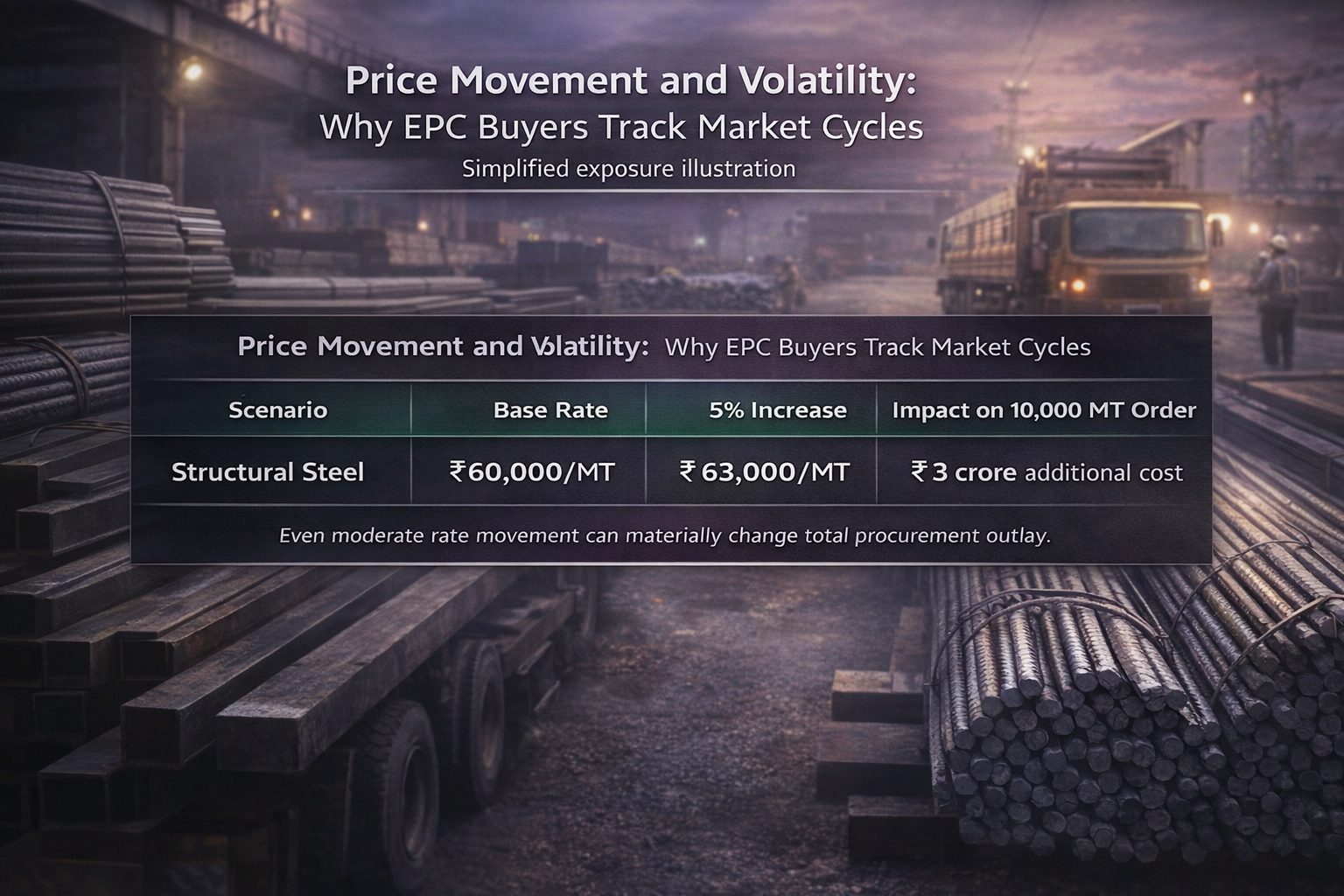
- A simplified illustration shows how exposure builds:
| Scenario | Base Rate | 5% Increase | Impact on 10,000 MT Order |
| Structural Steel | ₹60,000/MT | ₹63,000/MT | ₹3 crore additional cost |
- Even moderate rate movement changes total procurement outlay materially.
Regional price spread and freight impact
- Regional steel price spread India continues to influence landed cost. Differences between mill location, project site, and freight corridor create variation in effective purchase rate.
- Freight volatility and dispatch scheduling often narrow negotiated discounts. Logistics cost impact on steel procurement becomes visible when material moves across states.
Demand pressure from infrastructure activity
- Ongoing infrastructure allocations in transport, renewable, and industrial corridors increase baseline steel demand. When project execution peaks across regions, mill lead times extend.
- Procurement timing therefore requires coordination with site schedules and realistic steel demand forecasting EPC India practices.
- Steel procurement in EPC projects is shaped as much by market data as by drawings and BOQs.
Steel exposure modelling in EPC contracts
Steel procurement in EPC projects requires early exposure mapping. Before purchase orders are released, contractors must understand how steel cost influences overall contract value.
Cost sensitivity by project type
- Steel exposure varies by project category. Bridge and metro packages may carry higher structural intensity than utility or finishing-heavy scopes.
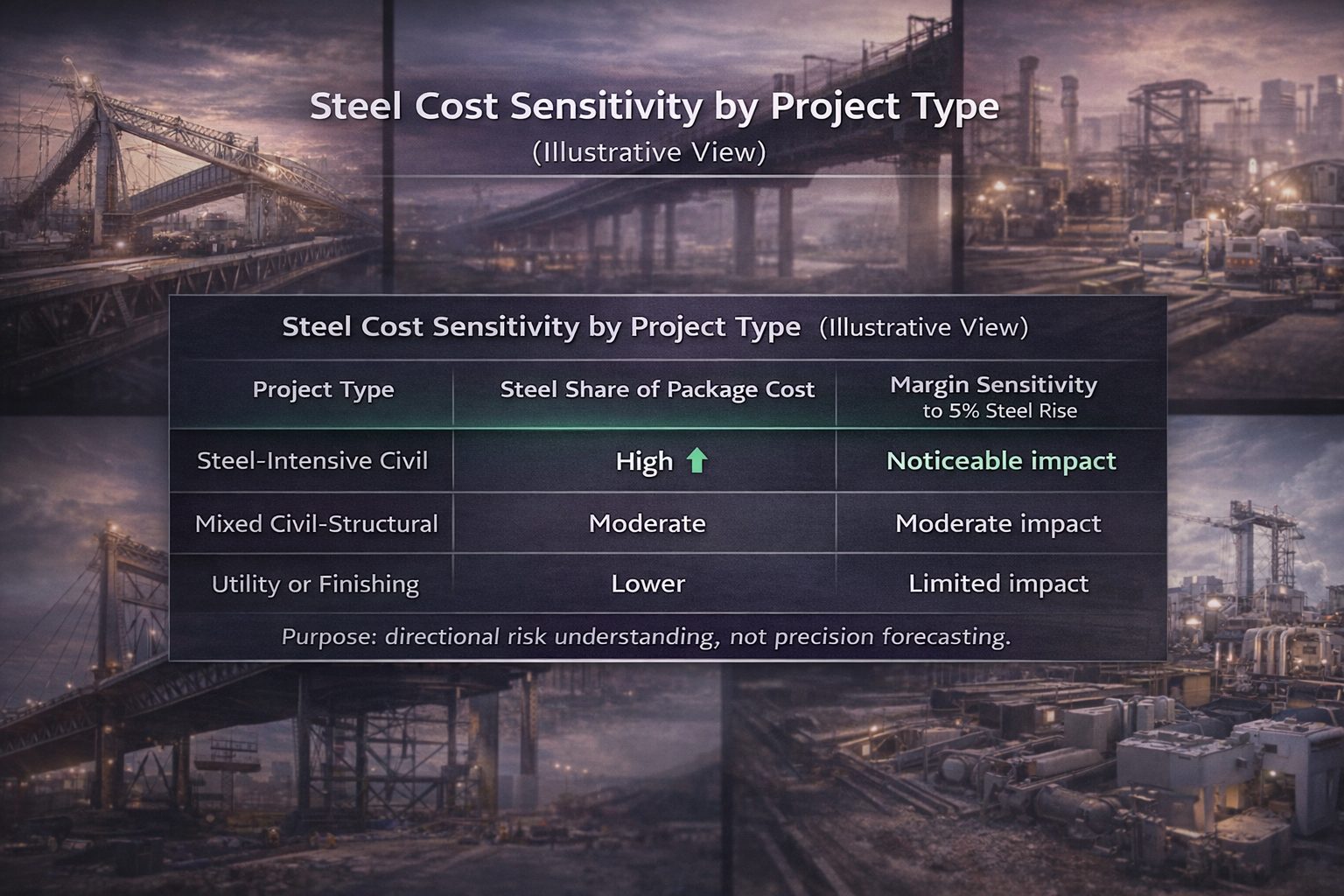
- A simplified sensitivity view illustrates this variation:
| Project Type | Steel Share of Package Cost | Margin Sensitivity to 5% Steel Rise |
| Steel-Intensive Civil | High | Noticeable impact |
| Mixed Civil-Structural | Moderate | Moderate impact |
| Utility or Finishing | Lower | Limited impact |
- The purpose is not precision forecasting, but understanding direction of risk.
Exposure simulation before procurement
- EPC steel exposure modelling helps quantify potential impact before rates are locked. Contractors can simulate scenarios where steel prices rise or fall within expected ranges.
- For example, if steel forms a substantial portion of a ₹100 crore package, even a modest price shift affects projected margin unless covered under a price variation clause steel EPC.
Limits of price variation clauses
- Many EPC contracts include escalation formulas. However, these formulas often apply with time lag or partial indexation.
- When procurement timing does not align with escalation triggers, recovery remains incomplete. Steel cost sensitivity in EPC contracts therefore requires conservative planning.
- Exposure modelling allows procurement and finance teams to review risk before committing to bulk quantities.
Procurement timing strategy under volatility
Steel procurement in EPC projects is not only about rate negotiation. Timing of purchase influences both landed cost and capital exposure.
Bulk lock-in versus staggered buying
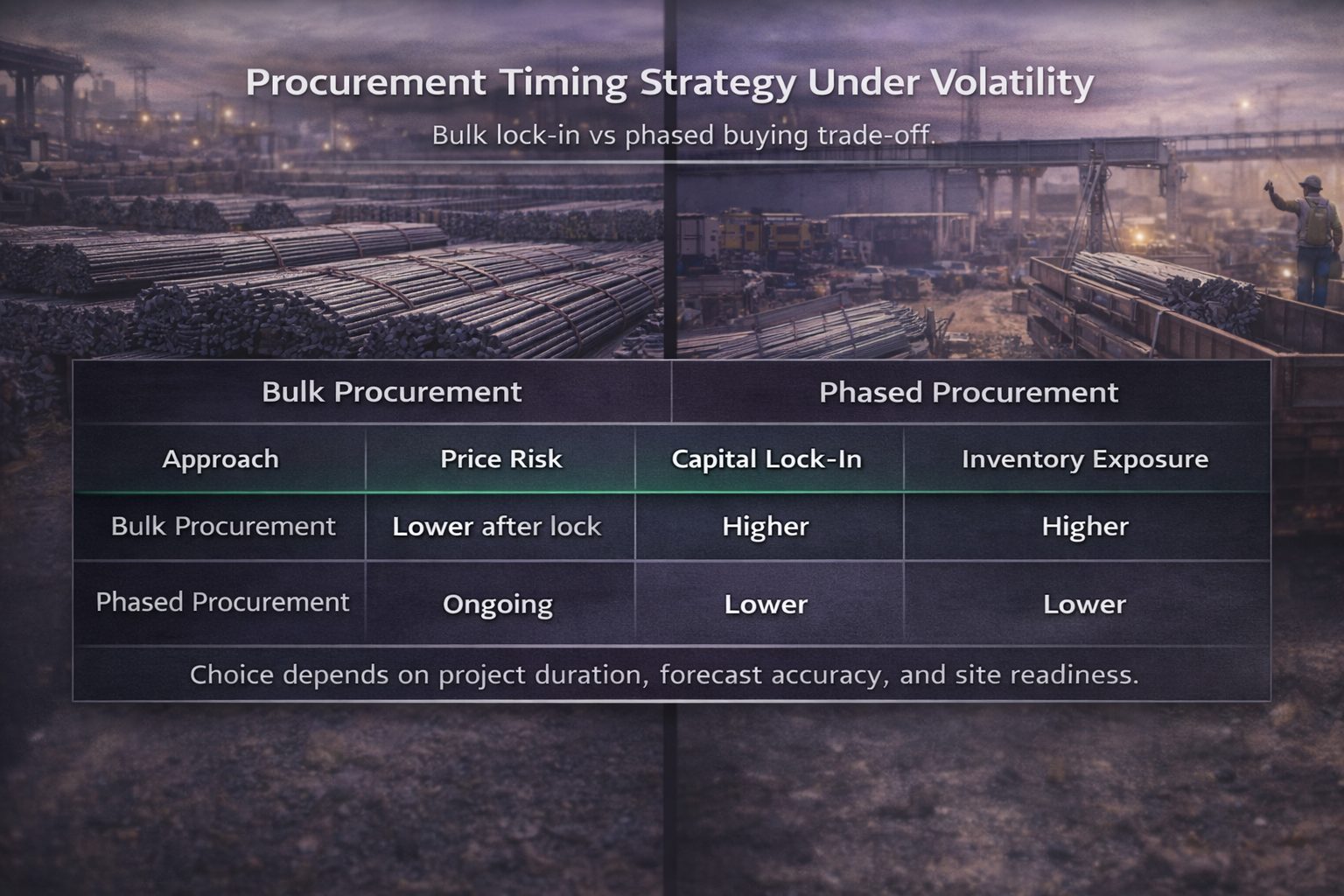
- A bulk steel buying strategy India approach secures quantity at a fixed rate. It reduces uncertainty but increases immediate working capital deployment.
- A staggered steel procurement model spreads purchases across phases of execution. This approach lowers inventory load but exposes the project to price movement risk.
- A comparative view helps frame the trade-off:
| Approach | Price Risk | Capital Lock-In | Inventory Exposure |
| Bulk Procurement | Lower after lock | Higher | Higher |
| Phased Procurement | Ongoing | Lower | Lower |
- Neither method is universally correct. Decision depends on project duration and steel demand forecasting EPC India accuracy.
Inventory carrying cost consideration
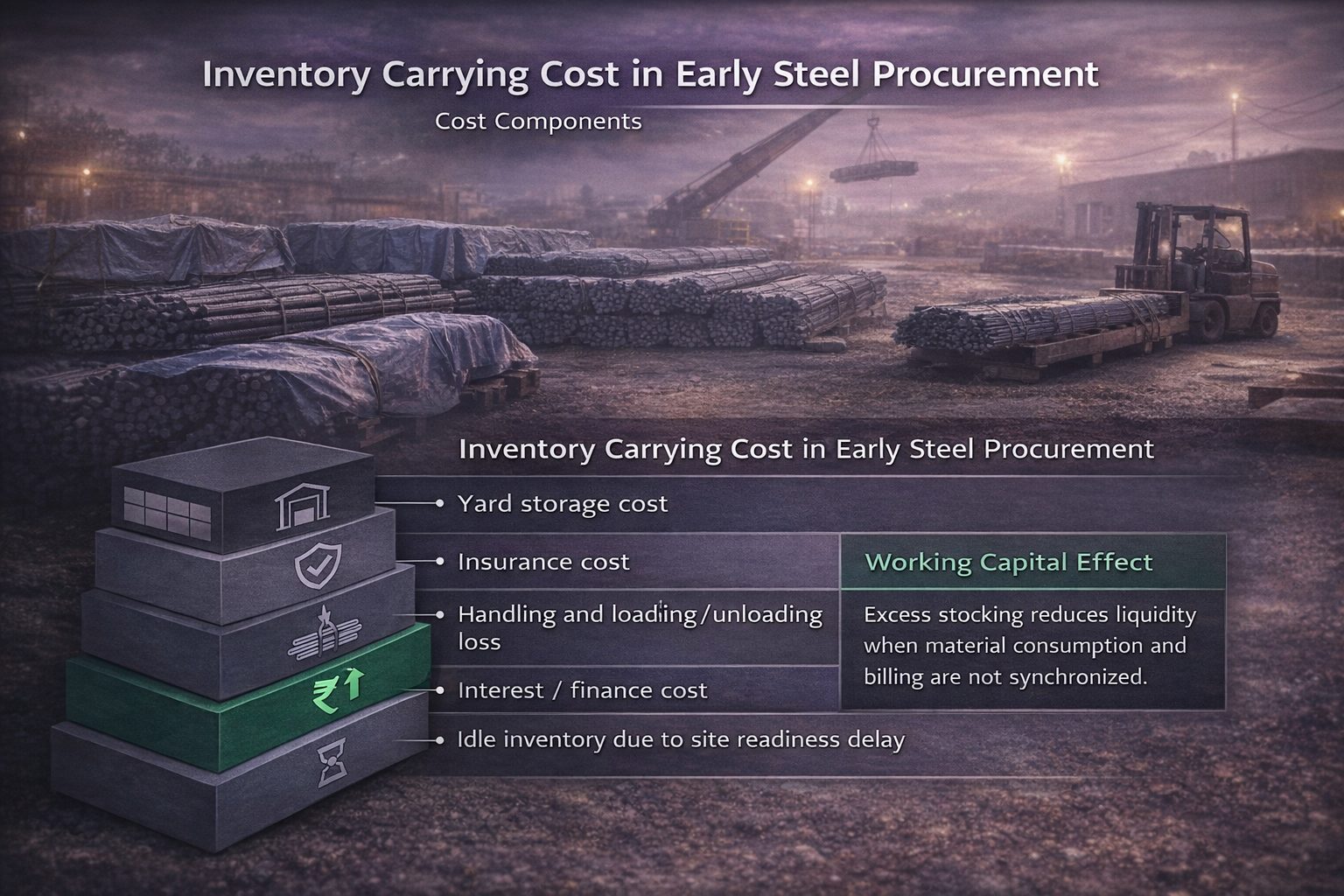
- Early procurement increases steel inventory carrying cost India. Yard storage, insurance, handling loss, and interest cost accumulate over time.
- Excess stocking without synchronised site consumption reduces liquidity. Working capital impact of steel stocking becomes visible when RA billing lags behind material deployment.
Aligning purchase with execution milestones
- Procurement schedules must align with structural casting or erection sequences. Delayed site readiness leads to idle stock.
- In real procurement cycles, timing discipline protects margin more effectively than chasing small rate differences. Steel procurement in EPC projects requires coordination between planning, site, and finance teams.
Grade rationalisation and engineering coordination
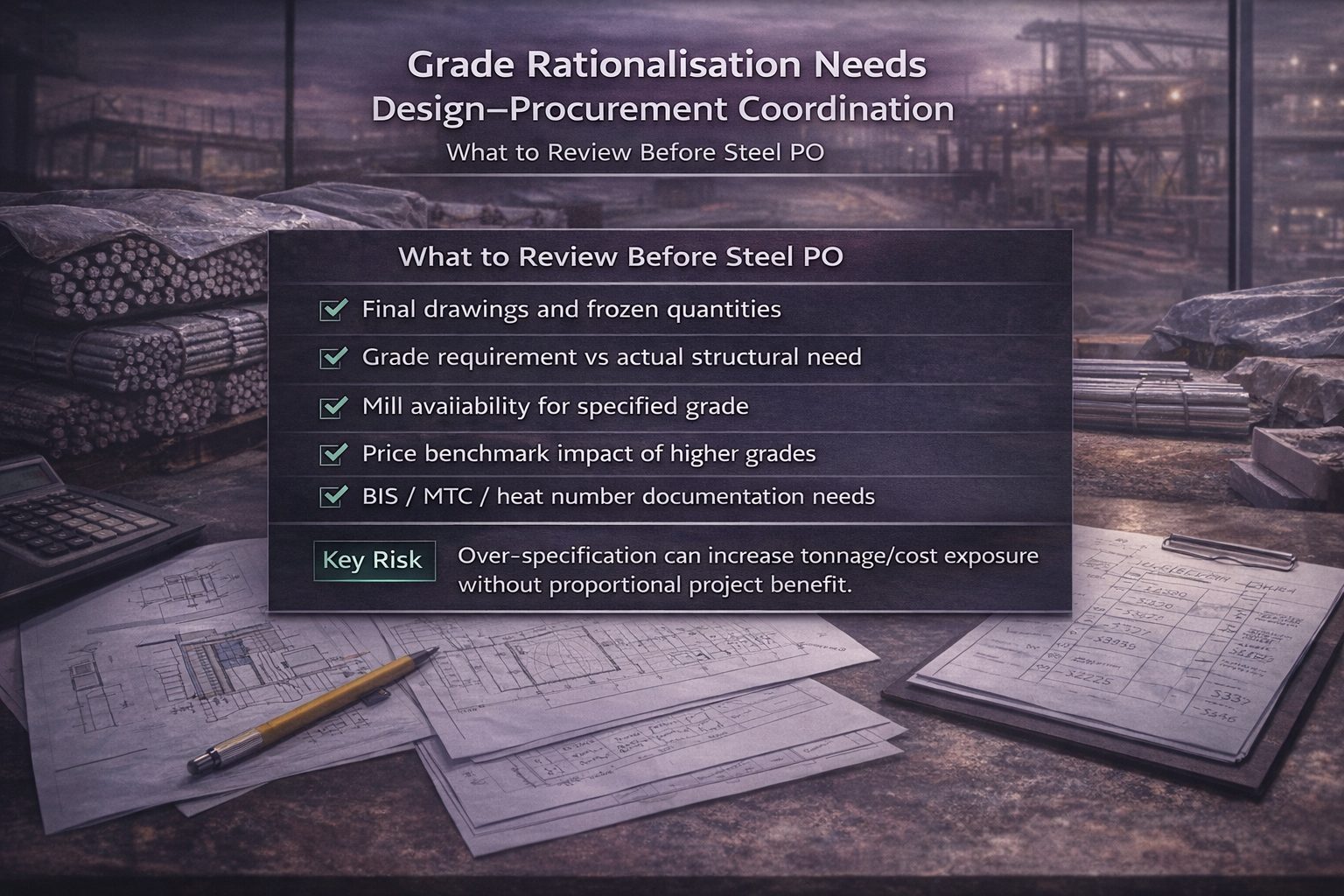
Steel procurement in EPC projects often suffers from over-specification or late design revisions. Procurement teams depend on drawings, yet design decisions directly influence grade selection and cost exposure.
IS 2062 grade selection decisions
- Structural packages commonly specify IS 2062 grades such as E250 or E350. Higher strength grades may reduce section size, but they also change mill availability and price benchmarks.
- IS 2062 grade selection EPC projects must balance structural requirement with procurement feasibility. Over-specification increases cost without proportional performance benefit.
Avoiding over-design cost escalation
- In some projects, conservative design assumptions lead to heavier sections than required. This inflates tonnage and expands procurement exposure.
- Regular coordination between design and procurement teams helps prevent avoidable quantity escalation. Steel demand forecasting EPC India improves when drawings are frozen before rate negotiation.
Compliance and certification discipline
- BIS compliance steel procurement India requirements affect dispatch clearance. Test certificates, heat numbers, and inspection documentation must align with project specifications.
- Material rejection due to documentation mismatch delays erection schedules. Green steel compliance EPC India clauses in certain projects may also influence approved supplier lists.
- Steel procurement in EPC projects becomes more efficient when grade rationalisation is discussed before purchase orders are finalised.
Supplier risk analytics and contract control
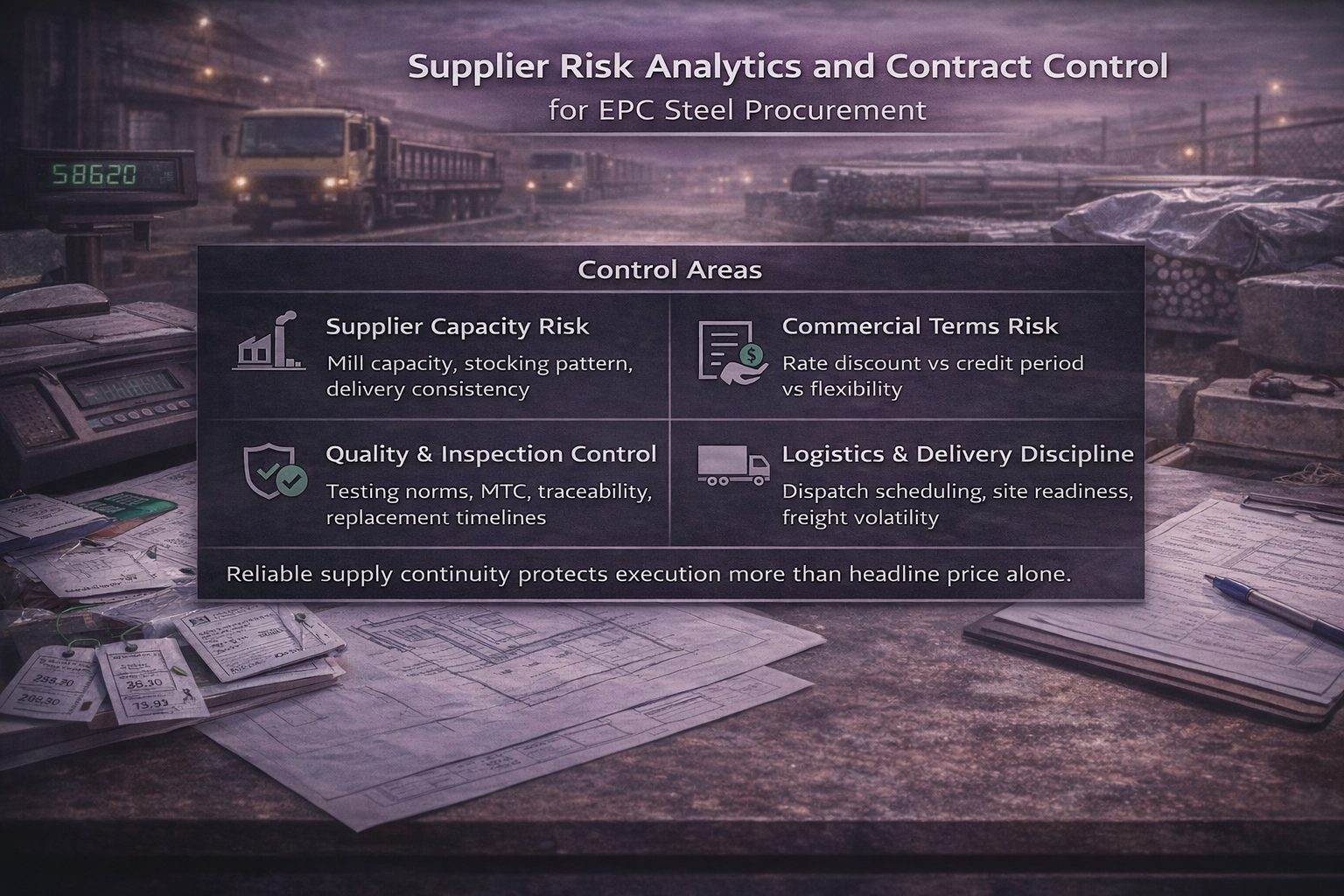
Steel procurement in EPC projects depends on supplier reliability as much as price. Vendor concentration, credit exposure, and delivery discipline directly affect execution continuity.
Supplier diversification and capacity risk
- Relying on a single mill or stockist increases disruption risk. Production shutdowns, logistics bottlenecks, or dispatch prioritisation for larger clients can delay supply.
- Steel supplier risk assessment India practices now include reviewing mill capacity, regional stocking patterns, and past delivery consistency before committing large volumes.
Credit terms versus rate discount
- Lower quoted rates often come with tighter credit periods. Extended credit reduces immediate cash outflow but may limit negotiation leverage.
- Procurement teams must evaluate whether price savings justify reduced flexibility. Long term steel supply agreement EPC arrangements sometimes balance price stability with structured credit support.
Quality assurance and inspection controls
- Material rejection disrupts schedule and raises re-procurement cost. Contract clauses should clearly define testing norms, third-party inspection rights, and replacement timelines.
- Documentation such as mill test certificates and batch traceability supports BIS compliance steel procurement India requirements. Clear quality protocols reduce downstream disputes.
Logistics and delivery discipline
- Delivery scheduling must match site readiness. Delayed dispatch increases idle labour risk, while premature dispatch inflates inventory exposure.
- Logistics cost impact on steel procurement becomes visible when freight rates fluctuate or multi-point unloading is required.
- Supplier analytics and contract discipline together reduce steel margin erosion risk EPC projects.
Data-led procurement framework for EPC contractors
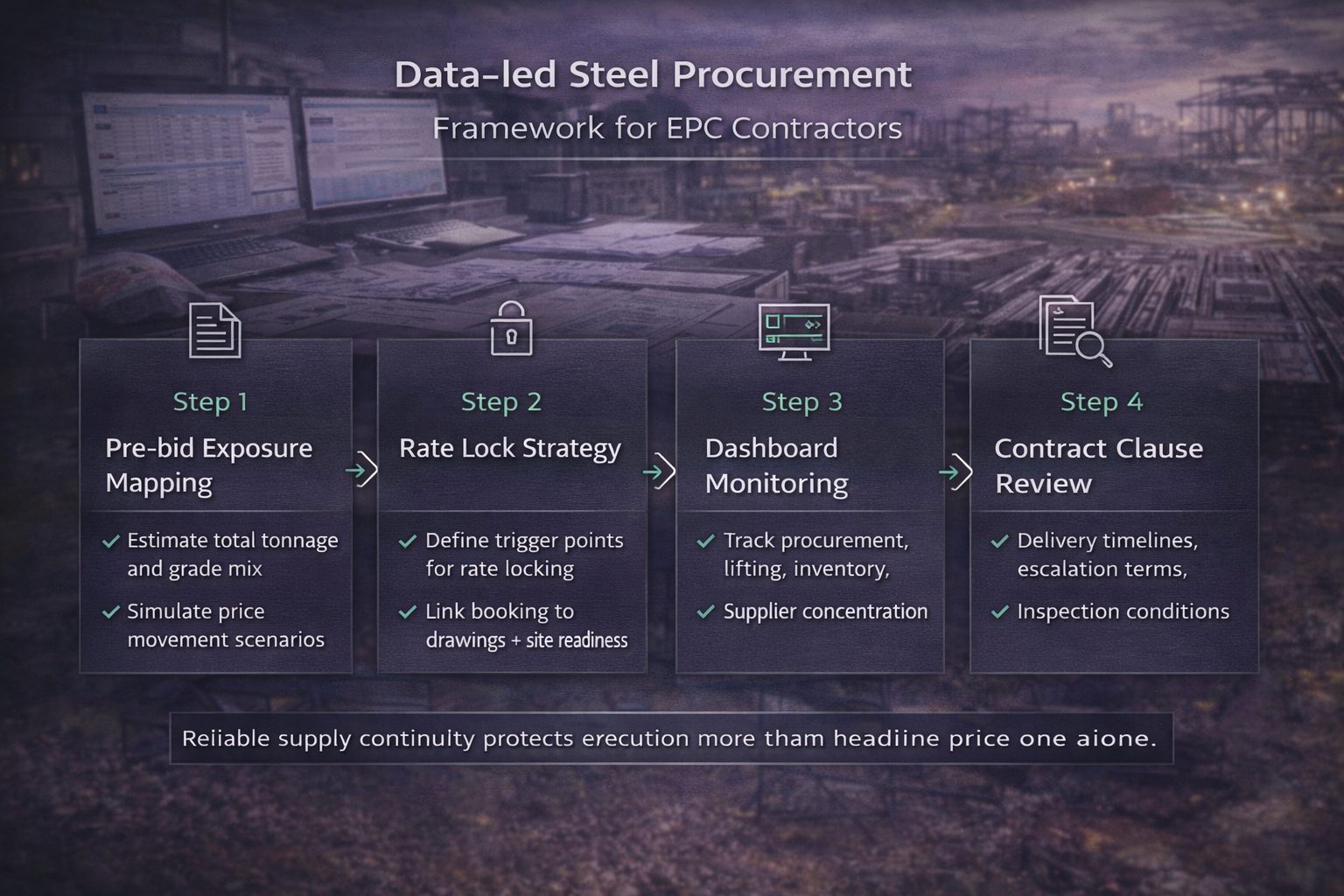
Steel procurement in EPC projects benefits from a structured decision framework. Ad-hoc buying based on spot rates increases exposure. A data-led approach improves predictability.
Pre-bid exposure mapping
- Before finalising a bid, teams should estimate total steel tonnage and identify grade mix. This helps in early EPC steel exposure modelling and scenario testing.
- Simulating moderate price movement allows finance teams to assess buffer requirements. Conservative modelling reduces steel cost sensitivity in EPC contracts.
Rate lock strategy before purchase order
- Procurement teams should define trigger points for rate locking. These triggers may depend on market trend, confirmed drawings, and site readiness.
- Linking rate finalisation to steel demand forecasting EPC India reduces mismatch between booking and lifting.
Integrated procurement dashboard
A simple dashboard can track:
- Committed tonnage versus lifted tonnage
- Average procurement rate
- Inventory holding days
- Supplier concentration percentage
These indicators support steel inventory carrying cost India control and highlight working capital impact of steel stocking early.
Contract clause review
- Purchase orders should align with project risk profile. Clear delivery timelines, escalation terms, and inspection conditions reduce later disputes.
- Steel procurement in EPC projects becomes more stable when procurement and finance review clauses jointly before release.
- A structured framework transforms procurement from reactive buying into margin protection.
Conclusion
Steel procurement in EPC projects is no longer a back-end buying function. It directly influences cost stability, cash exposure, and execution continuity. Small misjudgments in timing, grade selection, or supplier choice compound over the life of a project.
Price cycles, regional spreads, and compliance requirements will continue to shape procurement decisions in 2026. Contractors who treat steel demand forecasting EPC India and exposure modelling as financial tools, not just planning exercises, reduce avoidable volatility.
Margin protection now begins before purchase orders are issued. Clear coordination between design, procurement, finance, and site teams strengthens control over steel cost sensitivity in EPC contracts.
Steel procurement in EPC projects rewards discipline, data review, and measured decision-making.
Looking to procure steel?
Tata nexarc helps manufacturers, builders and MSMEs source certified steel products, compare prices, and choose the right grade as per IS codes—with complete traceability and procurement confidence.
FAQs
How does steel procurement strategy impact EPC bid competitiveness?
Should EPC contractors centralise steel procurement across multiple projects?
How does mill production scheduling affect EPC steel delivery timelines?
Can long-term steel supply agreements reduce volatility risk in EPC projects?
What role does tonnage commitment play in negotiating better steel rates?
How do dispatch lead times influence structural erection schedules?
Is regional sourcing always cost-effective for EPC steel procurement?
How should EPC firms evaluate supplier financial stability?
Can steel stock hedging strategies work in EPC contracts?
How do import duties affect steel procurement decisions in India?
Charul is a content marketing professional and seasoned content writer who loves writing on various topics with 3 years of experience. At Tata nexarc, it has been 2 years since she is helping business to understand jargon better and deeper to make strategical decisions. While not writing, she loves listing pop music.