Check Price Now
Table of Contents
- Introduction: Choosing the Right Steel Buying Model
- Understanding the Two Steel Buying Models
- Cost, Cash Flow, and Working Capital Impact
- Risk Exposure MSMEs Face
- Operational and Compliance Realities
- When Bulk Buying Makes Sense
- When On-Demand Steel Buying Works Better
- Adopting a Hybrid Approach for Indian MSMEs
- How This Decision Fits into the Steel Procurement Process
- Conclusion: Balancing Flexibility and Cost Efficiency
- FAQs on Steel Buying Models
Introduction: Why this steel buying choice matters for MSMEs
Steel is not just another line item for an MSME. It decides whether a job finishes on time, whether margins survive a bad quarter, and whether the bank manager stays comfortable with the account. The way steel is bought, in one big bulk lot or in smaller on demand orders, quietly shapes all three. Thus, it becomes crucial to understand bulk vs on demand steel buying in detail.
What usually happens in real MSME units
Walk into most fabrication shops or project offices and a similar pattern appears. Steel procurement is often driven by habit, fear, or whoever calls first with a rate.
Common scenes look like this:
- A sudden drop in prices, and phones start ringing to block a bulk steel purchase
- A large order lands, and the team scrambles to arrange on demand steel at short notice
- Space in the yard is already tight, yet material still arrives “just in case”
- Payments from customers are running 45 to 90 days, while material for the next job is already lying in stock
None of this is unusual. It is simply how many MSME steel buying models have evolved over time.
Why bulk vs on demand is a strategic decision
The debate on bulk vs on demand steel buying is often reduced to a rate comparison. Bulk looks cheaper per tonne, on demand looks flexible. In practice, the choice affects working capital, storage, production planning, tender performance, even the ability to accept or reject risky orders.
This article treats the buying model as a strategic lever for MSMEs. It looks at cost, cash flow, risk, and day to day operations, and helps decision makers see when bulk steel purchase makes sense, when on demand steel purchase protects the business better, and when a mix of both is the safest path.
Understanding the two steel buying models in practice
Let’s have a closer look at both the buying models for steel.
Bulk steel buying: One large decision, long impact
Bulk steel purchase usually means one big order that covers several weeks or months of work. A unit books a full truck of HR sheet, coils, sections or TMT and closes rate, quantity, and payment terms in one go. The bill often runs into lakhs, sometimes more than the monthly salary outflow.
For many MSMEs, bulk buying looks like this:
- A fabrication shop in Pune books 20–25 tonnes of common sizes before starting three warehouse jobs.
- A contractor handling an industrial shed in Gujarat blocks all beams and channels as soon as the client clears drawings.
- A rolling mill vendor offers a better rate on a minimum-lot size, so the buyer stretches bank limits to meet that slab.
The attraction is simple. One round of negotiation, lower rate per tonne, and comfort that steel is available on the floor when work starts. The other side is not so visible. More pressure on working capital, tighter conversations with the bank about CC limits, and extra care needed for stacking, rust prevention, and pilferage. Once material is in the yard, it sits on the balance sheet till the job moves and bills are paid.

On demand steel buying: Smaller tickets, faster rhythm
On demand steel purchase follows a different rhythm. Orders are linked closely to confirmed jobs or short production cycles, and the quantities stay small. A buyer calls the local stockist or checks an online platform, compares two or three quotes, and books what is needed for the next one or two weeks.
Typical patterns include:
- A laser cutting shop ordering plates twice a week based on actual drawings received.
- A job-work unit in a cluster such as Bhiwandi/ Faridabad picking material per customer order to avoid left-over odd sizes.
- Businesses working on thin margins utilising on demand steel buying to keep inventory light and cash free for wages, GST, transport payments, etc.
This model keeps steel inventory management simpler. Less stock lying at risk, lower storage cost, and fewer chances of material going slow or obsolete. At the same time, it depends heavily on supplier response and transport reliability. If prices jump suddenly or a regular supplier has no stock, production schedules feel the impact within days.

Cost, cash flow, and working capital impact
Most discussions on bulk vs on demand steel buying stop at the rate per tonne. One quote looks lower, so it feels like a win. In practice, the final landed cost often tells a different story.
For a bulk steel purchase, an MSME usually adds:
- Loading and unloading charges at both ends
- Extra transport cost if the vehicle does not go full on return
- Yard handling, cutting, and stacking cost
- Interest on money blocked till the job is billed and paid
On demand steel purchase may come with a slightly higher rate, but the hidden costs stay smaller. Material moves faster, stays less time in the yard, and ties up fewer resources for cutting and storage. When all these elements are added, the gap between “cheap” bulk and “costly” on demand narrows.
How each style pushes or frees cash
Bulk buying pulls a large amount of money out of the account at once. For an MSME working under a cash credit limit or OD, that single decision can decide how much room is left for salaries, diesel, and vendor payments. Delayed collections from customers stretch this even further.
On demand buying behaves more like a series of smaller, controlled hits on cash flow. Payments follow production more closely. Working capital planning becomes easier, as the buyer can match steel purchase with incoming advances, milestone payments, or invoice discounting. The trade off is simple. Volumes no longer give the same discount, but the business breathes easier month to month.
One simple comparison
Take a small fabricator that needs 60 tonnes of HR sheet across three projects.
- In bulk mode, the unit orders all 60 tonnes at one rate, pays transport once, and blocks money for two or three months of work. If one project slows down, steel for that job sits idle and still carries interest cost.
- In on demand mode, the unit buys 20 tonnes per project phase. The rate per tonne is higher, but material does not wait long in the yard. Cash comes back faster as each phase finishes and invoices get cleared.
Seen this way, cost, cash flow, and working capital sit at the heart of MSME steel procurement strategy, not just at the margin.
Risk exposure MSMEs face with each approach
Steel rates can move a few thousand rupees per tonne in a single month. An MSME that buys at the wrong time feels it immediately.
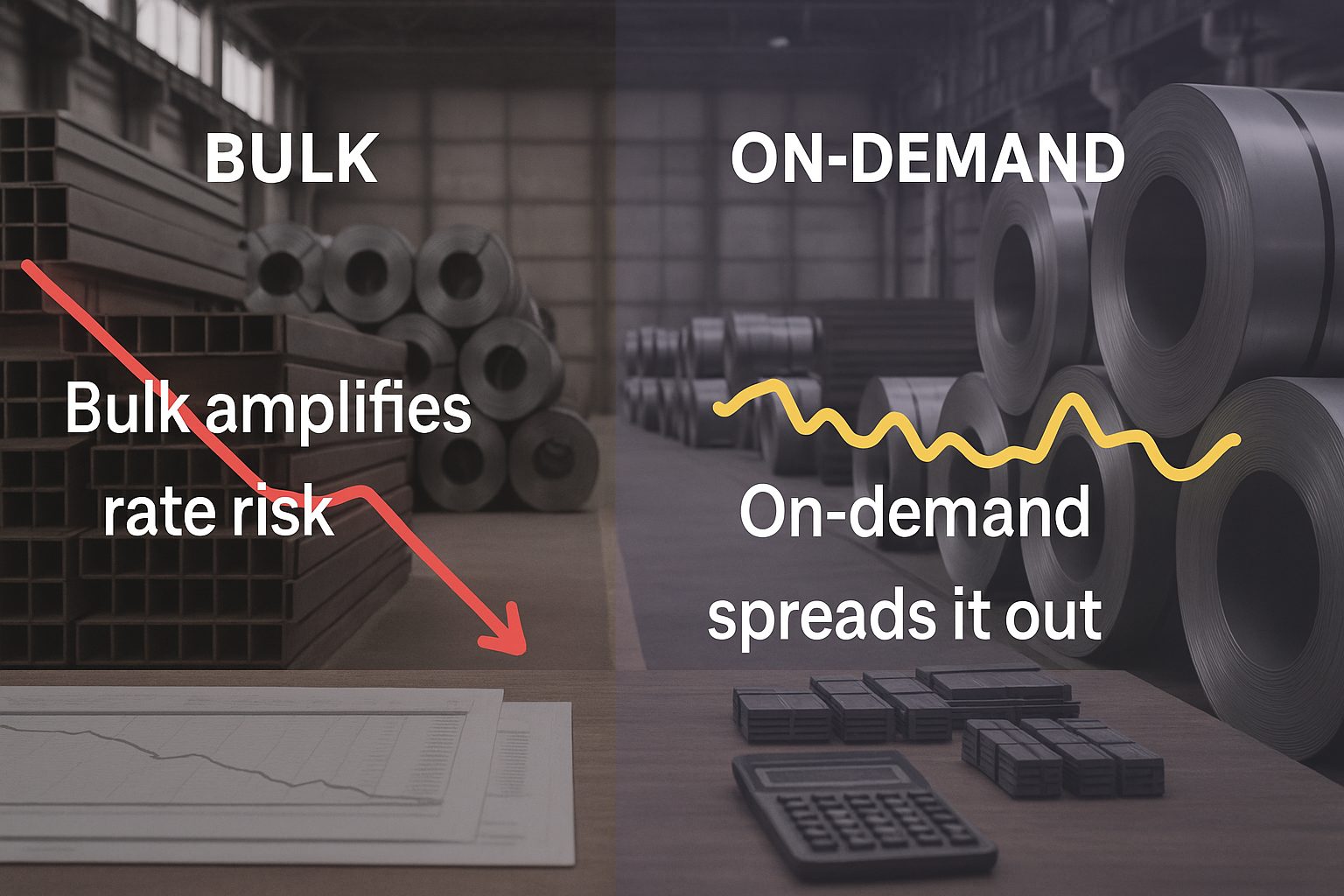
Bulk buying concentrates this risk. One decision fixes the rate for a large lot. If prices drop a week later, material in the yard suddenly looks expensive. Margins on ongoing jobs shrink, and future quotes become harder because old high-cost stock must clear first.
On demand buying spreads the exposure over several smaller orders. Prices still move, but the average tends to sit closer to the market. When rates soften, fresh orders capture the benefit. When rates jump, only the next lot hurts, not an entire quarter’s requirement.
Demand uncertainty and project delays
Most MSMEs work with imperfect visibility. Drawings change, site work slows, or clients push out deliveries. Bulk steel purchase assumes that everything will run on schedule. When it does not, unused material sits in one corner of the yard.
Common problems that follow:
- Sizes booked for one project do not match the next job
- Steel lies exposed longer than planned, inviting rust and handling damage
- Cash stays locked while collections from stalled jobs get delayed
On demand buying cuts this problem down. Material arrives closer to actual use. If a project stalls, the buyer simply pauses the next order. The trade off is the risk of short notice demand. When a client advances a deadline, the unit depends on how fast the supplier and transporter can respond.
Quality, claims, and supplier behaviour
Quality issues hurt more in bulk mode. If one heat has a defect or specs do not match the PO, the entire lot becomes a dispute. Sorting, returns, and rework take time. In the meantime, production plans go off track.
Smaller, on demand purchases limit the spread of any single problem. A bad batch affects a few tonnes, not the whole quarter’s stock. The buyer can shift more easily to another supplier if there is repeated non-performance.
Both models carry risk. Bulk buying amplifies timing and quality mistakes. On demand buying amplifies supply disruption and coordination gaps. The safer choice for an MSME depends on how predictable its orders are and how strong its supplier network really is, not only on the rate written on the quotation.
Operational and compliance realities for MSMEs
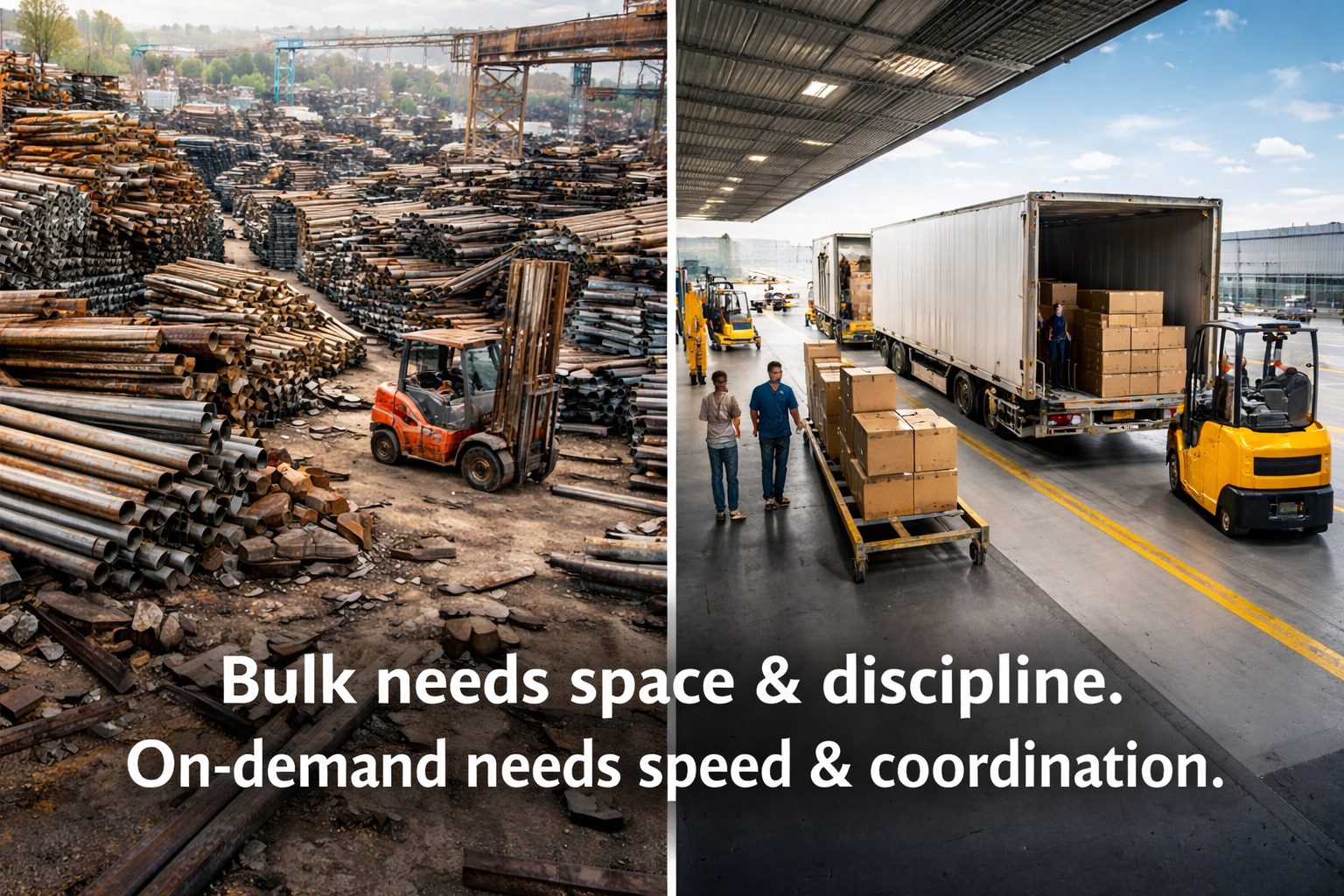
For many MSMEs, steel storage is a patch of open ground behind the shed or a rented godown near the highway. Bulk steel purchase fills that space very quickly. A single 20–25 tonne truck of coils or sections needs clear bays, sleepers, tarpaulin, and safe walkways. Without this, workers climb over bundles, forklifts struggle to turn, and small accidents become routine.
On demand buying changes the scene. Material arrives in smaller lots, often through PTL vehicles. Bundles move faster in and out of the yard, so stacking is simpler. At the same time, vehicle traffic increases. More gate entries, more unloading events, and more chances for mismatch between challan and actual received quantity. Operations feel lighter, but coordination work increases.
Paperwork, audits and tender conditions
Bulk buying creates a fat file of documents in one go. Purchase order, e way bill, LR, test certificates, weighbridge slips, and GST invoices, all tied to a few large consignments. For units that supply to PSUs or work under EPC contractors, these papers support tender based steel buying and future audits. One mistake in description or HSN can keep a bill stuck in processing queues.
On demand steel purchase spreads the same stack of paperwork across many smaller bills. GST input comes in more regularly, which helps cash flow. However, record keeping must stay tight. Stock registers, bin cards, and ERP entries need frequent updates to avoid confusion. During a departmental visit or project audit, officers often pick random invoices. If descriptions differ from PO terms or tender clauses, explanations take time.
What changes between bulk and on demand in practice
In bulk mode, one wrong line in a PO, one missing heat number on a certificate, or one short receipt entry can affect several months of work. Corrections and debit notes then cut across many jobs. In on demand mode, the impact of a mistake is smaller, but the number of touch points is higher. Stores, accounts, and purchase teams spend more time matching small invoices with multiple projects.
For MSMEs, the real question is simple. Which model fits the team’s current capacity to handle storage, documentation, and inspection. Bulk vs on demand steel buying is not only a finance choice. It is also a test of how much administrative load the organisation can carry without losing control of compliance or daily operations.
When bulk buying makes sense and when it hurts
Bulk steel purchase can be very effective when a few basic conditions hold true. The work pipeline is clear, finance is reasonably stable, and specifications do not change every few weeks. In such cases, bulk vs on demand steel buying tilts towards bulk.
Bulk buying usually makes sense when:
- Order book covers at least one full quarter with similar sections or thicknesses
- Drawings are frozen and there is low chance of frequent design changes
- The yard has covered or at least well prepared space for safe stacking
- Bank limits and internal cash allow payment within agreed credit days
Examples are common. A shed fabricator with repeat orders from the same industrial client, or a PEB player executing phased work inside a large plant, can take advantage of bulk steel purchase. In these cases, volume discounts and stable availability often outweigh the holding cost, as long as cutting, nesting and dispatch are planned carefully.
Warning signs that bulk buying may damage margins
The same model becomes risky when visibility is weak. A unit with irregular work, heavy dependence on one buyer, or strict space limits may suffer from too much steel on the ground.
Red flags include:
- Jobs vary a lot in size or grade, so common stock does not fit the next order
- Payment terms with key customers are already stretched beyond 60 days
- Yard space is open to rain, dust or theft, and protection costs are rising
- Past experience shows leftover or scrap generation is high after each project
In such settings, bulk vs on demand steel buying tends to favour a lighter approach. Bulk orders may still be used for the most common sizes, but pushing every item into a single large PO often locks money and creates slow moving stock. For these MSMEs, discipline around project-based steel buying matters more than chasing the lowest possible rate for every tonne.
When on demand steel buying works better
On demand steel purchase suits units that live with fluctuating orders and tight cash. Many job-work shops, fabricators, and small OEMs in clusters like Faridabad, Chakan, and Howrah already work this way, even if they do not call it a model.
Typical cases where on demand steel buying fits well:
- Orders change every week, with different thickness, grade, or section
- Customers confirm jobs late or in small batches
- Space inside the shed is limited, and outside storage is risky
- The firm runs close to its CC or OD limit and cannot block cash for months
In such conditions, smaller and more frequent steel orders keep the balance sheet lighter. Inventory stays close to live requirements. Steel storage challenges reduce, and mistakes in planning hurt less because only a few tonnes are involved.
Signals that an on demand model is safer
Some warning signs suggest that pushing for bulk in these setups can backfire. A few simple checks help an MSME decide whether on demand steel purchase should be the default:
- Past experience shows a lot of leftover odd sizes after each project
- Drawings from clients come in parts, not as one final approved set
- Transporters often struggle to get vehicles into the lane or yard
- Monthly cash flow statements already show strain due to delayed receipts
When these patterns appear, bulk vs on demand steel buying usually tilts toward the on demand side. The unit benefits more from flexibility than from extra discount per tonne. Steel procurement strategy in such firms focuses on:
- Quick rate comparison between two or three nearby suppliers
- Clear linking of each material order to a specific job or customer
- Simple, visible stock tracking so that repeat orders do not create silent scrap
On demand buying then becomes less of an emergency habit and more of a planned rhythm that protects both cash and floor space.
A practical hybrid approach for Indian MSMEs
Not every unit can live fully on bulk buying or fully on on demand. Most stable MSMEs slowly land in between, sometimes without giving it a name. The pattern can be made more deliberate and cleaner.
Fix the base, flex the rest
Start by separating steel into two clear buckets:
- Items that move every month, almost like clockwork
- Items that depend on one client, one drawing, or one special job
For many fabrication and machining units, the first bucket usually has:
- Standard HR sheet thickness and common widths
- Regular angles, channels, beams used across jobs
- Routine plates used for gussets, brackets, stiffeners
These items suit planned bulk steel purchase. Consumption is steady, nesting is predictable, and leftover pieces usually get used in the next job.
The second bucket is better kept for on demand steel purchase. Chequered plates for one client, odd sizes, special grades for export, very thick or very thin sections. Ordering these only against confirmed drawings avoids slow moving stock.
Bulk rate, staggered lifting
Another practical mix is to negotiate bulk, yet lift in parts. Rate and total quantity are agreed upfront, but material is dispatched in smaller lots against a simple schedule.
This helps when:
- Projects run in phases over three to six months
- Site storage is tight, but overall requirement is clear
- The supplier is reliable and has stock discipline
The purchase team needs one basic sheet to track:
- Quantity booked
- Quantity lifted so far
- Balance left against the same PO
If this tracking is done even in a spreadsheet, arguments at the end of the project reduce sharply. Pricing stays closer to bulk, while the yard behaves more like an on demand model.
Buying together inside a cluster
In industrial belts, a few nearby MSMEs can also combine only the most common items. For example, three units in Chakan or Howrah may pool monthly demand for ISMB 200 or HR sheet 5 mm, place one larger order, then split material.
This type of shared buying works only when:
- Roles are clear, one firm handles PO and billing
- Quantities and rates for each partner are written and signed
- Transport and unloading charges are divided upfront
Handled with basic discipline, this turns a group of small on demand buyers into a single semi bulk buyer for selected items. It softens the sharp edge in the bulk vs on demand steel buying choice and suits MSMEs that do not want to swing fully to either side.
How this choice fits into the full steel procurement process
In most MSMEs, steel buying starts with a simple trigger. Sales books an order, design or estimation sends a BOQ, and someone in purchase starts calling suppliers. The decision on bulk vs on demand steel buying often happens in that phone call itself, which is where trouble starts.
A cleaner way is to fix the buying style just after the requirement is frozen.
Simple sequence:
- Get quantity and grade clarity from design or site.
- Check project duration and delivery milestones.
- Look at current cash position and payment terms with the buyer.
- Only then decide, “This job goes bulk” or “This job stays on demand.”
Once this is done, RFQs, comparison sheets, and final POs all follow the same logic. Suppliers also know what they are quoting for, full truck or split deliveries.
Vendor and process change with the model
Vendor choice rarely stays the same for both styles.
- Bulk buying usually sits better with mills, big stockists, or long term partners who handle full loads, credit, and test certificates properly.
- On demand buying often depends on nearby dealers or platforms that can cut, load, and ship in one or two days.
So before sending enquiries, one basic question helps:
“For this requirement, is reliability on large volume more important, or speed on small lots?”
That answer decides which vendor set to tap and what to write in the PO, including delivery pattern, inspection, and payment terms.
Why procurement feels smoother when the model is fixed early
When the buying model is clear at the start, every later step becomes simpler. GRN format, stock tagging, linking material to job cards, even follow up on payments, all follow one pattern for that project.
Instead of handling each steel order as a fresh crisis, the team runs a repeatable method. Over a few jobs, this consistency matters more than squeezing an extra 200 rupees per tonne, because it cuts mistakes and keeps both production and accounts on the same page.
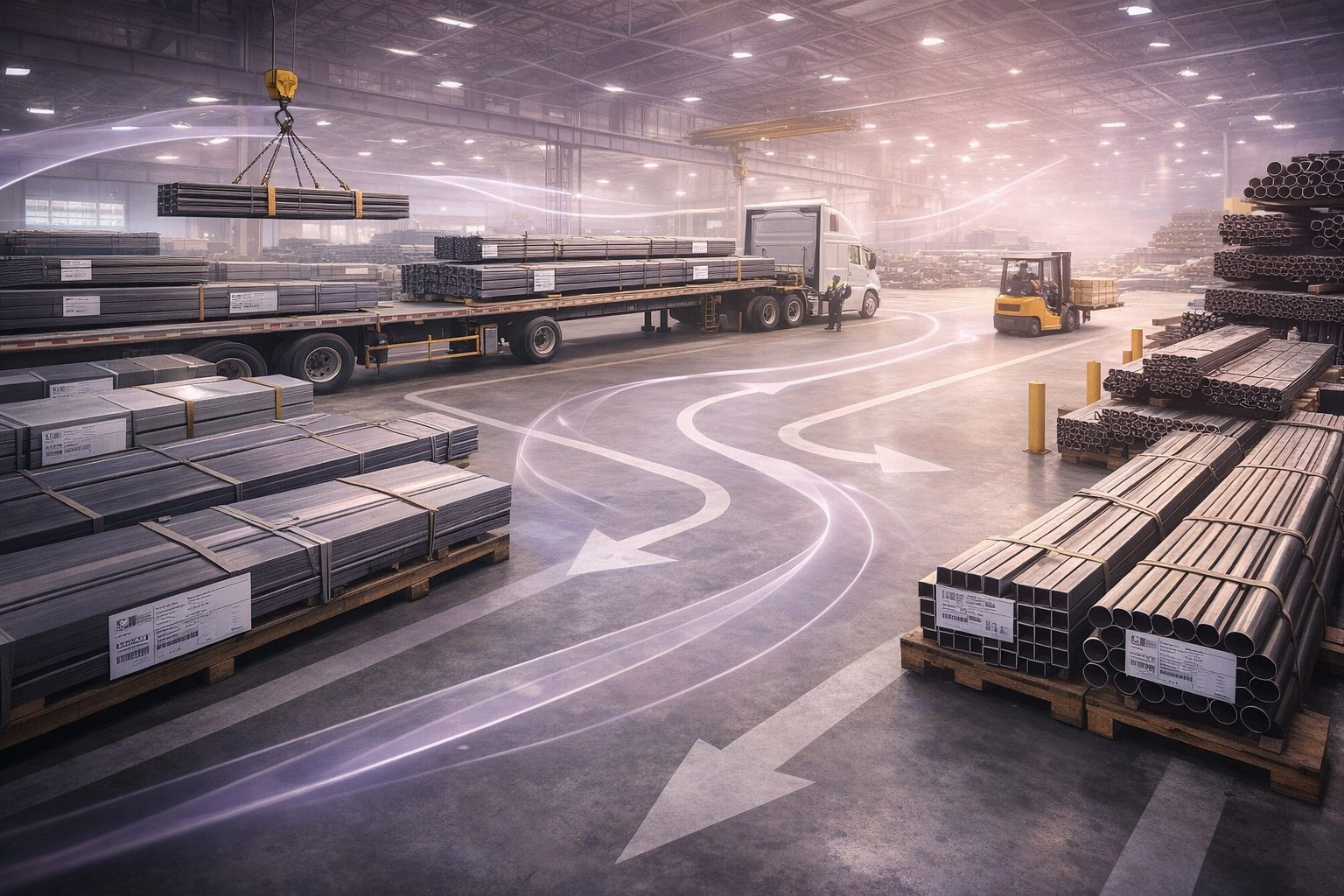
Conclusion: Choosing a steel buying style that protects the business
Bulk vs on demand steel buying is not a theory topic for MSMEs. It decides whether projects move smoothly, whether bank limits stay manageable, and whether stockyards remain usable. A cheap-looking rate can still hurt if it locks cash or clogs space. A flexible model can still fail if suppliers or transporters cannot support short notice orders.
A simple closing checklist helps:
- Order book visibility: clear for one quarter, or uncertain beyond a month
- Cash position: room in limits, or constant strain on payments
- Yard and storage: organised and covered, or cramped and exposed
- Supplier strength: reliable on full loads, or quick on small lots
If most answers point to stability and repeat work, bulk steel purchase can support margins. If answers point to volatility, tight cash and changing jobs, on demand steel purchase or a careful mix is usually safer. The key is to treat the buying model as a conscious choice, not a habit carried over from a different time.
Looking to procure steel?
Tata nexarc helps manufacturers, builders and MSMEs source certified steel products, compare prices, and choose the right grade as per IS codes—with complete traceability and procurement confidence.
FAQs
Should MSMEs link steel buying frequency with monthly cash flow reviews?
Can on demand steel buying reduce scrap generation?
Does supplier credit change the choice between bulk and on demand?
Should MSMEs freeze suppliers for the entire year?
Is on demand buying suitable for export jobs?
Should MSMEs track material velocity before choosing a model?
Can multiple transport partners support an on demand model?
Does insurance cost increase with bulk buying?
Can cutting service centres support hybrid buying?
Does GST reconciliation become harder with on demand buying?
Should MSMEs create a steel buying SOP?
Does heavy dependence on one client favour on demand buying?
Charul is a content marketing professional and seasoned content writer who loves writing on various topics with 3 years of experience. At Tata nexarc, it has been 2 years since she is helping business to understand jargon better and deeper to make strategical decisions. While not writing, she loves listing pop music.